

 Show all photos in album
Insert for comparison
We will identify your pest
Add pictures of this species
Show all photos in album
Insert for comparison
We will identify your pest
Add pictures of this species
Eotetranychus carpini
Hornbeam mite
Description
Eotetranychus carpini is a polyphagous mite from the Tetranychidae family, known as the hornbeam mite. It is primarily found on Carpinus betulus (hornbeam) and other deciduous trees and shrubs, but in southern Europe, it also occurs on grapevine (Vitis vinifera), particularly in France and Italy. Studies suggest the existence of host-specific races, such as the "carpini race" on hornbeam and the "vitis race" on grapevine, due to their inability to interchange hosts. This mite feeds by piercing leaf surfaces with its stylet-like chelicerae, extracting cell contents, leading to visible damage.
The presence of E. carpini on host plants can reduce photosynthetic capacity due to leaf discoloration and damage, impacting the aesthetic appearance of ornamental plants and the productivity of grapevines. Its polyphagous nature allows it to infest a wide range of hosts, including Acer campestre, Corylus avellana, Castanea sativa, Quercus robur, and Vitis vinifera, making it an important pest in both natural and agricultural systems.
Symptom
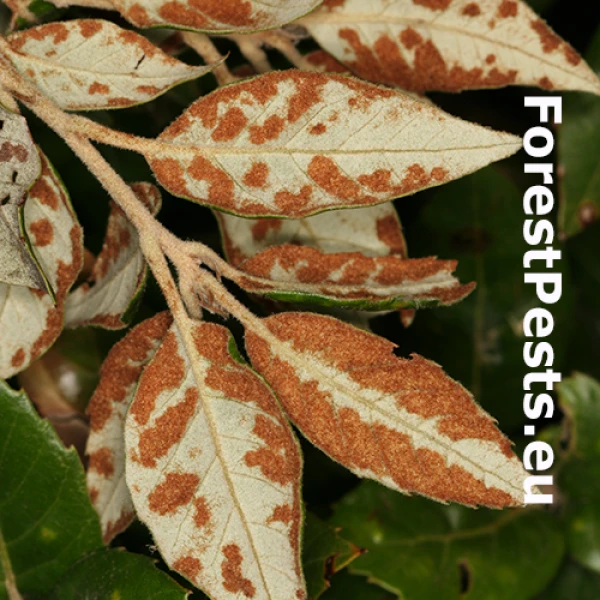
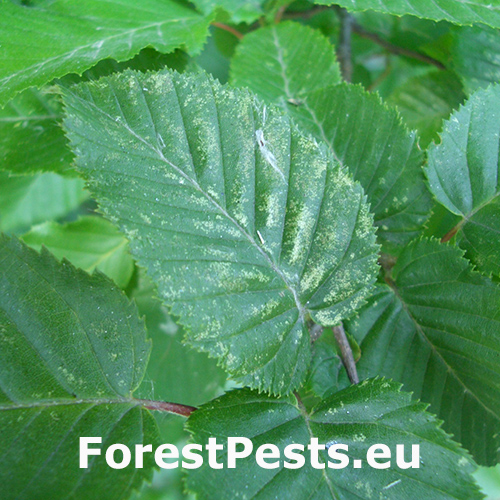
Infested leaves show discoloration, often with yellowish or bronzed patches. Mites, eggs, and larvae are visible on the undersides of leaves, primarily along veins. Severe infestations cause curling and premature leaf drop. The damage caused by this species on the upper side of the leaf can easily be mistaken for ozone damage. Therefore, it is important to carefully inspect the underside of the leaf to confirm the presence of mite symptoms.
Tree Species: Oak, Hornbeam, Maple, Hazel, Grape
Part of a plant- attacked: Leaf / Needle
Pest significance: Harmful
Pest Category: Mites
Invasive Species: No
Present in EU: Yes
Add comment: Eotetranychus carpini
Location map: Eotetranychus carpini
Legend:

Expert verified points

Unverified points
Observed by users on these tree species
Similar damage
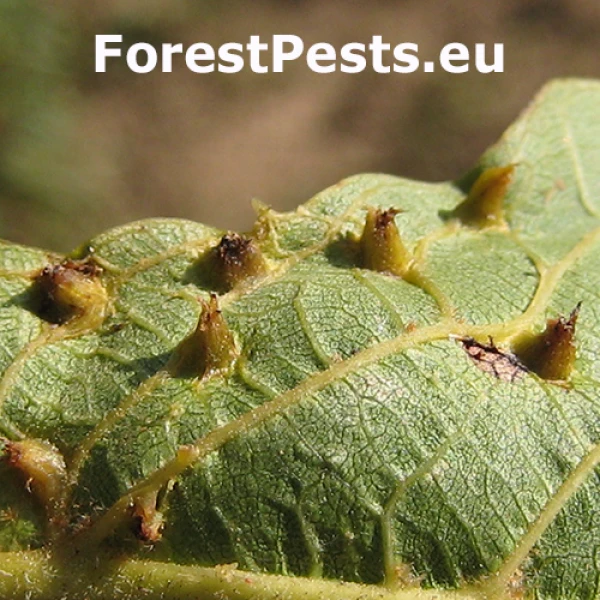
Walnut pouch gall mite
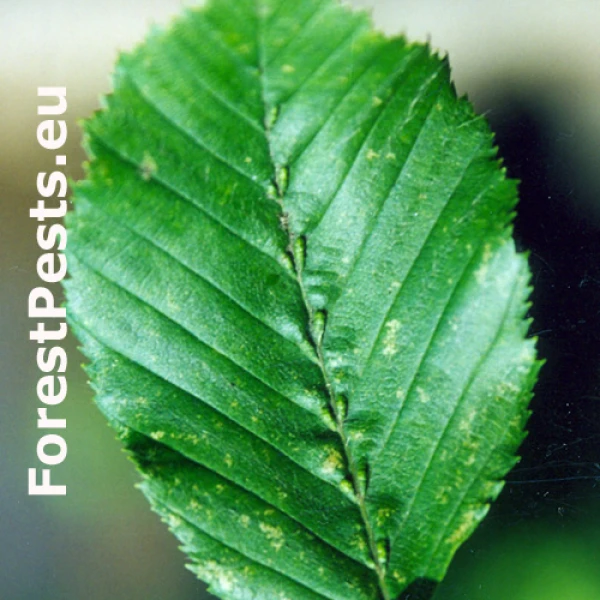
Mite Aceria tenella
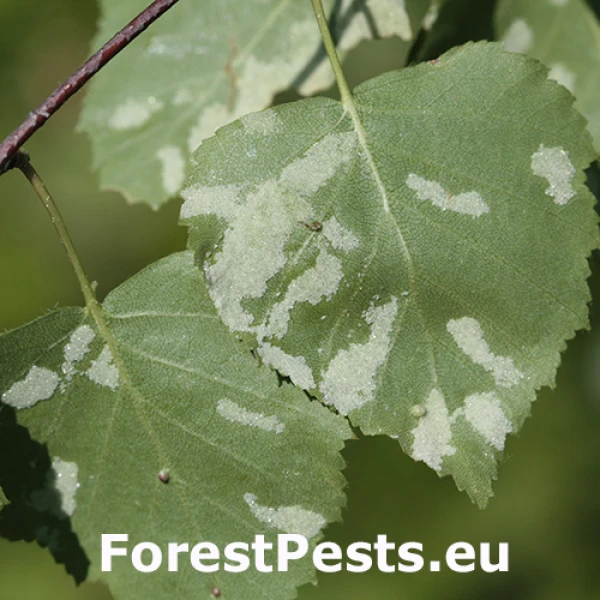
Gall mite Acalitus rudis