





 Show all photos in album
Insert for comparison
We will identify your pest
Add pictures of this species
Show all photos in album
Insert for comparison
We will identify your pest
Add pictures of this species
Phylloxera spp.
Phylloxera on oaks
Description
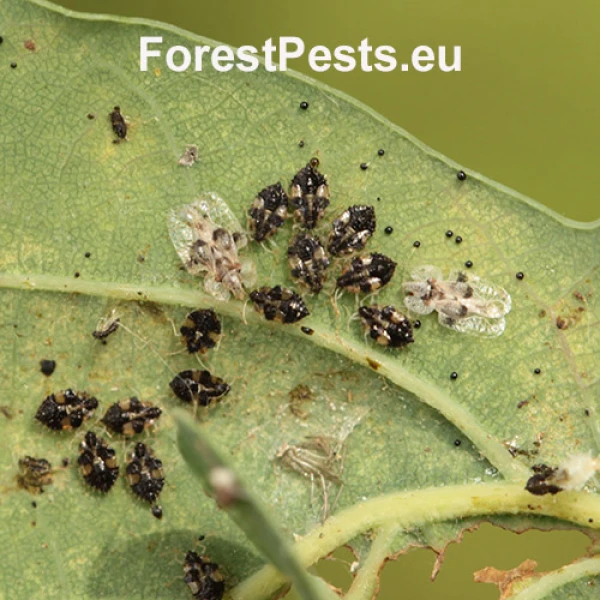
Phylloxera is a genus of aphids. Several species of this genus can feed on oaks in Europe (Quercus spp.). These insects are narrowly oligophagous or monophagous, depending on the species, with host plants including both deciduous and evergreen oaks. There are several species of this genus living on different types of oaks, such as Phylloxera coccinea, Phylloxera confusa, Phylloxera foae, Phylloxera glabra, Phylloxera quercina, and Phylloxera quercus. They are very similar, and even experts may have difficulties identifying them to the species level. Also, the symptoms they cause are very similar. For these reasons, we have decided to list them all under one record in this atlas. They are distributed throughout Europe, with higher prevalence in warm southern and central regions, though there are only a few records from northern areas.
The lifecycle of Phylloxera involves multiple generations per year. Overwintering typically occurs as eggs on the bark or branches of host trees. In early spring, nymphs emerge and feed on young leaves (mainly on the underside of them), leading to the formation of necrotic spots – yellow or brown discolorations due to their suction activities. Adult females deposit large numbers of eggs on the underside of leaves.
The impact on the health and appearance of oaks varies. While minor infestations may go unnoticed, severe infestations can lead to reduced photosynthetic capacity, premature leaf drop, and aesthetic damage. Prolonged and intense infestations may weaken the overall vitality of the tree, making it more susceptible to secondary pathogens or environmental stressors.
Symptom
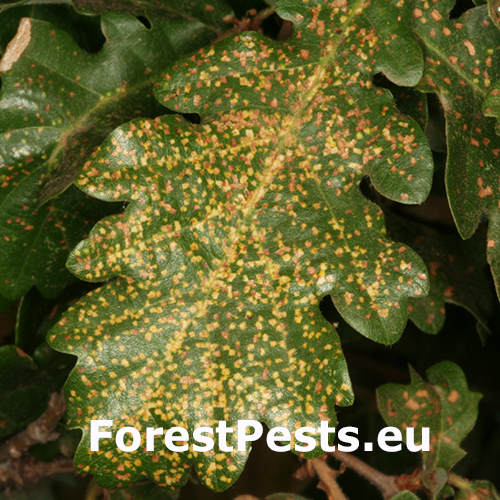
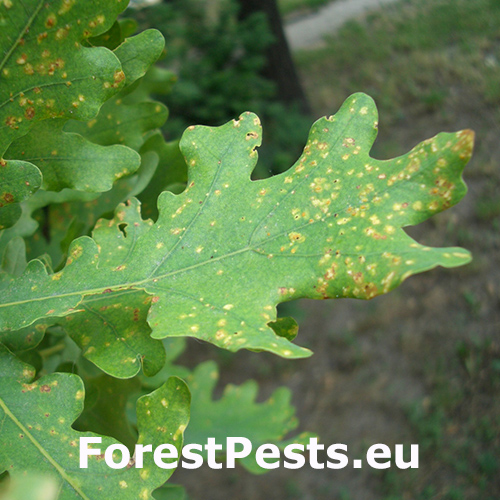
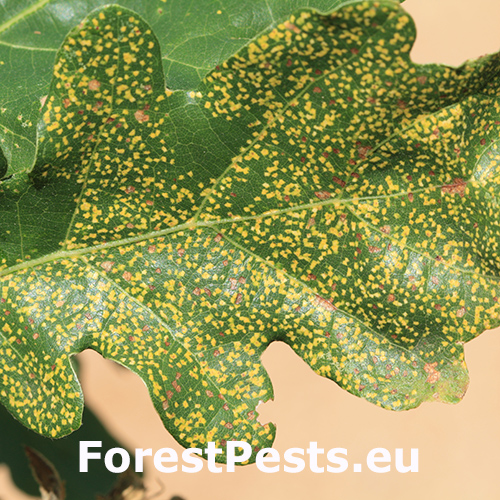
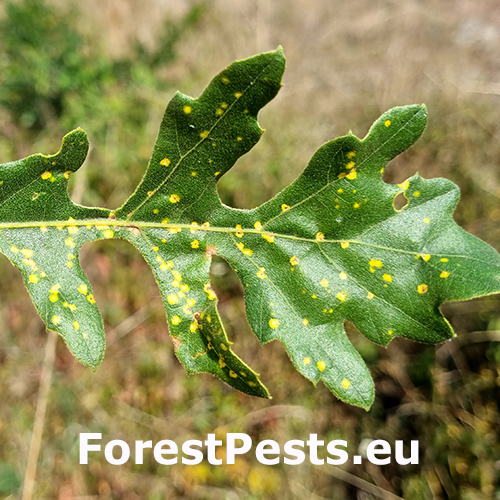
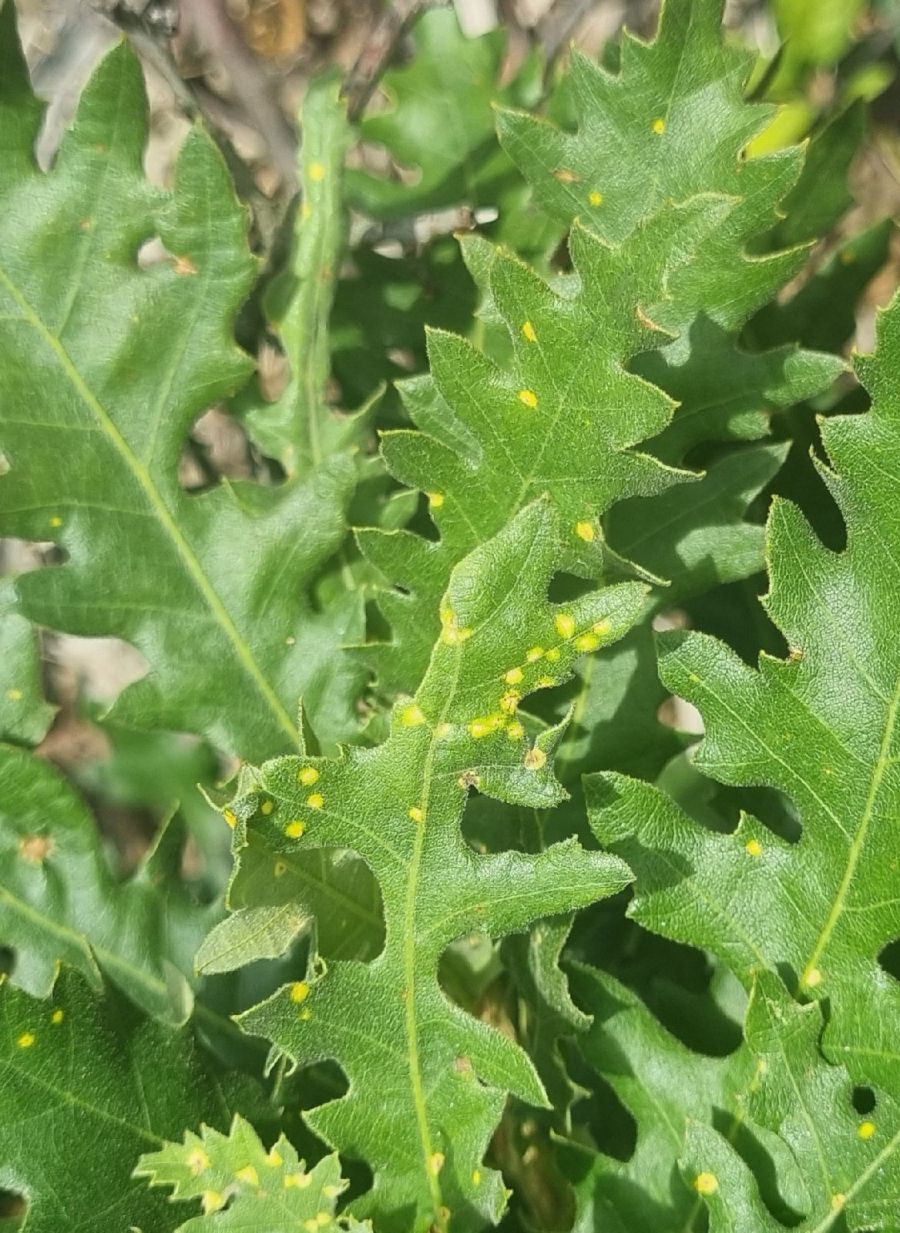
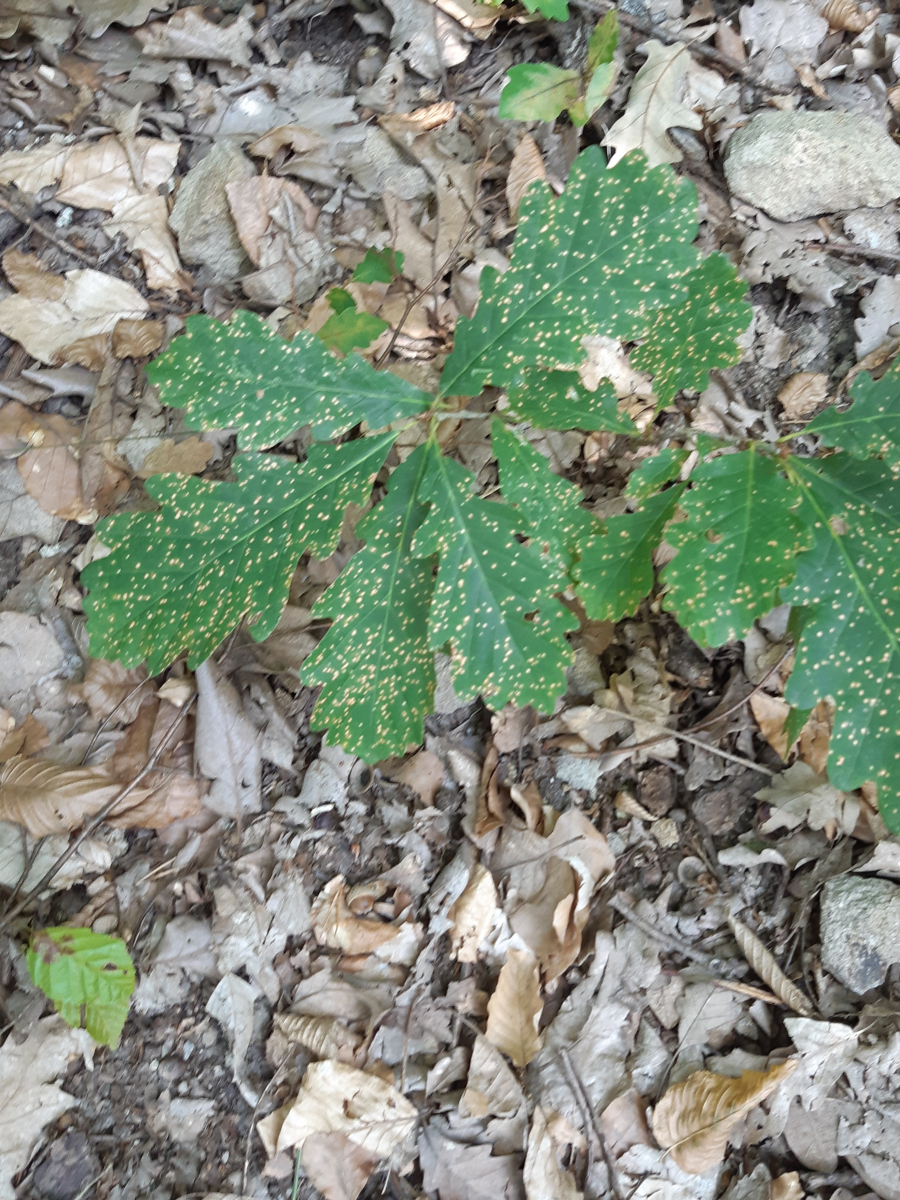
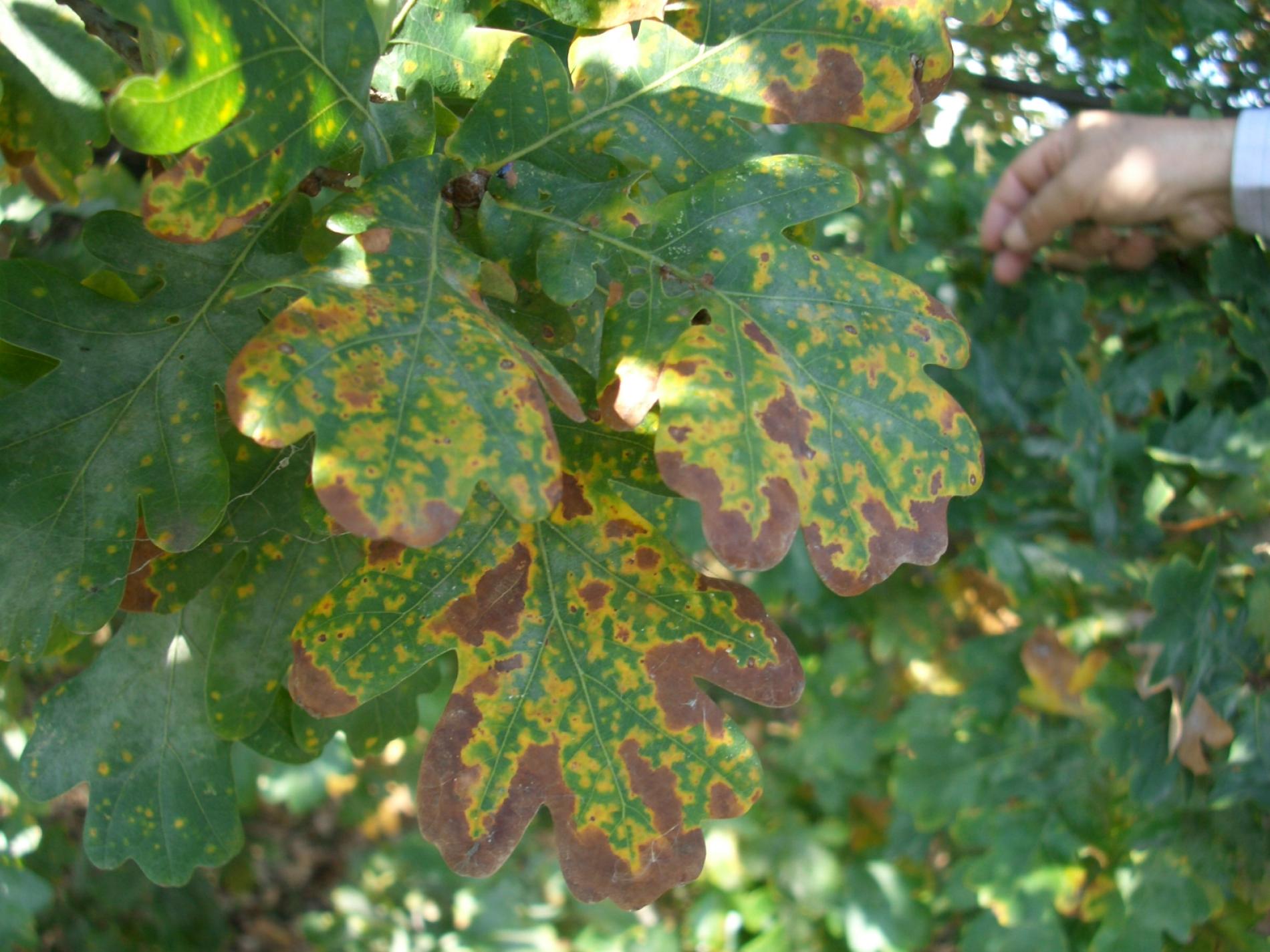
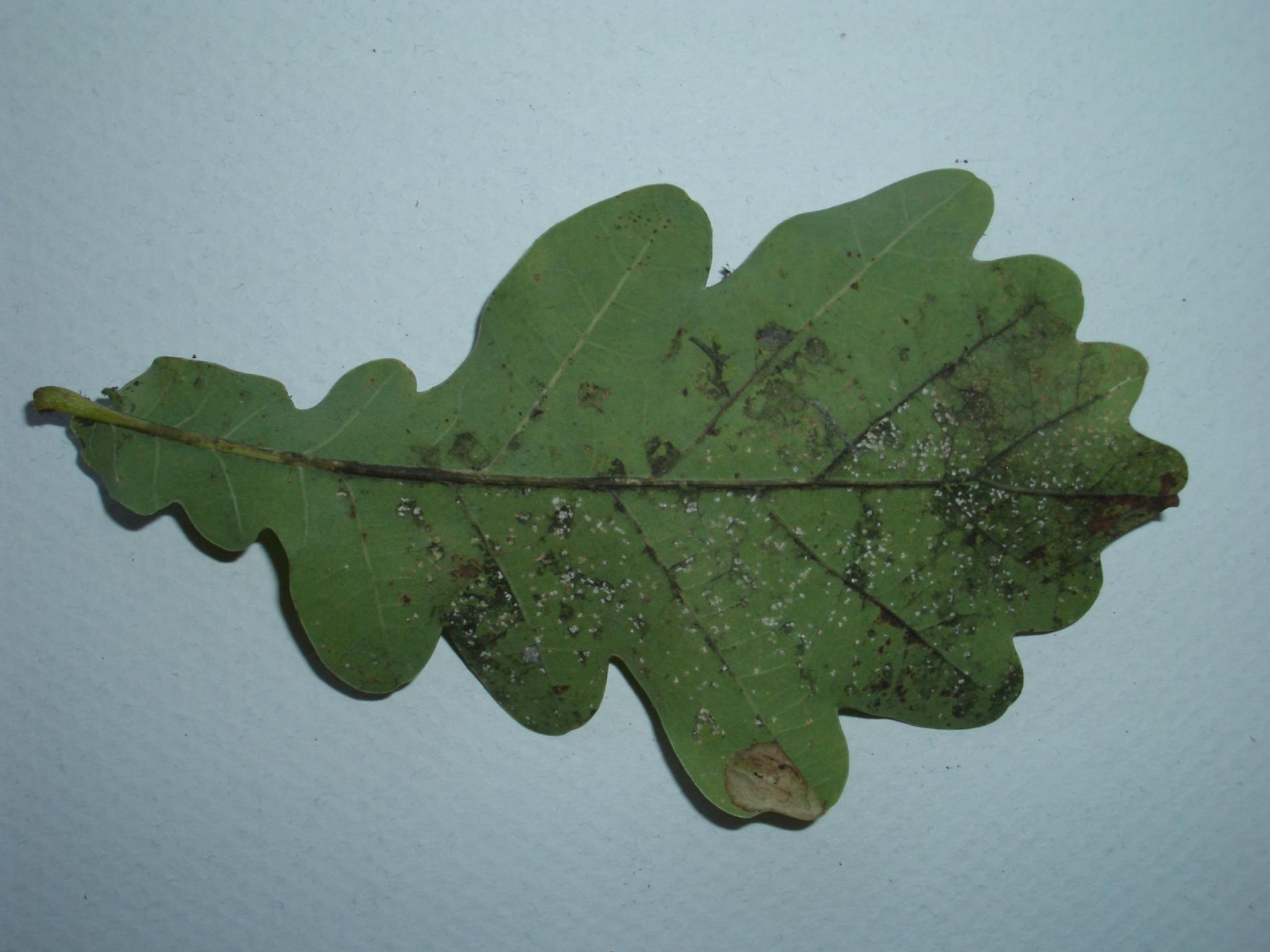
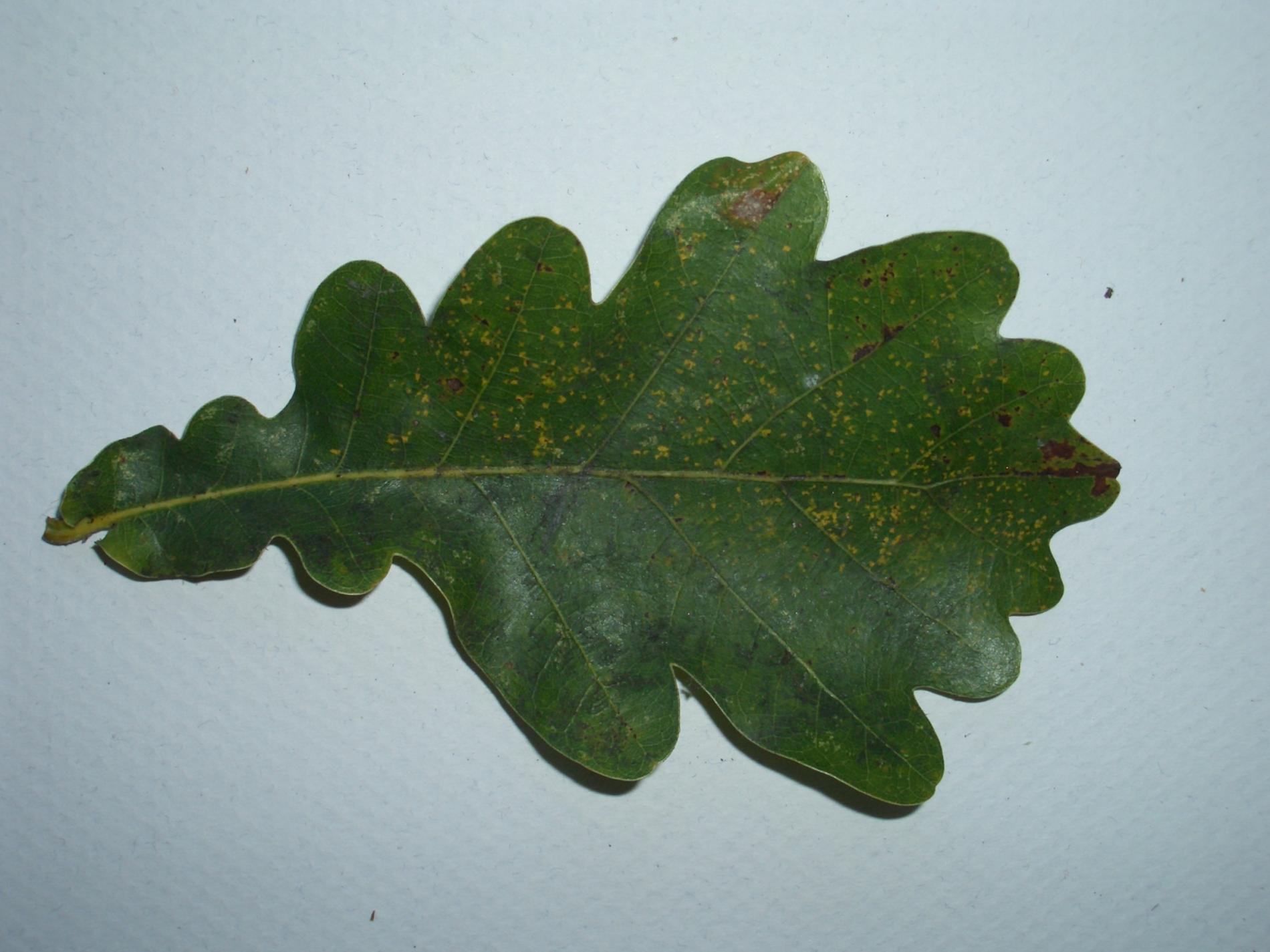
On infested oaks, small orange-yellow or necrotic spots appear on the underside and topside of leaves. In severe cases, leaves may show discoloration, curling, or deformation. Infested leaves may also drop prematurely. On the underside, very small Phylloxera individuals in creamy yellow or yellow color can be observed. These individuals are very tiny and not easily visible to the naked eye.
Tree Species: Oak
Part of a plant- attacked: Leaf / Needle
Pest significance: Less harmful
Pest Category: Insects
Invasive Species: No
Present in EU: Yes
Add comment: Phylloxera spp.
Location map: Phylloxera spp.
print viewLegend:

Expert verified points

Unverified points
Observed by users on these tree species
Most sightings of the species


Last observations
There are a total of 4 observations of the species in the system

Phylloxera spp.Phylloxera on oaks
milan
Number of votes: 0
Published: 17.7.2025

Phylloxera spp.Phylloxera on oaks
Milan Zúbrik
Number of votes: 0
Published: 23.5.2025

Phylloxera spp.Phylloxera on oaks
majo
Number of votes: 0
Published: 8.9.2021

Phylloxera spp.Phylloxera on oaks
majo
Number of votes: 0
Published: 15.7.2021
Similar damage
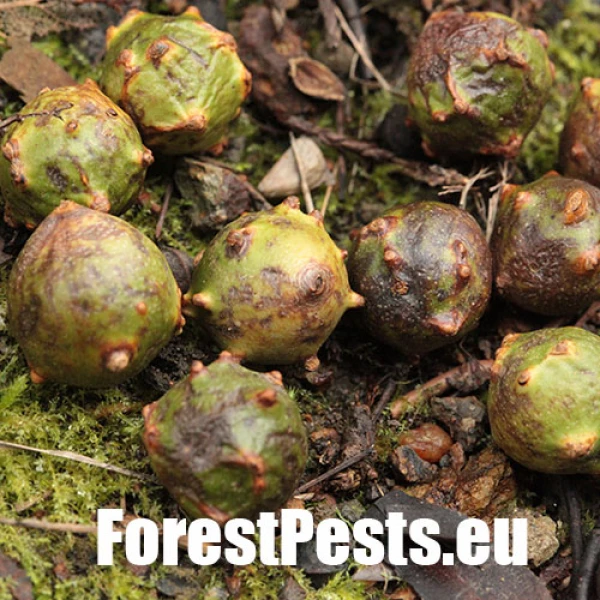
Gall wasp Andricus hungaricus
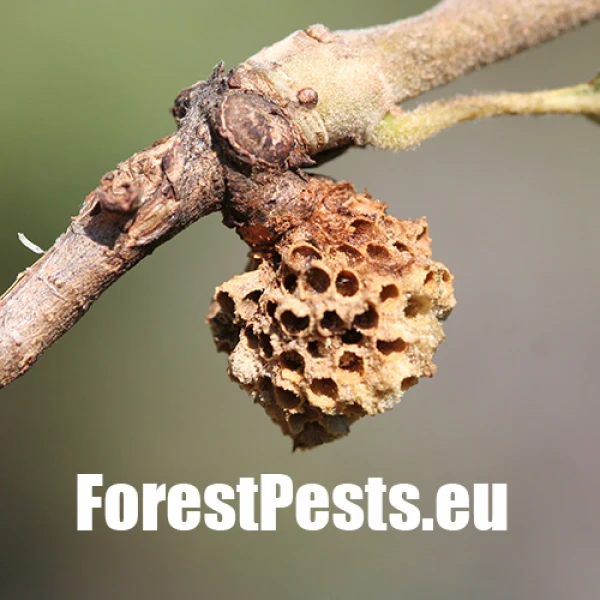
Gall wasp Andricus quercusradicis
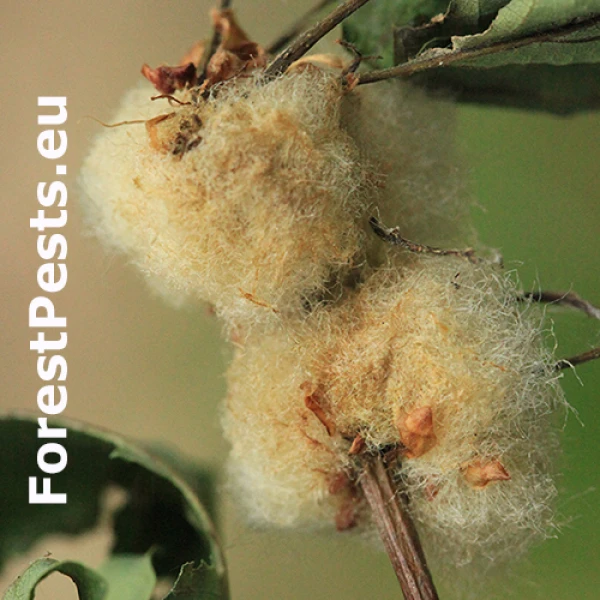
Cotton wool gall wasp