

 Show all photos in album
Insert for comparison
We will identify your pest
Add pictures of this species
Show all photos in album
Insert for comparison
We will identify your pest
Add pictures of this species
Ropalopus clavipes
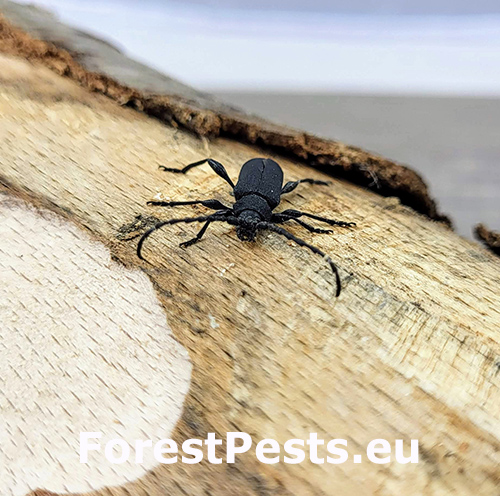
Longhorn beetle Ropalopus clavipes
Description
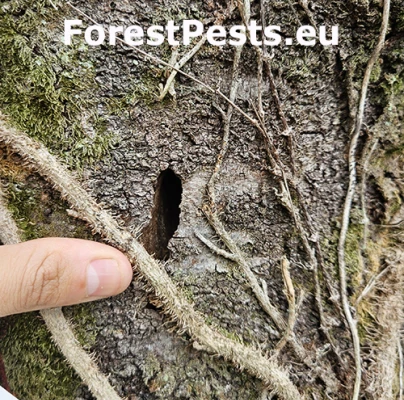
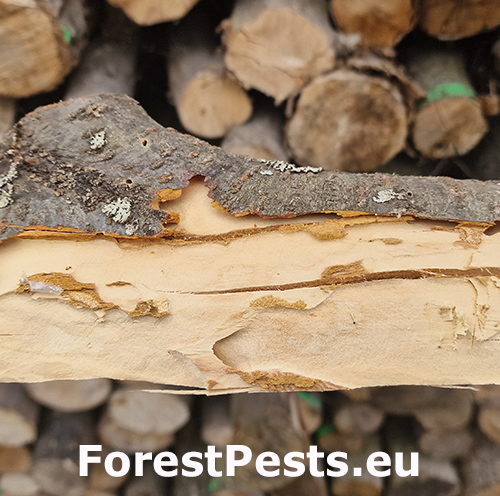
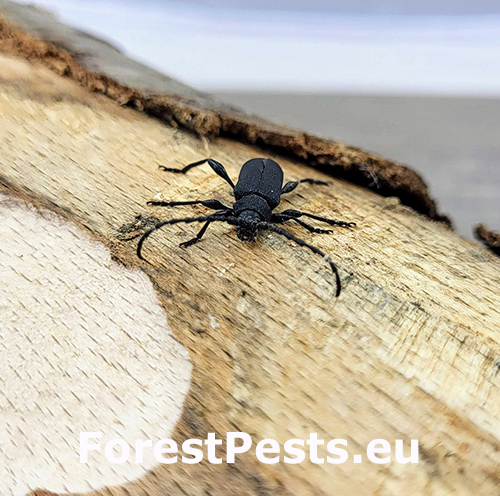
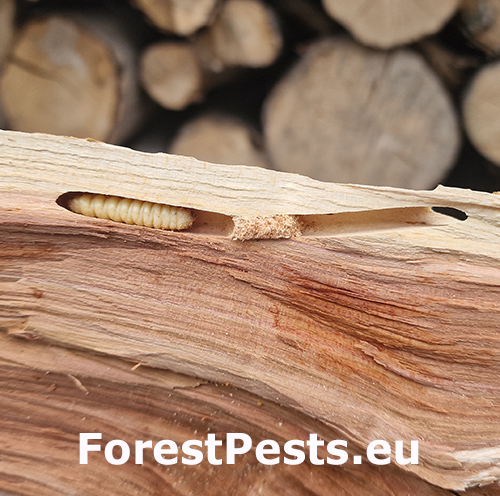
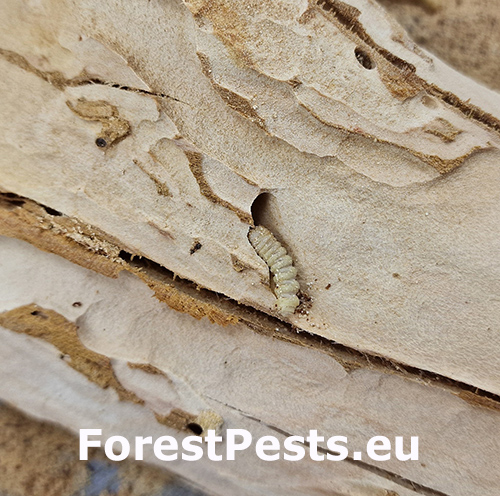
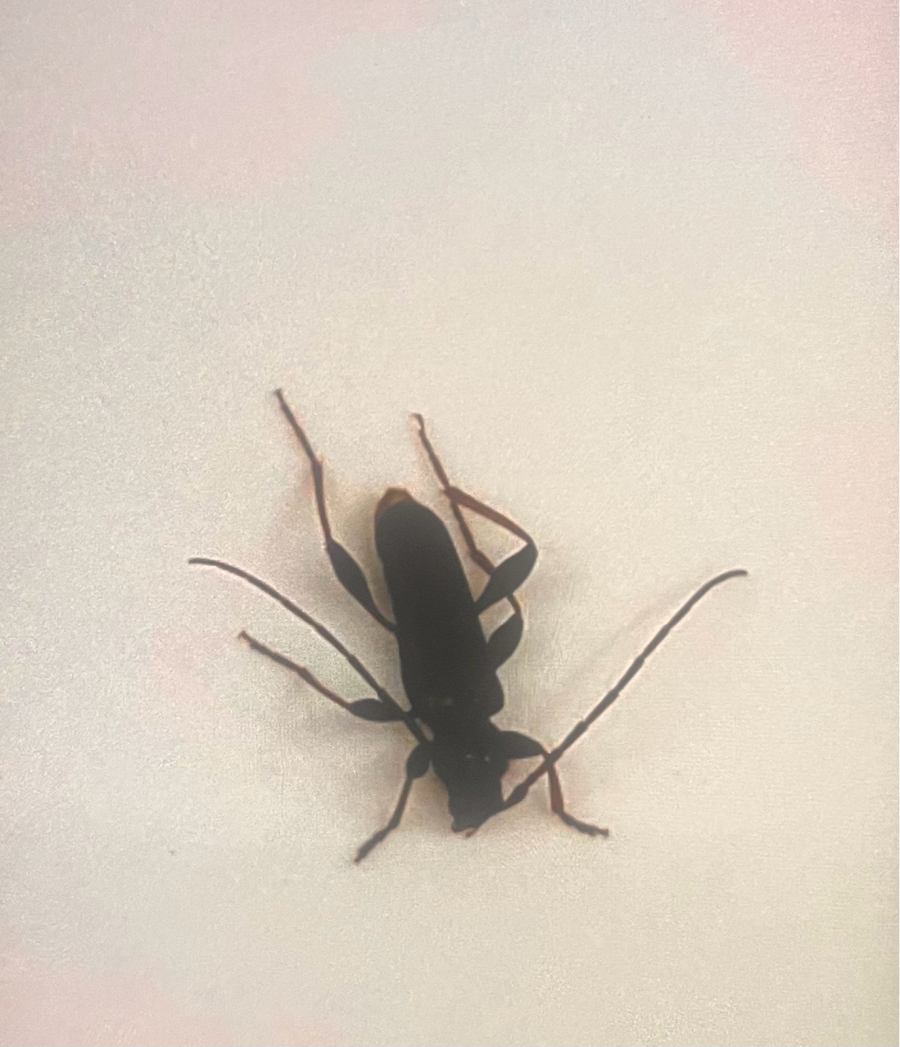
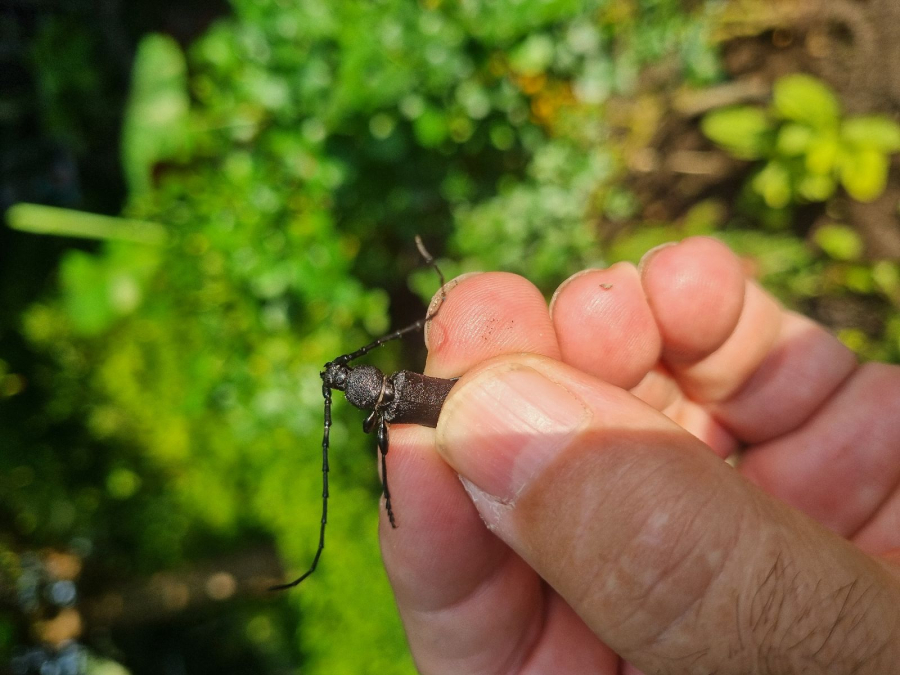
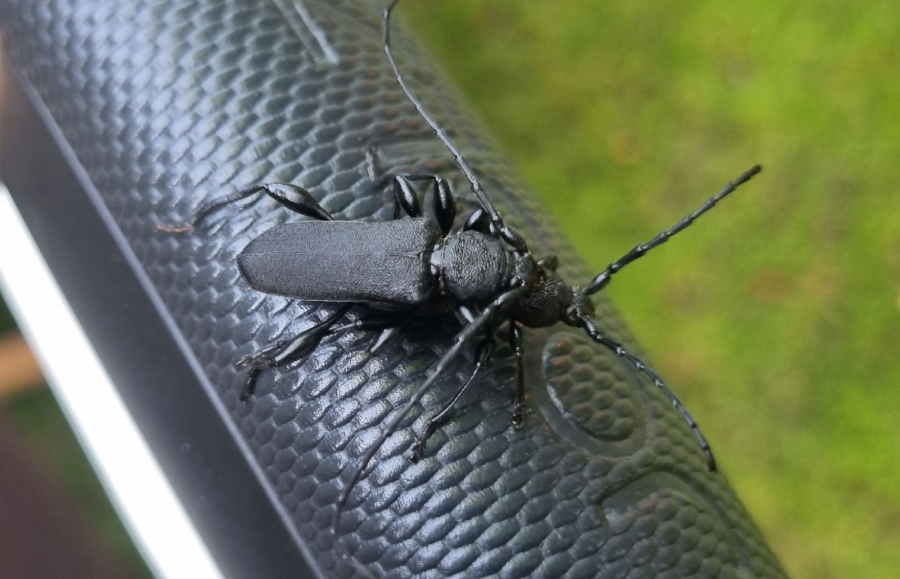
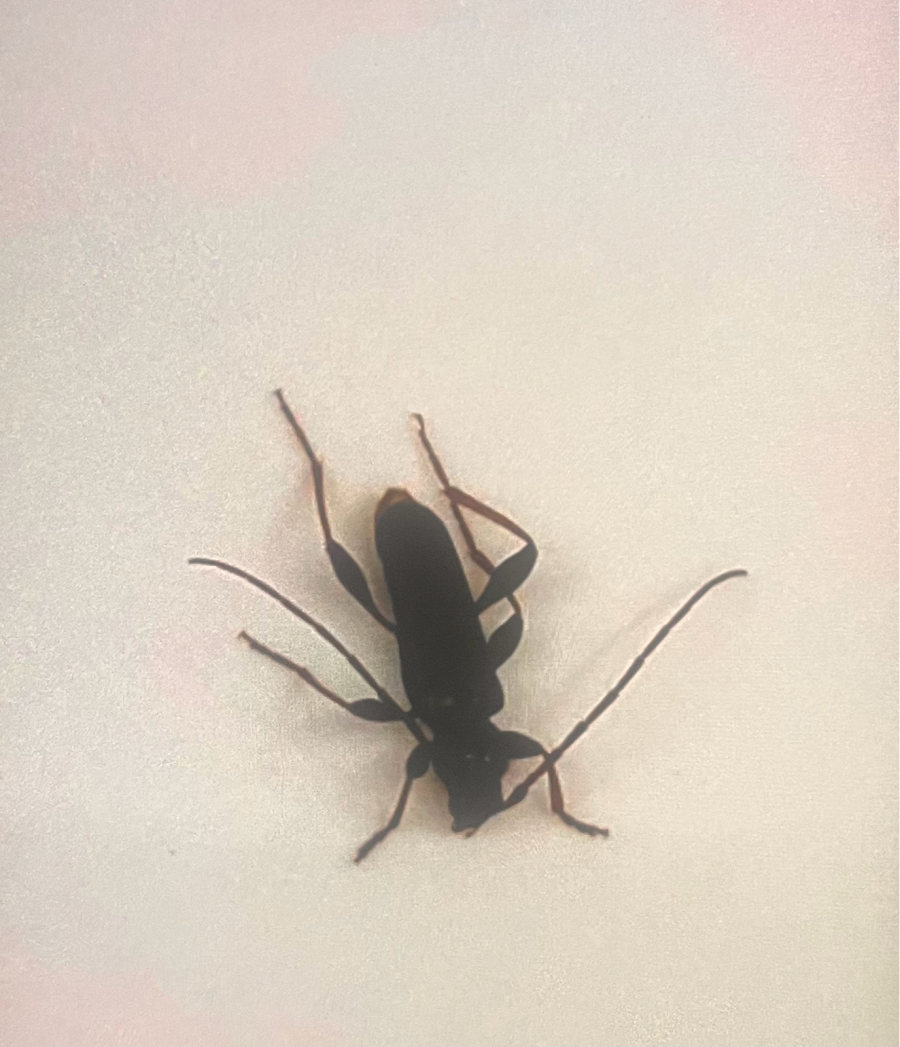
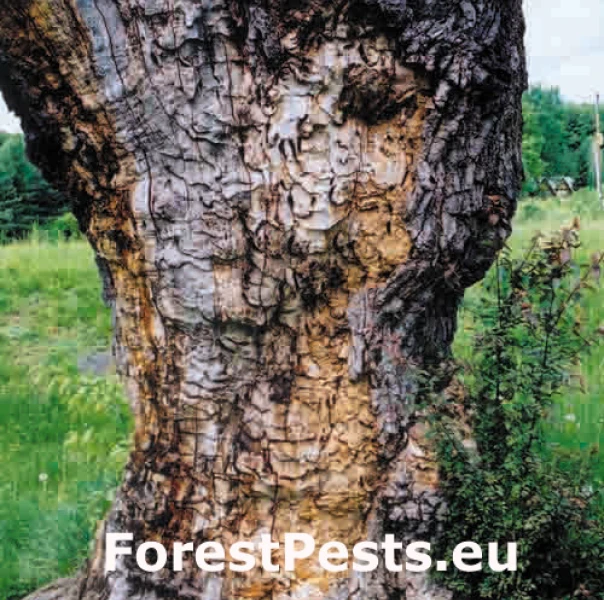
This thermophilic species inhabits forest-steppe areas, edges of deciduous forests, old orchards, and abandoned gardens. It is common in Southern Europe. It's a polyphagous species that attacks dozens of species of deciduous trees, especially fruit trees like apple, plum, peach, cherry, and walnut, and also commonly attacks beech firewood from forest trees. The adult reaches sizes up to 3 cm, is nearly black, similar To Cerambyx scopolii imago. Swarming occurs from late April to July. Larvae develop under the bark in branches and thinner stems, creating wide, flat galleries visible even in sapwood. The exit hole is elliptical, with a size ranging from 6 to 10 mm along the longer side, depending on the variable size of the adult. The developmental cycle lasts 1 to 2 years, depending on climatic and food conditions. From a forestry perspective, it's not a major pest, but theoretically, it can damage fruit trees, especially with ongoing warming trends. When infesting firewood, it can multiply rapidly, and larvae can literally disintegrate the wood under the bark. During logging, this can result in significant wood sawdust falling from the affected material.
Symptom
Elliptical exit holes, with sawdust literally pouring out of the infested material.
Tree Species: Beech, Cherry, Pear, Apple Tree, Walnut, Plum
Part of a plant- attacked: Tree trunk, Branch
Pest significance: Less harmful
Pest Category: Insects
Invasive Species: No
Present in EU: Yes
Add comment: Ropalopus clavipes
Location map: Ropalopus clavipes
print viewLegend:

Expert verified points

Unverified points
Observed by users on these tree species
Most sightings of the species


Last observations
There are a total of 3 observations of the species in the system

Ropalopus clavipesLonghorn beetle Ropalopus clavipes
milan
Number of votes: 0
Published: 16.7.2025

Ropalopus clavipesLonghorn beetle Ropalopus clavipes
milan
Number of votes: 0
Published: 16.7.2025

Ropalopus clavipesLonghorn beetle Ropalopus clavipes
Mária
Number of votes: 0
Published: 2.7.2025

Ropalopus clavipesLonghorn beetle Ropalopus clavipes
Mária
Number of votes: 0
Published: 27.6.2025
Similar damage
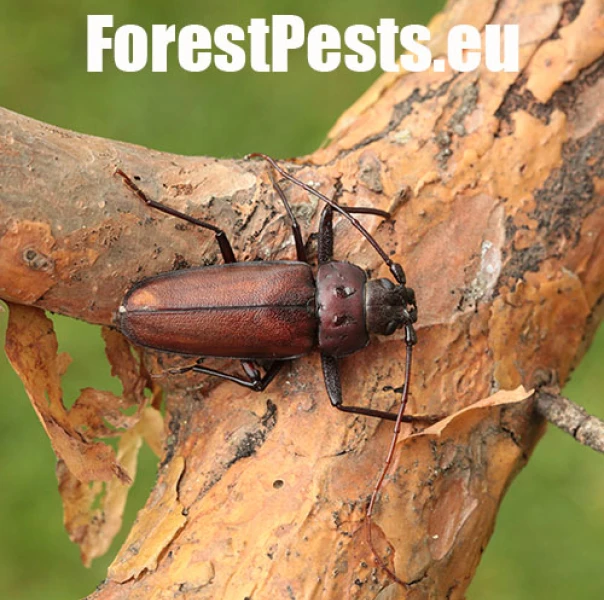
Long-horned beetle Ergates faber
Great capricorn beetle

Violet beetle