

 Show all photos in album
Insert for comparison
We will identify your pest
Add pictures of this species
Show all photos in album
Insert for comparison
We will identify your pest
Add pictures of this species
Impatiens glandulifera
Himalayan balsam
Description
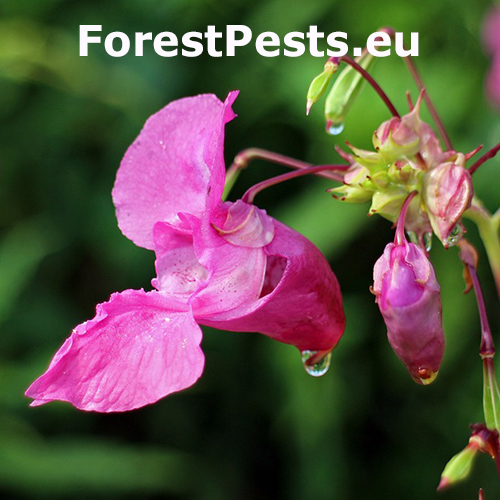
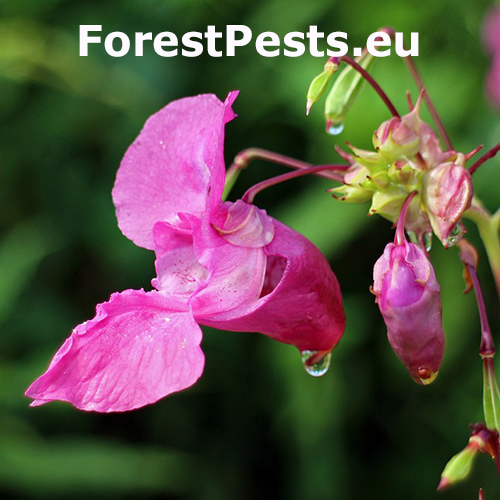
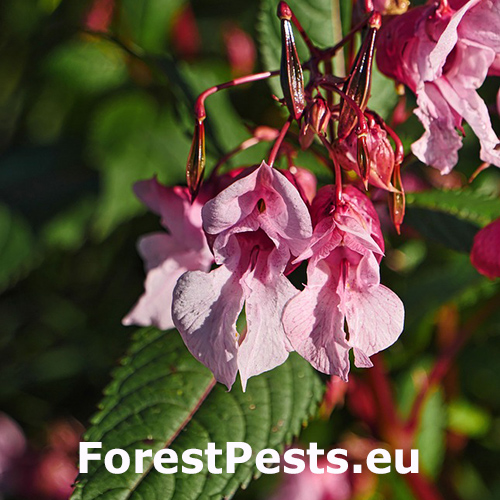
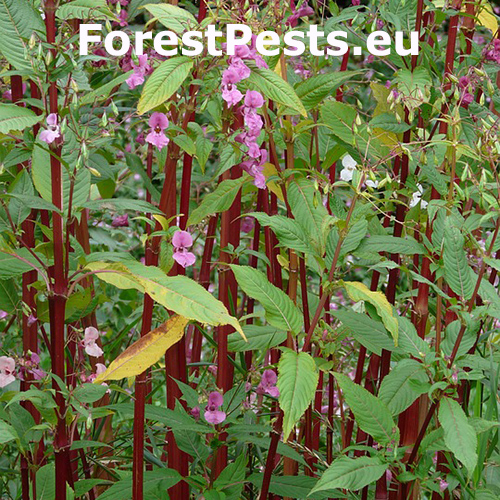
Himalayan balsam is a large annual plant native to the Himalayas. Due to human introduction, it is now found throughout much of the Northern Hemisphere and is considered an invasive species in many areas. Uprooting or cutting plants is an effective means of control. In Europe, it has been included in the list of invasive non-native species of Union concern since 2017. It grows to a height of 1 to 2 m with a slightly green or red-tinged stem and lance-shaped leaves 5 to 23 cm long. Crushed leaves have a strong musty smell. Under the leaf stems, the plant has glands that produce sticky, sweet-smelling, and edible nectar. The flowers are pink. After flowering between June and October, the plant produces seed pods 2 to 3 cm long and 8 mm wide), which explode when disturbed] seeds up to 6-7 metres.
Symptom
Crushed leaves have a strong musty smell. Under the leaf stems, the plant has glands that produce sticky, sweet-smelling, and edible nectar. The flowers are pink.
Tree Species: Different tree species
Part of a plant- attacked: Roots
Pest significance: Harmful
Pest Category: Other, Invasive plants
Invasive Species: Yes
Present in EU: Yes
Add comment: Impatiens glandulifera
Location map: Impatiens glandulifera
Legend:

Expert verified points

Unverified points
Observed by users on these tree species
Similar damage
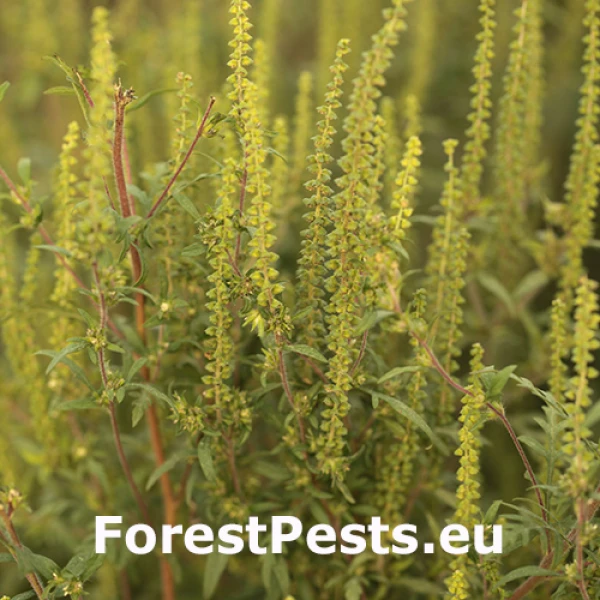
Annual ragweed
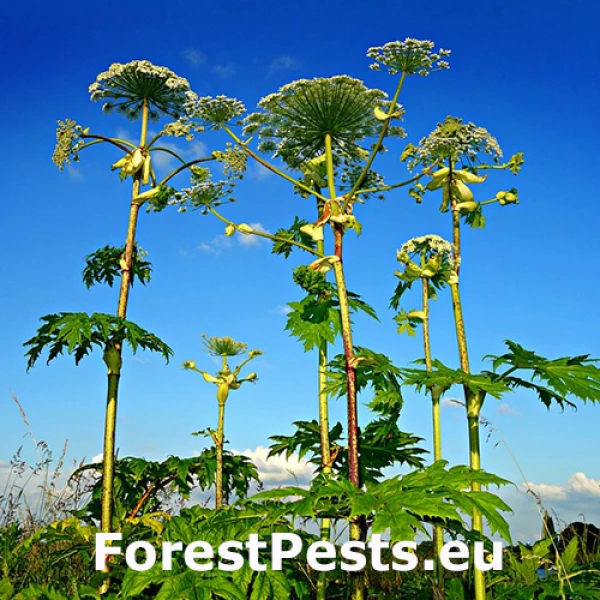
Giant Hogweed
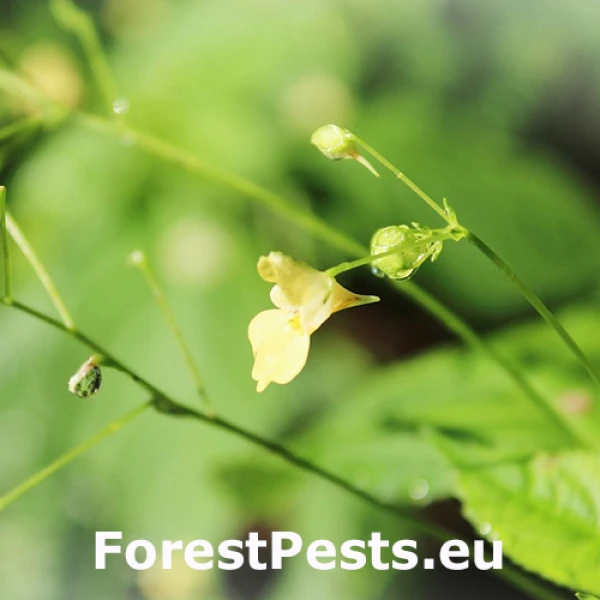
Small balsam