

 Show all photos in album
Insert for comparison
We will identify your pest
Add pictures of this species
Show all photos in album
Insert for comparison
We will identify your pest
Add pictures of this species
Erysiphe (Uncinula) necator
Powdery mildew on grape
Description
Erysiphe necator is the fungal pathogen responsible for powdery mildew on grapevines. Originally classified as Uncinula necator, it is now recognized as Erysiphe necator. Originating in North America, it spread to Europe in the 19th century and is now widespread in vineyards across the continent. The fungus overwinters in buds and spreads to new shoots in spring, continuing to multiply and attack all green parts of the plant. Erysiphe necator thrives in warm, dry conditions, with optimal temperatures of 24–28°C and humidity levels of 70–95%. The highest risk of infection occurs in June and July. Freezing temperatures of at least -15°C during winter can effectively kill the fungus. As one of the most economically significant fungal diseases in viticulture, Erysiphe necator requires careful control to prevent crop losses and maintain fruit quality. E. necator significantly damages grapevines by reducing photosynthesis, weakening the vines, and leading to poor fruit development. If left untreated, it can cause substantial crop losses.
Symptom
White, powdery fungal growth on leaves, shoots, and grape clusters. Distorted, stunted growth of leaves and fruit. Reduced fruit quality and yield.
Tree Species: Grape
Part of a plant- attacked: Leaf / Needle, Fruit / Seed, Branch
Pest significance: Very harmful
Pest Category: Fungi
Invasive Species: Yes
Present in EU: Yes
Add comment: Erysiphe (Uncinula) necator
Location map: Erysiphe (Uncinula) necator
Legend:

Expert verified points

Unverified points
Observed by users on these tree species
Similar damage
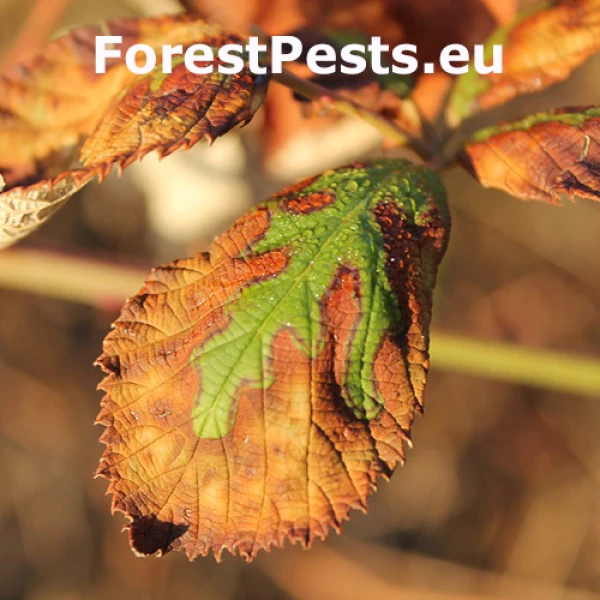
Heat, drought and bark burn
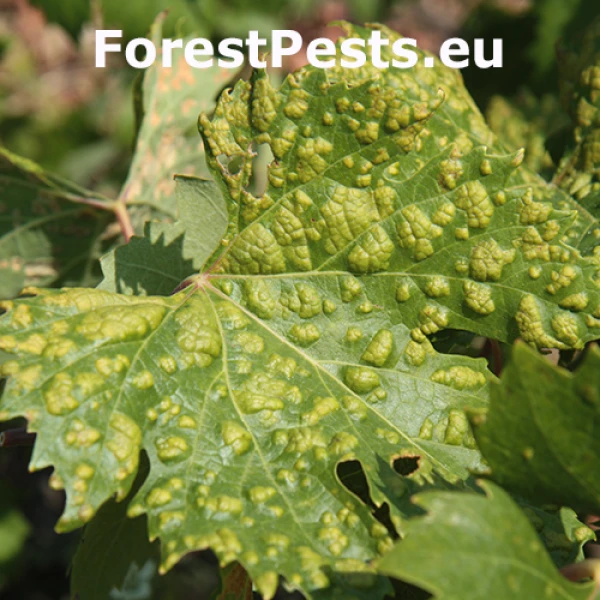
Grape erineum mite
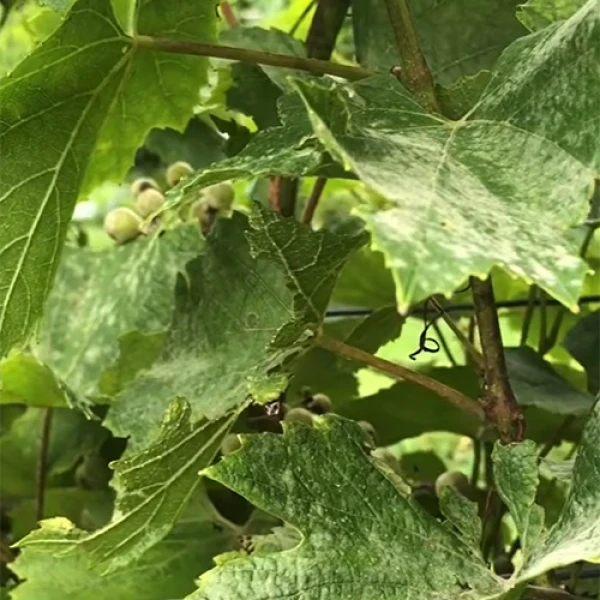
Powdery mildew on grape