Thaumetopoea pityocampa
Pine processionary
Thaumetopoea pityocampa
Pine processionary:
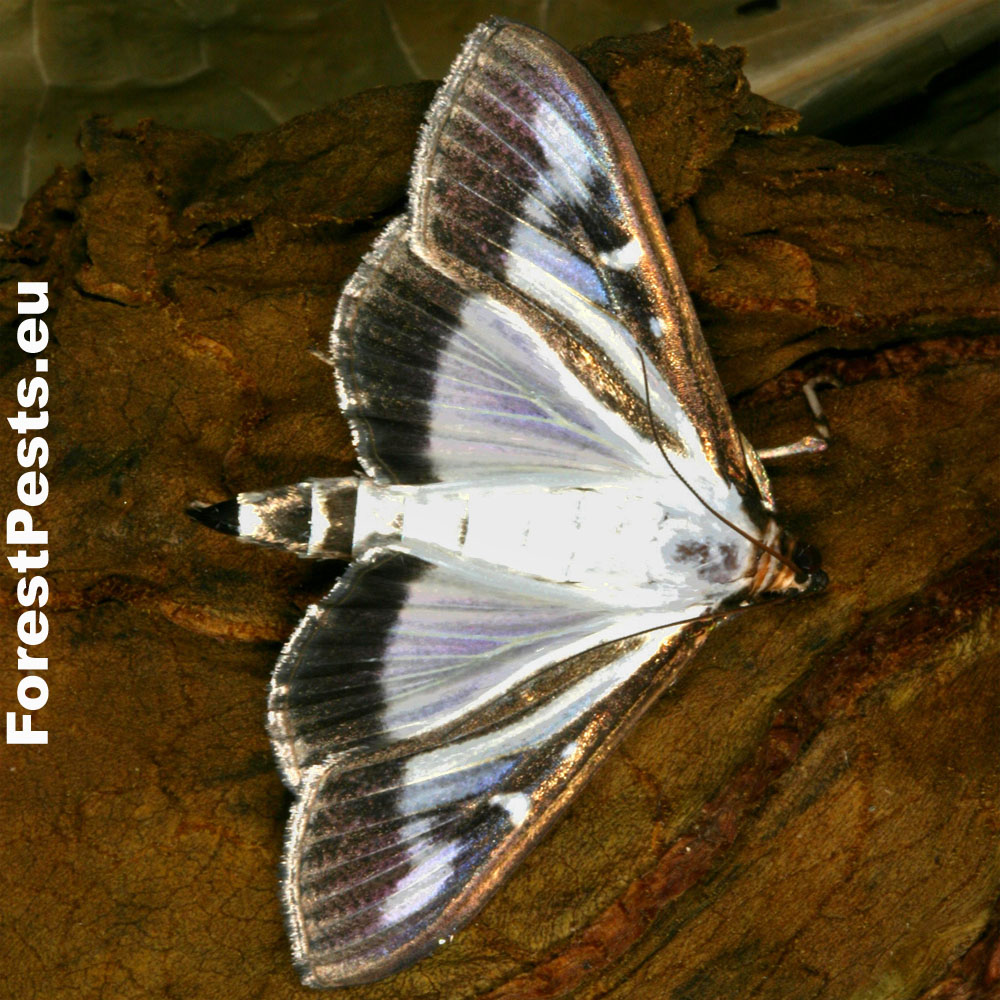
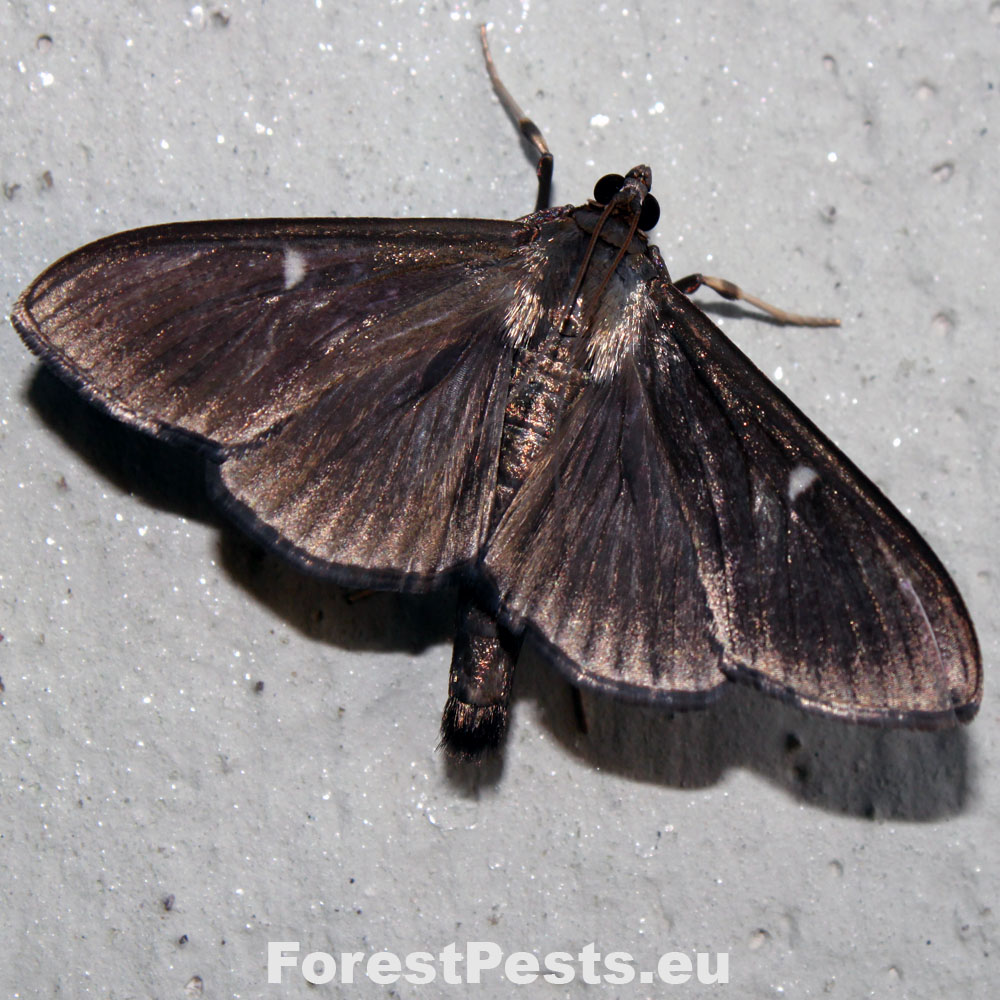
The imago is a medium-sized, black-gray moth. The female has about 35-50 mm in the wingspan. Males are slightly smaller. Densely hairy caterpillars live on several woody plants, preferring pine and cedar. They live on Pinus nigra, Pinus sylvestris, Pinus pinaster, Pinus pinea, Pinus canariensis, Pinus halepensis, Cedrus atlantica and Larix decidua. Thus, both species of our most economically important pine species, Scots pine and black pine, are among the hosts of this species.
Bionomy - infection cycle:
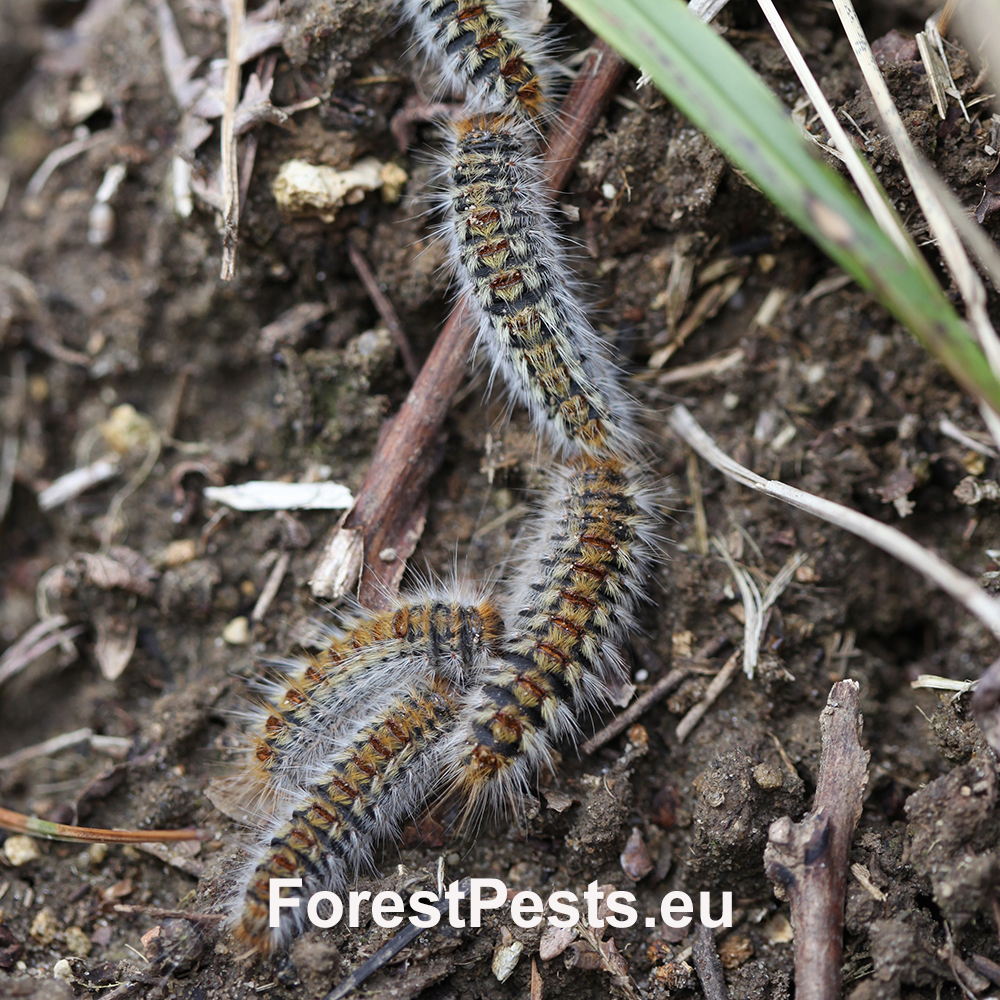
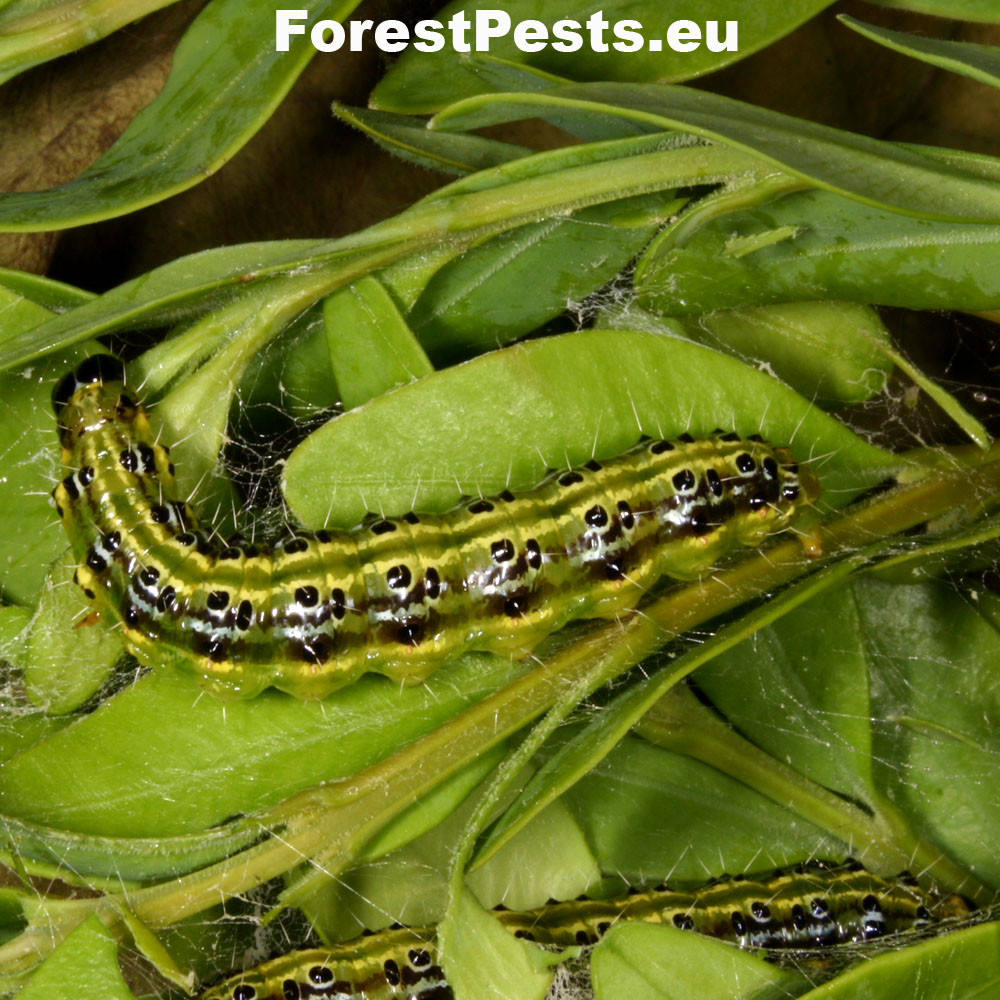
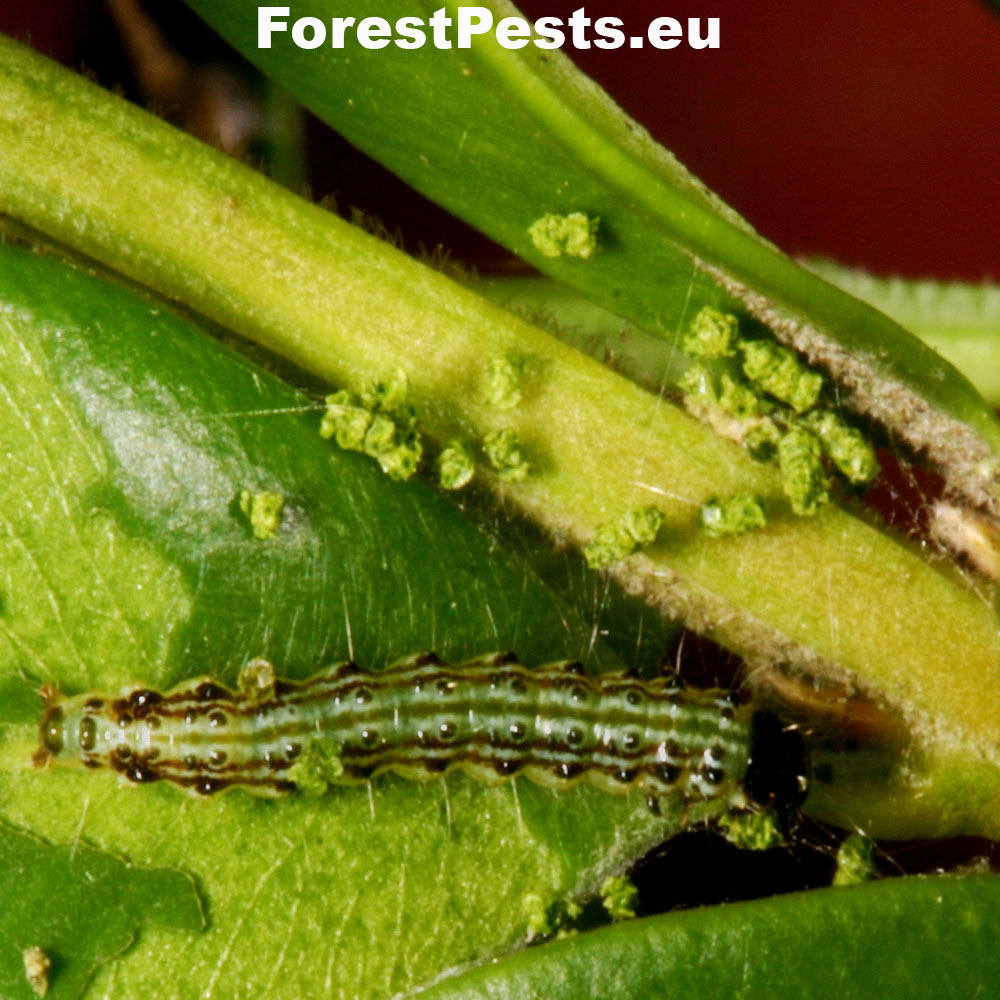
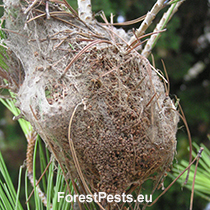
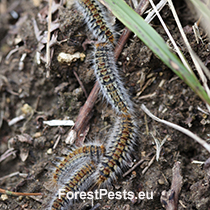
It has a similar bionomy as its relative oak processionary (Thaumetopoea processionea), which occurs in Slovakia and is harmful to oaks. In most ecological conditions where Thaumetopoea pityocampa lives, adults fly in July. Moths can fly over several kilometers, thus quickly extending their range. The female Thaumetopoea pityocampa lays up to 300 eggs on pine needles. Caterpillars hatch from eggs. They are densely hairy, 4.0-4.5 cm in adulthood. At first, they live together in a silken bag-like nest on a pine branch. Their frass and remains of needles are caught at the bottom of the nest. While they are young, they often move from branch to branch and build a new nest every time. When they do not reach 4 - 5 instar, they will construct a permanent nest. They occur together during the whole development near the nest. There are usually more nests on the tree. Depending on the climatic conditions, caterpillars pupate in autumn or overwinter in the nest and then pupate in spring. The adult caterpillars leave the nest just before pupation and look for suitable pupation sites in a lengthy procession. The procession can consist of more than 100 caterpillars, and a future female usually leads them. They touch each other with the front and back parts of the bodies. They pupate shallowly in the ground.
Thaumetopoea pityocampa caterpillars are very dangerous for humans. Their fragile hairs break easily and cause severe allergic reactions when pierced in the skin.
Symptom:
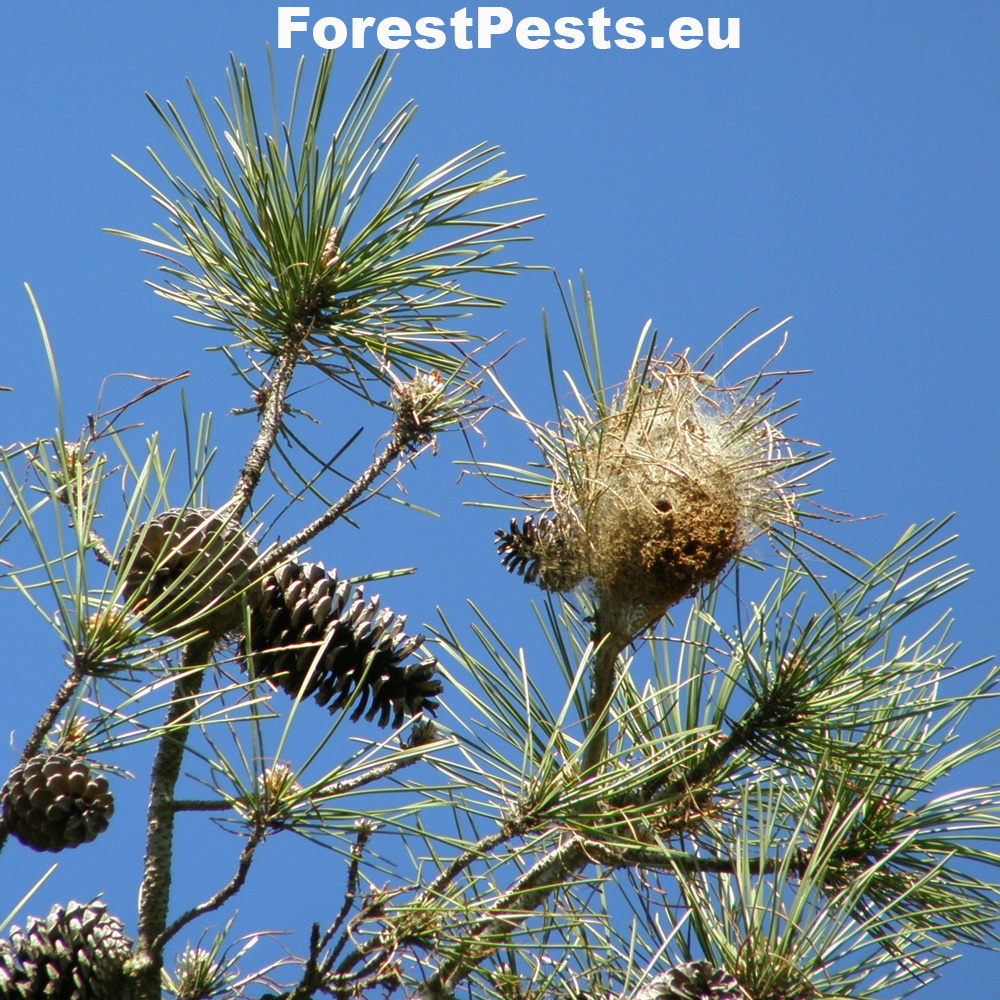
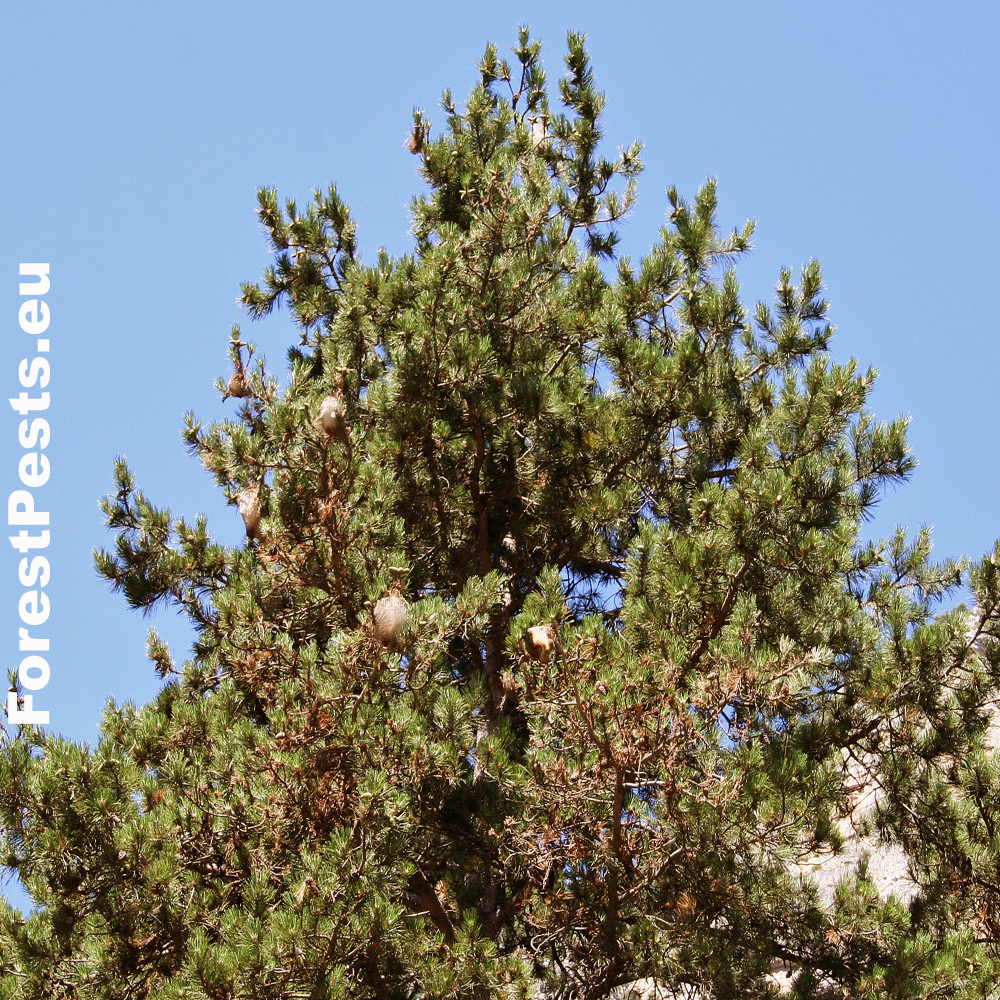
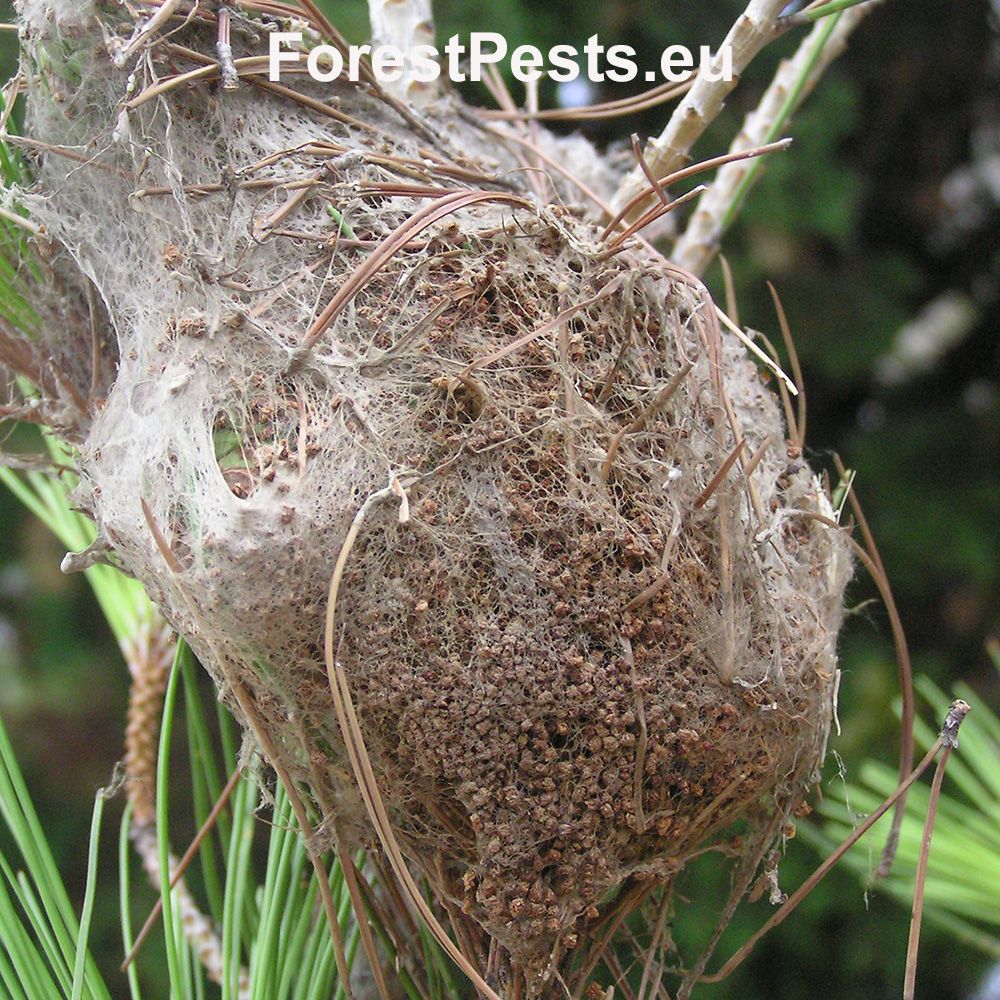
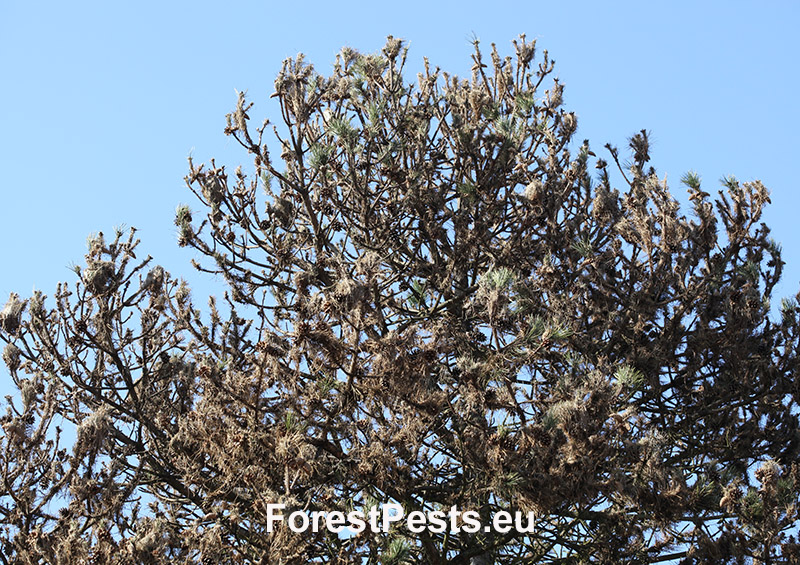
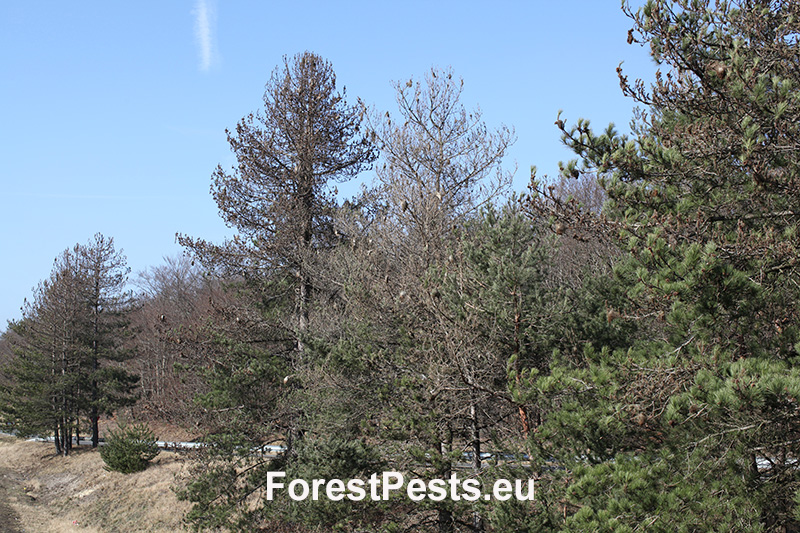
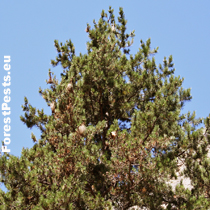
During proliferation, the caterpillars can completely defoliate trees. In older stands, as a result of defoliation, entire branches or parts of crowns die. Nests of various sizes with the frass collected at the bottom are visible on the tree. Hairy caterpillars live together on needles. The needles are consumed up to the sheaths. Defoliation can reduce the annual growth of infested trees by up to 60% and, at the same time, reduce their vitality. Weakened trees then die either as a direct consequence of defoliation or after bark beetles' infestation. Entire vegetation complexes can die.
|
|
|
|
|
Nest with caterpillars. Photo: M. Zúbrik.
|
Thaumetopoea pityocampa. Photo: J. Vakula.
|
Nest with caterpillars. Photo: M. Zúbrik.
|
Caterpillars follow in head to tail procession Photo: M. Zúbrik.
|
Endangered woody plants: Pine
Damaged plant parts: branches, leaves, needles.
Significance: Very significant.
Origin and distribution:
T. pityocampa is widespread in the pine forests of southern Europe and northern Africa. It is gradually expanding from the south in connection with climate changes. It was already found, in the vicinity of Vienna. It is currently present in Albania, Croatia, Austria, Bulgaria, France, Greece, Hungary, Italy, and North Africa. Due to climate warming, this species will expand into northern parts of Europe. It has not been found in Slovakia yet.
Endangered stands and areas:
The moth is one of the most dangerous pests of pine forests in southern Europe. It prefers thermophilic pines species but can also live on our pine species - black pine and Scots pine. Pine processionary is not present in Slovakia yet, but it is already in Austria and Hungary. If global warming continues at the same pace, there is a risk that this species will soon enter our territory. The most endangered region is the Záhorie area, where extensive monocultures of pine forests grow and where the pest could find suitable conditions. However, all other pine stands are also endangered. The only limiting factor of caterpillars surviving will be winter conditions in Slovakia.
Monitoring:
The control can be performed by detecting nests on tree branches. Critical numbers or the numbers are not known.
Control:
In a single nest occurrence in gardens or parks, mechanical disposal is crucial. These must be carefully cut from the tree and burned. It is important to avoid any physical contact with caterpillars. They can cause a variety of severe allergic reactions. In case of occurrence in forest stands, it is necessary to treat the trees with insecticides. It is suitable to use biological control treatment based on Bacillus thuringiensis. The product should be applied to the youngest instars of caterpillars, usually sometime in late July or August.
Pest category: Insects
Found in Slovakia: No
Invasive species: Yes
Similar species:
In Slovakia, related oak processionary (Thaumetopoea processionea) is harmful to oaks.
Bag-like nests on trees damaged by caterpillars. Photo: M. Zúbrik.
Trees damaged by caterpillars feeding. Photo: M. Zúbrik.