Here you can request to determine the cause of the damage. You can view the requests of other users and sort them according to the selected criteria. In addition, you can get information about your request, and you can follow the progress of its current state. If your application was not approved, it had probably been because it was impossible to identify the damage based on the sent photos or because the application does not address our topic - determining the pests of trees and shrubs. We will inform you about the status of your application by email.
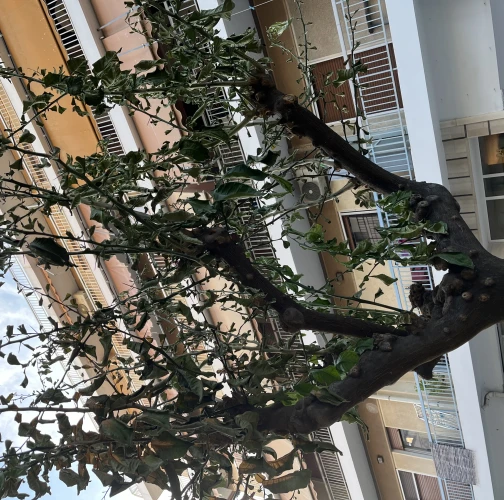
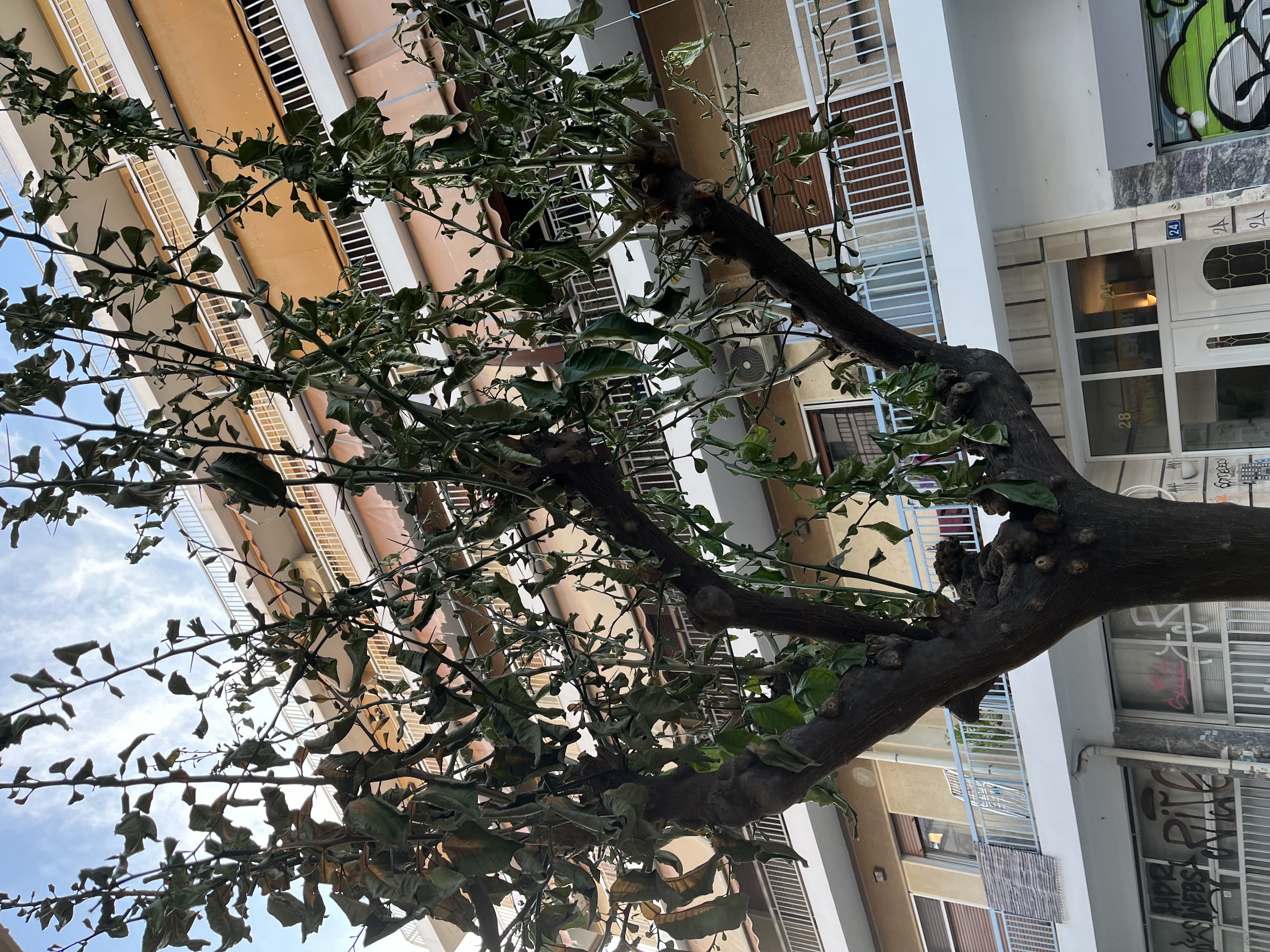
Dear J.M., Thank you for your inquiry. From this photo, it appears that there has been a rather sudden dieback of the entire crown. It is not just a part of the crown that is affected — the whole crown is dying. This kind of rapid decline is not very common. In cases involving insect or fungal infestations, the decline is usually gradual, starting with the wilting and dieback of individual branches or parts of the crown. The tree typically shows signs of reduced vitality over a period of 1 to 3 years before it eventually dies.
In this case, the process seems to have progressed differently, suggesting a sudden death of the tree. Possible causes of such sudden decline include frost damage, severe overwatering or drought, aggressive root rot, chemical injury from herbicide application, or significant mechanical damage to the trunk.
From the photo provided, it is not possible to determine the exact cause. If you have more photos, please send them to milan.zubrik@nlcsk.org — I would be happy to take a closer look.
Best regards M. Zúbrik
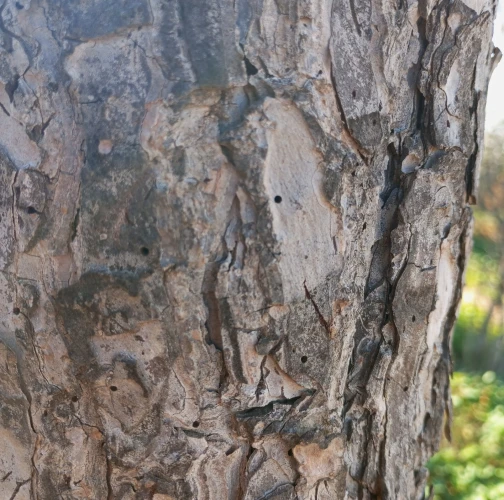
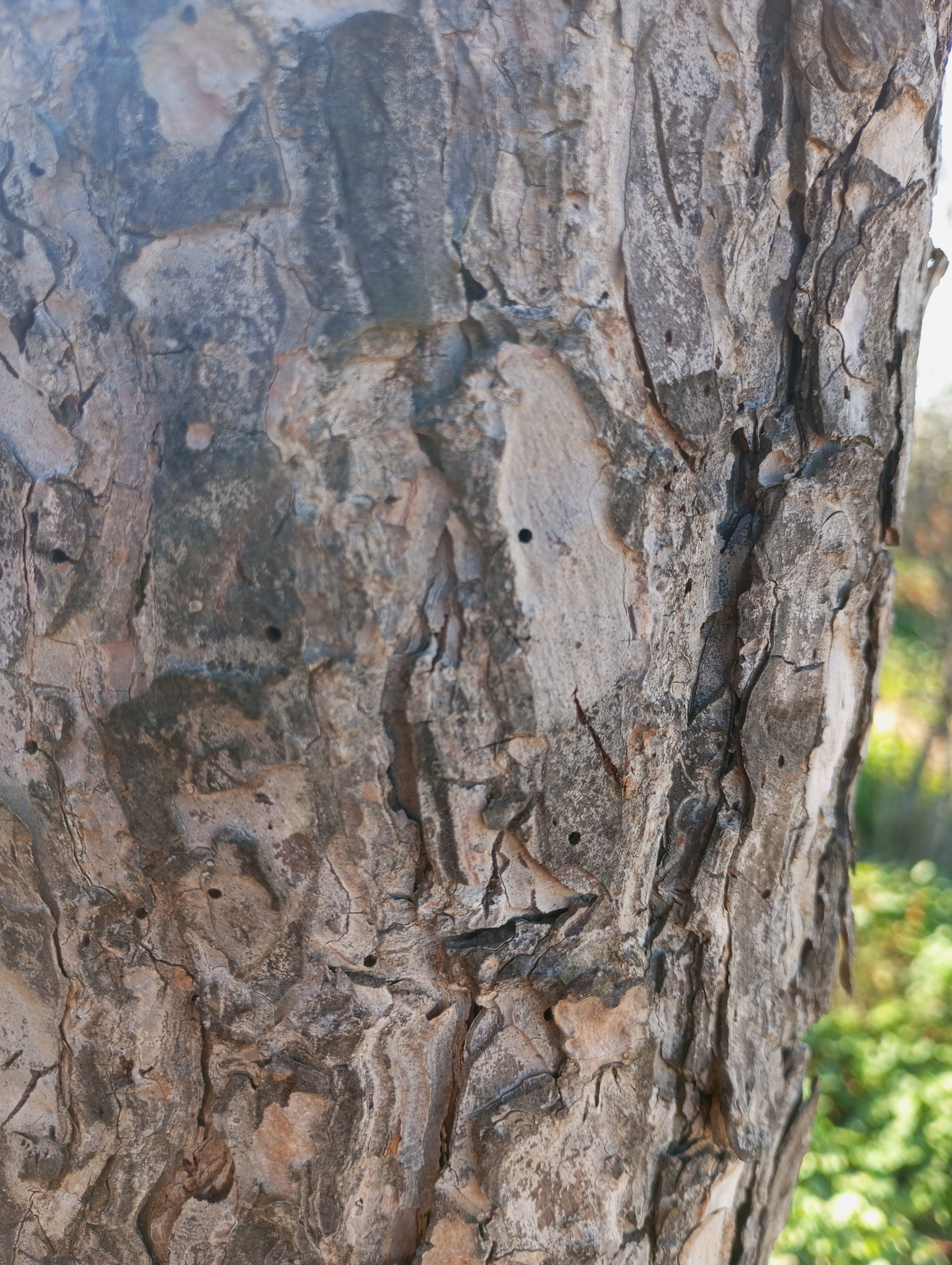
Hi J.M. Thank you for your inquiry. These are exit holes – points where adult insects have emerged from their galleries under the bark to infest another tree. Based on the shape and size of the holes, it is likely that they belong to a representative of the family Curculionidae, most probably from the subfamily Scolytinae. However, an exact species identification cannot be made based on these features alone. Kind regards, M. Zúbrik