Here you can request to determine the cause of the damage. You can view the requests of other users and sort them according to the selected criteria. In addition, you can get information about your request, and you can follow the progress of its current state. If your application was not approved, it had probably been because it was impossible to identify the damage based on the sent photos or because the application does not address our topic - determining the pests of trees and shrubs. We will inform you about the status of your application by email.
Hello,
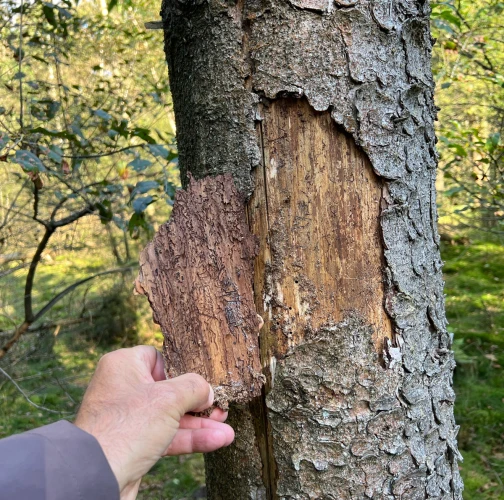
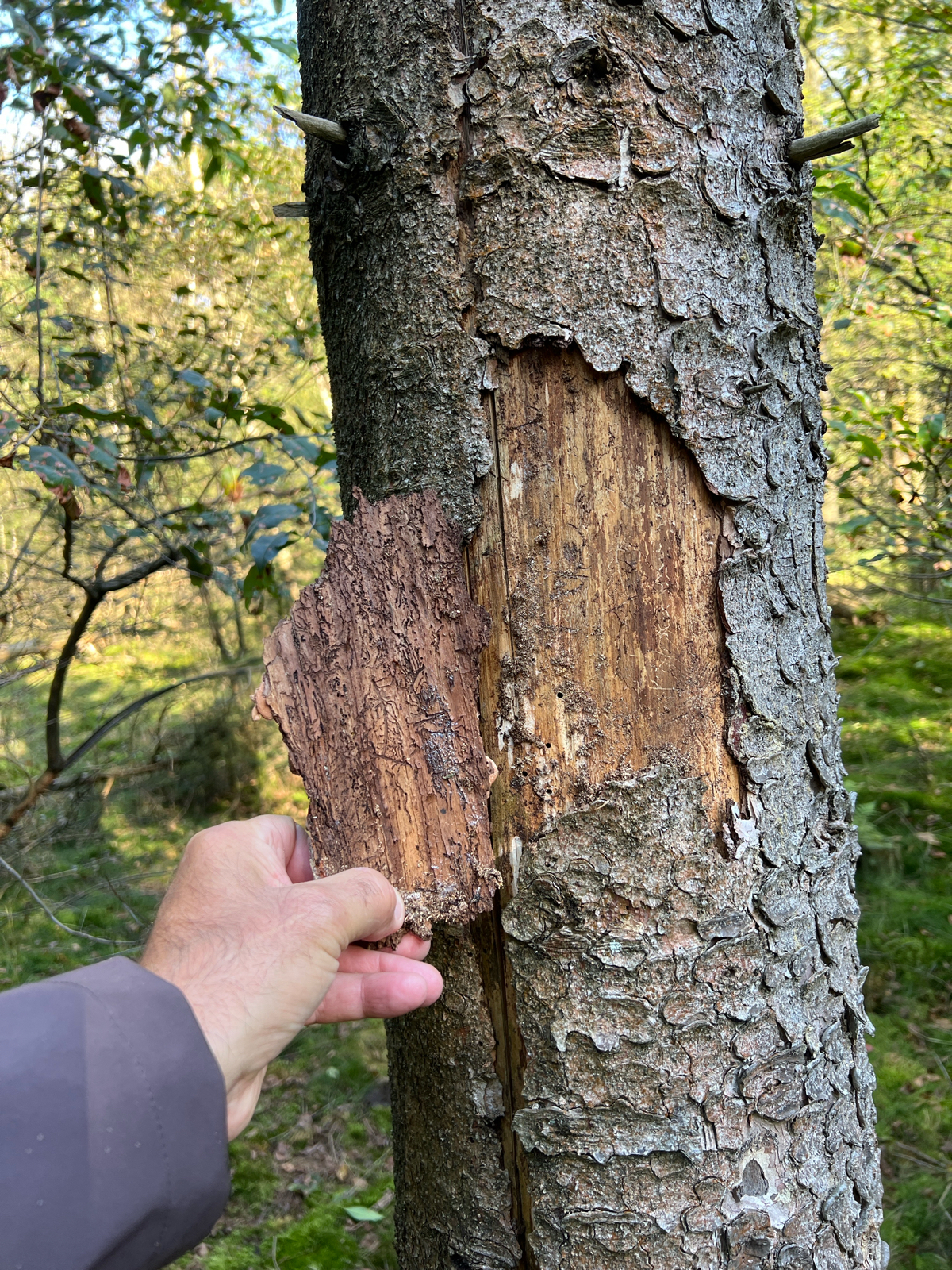
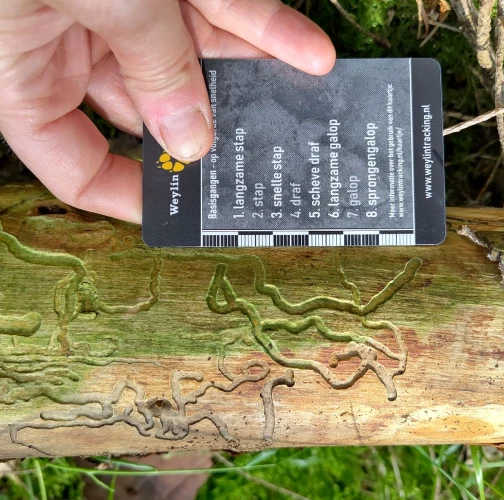
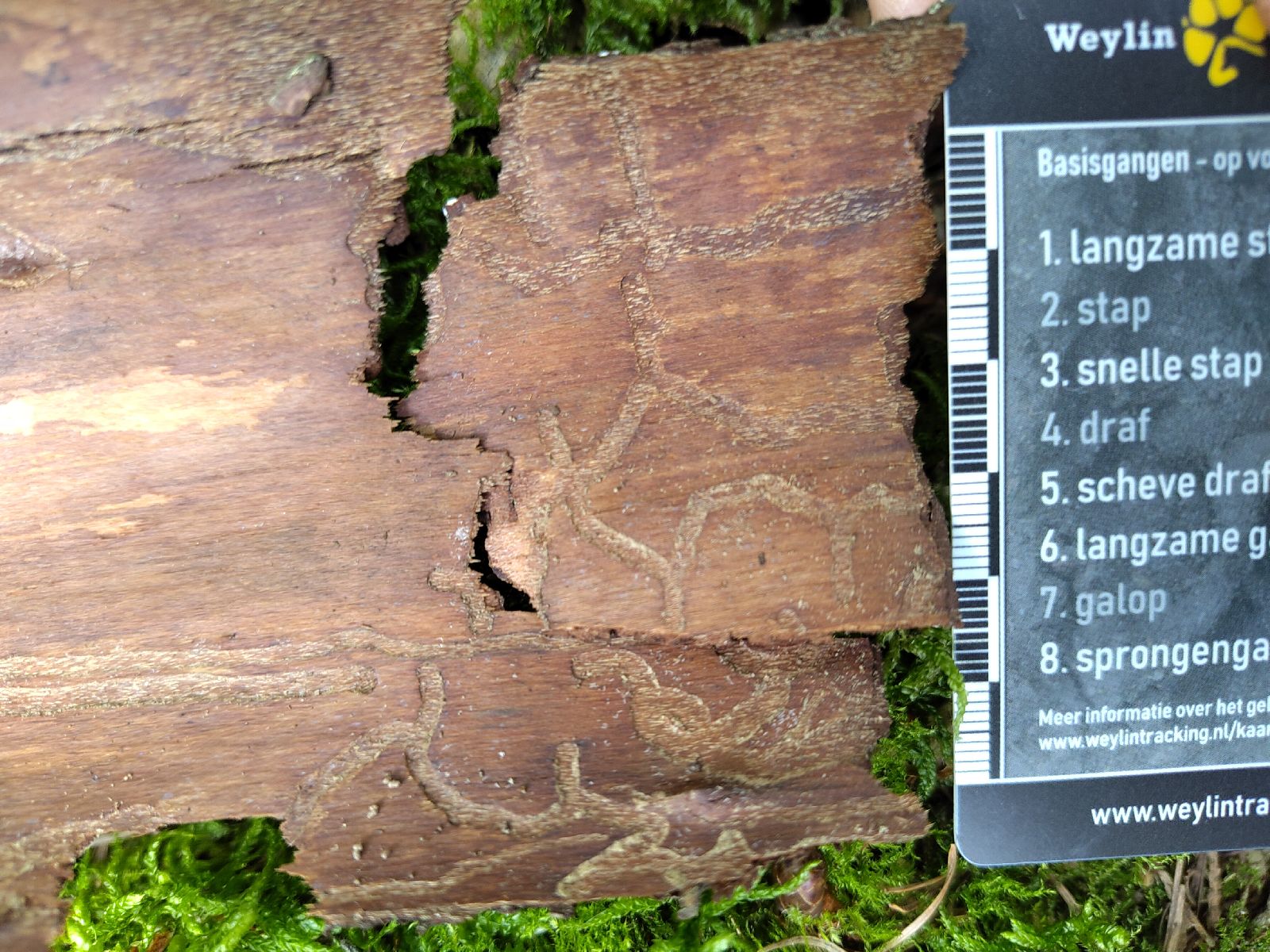
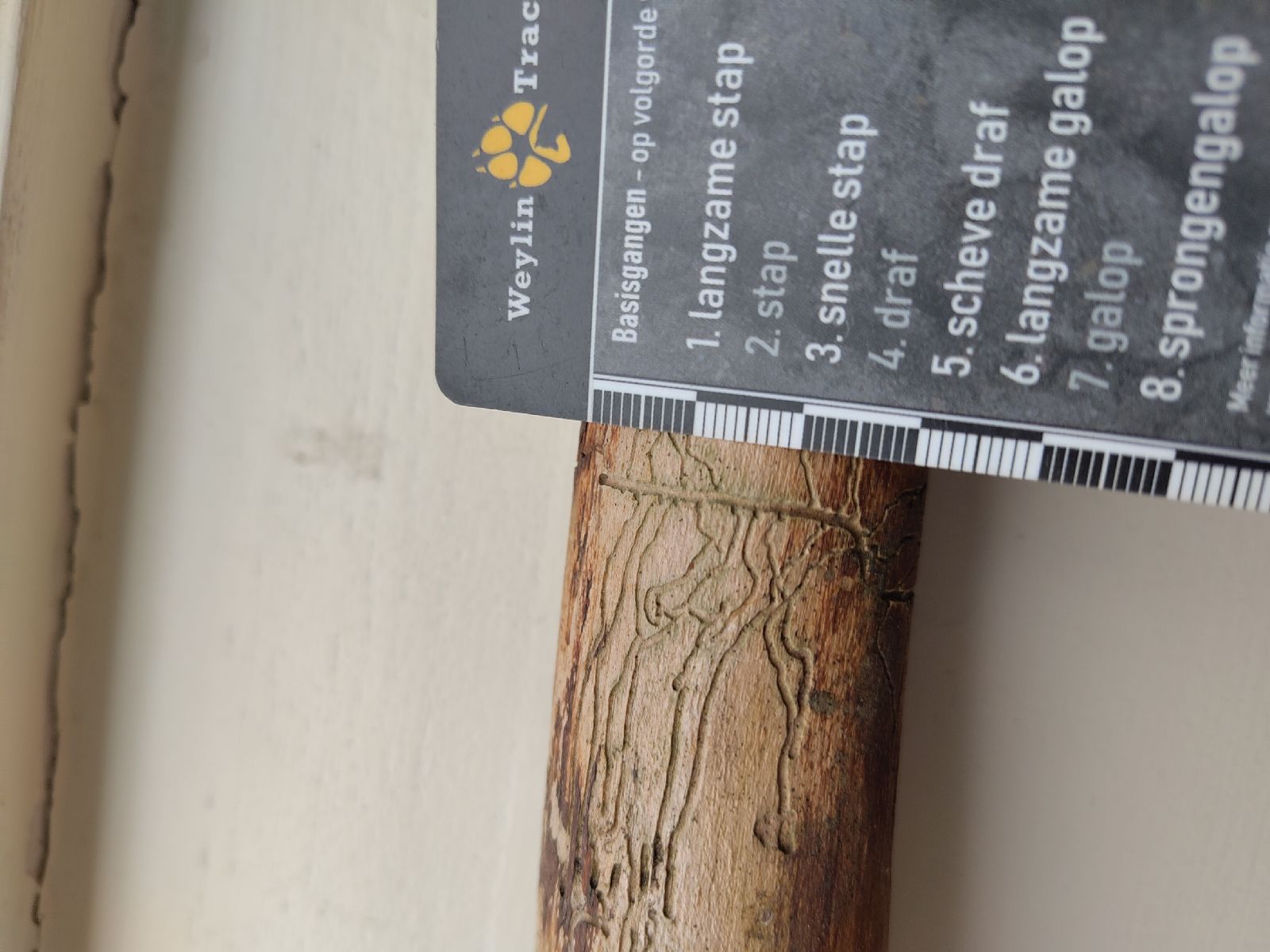
I think that tree species is spruce and galleries under the bark were made by Pityogenes chalcographus.
Circle exit holes in the wood are probably from Siricidae species.
Best regards
Jozef Vakula
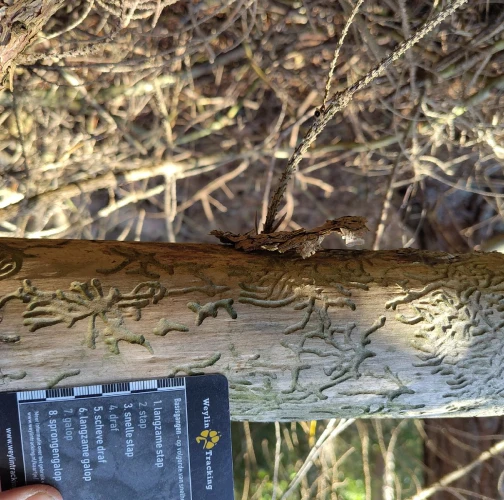
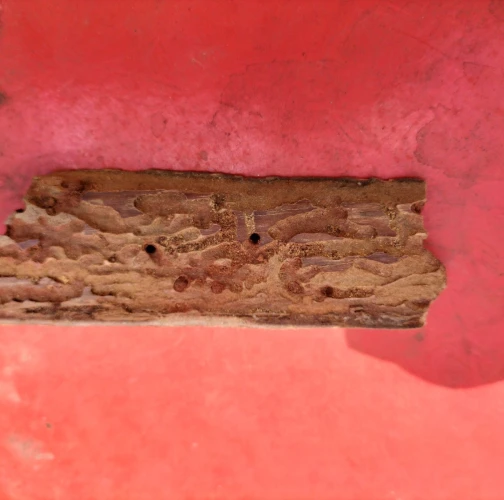
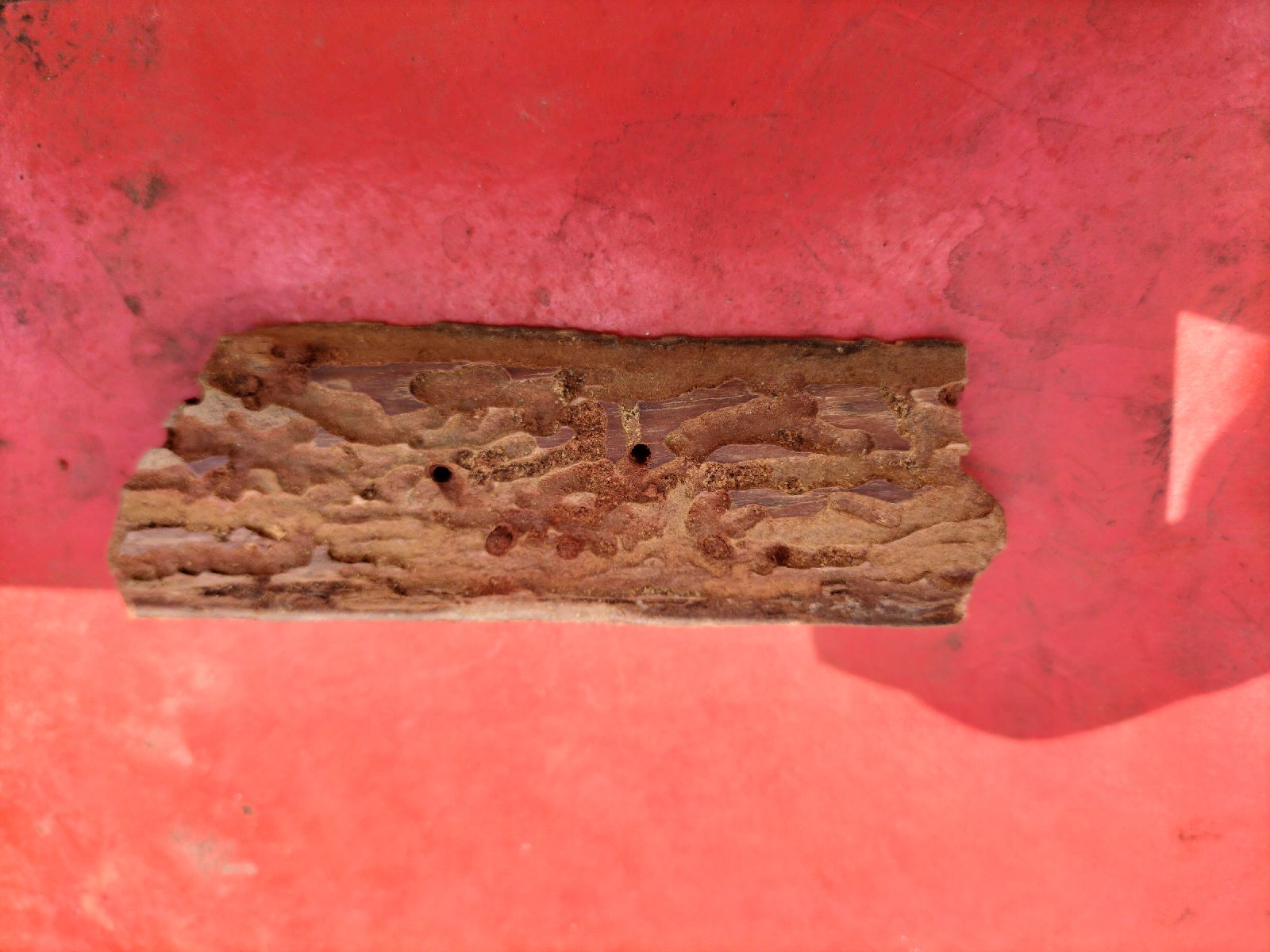
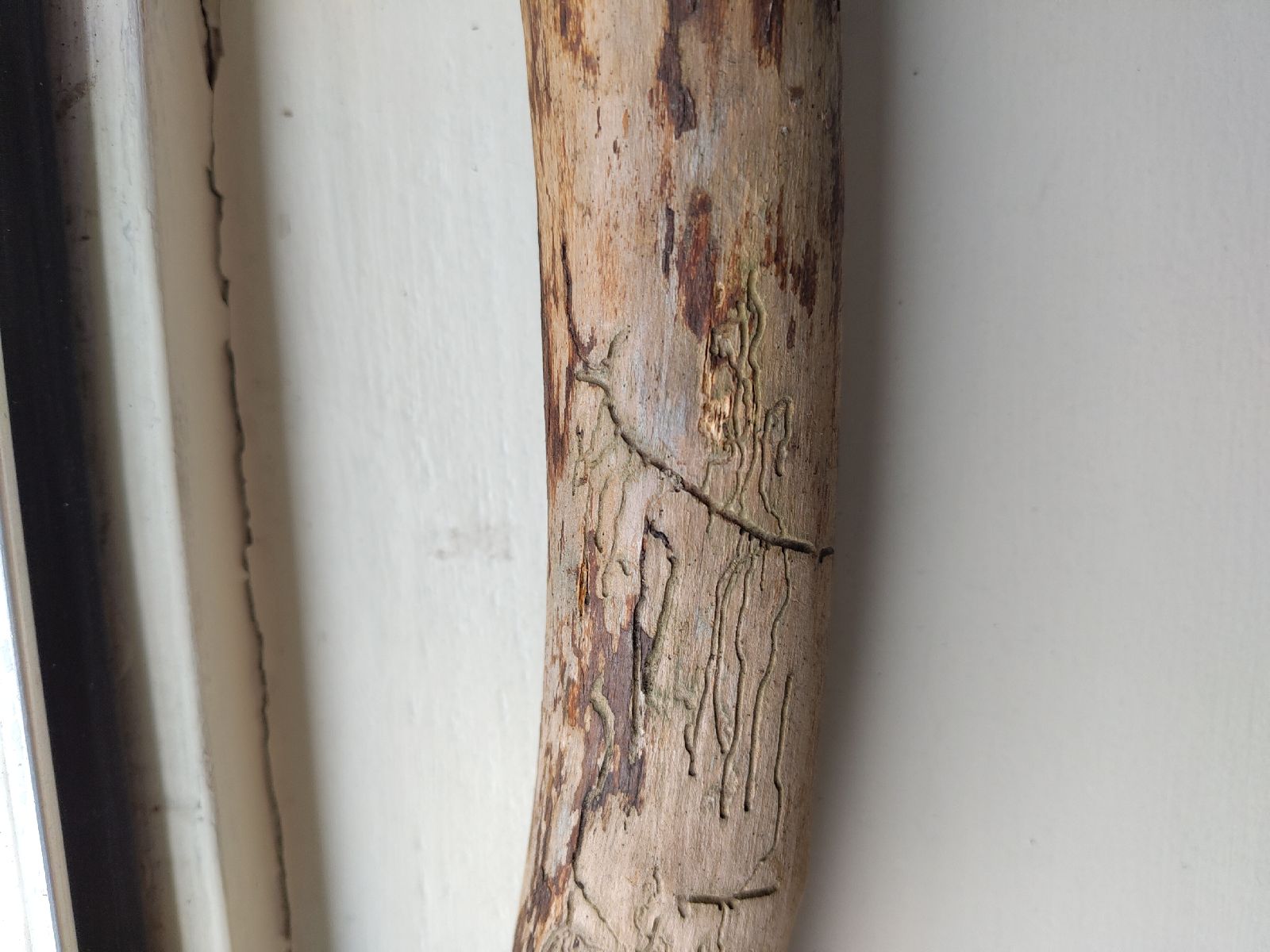
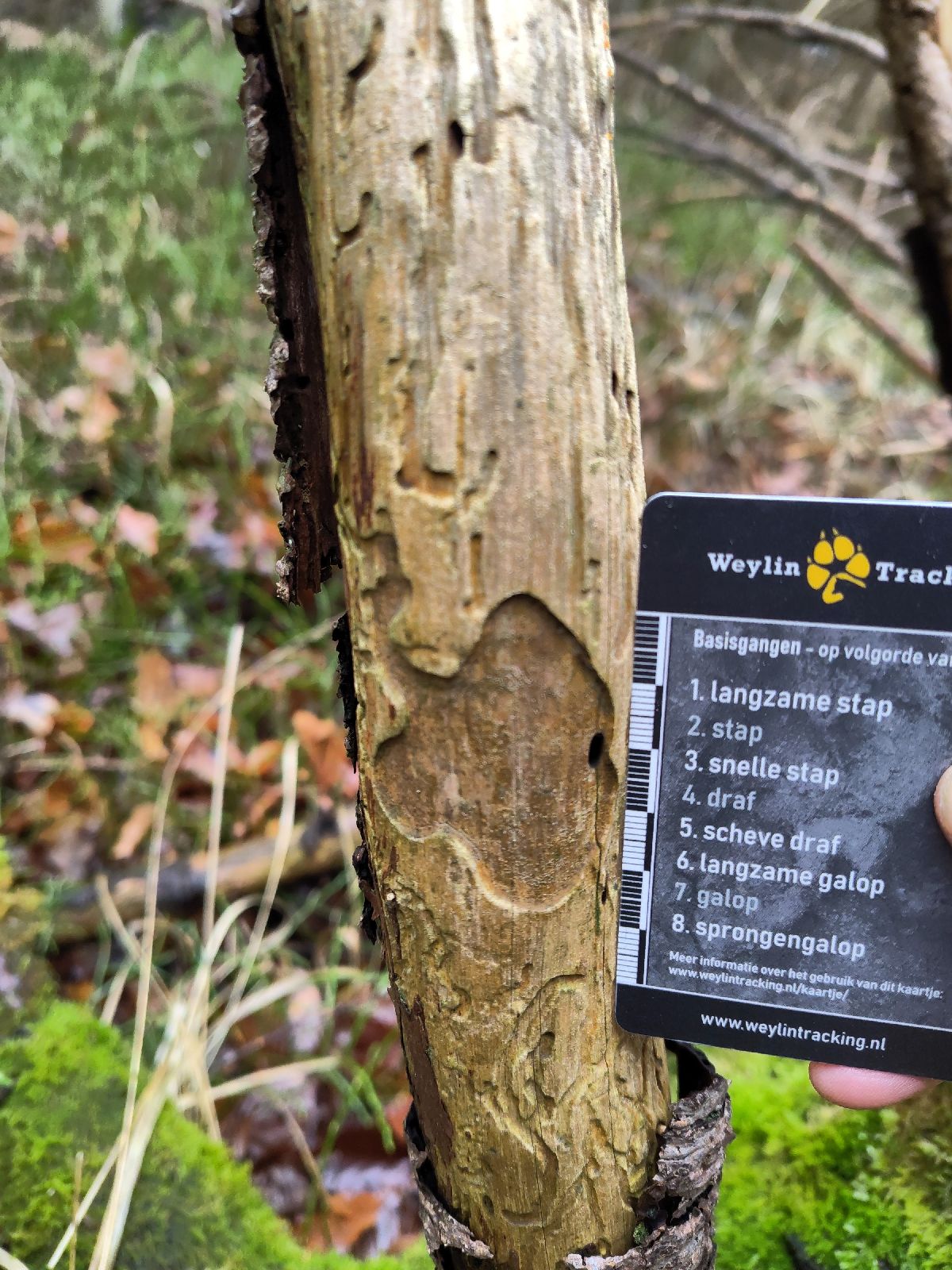
An image which is mostly 4-5 mother galleries rather deep in the sapwood. no larvae galleries in the sapwood. the tree was cut in half, this was the top. it was more frequent in the top of the tree. i think ips amitinus, but it does not occur in NL?
Answer
Hello,
I think that it is maturation feeding of Ips species. Probably Ips typographus. Galleries with maturation feeding are often on thinner part of trunks. Ips amitinus is less frequent and abundant.
Best regardsJozef Vakula
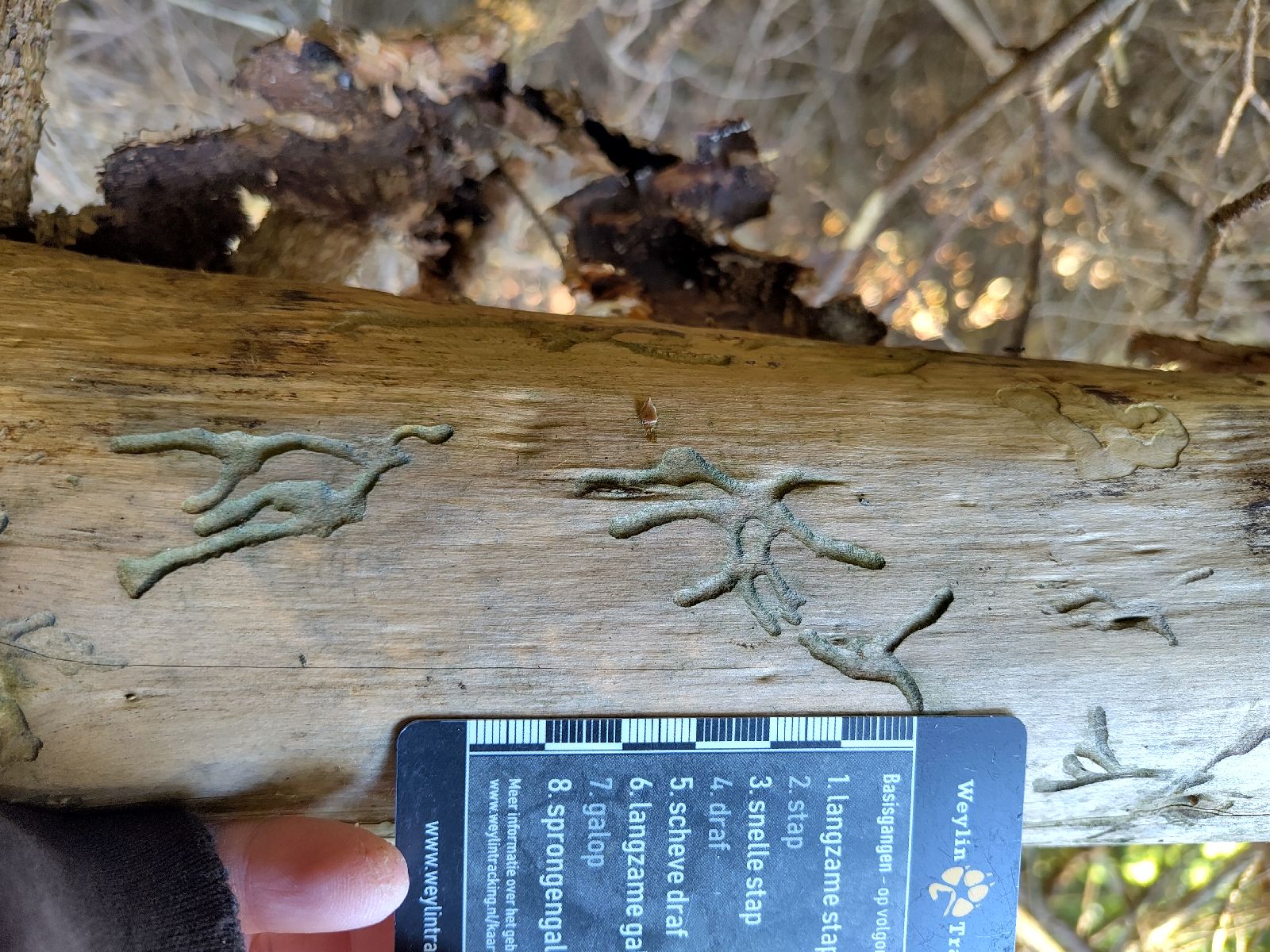
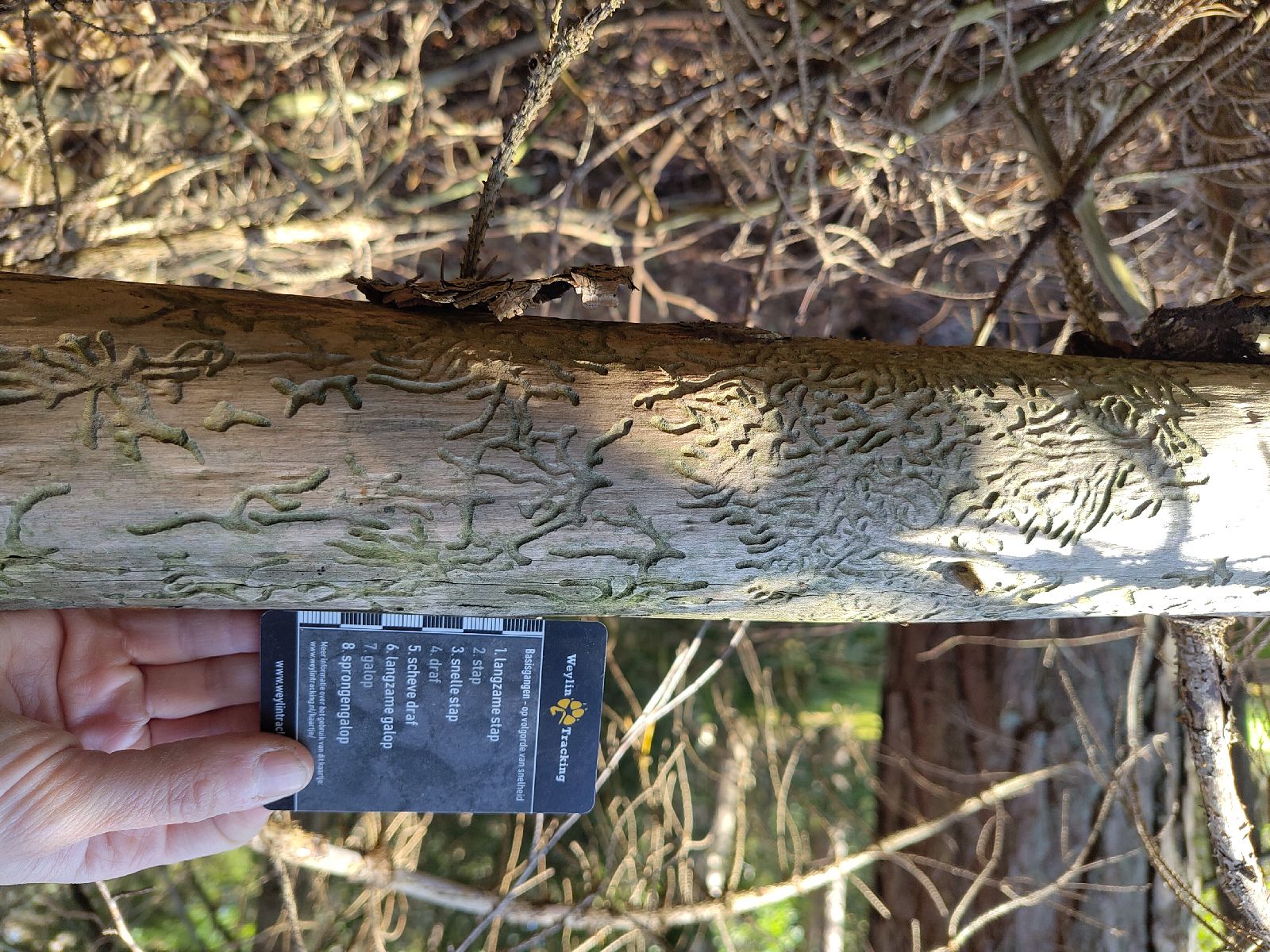
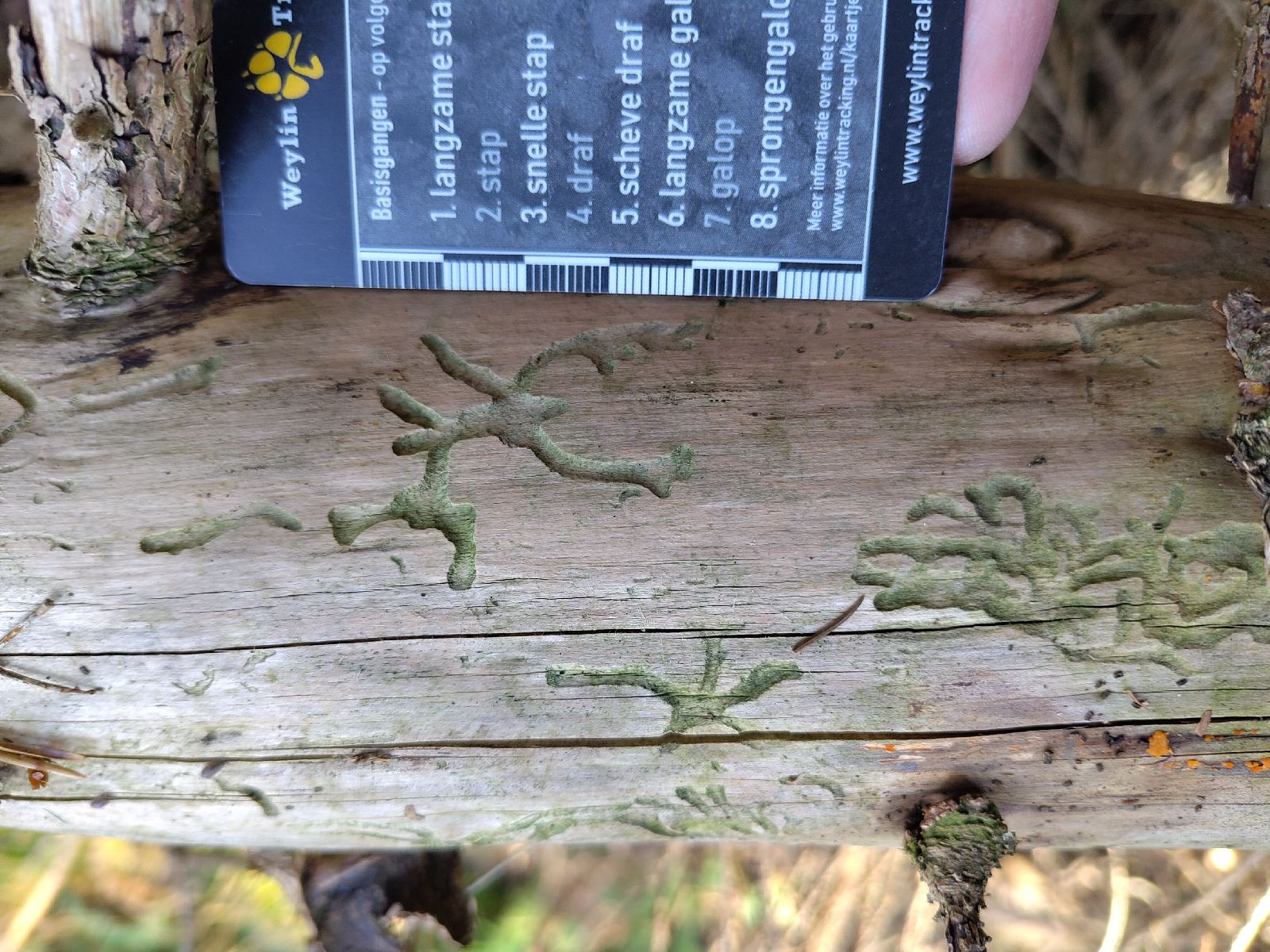
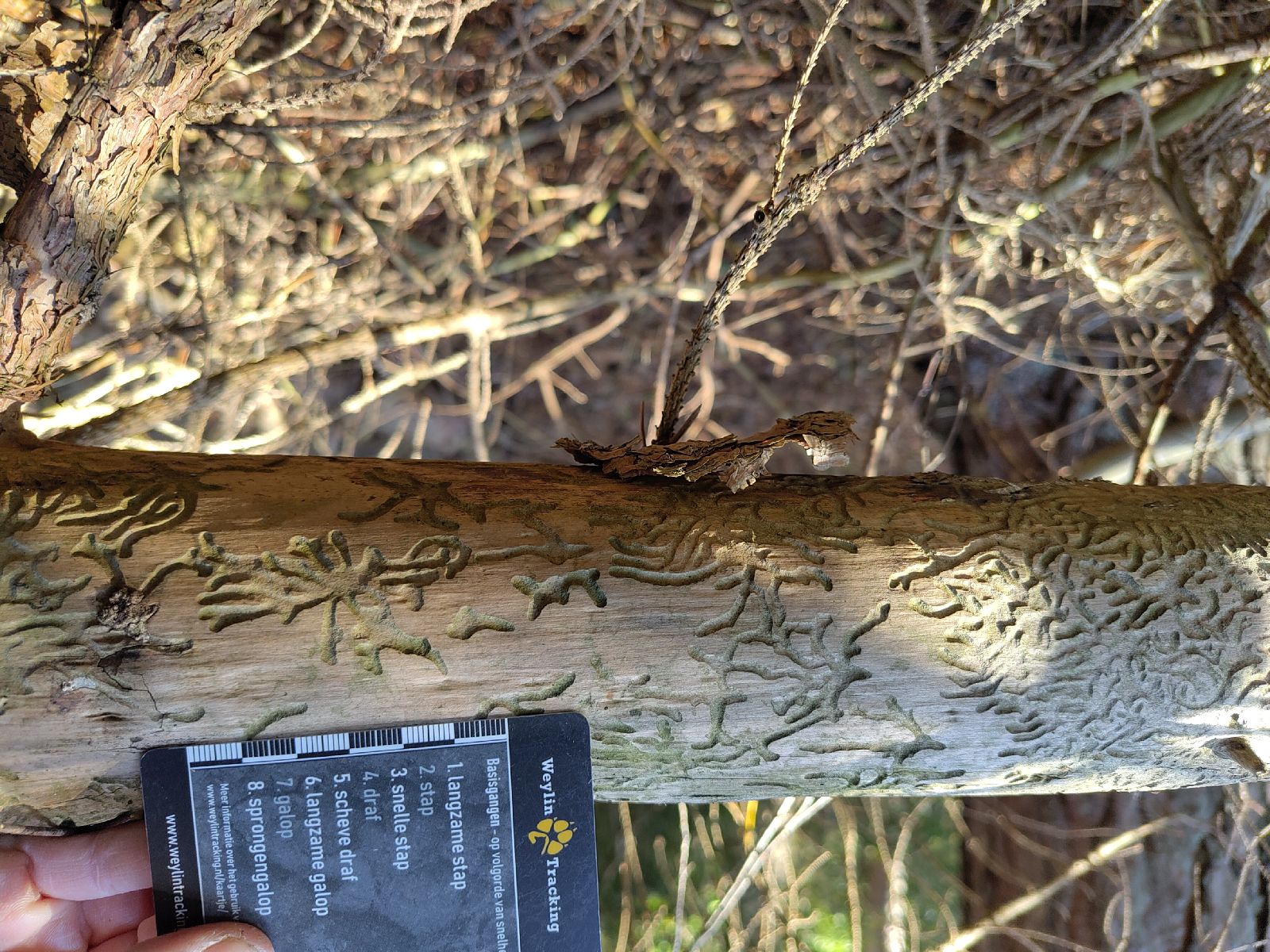
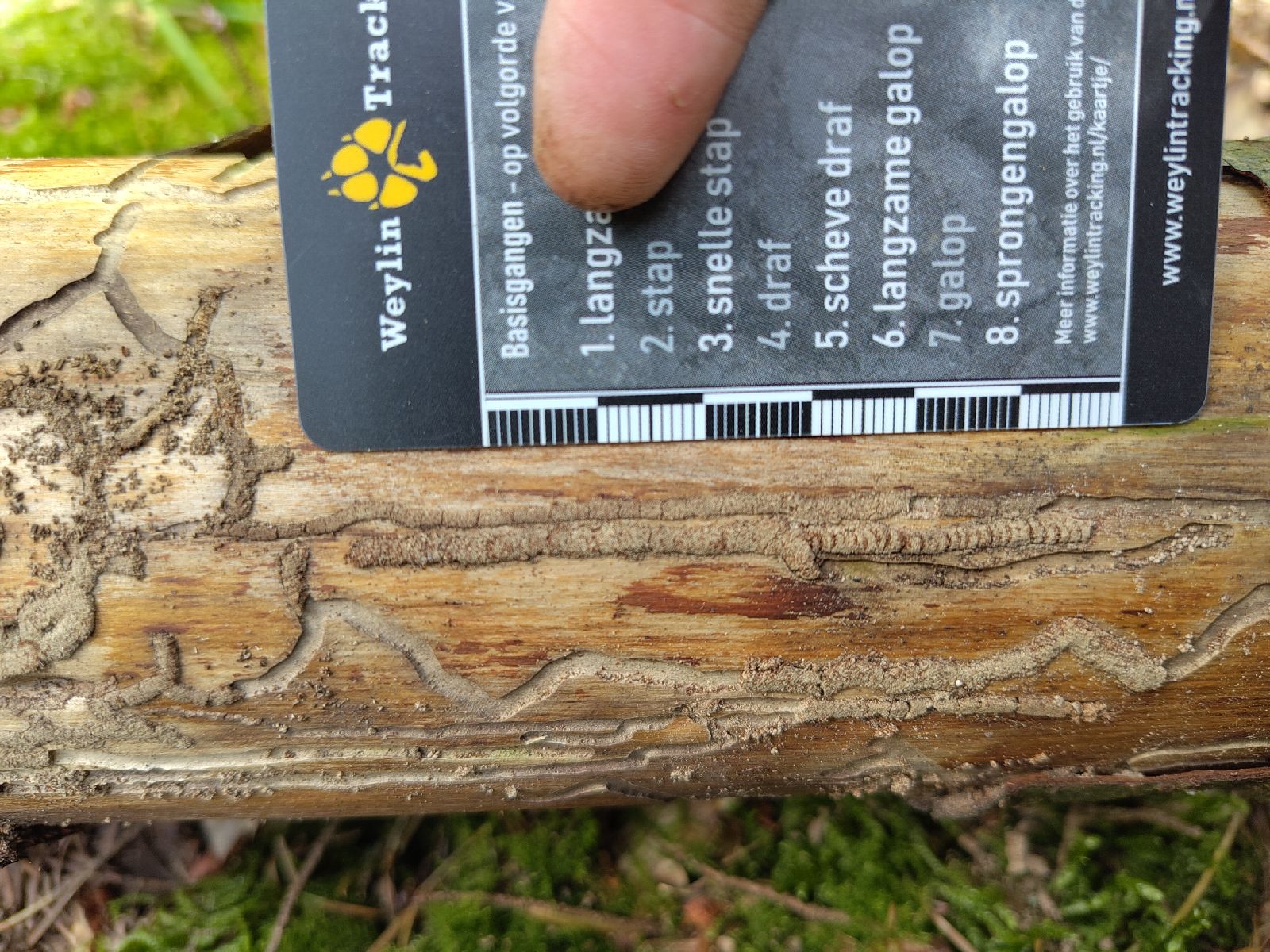
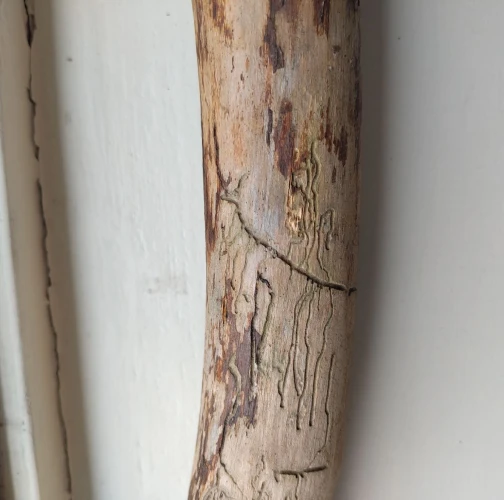
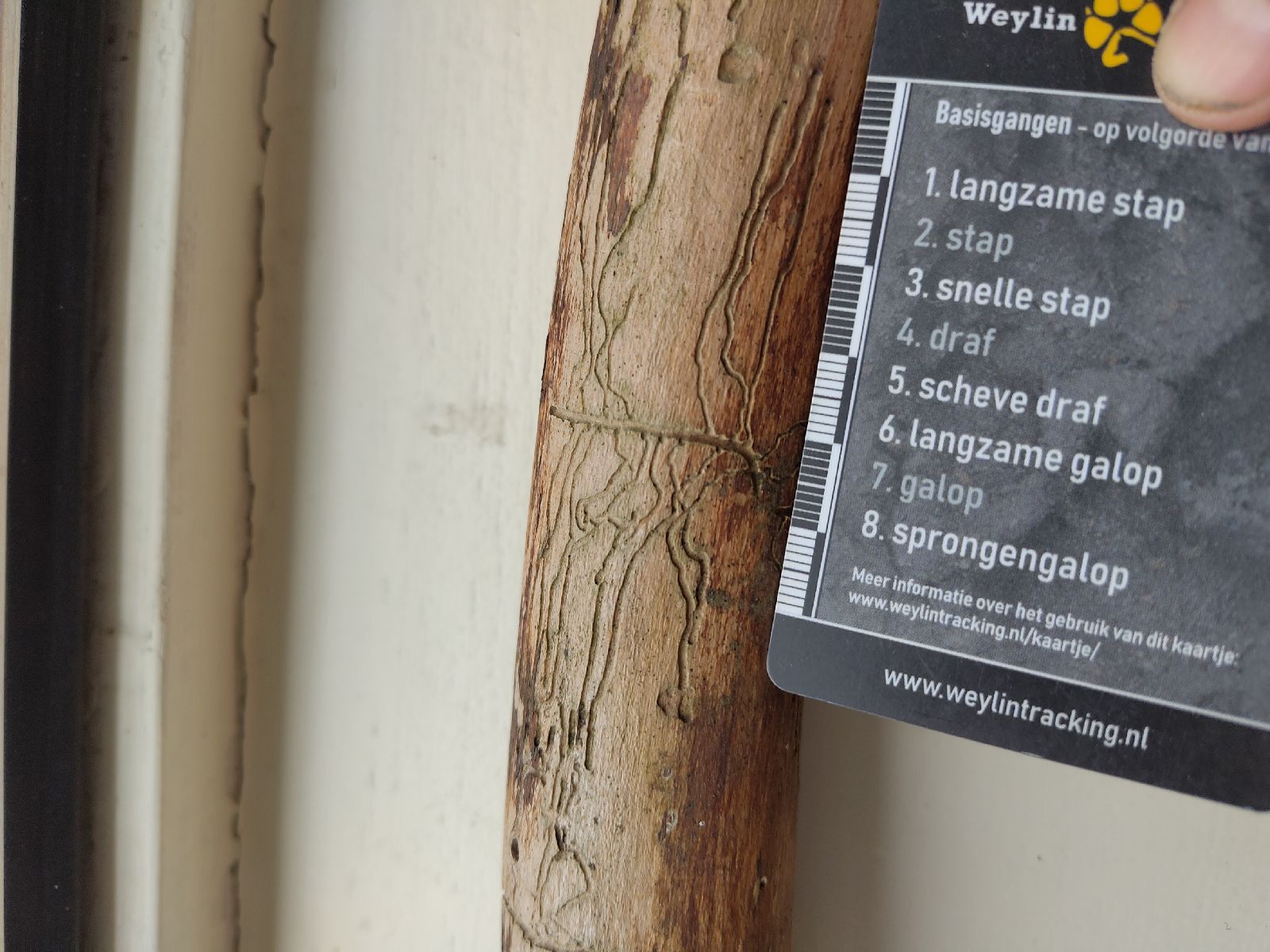
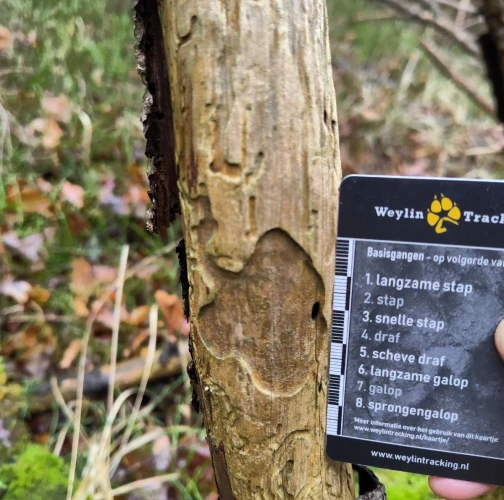
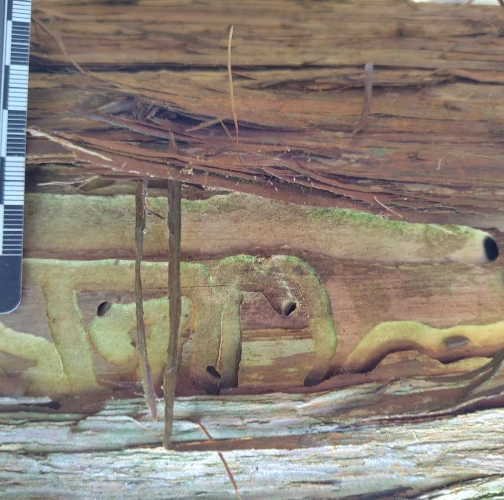
looks like a gallery from a very small jewel beetle. seems it does not pupate in the wood. exit hole about 2 mm. could not determine if tree was abies alba or pseudotsuga menziesii. only seen on smaller dead trees. not on the stem of big trees.
Answer
Hello Mr. Froukje,
nice photos.
In the pictures there are galleries under the bark of the Cerambycidae, probably Callidium violaceum.
The exit hole belongs to Trypodendron lineatum.
Best regards
Jozef Vakula
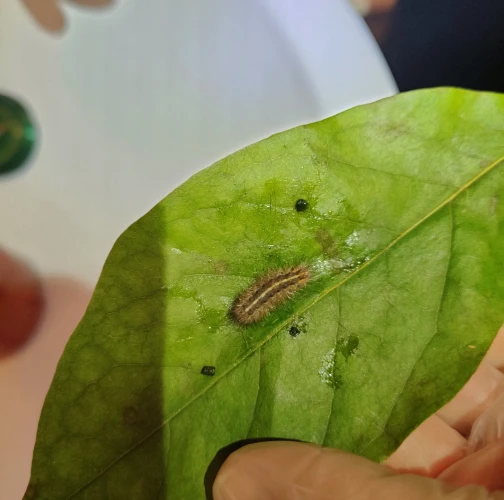
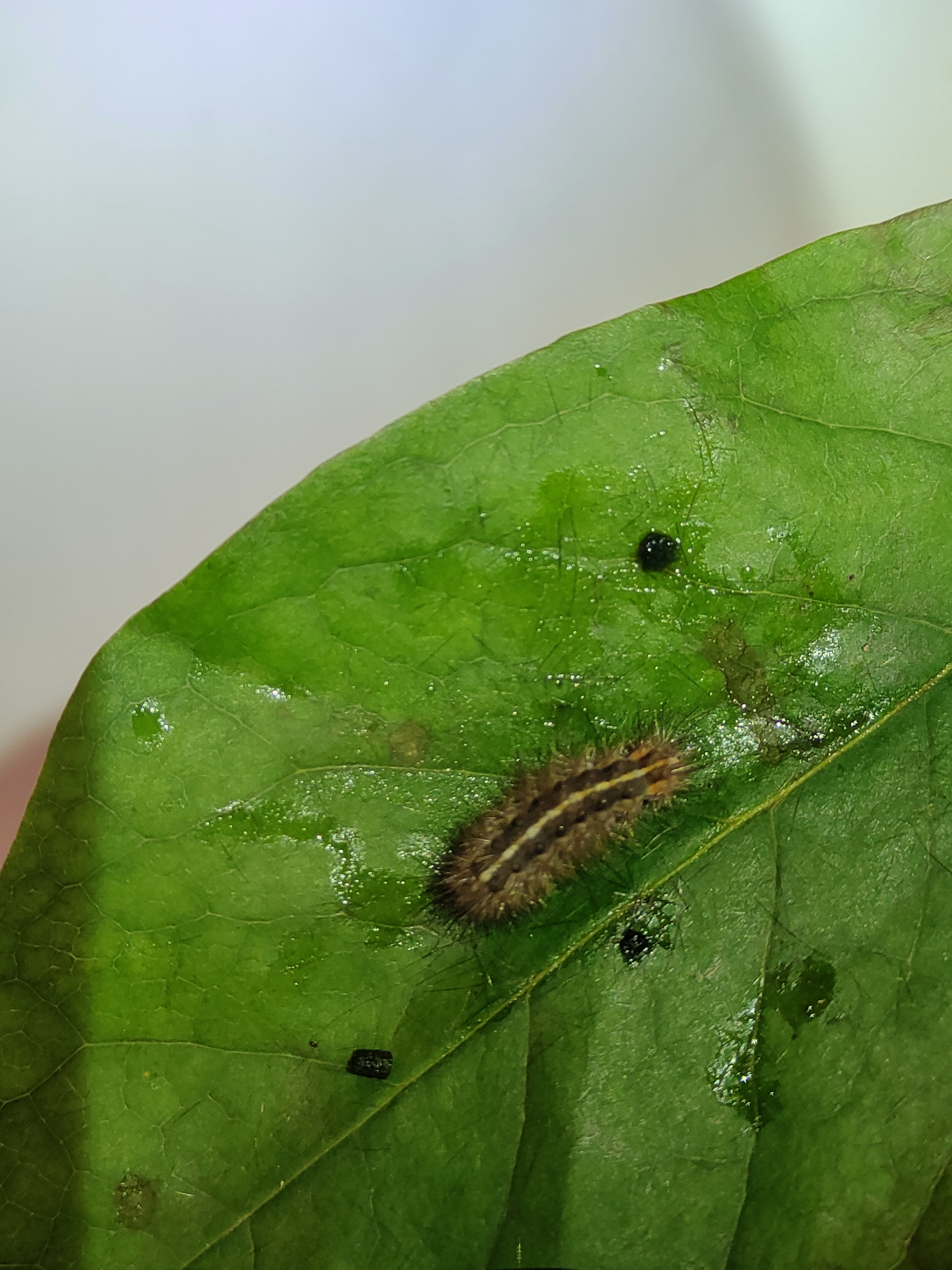
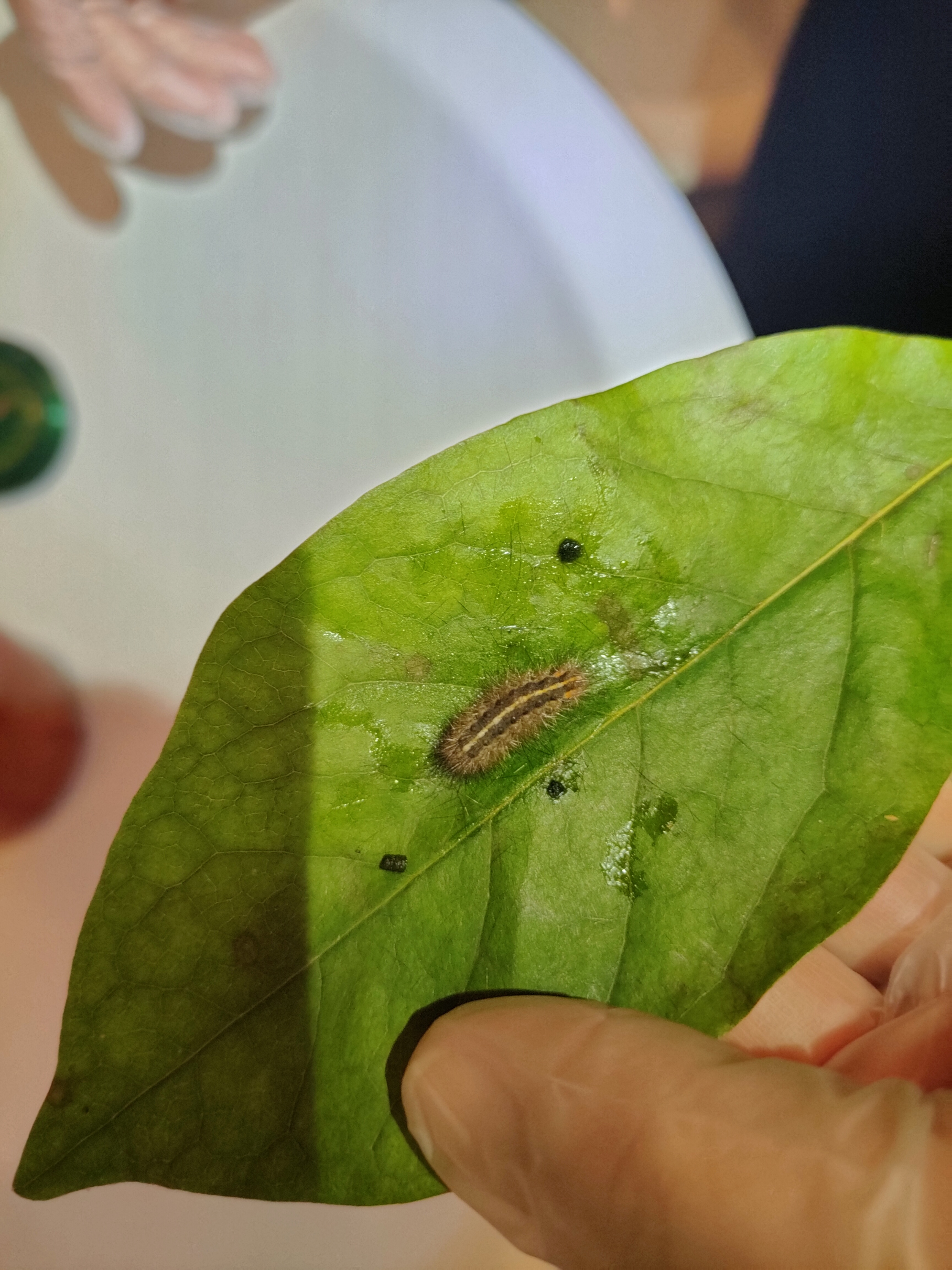
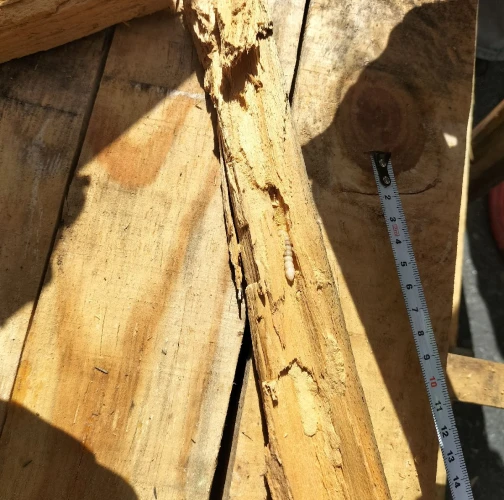
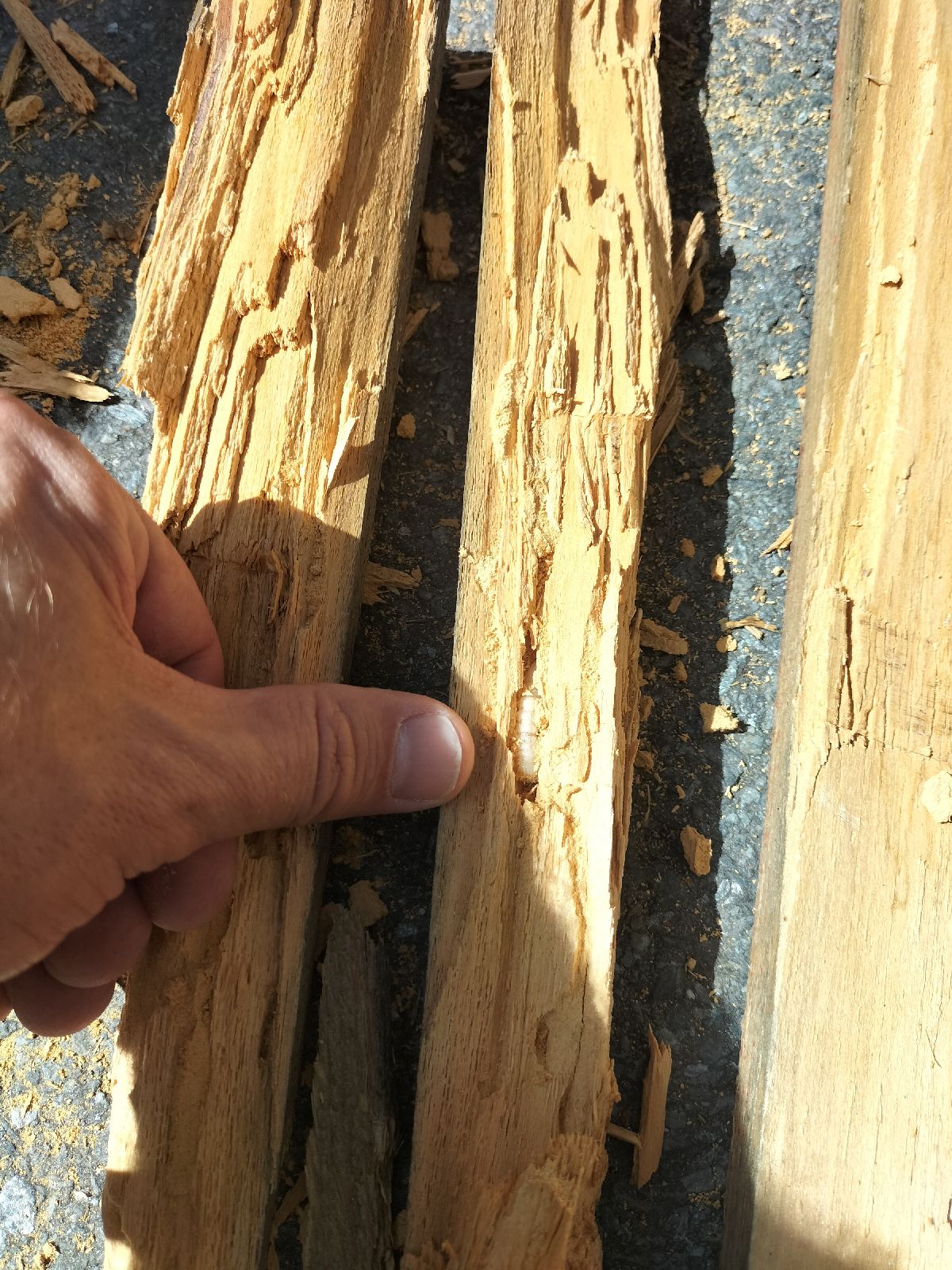
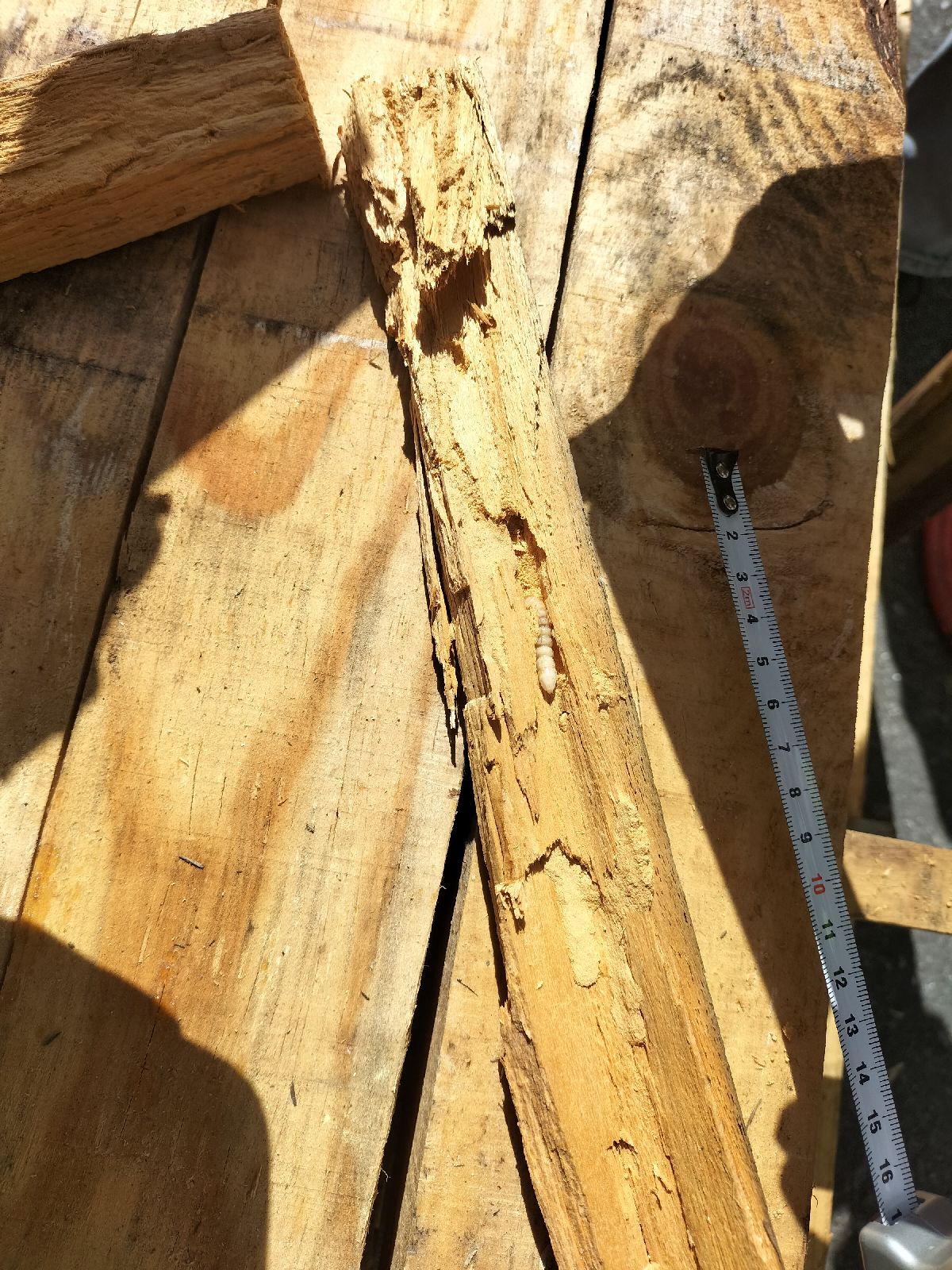
The larvae were found on a cut piece of wood. Thank you!
Answer
Hello Fran. According to the body shape of the larvae it belongs to Cerambycidae family. It could be several cerambycid species but we are not sure which one it is. If you will see the imago then make a picture and send another request. All the best, Juraj.
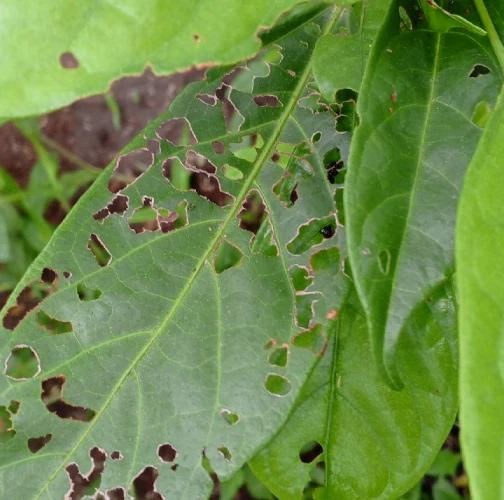
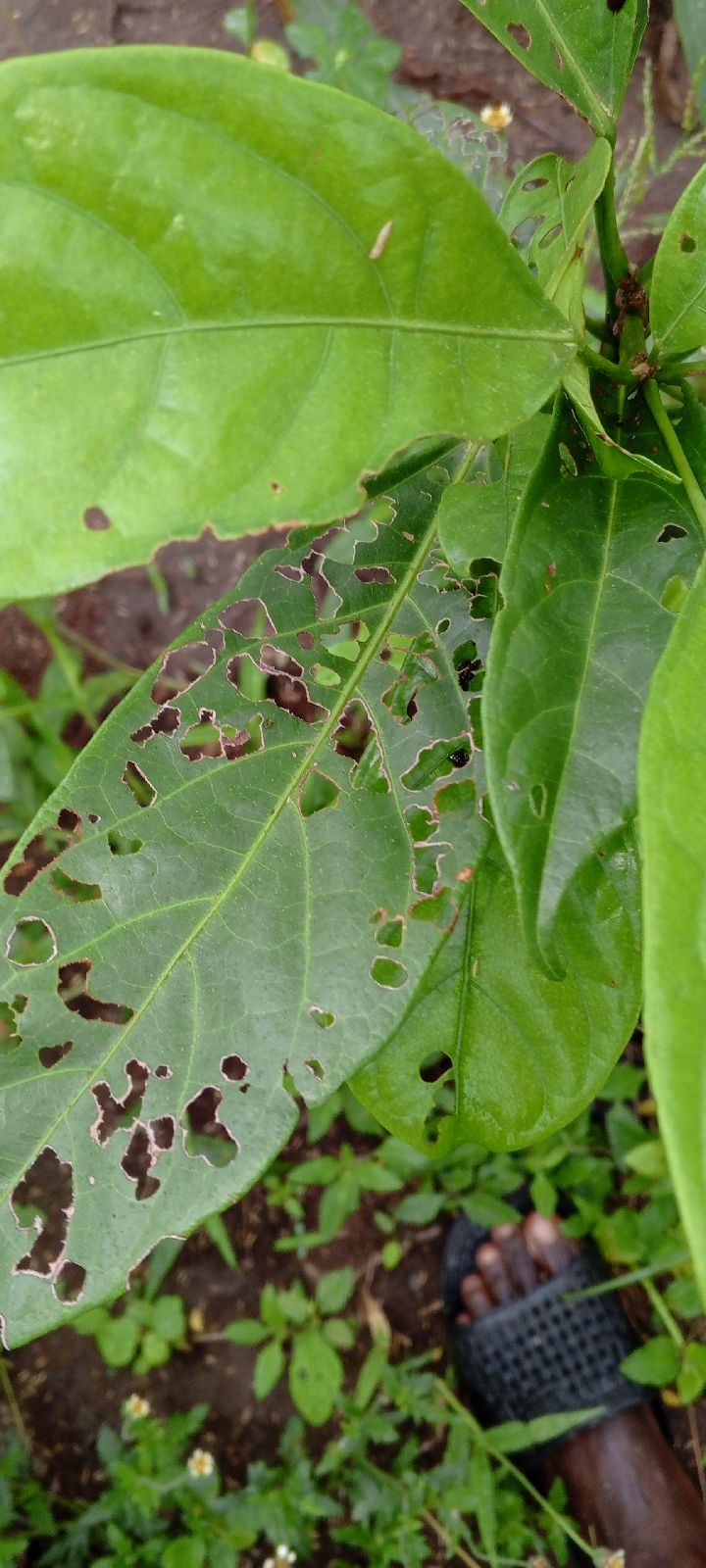
Dear Roméo, thank for your inquiry. Unfortunately there is definitivelly not mulberry on the picture - as you stated in the request. I can not idetified the plant species. Also it looks like it is not photographed on European continent so we can not help you with idetification as we do not know african species. It looks like eaten by some adult beetles. But that can be also something different. Wish you have a nice day. M. Zubrik
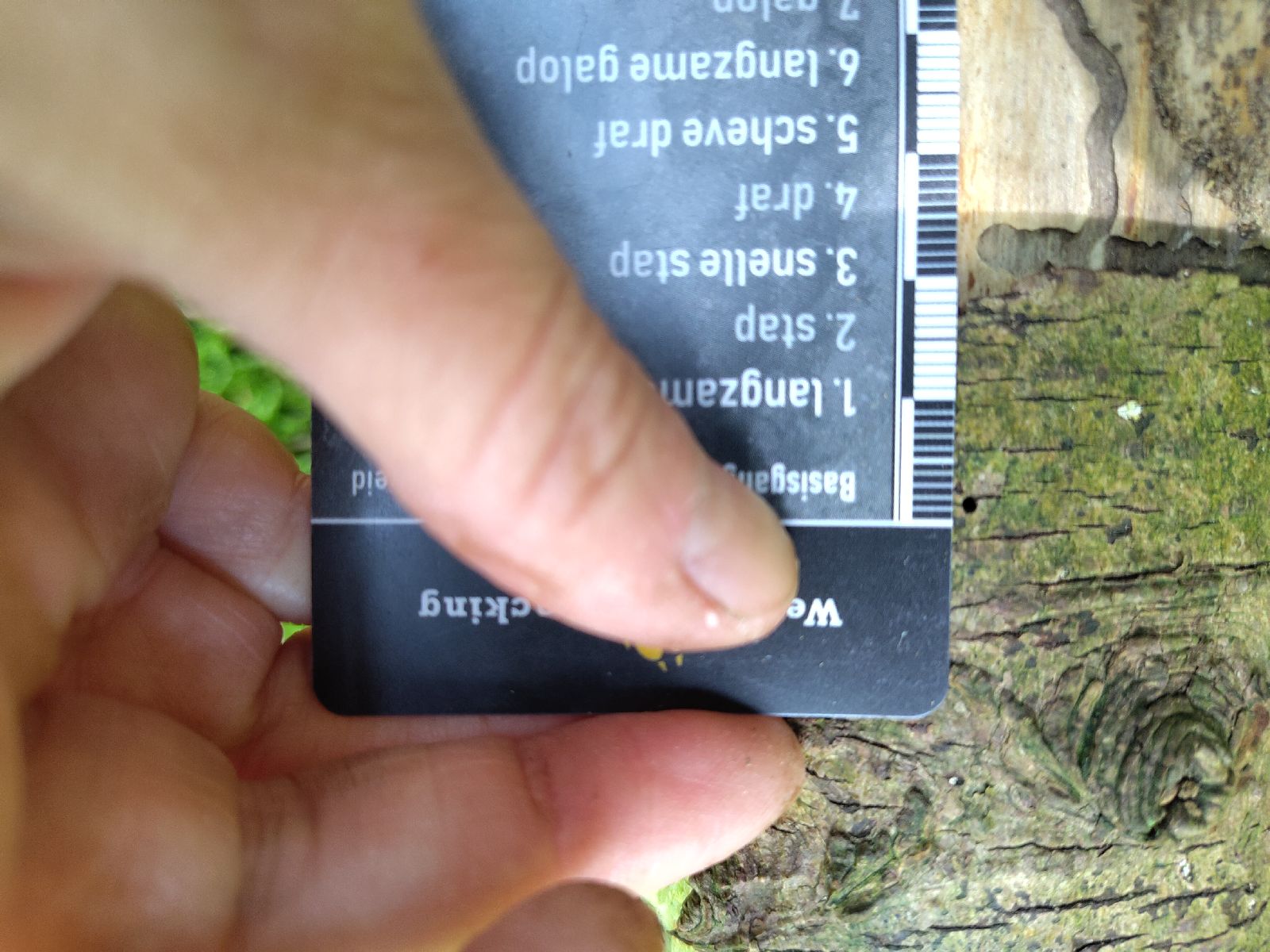
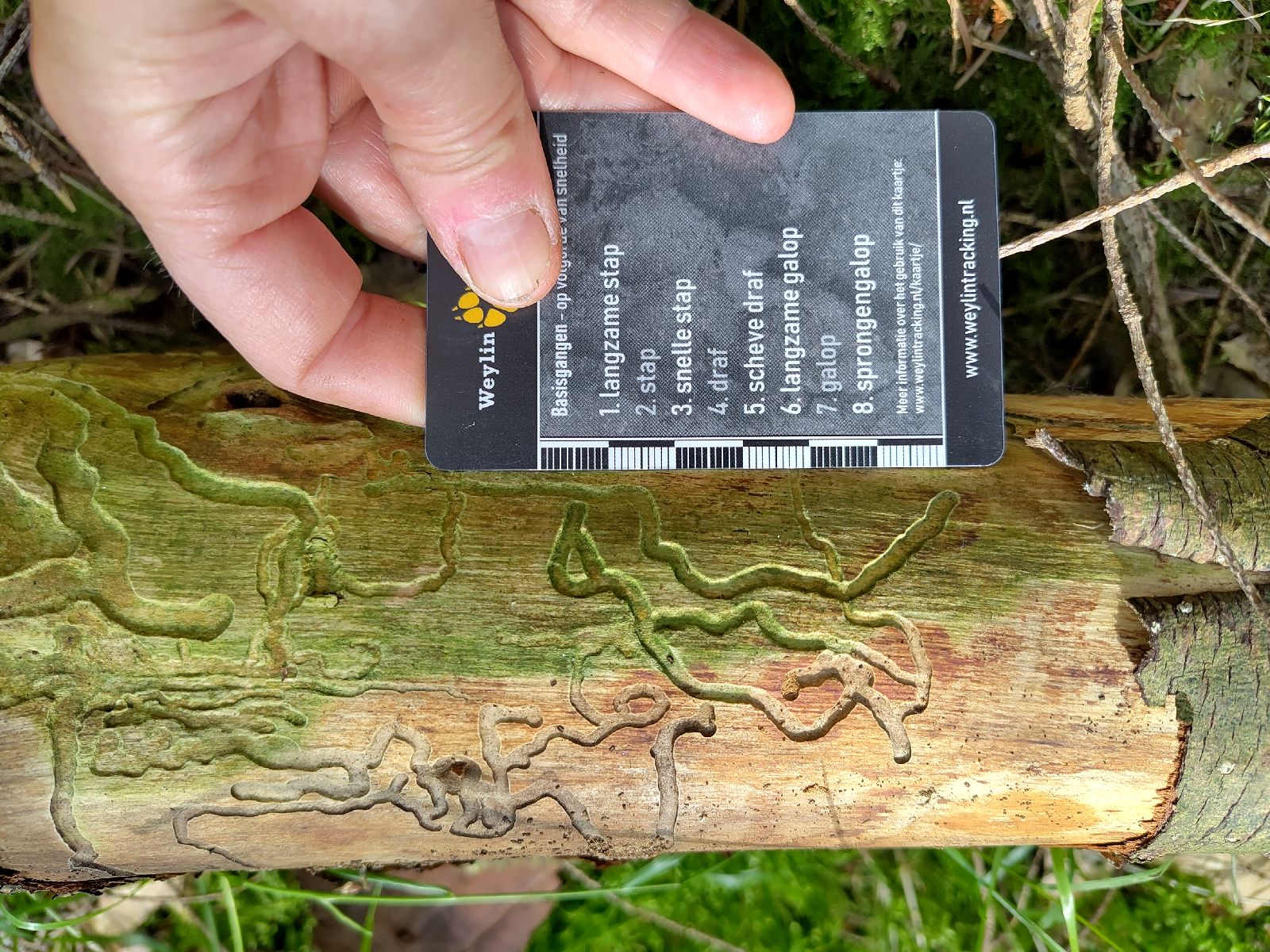
mating room visible. single mothergallery often hooked shape up to 10cm, 1mm wide. larvagalleries far apart, about 3,5 cm long, 1mm wide. maybe have been a different tree: like abies.
Answer
Hello Froukje,thank you for very nice photos and detailed description with dimensions of galleries. I think that it is gallery of genus Pityophthorus. If it is spruce may be P. exsculptus. However, an exact determination is not possible. Many galleries look alike, and if they are older, it is very problematic to determine the species or even the genus. If possible, please try to determine the exact species of host tree in the future and send several photos of the entire gallery. Fresh galleries are more suitable for determination.Best regardsJozef
Dear Froukje, thanks for your inquiry. I want to encourage you to map species using this internet tool and send us your nice pictures. Although it seems that we are not able to identify most of your questions down to the species level. We are not taxonomists. We are a group of people who deal with forest and tree protection. Our goal is to help the owner recognize the cause of the damage, wilting or death of the tree. So I want to help him to take such precautions that will save the given tree, or prevent it from attacking next trees in the vicinity. From the point of view of forest or tree protection, it is not always necessary to recognize exactly what kind of beetle it is. Knowing that it is a bark beetle and not a fungal pathogen is often enough for the tree owner to take apropriate control measures. Just as the determination of species based on external morphological signs is complicated, the identification of galleries or feeding traces is even more difficult. Only a small part of galleries, wounds, damage, etc. it has such signs, on the basis of which the cause of the damage can be clearly determined totally exactly. Not all they are fully species-typical. I have some suggestions for you if you want your requests to be more exactly determined. Please try to send more pictures of dying trees, not totally dead trees. Try to capture more different symptoms, however remember, that to have a picture of the adults (in the case of insects) is always the best for species identification. I think that galleriess on the pictures were caused by some Cerambycidae species. They look very much like some Callidium galleries, but I can not say which exact species it is. With best regards, M. Zúbrik
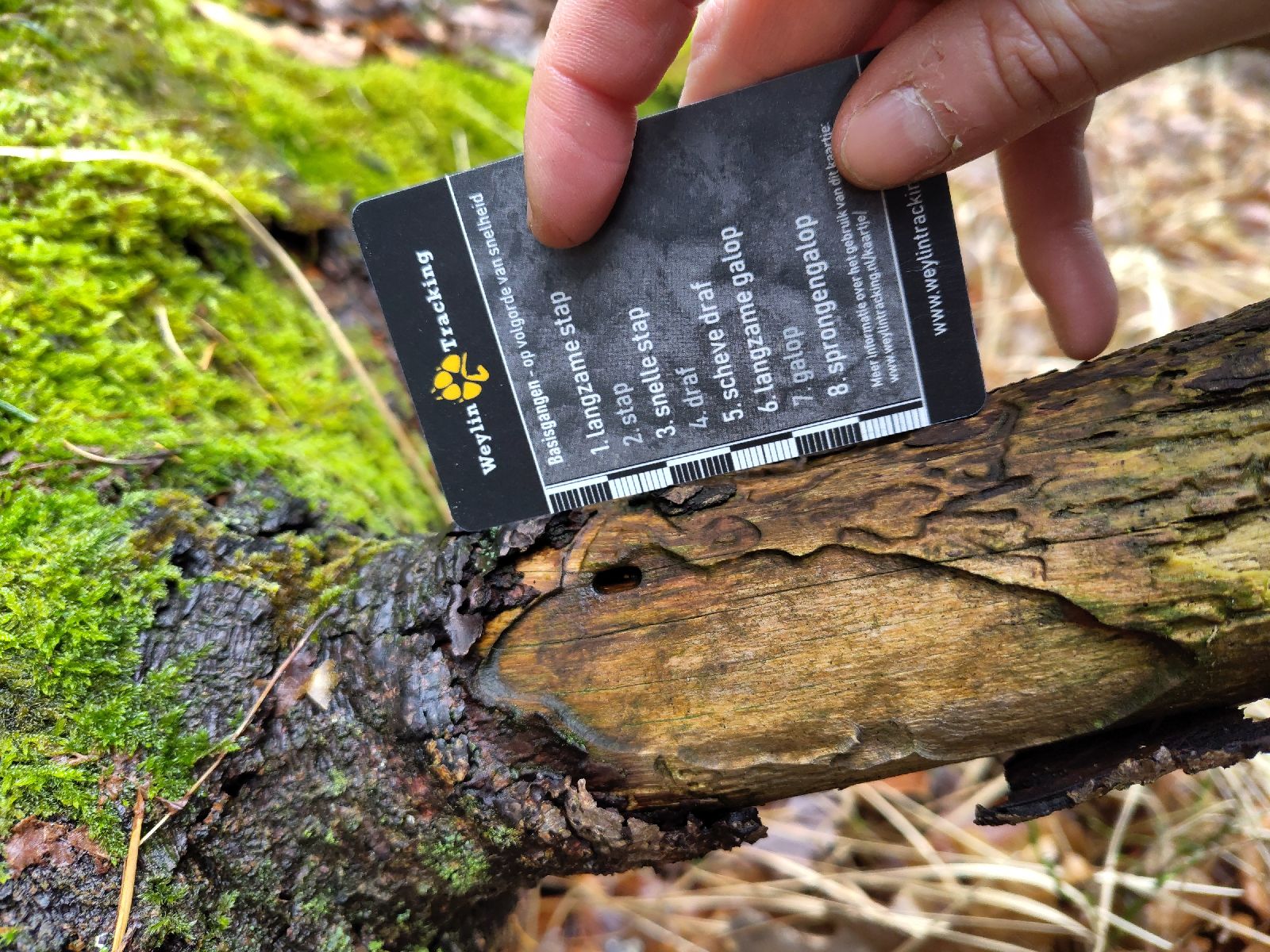
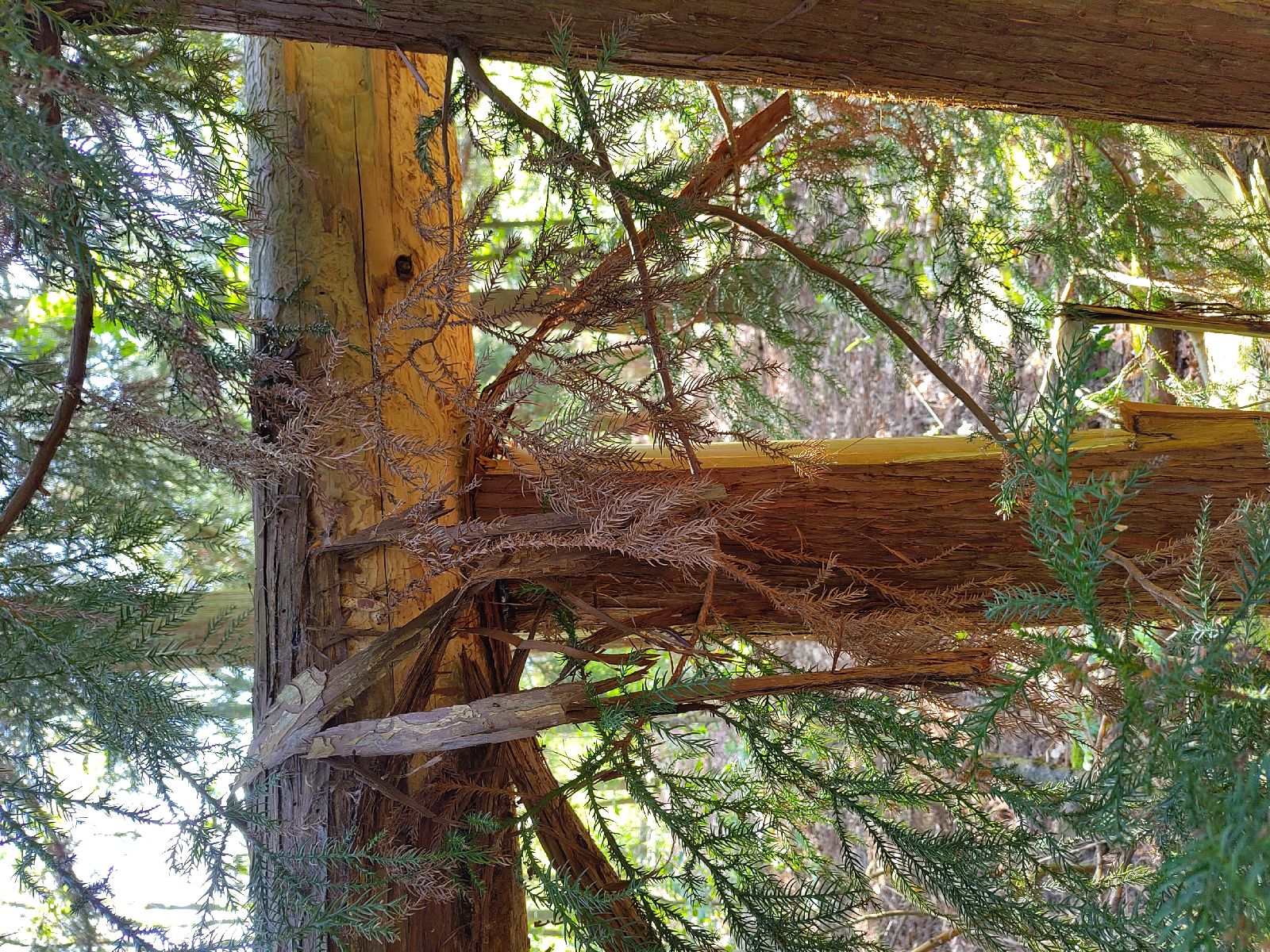
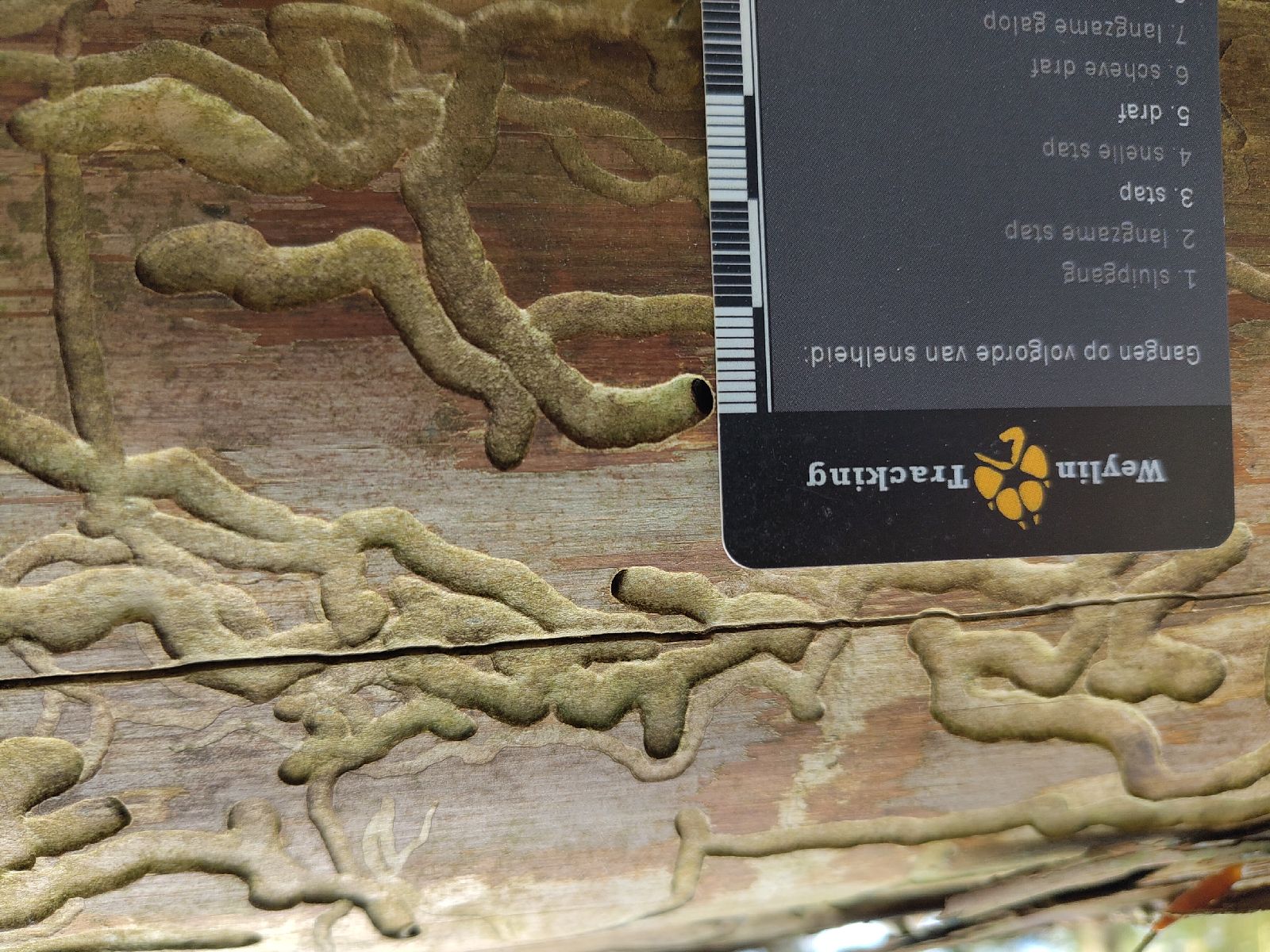
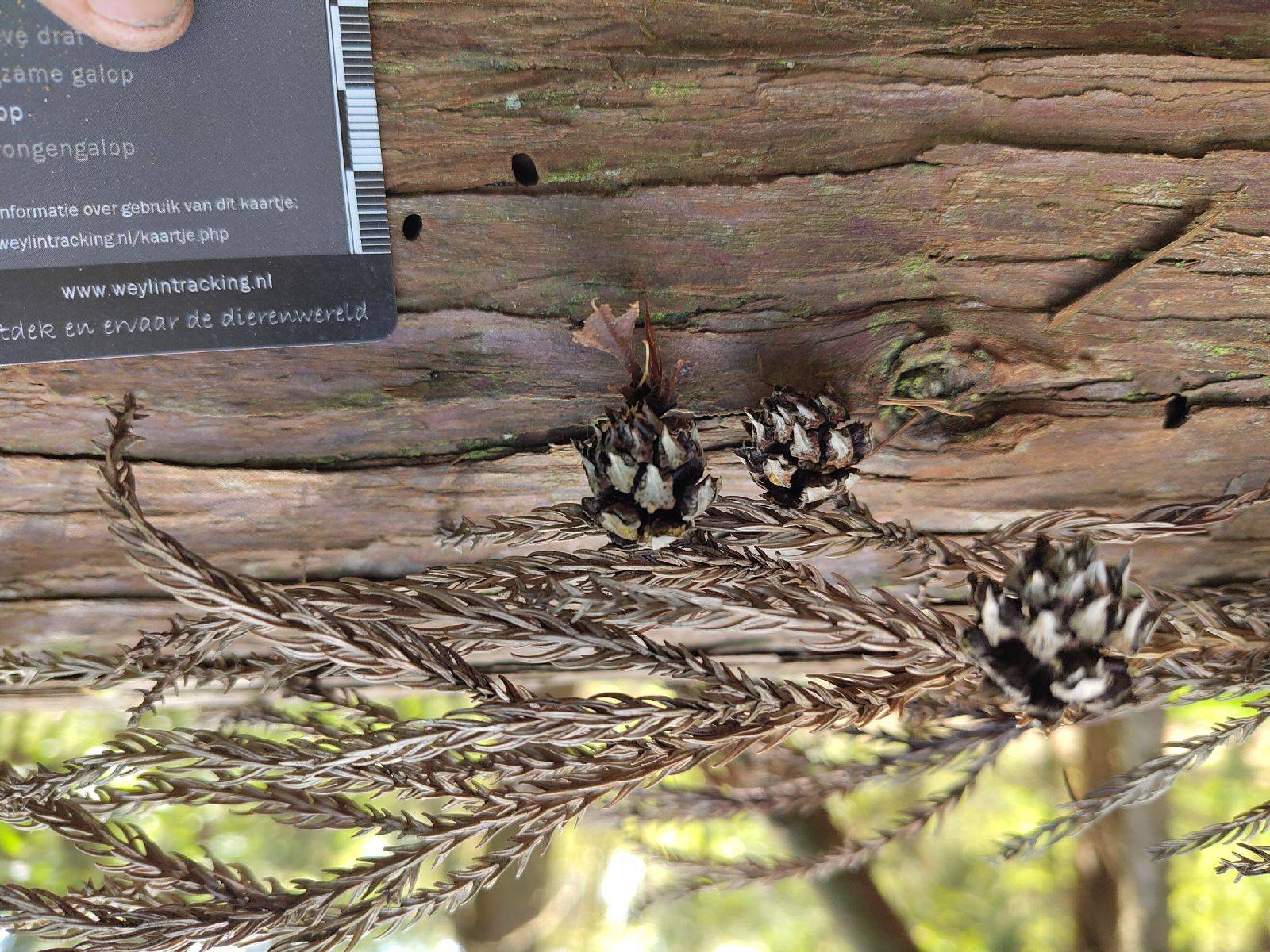
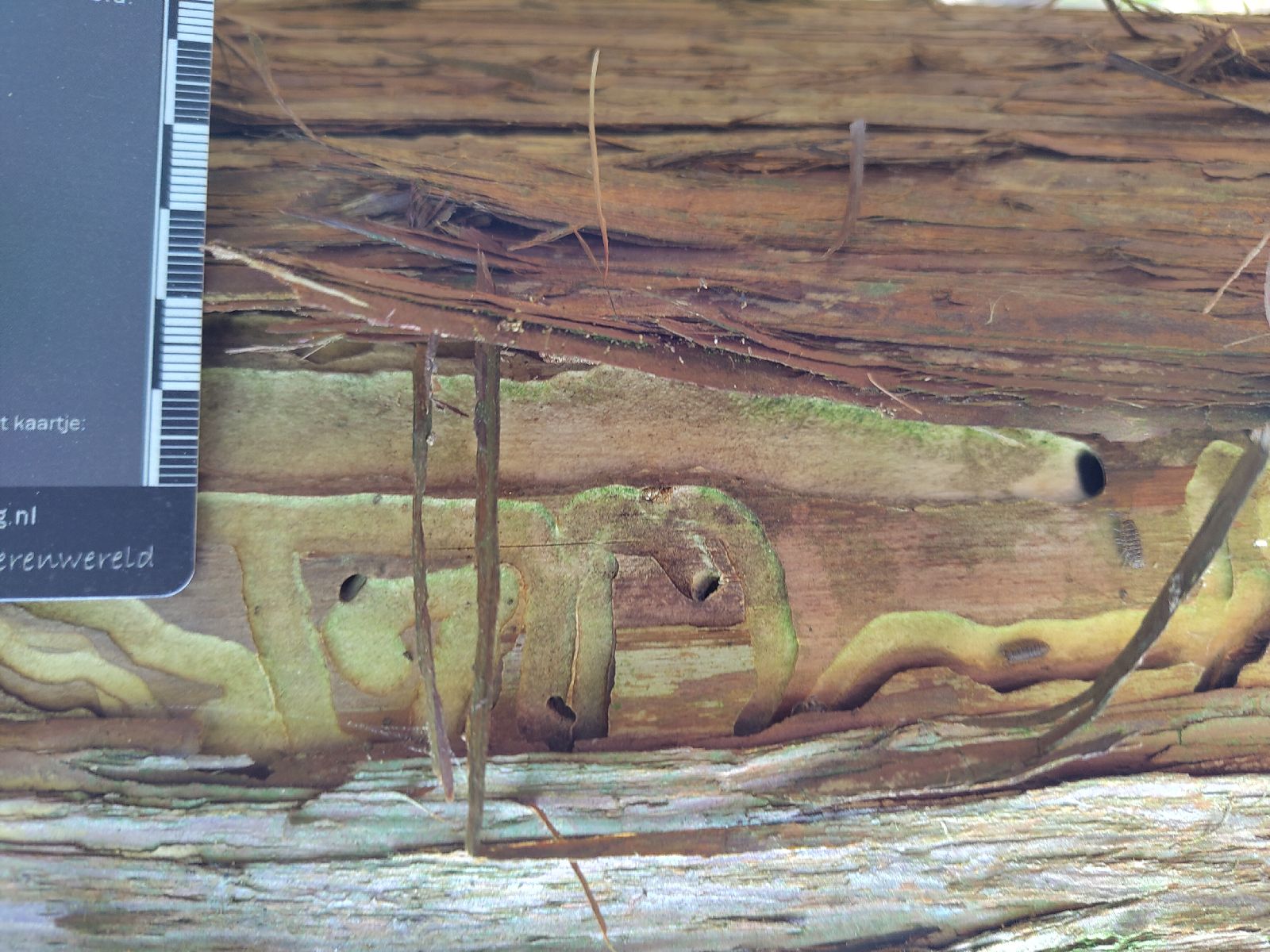
Cryptomeria japonica,broke in half due to another tree falling on it. it is the only one in a group of 9 with it. Infestation only above breakpoint, also in branches >3cm. gallery appr 20 cm long, up to 1cm, entrance hole only 4 mm. lamprodila festiva?
Answer
Hello. Gallery looks simalar to Lamprodila festiva gallery system but we are not sure. Simalar gallery can create another Buprestids or Cerambycids species. Some Cerambycids on Cryptomeria japonica are decribed here (https://avesis.gazi.edu.tr/yayin/b4979d05-8d63-4f42-8ae9-6c2d6236bb3c/cupressaceae-and-taxaceae-taxa-pinopsida-cupressales-associated-with-longicorn-beetle-taxa-coleoptera-cerambycidae-of-turkey/document.pdf). All the best, JG.