

Hyphantria cunea
all Webworm
Hyphantria cunea
Species description:
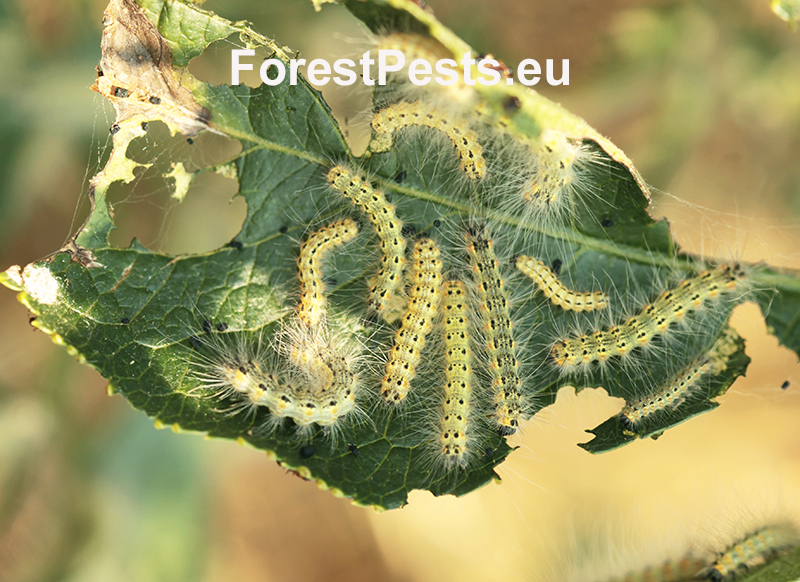
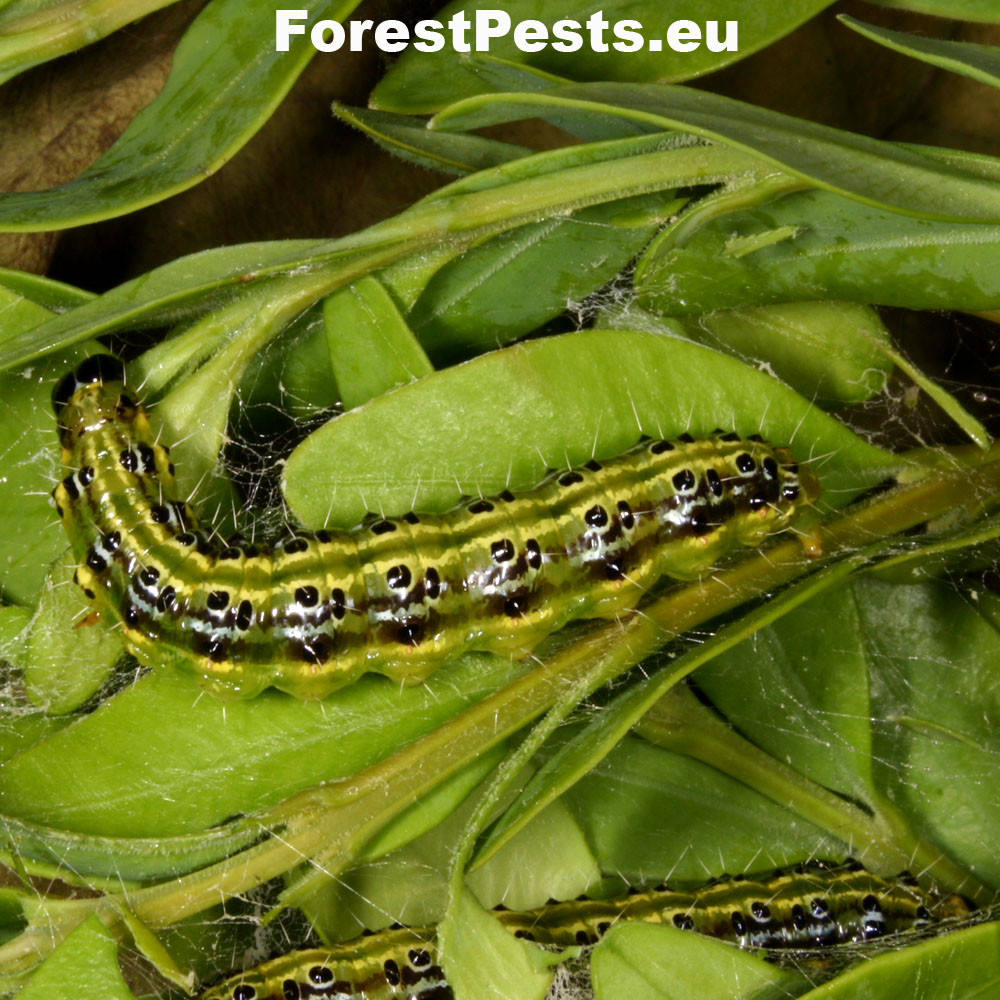
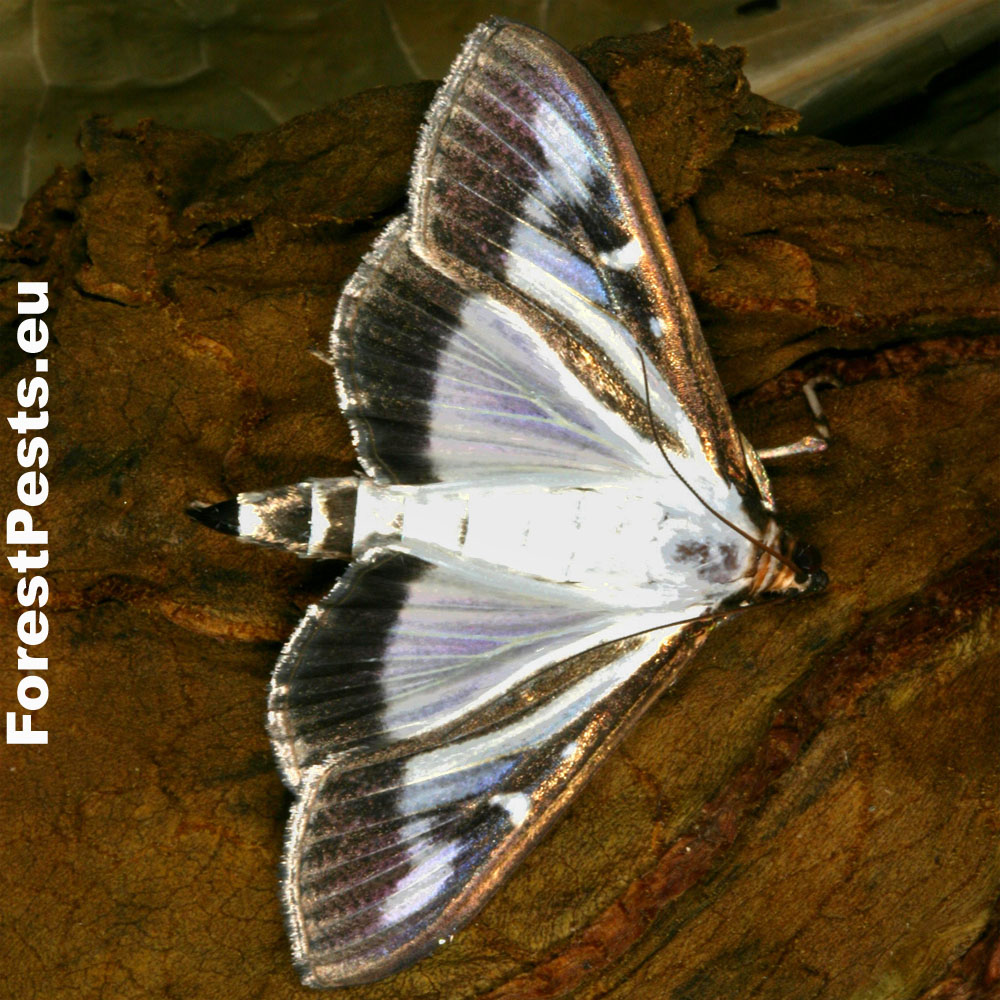
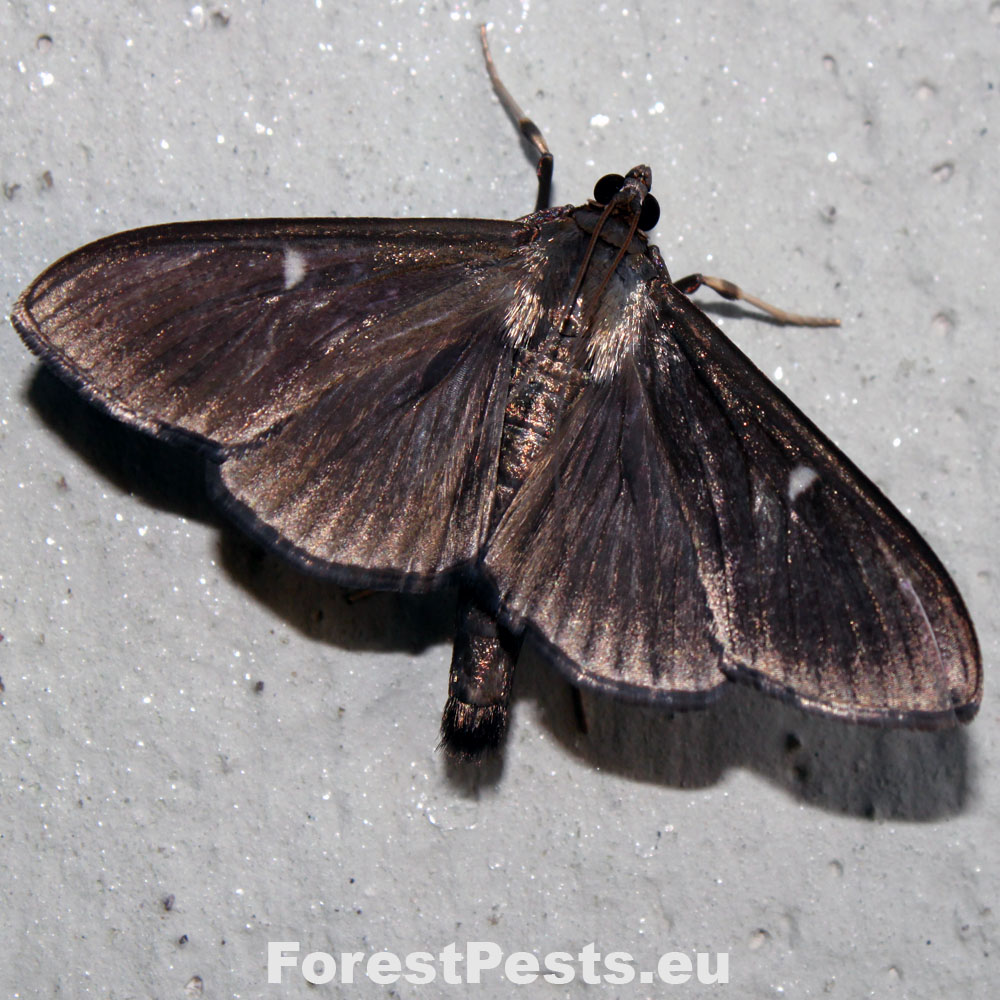
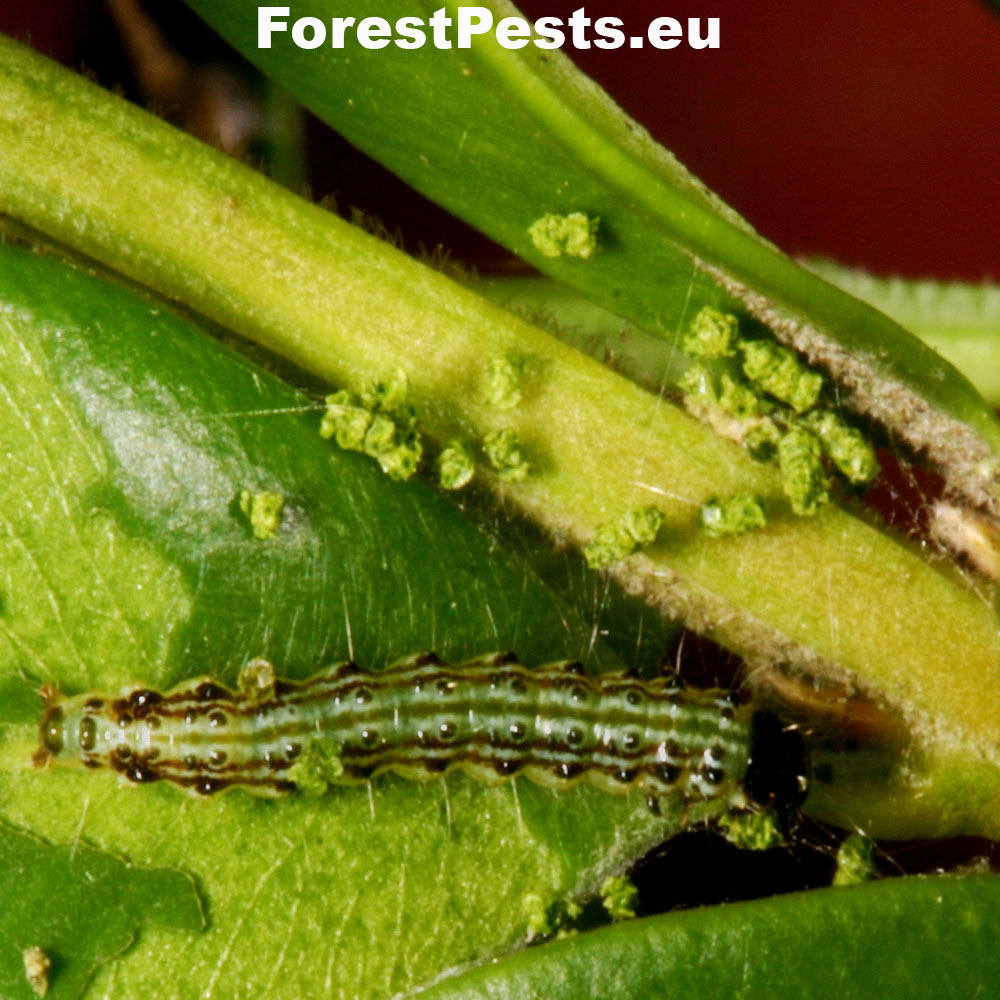
The wingspan of this snow-white moth is 25-35 mm. The female is white-colored. The front wings of the male are covered with irregular dark spots. The caterpillars are hairy, dark-colored, with stripes of tiny black and orange heads. They grow to a length of 30 - 45 mm.
Bionomy – infection cycle:
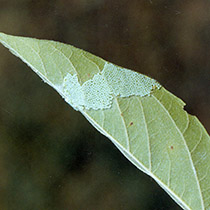
The moth has two generations a year - the first swarms in April to May, the second in August and September. After copulation, the adult moth lays eggs on the underside of leaves and covers them with hair from the anal part of the abdomen. Tiny caterpillars hatch in May in 7 - 10 days. They grow fast and spin whole branches into the cobwebs. At first, they live together in cobweb nests; later, they crawl out and live individually. Finally, they pupate in cracks in the bark, often together. The pupas of the second generation overwinter.
Symptom:
Web nests from the fall webworm are concentrated at the tips of the branches. There are several nests on one tree, which, when strongly overgrown, join together, and wrap the whole branches and parts of the crowns with cobwebs. At first, leaves are skeletonized and later eaten, and the thicker veins remain untouched. The economic damage in forests caused by this species by defoliation is usually minor.
 |
 |
 |
 |
|
Hyphantria cunea. Photo: M. Zúbrik.
|
Hyphantria cunea. Photo: M. Zúbrik.
|
Egg mass on leave. Photo: M. Zúbrik.
|
Caterpillars. Photo: M. Zúbrik.
|
The literature states that the caterpillars of this pest can consume the leaves of about 100-120 different species of trees, shrubs, and herbs. In Europe, they prefer mulberry (Morus spp.), boxelder maple (Acer negundo), elderberry (Sambucus spp.), walnut (Juglans spp.), poplar (Populus spp.), fruit trees, and some herbs (for example, burdock - Arctium).
Damaged plant parts: Leaves, needles.
Significance: Significant.
Origin and distribution:
The species has initially been widespread in the southern parts of North America. It was introduced to Europe in the relatively recent past, around 1940. It first appeared near Budapest, where it was probably shipped. From there, it spread very quickly to the whole of Hungary, later to former Yugoslavia (1948), Austria (1951), and Ukraine (1952). It probably reached Slovakia in the years 1946 - 1948. It first appeared in the surroundings of Komárno in the years 1946 - 1947. From there, in the following period, it spread to other territories. In 1951 and 1952, its range in Slovakia culminated, with the pest occurring only in Považská Bystrica and Žilina, further in the vicinity of Detva and on the east around Vranov nad Topľou. After culmination in 1951 - 1952, its activity gradually decreased, and the expansion area narrowed. From 1955 to 1957, this pest occurred only in the warmest areas of southern and eastern Slovakia and still caused defoliation. The species has rarely emerged in recent decades and has not been commonly encountered. In 1998-1999 it was observed in various parts of southern Slovakia, between Levice and Nitra, around Kalná nad Hronom, as well as Nové Zámky, Šurany, Vráble, Dunajská Streda, Gabčíkovo, Komárno, Štúrovo, Veľký Krtíš and many other places.
Endangered stands and areas:
The damage could be bound mainly to the edges of the stands. However, due to the high light preference of caterpillars, they do minor damage in the forest (they avoid forest stands) and prefer parks and urban vegetation.
Prevention:
The isolated occurrence of the pests complicates prevention, and we have little experience with it. However, in small areas, such as gardens, pruning and burning nests with young caterpillars could be effective.
Monitoring:
The best way of control is to detect the presence of nests, alternatively counting them on infested trees. However, the exact critical numbers are not known.
Pest control:
The isolated occurrence of this pest complicates defense, and we have little experience with it. Pruning and burning nests with young caterpillars can have an effect. Insecticides from synthetic pyrethroids or inhibitors of chitin formation and biological preparations based on Bacillus thuringiensis are also effective. The most suitable time to intervene is when caterpillars are at the earliest stages, just after hatching and before they weave their strong nests, from the first half of May to late July and early August.
Pest category: Insects
Found in Slovakia: Yes
Invasive species: Yes
Similar species:
The brown-tail moth (Euproctis chrysorrhoea) causes similar damage. It swarms in late June and July. Caterpillars damage and skeletonize the undersides of the leaves. At the end of the summer, they spin several leaves, between which they overwinter and continue to eat in the spring. They never make large web nests as the caterpillars of the webworm (mulberry moth). They have orange heads on the 9th, 10th, and 11th segments.