

 Show all photos in album
Insert for comparison
We will identify your pest
Add pictures of this species
Show all photos in album
Insert for comparison
We will identify your pest
Add pictures of this species
Stephanitis rhododendri
Rhododendron lace bug
Description
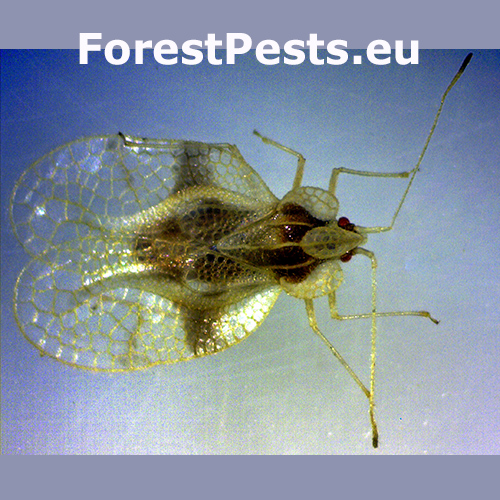
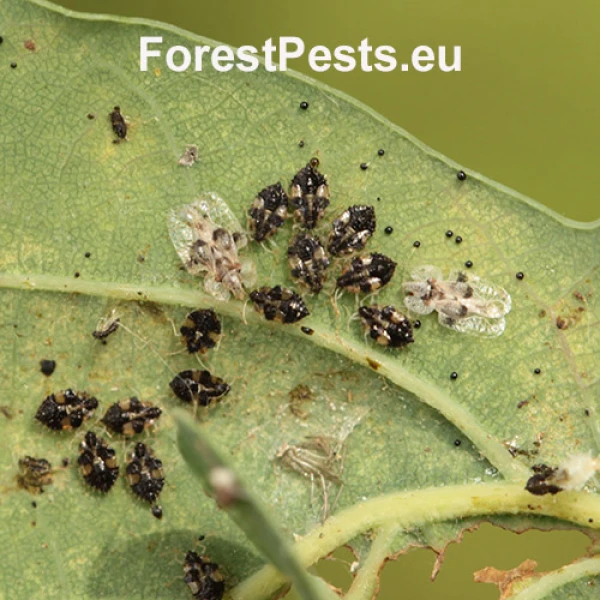
Stephanitis rhododendri, commonly known as the rhododendron lace bug, is a small insect from the family Tingidae. Native to North America, it has established itself in various regions of Europe, particularly in ornamental gardens. This oligophagous species primarily feeds on plants of the Ericaceae family, such as rhododendrons (Rhododendron spp.) and azaleas. Occasionally, it may infest other ornamental shrubs. Adults measure 3–4 mm and are distinguished by their lace-like wings, while nymphs are dark, oval-shaped, and spiny.
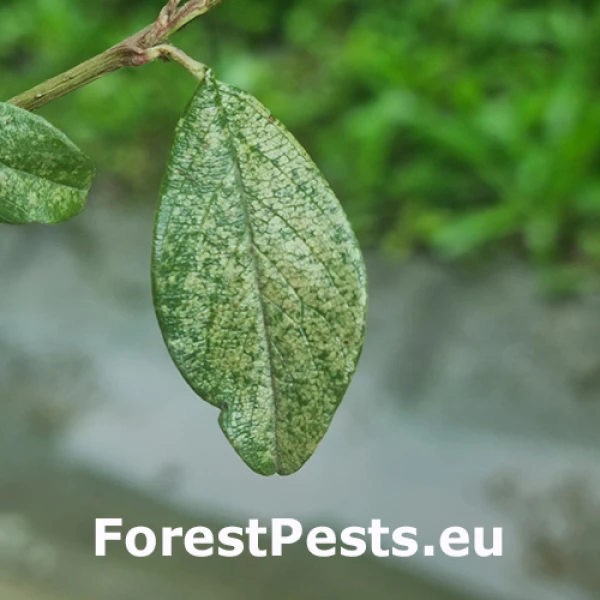
This species completes 2–3 generations annually, depending on climate conditions, and overwinters as eggs embedded in leaf tissue. Both nymphs and adults use their piercing-sucking mouthparts to extract sap from the undersides of leaves, causing chlorophyll loss. Infested plants exhibit reduced photosynthetic capacity, which may lead to diminished vitality in severe cases. Aesthetically, affected leaves display discoloration, speckling, and may curl or deform under heavy infestation. This damage significantly detracts from the ornamental value of host plants and can result in defoliation if infestations persist.
Symptom
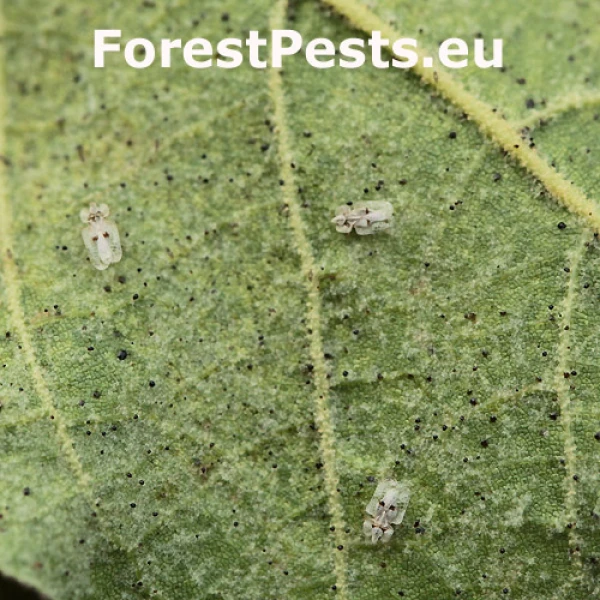
On infested leaves, light or dark speckles appear due to chlorophyll loss, mainly on the upper surface. The undersides show black excrement and feeding marks. Leaves may curl, deform, or drop prematurely.
Tree Species: Rhododendron
Part of a plant- attacked: Leaf / Needle
Pest significance: Less harmful
Pest Category: Insects
Invasive Species: Yes
Present in EU: Yes
Add comment: Stephanitis rhododendri
Location map: Stephanitis rhododendri
Legend:

Expert verified points

Unverified points
Observed by users on these tree species
Similar damage
Sycamore lace bug
Pear lace bug
Oak lace bug