

 Show all photos in album
Insert for comparison
We will identify your pest
Add pictures of this species
Show all photos in album
Insert for comparison
We will identify your pest
Add pictures of this species
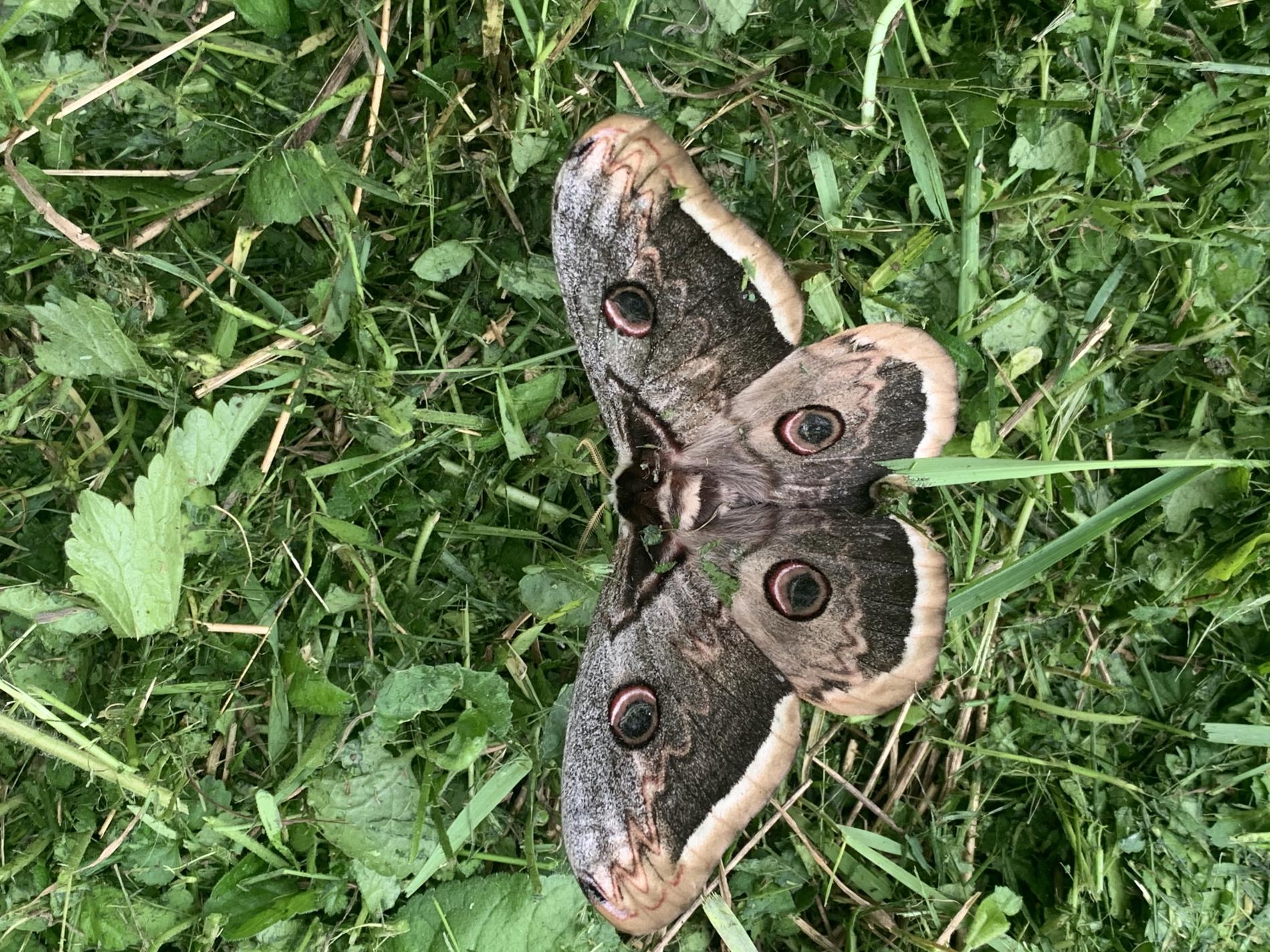
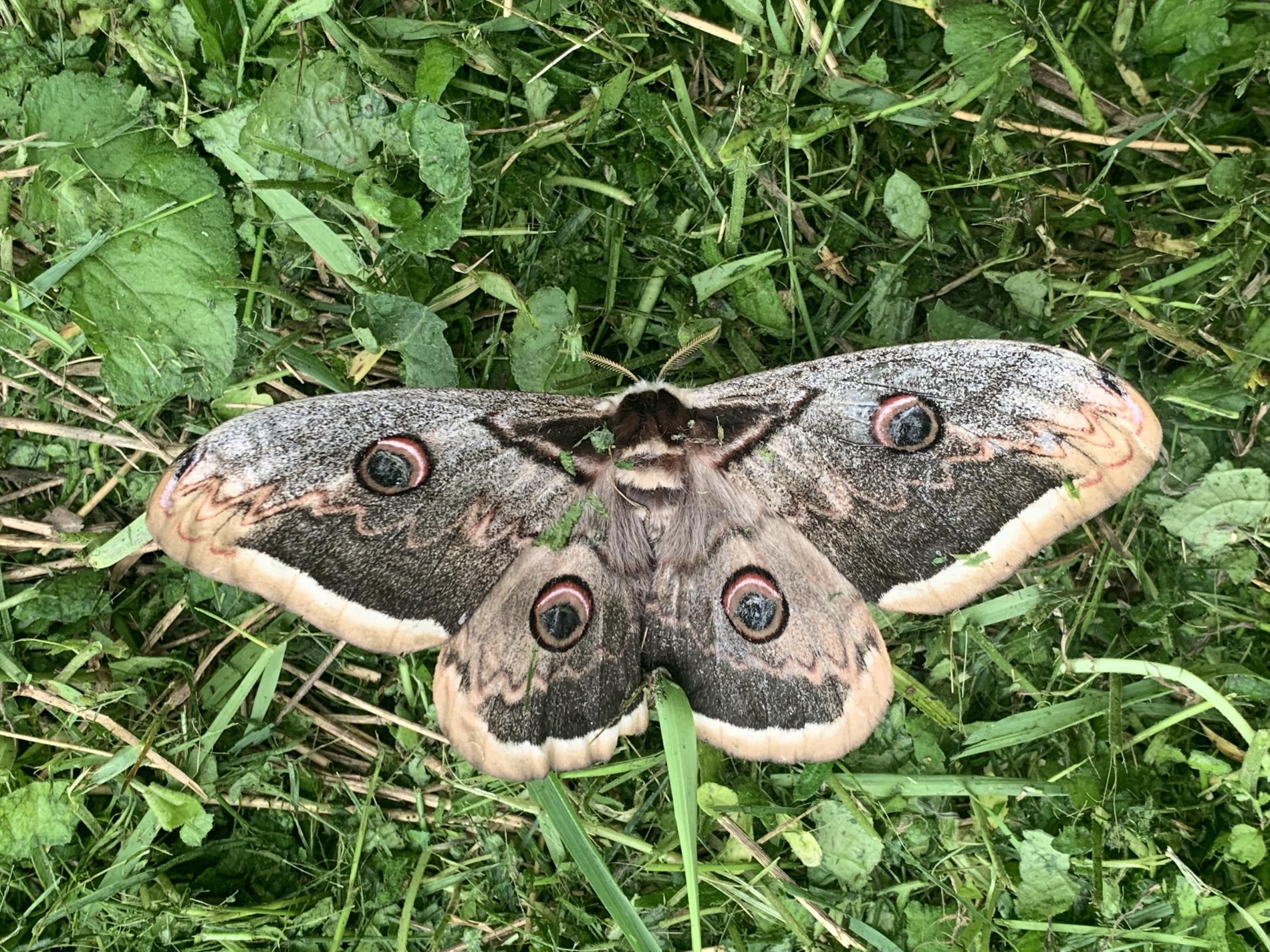
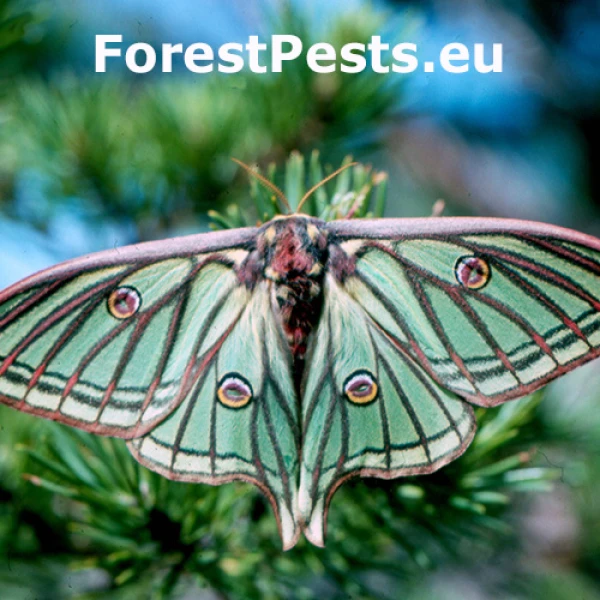
Saturnia pyri
Giant peacock moth
Description
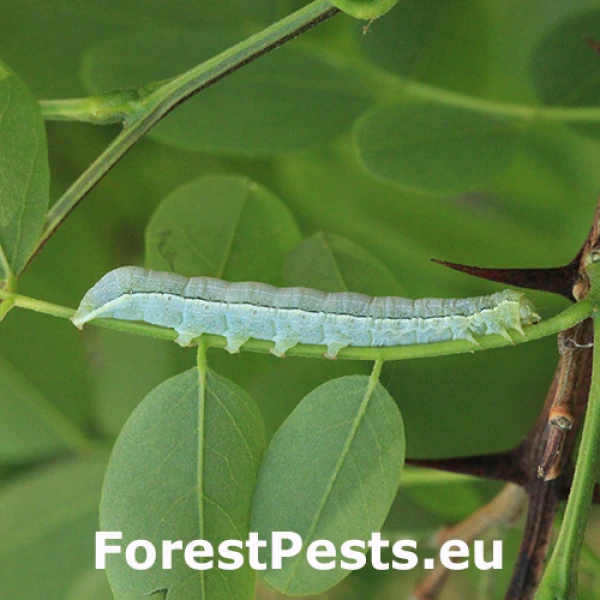
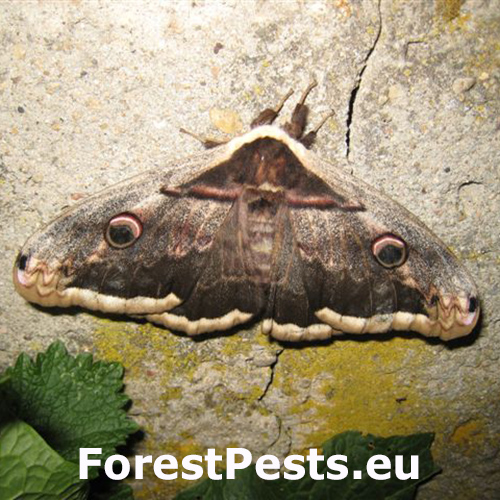
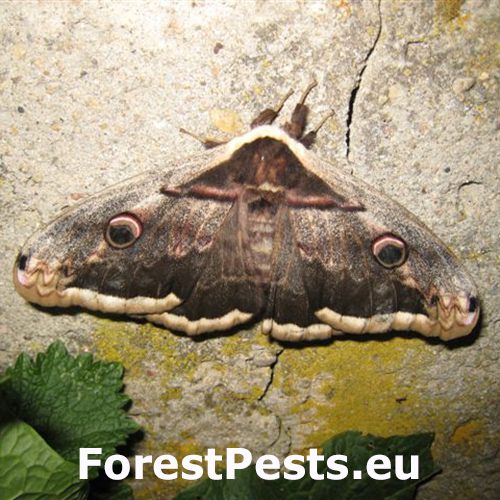
The giant peacock moth, Saturnia pyri, is the largest moth in Europe, with a wingspan of up to 16 cm. It has one generation per year. Adults emerge from late April to June and are active at dusk and during the night. They do not feed, as they lack a functional proboscis, and live for only a few days. Females release pheromones that attract males even from several kilometers away. Eggs are laid in small clusters on the branches of host trees. The caterpillars feed on the leaves of various deciduous trees, especially fruit trees (Prunus, Malus, Pyrus) and others such as Acer, Salix, and Populus. Pupation takes place in strong silken cocoons attached to branches or bark. The pupal stage overwinters and may remain in diapause for more than one year.
Saturnia pyri is generally not considered a significant pest. Although the caterpillars can defoliate trees, their occurrence rarely reaches levels that would seriously affect tree health. The species has only one generation per year, and caterpillars are usually present in low numbers in the wild. It prefers natural habitats such as forest-steppe zones, forest edges, and old orchards, and therefore is virtually absent from intensive plantations or commercial orchards. Minor defoliation can occasionally occur, particularly if several individuals appear by chance, but this is usually an isolated situation with only an aesthetic impact on the tree. From an ecological perspective, it is a valuable species and is protected in some countries.
Symptom
Large green caterpillars with tubercles on their bodies are present on the twigs or leaves. Leaves are missing from the branches.
Tree Species: Pear, Apple Tree, Maple, Poplar
Part of a plant- attacked: Leaf / Needle
Pest significance: Less harmful
Pest Category: Insects
Invasive Species: No
Present in EU: Yes
Add comment: Saturnia pyri
Location map: Saturnia pyri
Legend:

Expert verified points

Unverified points
Observed by users on these tree species
Similar damage
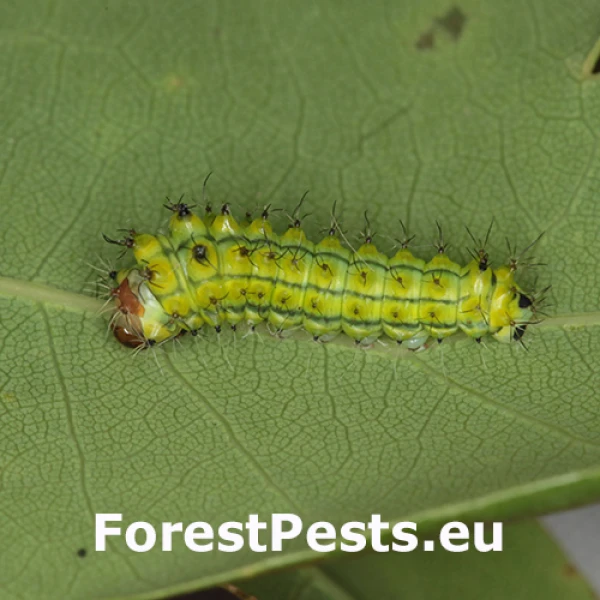
Japanese oak silkmoth
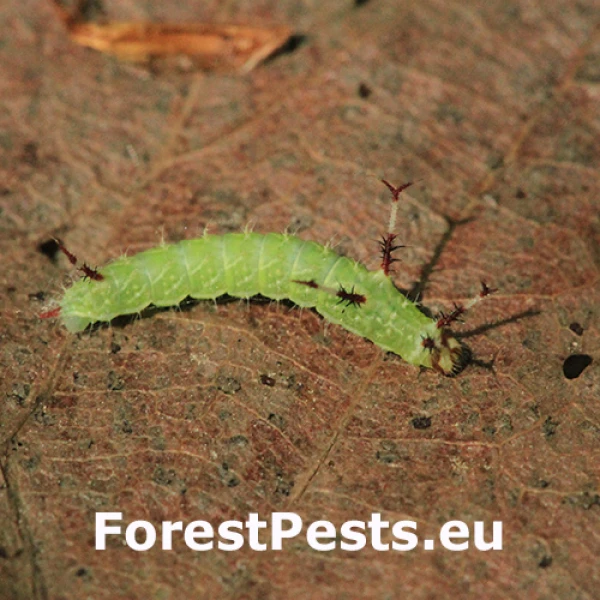
Tau emperor
Spanish moon moth