

 Show all photos in album
Insert for comparison
We will identify your pest
Add pictures of this species
Show all photos in album
Insert for comparison
We will identify your pest
Add pictures of this species
Pemphigus bursarius
Poplar-lettuce aphid
Description
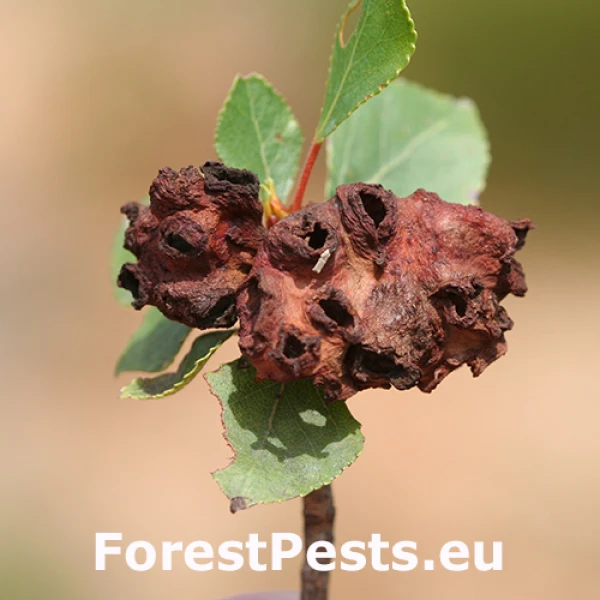
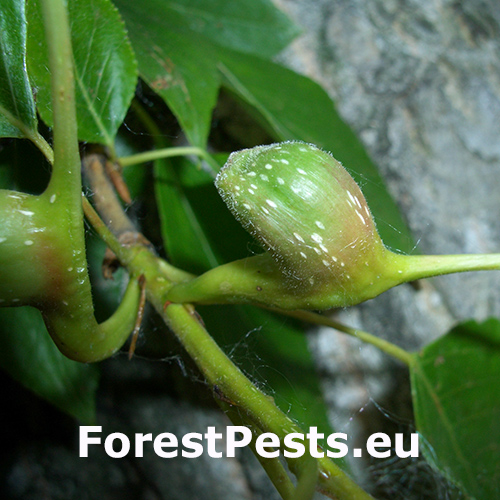
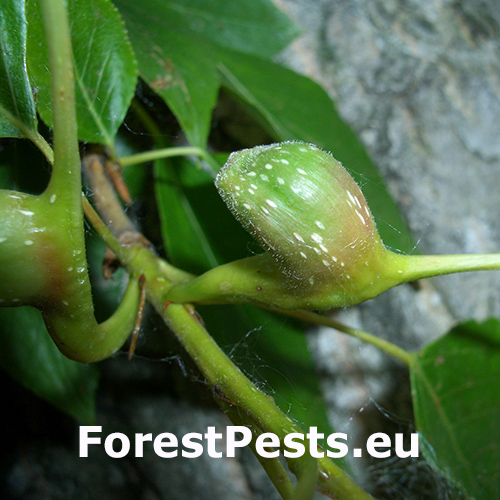
Pemphigus bursarius, known as the poplar-lettuce aphid, is a monophagous species that primarily infests black poplar (Populus nigra) and occasionally other poplar species. In the spring, the aphids induce the formation of pouch-shaped galls on the petioles of poplar leaves. Later in the season, winged generations migrate to secondary hosts in the Asteraceae family, including lettuce (Lactuca sativa), where they colonize the roots and can cause significant damage.
This species is widespread across Europe, North America, and parts of Asia and Africa. While the galls on poplars rarely cause serious harm, they can impact the tree’s aesthetics. However, on secondary hosts like lettuce, P. bursarius can become a serious pest, causing root damage, reduced growth, and even plant death in severe infestations. Additionally, aphids excrete honeydew, leading to sooty mold development, which further weakens host plants.
Symptom
On poplars, purse-shaped galls (1–2 cm) appear on leaf petioles, often green to reddish in color
Tree Species: Poplar
Part of a plant- attacked: Leaf / Needle
Pest significance: Less harmful
Pest Category: Insects
Invasive Species: No
Present in EU: Yes
Add comment: Pemphigus bursarius
Location map: Pemphigus bursarius
Legend:

Expert verified points

Unverified points
Observed by users on these tree species
Similar damage
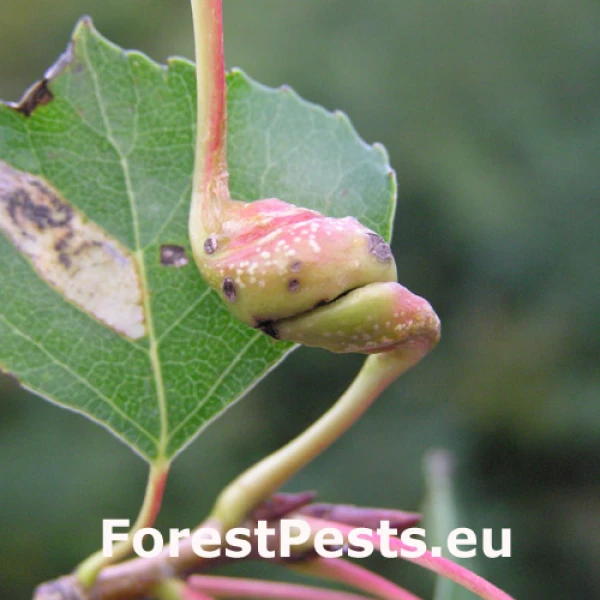
Poplar spiral gall aphid
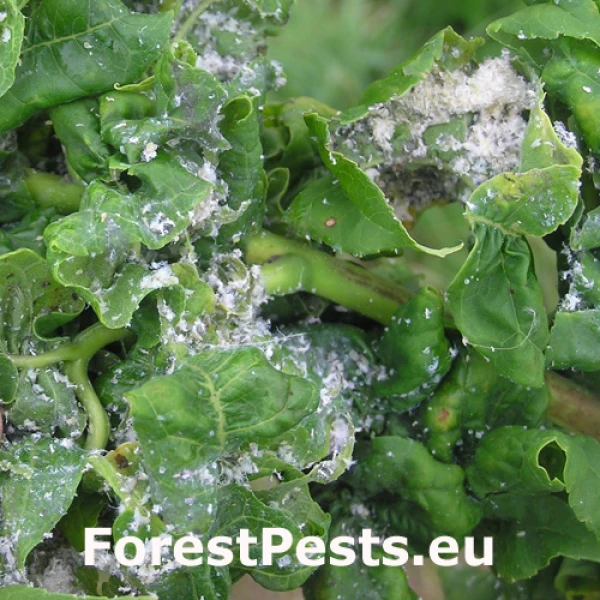
Aphid Prociphilus bumeliae
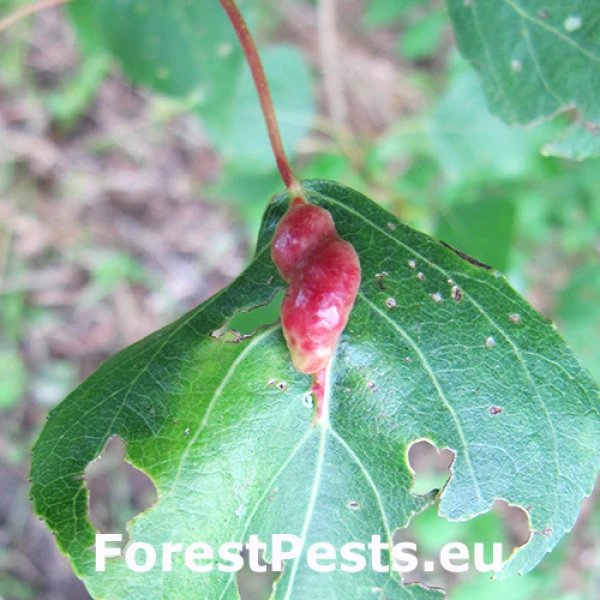
Pemphigus phenax