

 Show all photos in album
Insert for comparison
We will identify your pest
Add pictures of this species
Show all photos in album
Insert for comparison
We will identify your pest
Add pictures of this species
Lytta vesicatoria
Spanish fly
Description
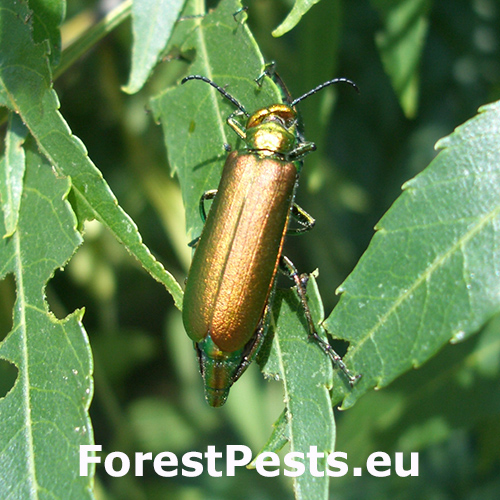
Lytta vesicatoria, also known as the Spanish fly, is a conspicuous green metallic blister beetle from the family Meloidae. It occurs in southern and central Europe, where adults appear in late spring and early summer. The beetles are active during hot daylight hours and aggregate in large numbers on host trees, feeding on the foliage. They prefer ash (Fraxinus), but also feed on lilac, privet, elm, maple, poplar, catalpa, rose, and other deciduous plants. Heavy feeding can result in partial or complete defoliation, especially on young trees, which may significantly worsen their condition. Larvae develop in the nests of solitary bees, where they prey on bee larvae and stored pollen. The species has one generation per year.
The body of Lytta vesicatoria contains the toxic substance cantharidin, which can cause painful blisters upon contact with the skin. If ingested, cantharidin is highly dangerous – it can damage the kidneys and lead to severe poisoning. This compound was historically used in folk medicine, but its effects are extremely risky. Therefore, caution is strongly advised when handling the beetle.
Symptom
Chewed leaves with irregular edges, mostly in upper tree canopy; remaining veins may remain intact.
Tree Species: Ash, Maple, Catalpa, Boxwood, Lilac, Rose, Poplar
Part of a plant- attacked: Leaf / Needle
Pest significance: Less harmful
Pest Category: Insects
Invasive Species: No
Present in EU: Yes
Add comment: Lytta vesicatoria
Location map: Lytta vesicatoria
Legend:

Expert verified points

Unverified points
Observed by users on these tree species
Similar damage
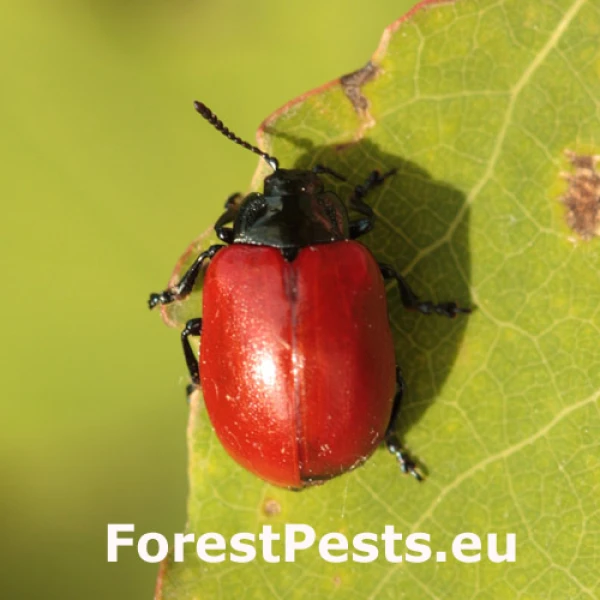
Poplar leaf beetle
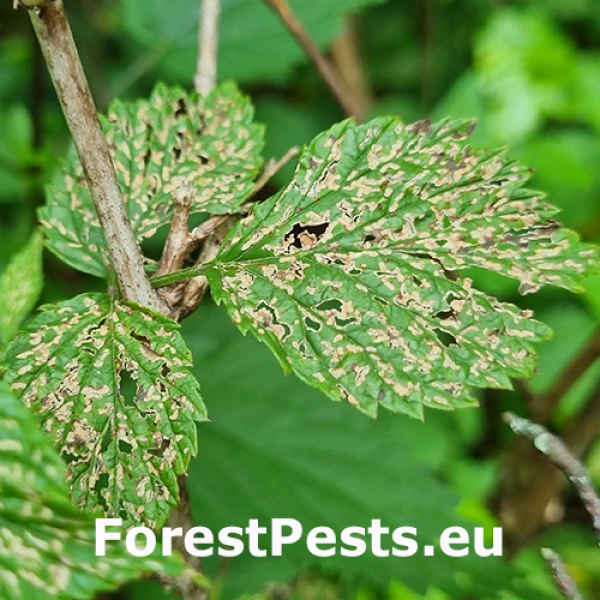
Leaf beetles on raspberries
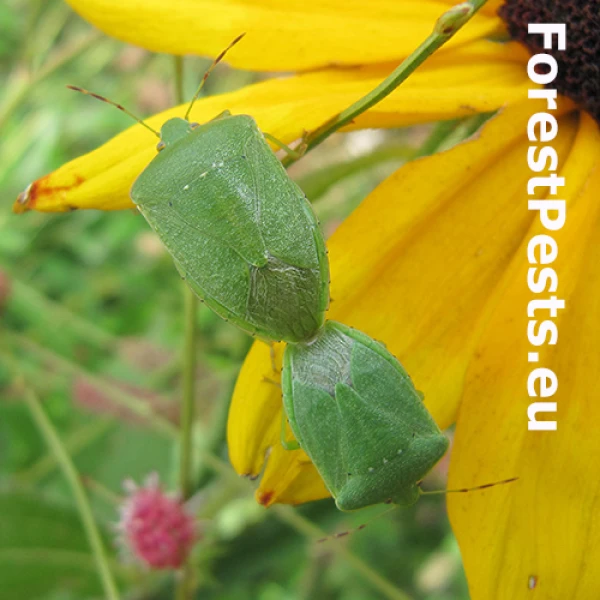
Southern green stink bug