

 Show all photos in album
Insert for comparison
We will identify your pest
Add pictures of this species
Show all photos in album
Insert for comparison
We will identify your pest
Add pictures of this species
Leucoma salicis
White satin moth
Description
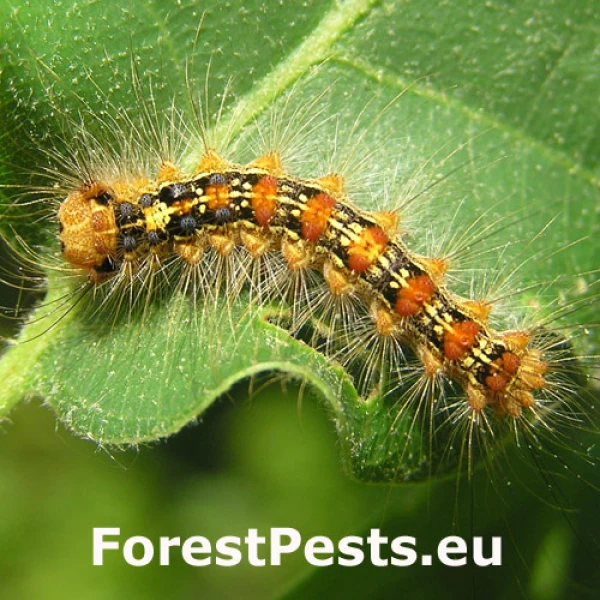
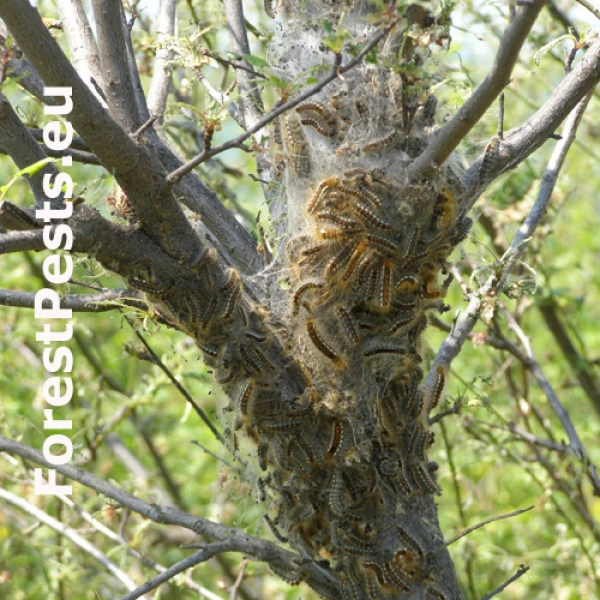
Wingspan 37-50 mm. The glossy surface of the wings gives rise to this moth\'s English name. The female is larger than the male. In August females lay eggs on the leaves or twigs of trees. Its larvae are quite similar to those of gypsy moth, however, they have more orange and above all white spots on their back. After overwintering, young larvae begin feeding early in spring and they cause defoliation of stands already in late April and in early May (unlike gypsy moth which damages stands later, at the end of May). They consume completely all leaves so that only stems are left. Larvae pupate in June and moths fly in July. Occurrence of this pest is limited to the lowlands. Defoliation of poplar plantations and tree-lined avenues is occasionally caused by this pest.
Symptom
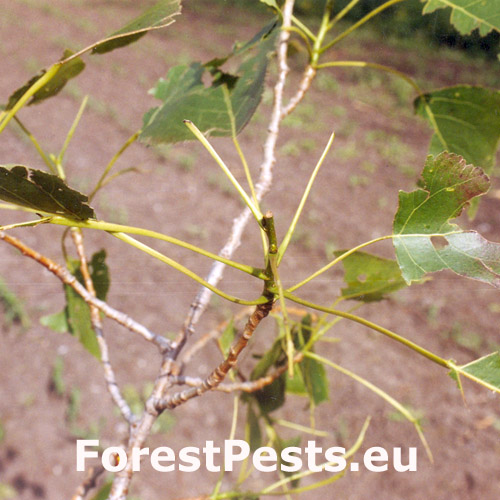
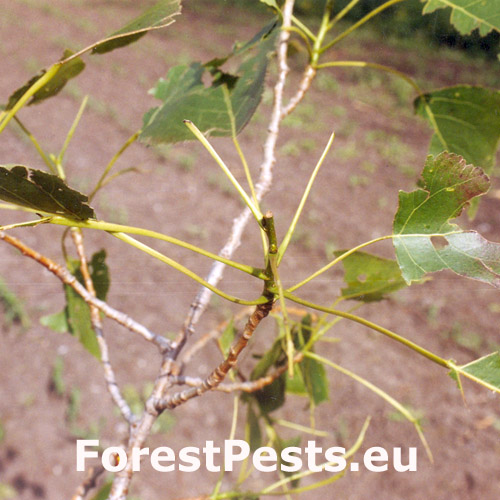
Larvae consume completely all leaves so often only leave petioles are left.
Tree Species: Poplar, Willow
Part of a plant- attacked: Leaf / Needle
Pest significance: Harmful
Pest Category: Insects
Invasive Species: No
Present in EU: Yes
Add comment: Leucoma salicis
Location map: Leucoma salicis
Legend:

Expert verified points

Unverified points
Observed by users on these tree species
Similar damage
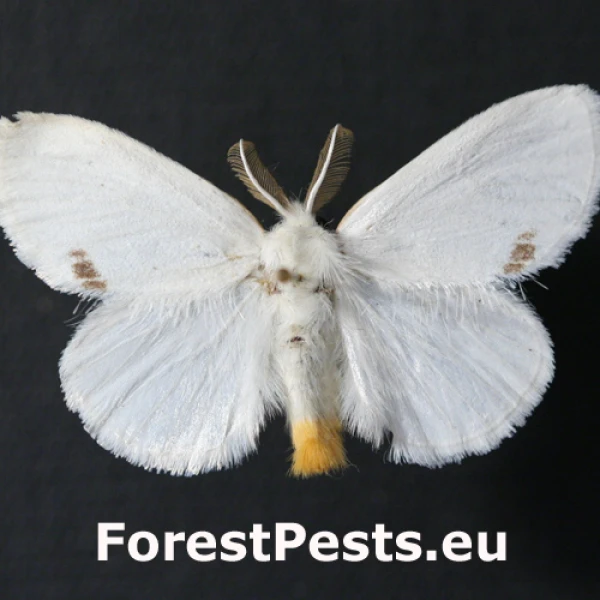
Yellow-tail moth
Browntail moth

Poplar leaf beetle