

 Show all photos in album
Insert for comparison
We will identify your pest
Add pictures of this species
Show all photos in album
Insert for comparison
We will identify your pest
Add pictures of this species
Flooding
Flooding
Description
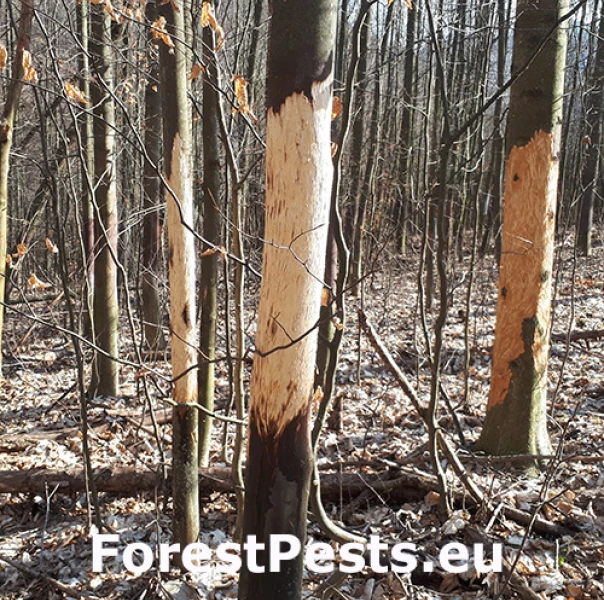
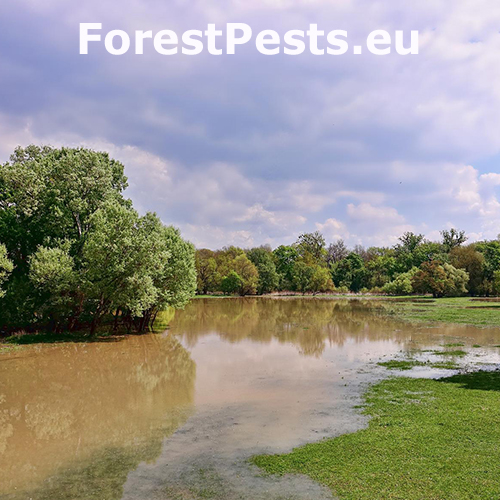
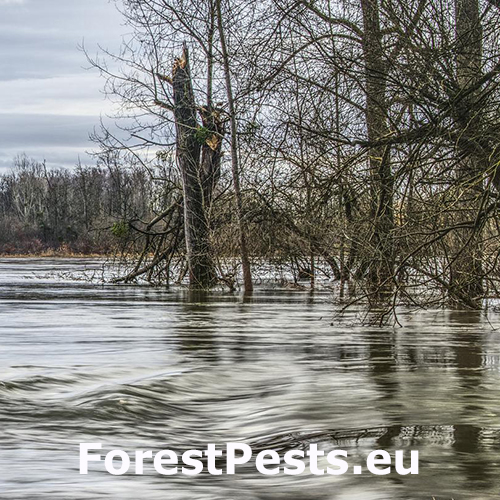
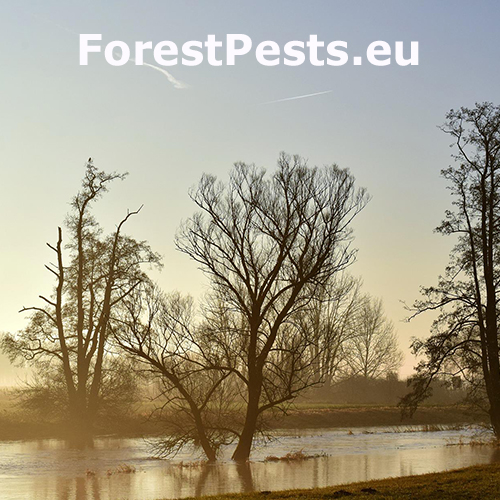
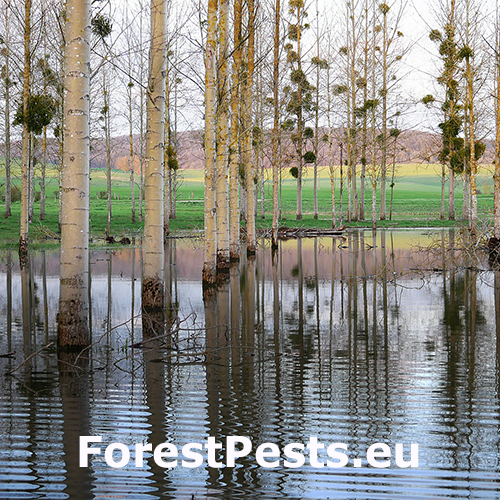
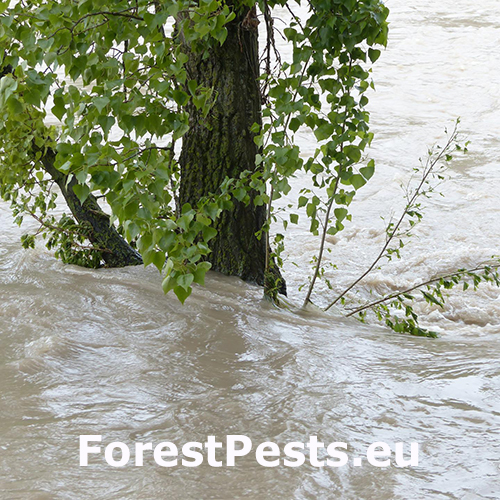
Water over-saturation on site occurs when the amount of water is greater than the sorption capacity of the soil and vegetation. It happens during abnormally intense or long-lasting precipitations, or with subsequent floods. Another case is permanently wet site, mainly due to high groundwater levels (so called azonal plant communities). During floods, seedlings are washed away and the vegetation organs of trees are mechanically damaged, especially bark is abraded. Ice floes, which usually occur in early spring on large watercourses, are also dangerous for tree condition. When environment becomes wet, the soil is usually incoherent. Trees develop the organs more slowly due to wetting of the soil than under standard growth conditions. Their tissues usually do not mature properly, consequently they can freeze with the onset of frost. This creates conditions for infection with parasitic and wood-destroying fungi. The roots of trees are weakly rooted in waterlogged soil. Seedlings often die in event of a long flood. After floods, wet places remain in forest sites, from which the outflow of water is changed for a longer period of time. That makes difficult to restore forest stands. The water over-saturated soil is depleted of calcium and other basic elements, sometimes becomes glazed repeatedly.
Endangered trees
Repeatedly occurring floods endangers a variety of forest stands, mostly in oaks, ashes and elms. Willows, poplars, alders and European hornbeam are a bit more resistant to conditions of water over-saturation. Shallow rooted tree species, especially Norway spruce, are in permanently wet sites very endangered by wind (potential uprooting).
Damage localization
Water floods occur in the vicinity of large rivers in the spring during long-lasting or intesnive rains, where water flow is limited. Furthermore, damage to trees can appear in permanently wet habitats (azonal communities).
Symptom
Tree roots are loosened in the soaked soil, which is then uprooted by wind. Heavy soils remain muddy. On the slopes, water washes grooves, and water erosion occurs, or soil slides arise (this is typical especially for clay soils). Riparian trees are exposed to the mechanical effects of water stream. Excessively saturated soil environment causes a reduction in root respiration, as a result of which trees suffer from physiological disorders. In permanently wet habitats, trees have very shallow roots and are unstable.
Tree Species: Elm, Oak, Hornbeam, Alder, Spruce, Poplar, Willow
Part of a plant- attacked: Tree trunk, Branch
Pest significance: Harmful
Pest Category: Other
Invasive Species: No
Present in EU: Yes
Add comment: Flooding
Location map: Flooding
Legend:

Expert verified points

Unverified points
Observed by users on these tree species
Similar damage
Wind
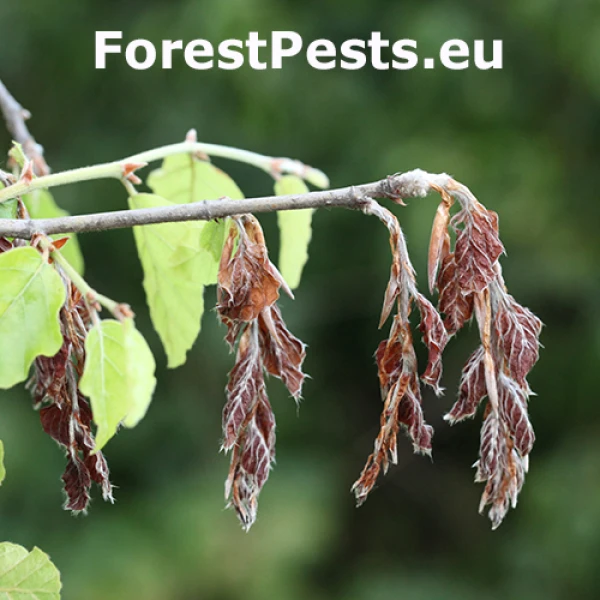
Frost

Rime