

 Show all photos in album
Insert for comparison
We will identify your pest
Add pictures of this species
Show all photos in album
Insert for comparison
We will identify your pest
Add pictures of this species
Diplocarpon mespili
Quince leaf blight
Description
Diplocarpon mespili is a pathogenic fungus responsible for quince leaf blight, a disease affecting primarily Cydonia oblonga (quince) but also other members of the Rosaceae family, such as Amelanchier, Aronia, Chaenomeles, Cotoneaster, Crataegus, Malus, Pyracantha, Pyrus, and Sorbus. This fungus thrives in wet and humid conditions, particularly during rainy summers. It overwinters in plant debris like fallen leaves and branches, producing spores in spring that spread via wind, rain, or pollinators to infect new plants.
The fungus causes significant damage to quince trees by creating dark spots on leaves and fruits, leading to premature defoliation and reduced fruit quality. Severe infections can weaken trees, reducing their aesthetic value and productivity. Though it can also infect other Rosaceae species, the damage is generally less severe compared to quince.
Symptom
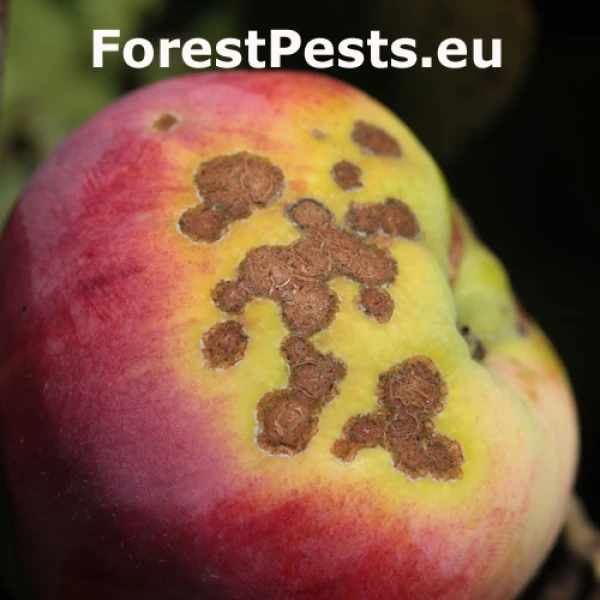
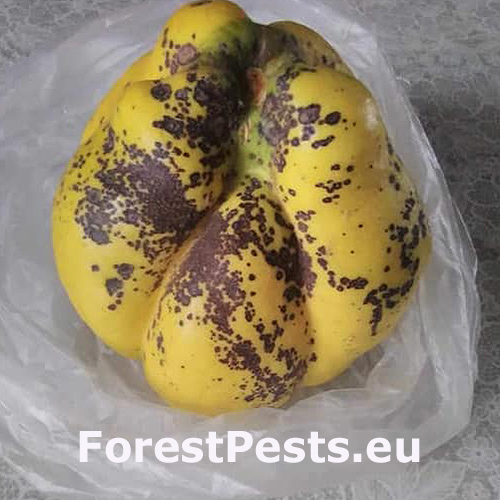
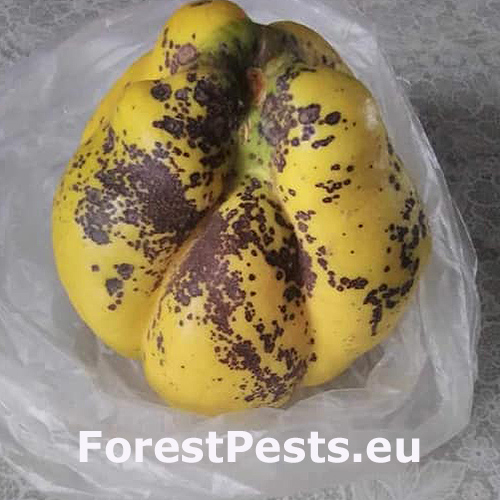
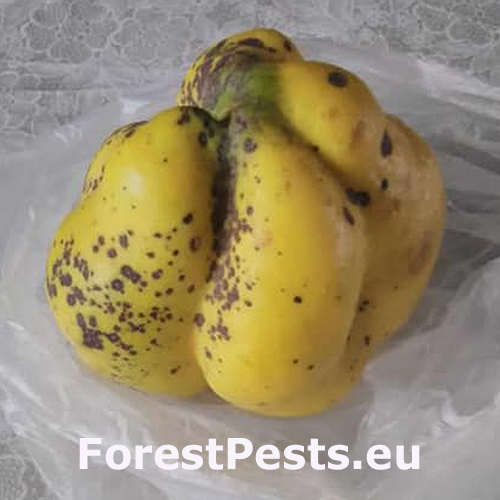
Small black spots appear on leaves, expanding as the leaf yellows or browns. Infected fruits show dark, black spots and can be deformed seriously. Severely infected leaves fall prematurely, and black specks may appear on necrotic tissue.
Tree Species: Black chokeberry, Quince, Flowering quince, Hawthorn, Firethorn, Apple Tree, Rowan, Whitebeam, Shadbush, Cotoneaster
Part of a plant- attacked: Leaf / Needle
Pest significance: Very harmful
Pest Category: Fungi
Invasive Species: No
Present in EU: Yes
Add comment: Diplocarpon mespili
Location map: Diplocarpon mespili
Legend:

Expert verified points

Unverified points
Observed by users on these tree species
Similar damage
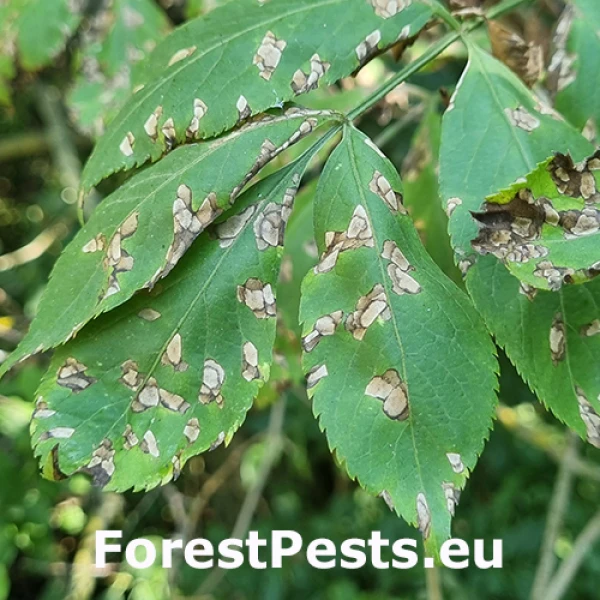
Leaf spots on elder
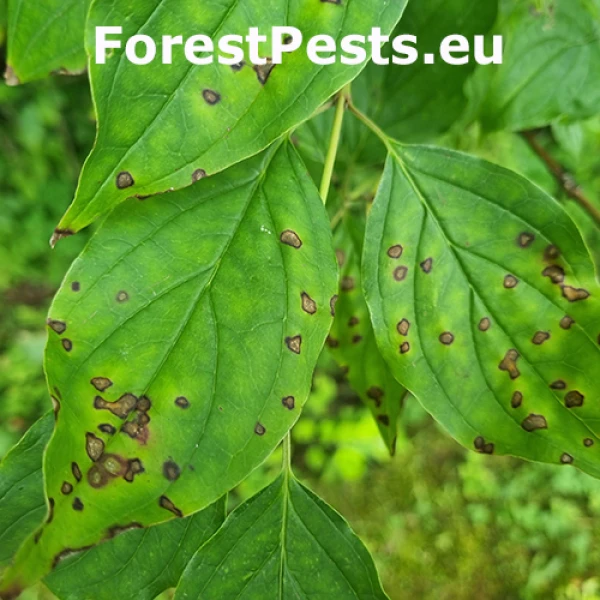
Leaf spot on dogwoods
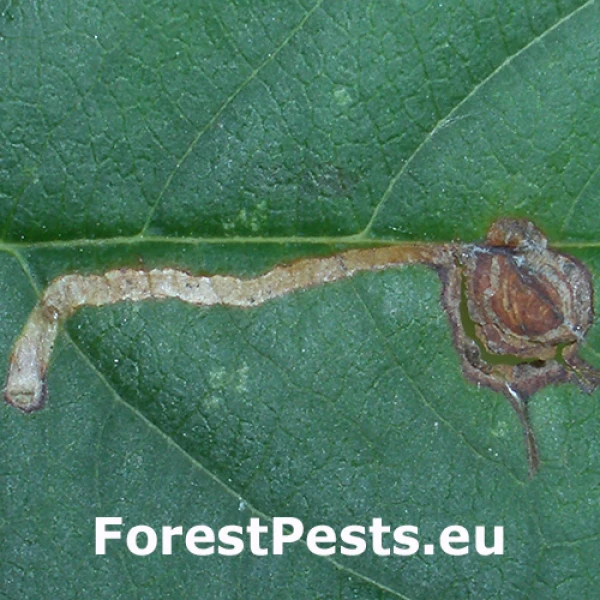
Scarce sloe pigmy