




 Show all photos in album
Insert for comparison
We will identify your pest
Add pictures of this species
Show all photos in album
Insert for comparison
We will identify your pest
Add pictures of this species
Wind
Wind
Description
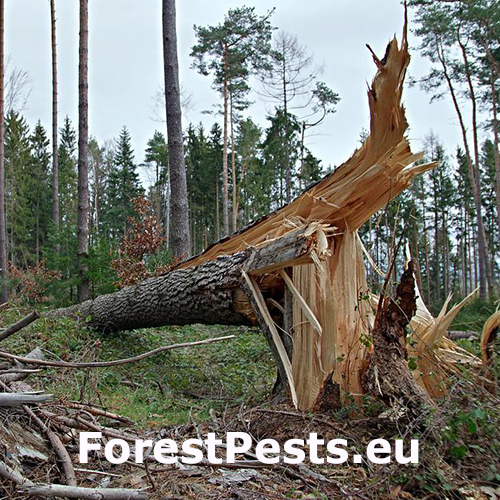
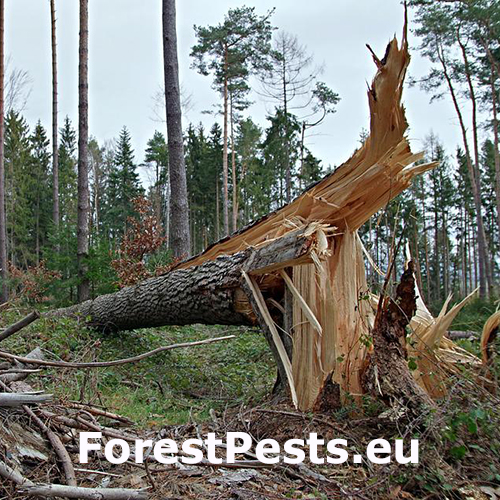
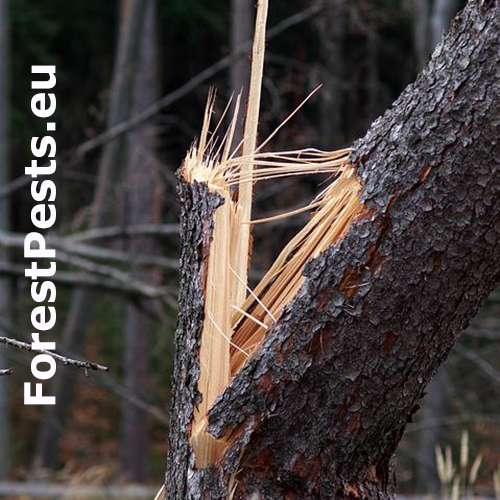
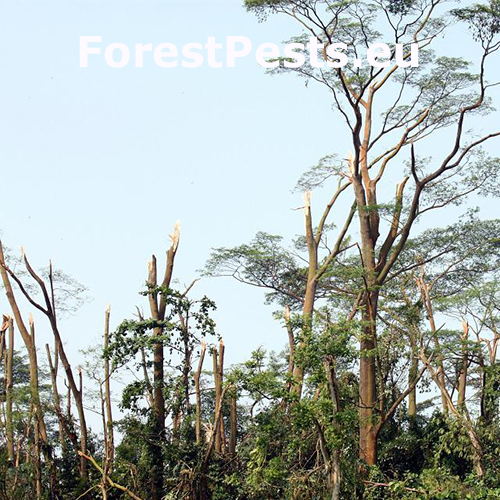
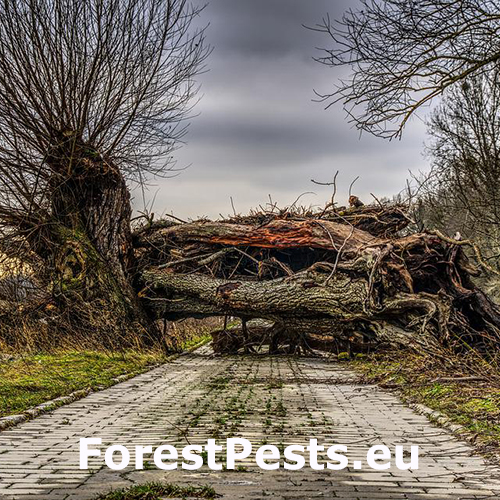
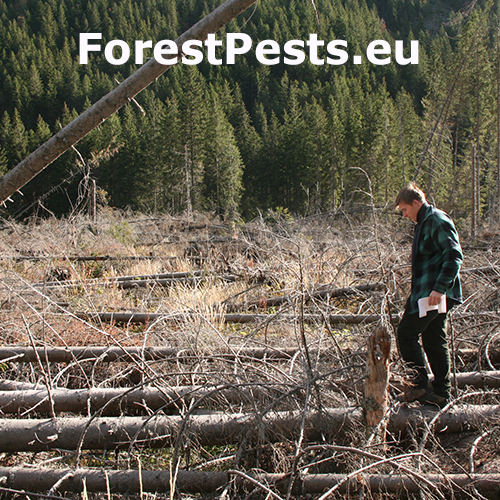
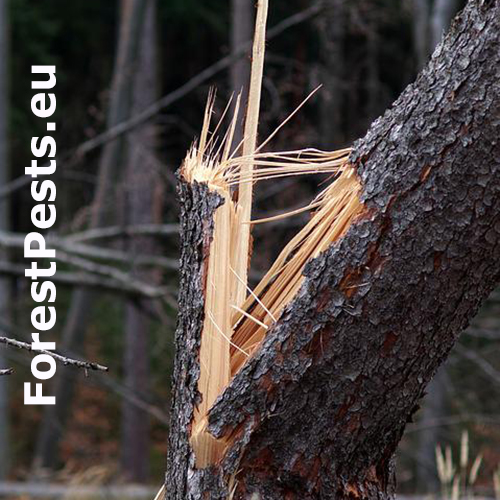
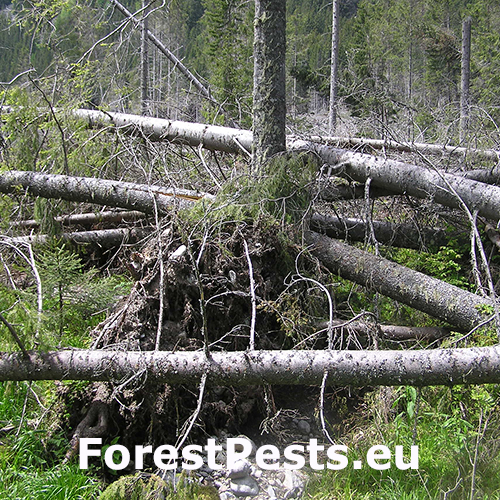
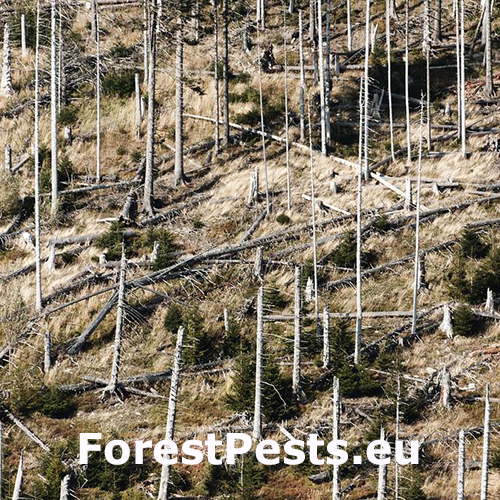
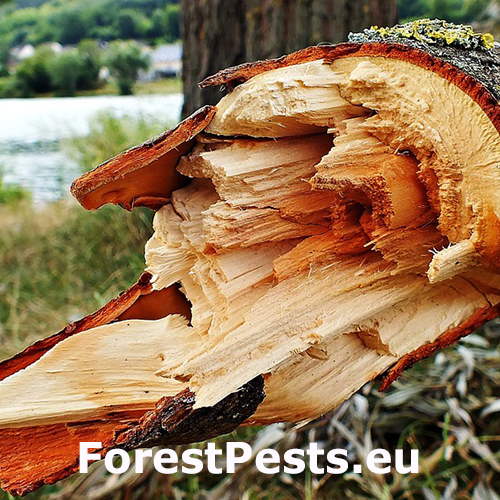
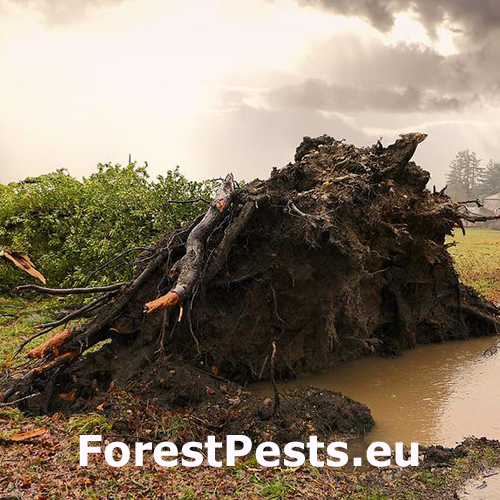
Wind is the moving air from a place of higher pressure to a place of lower pressure. It mechanically damages forest stands mainly by causing uprooting and tree breakages. Uprooting occurs especially when the soil is wet, breakage when the trees are well rooted in the soil. Wind damage in forest stands usually occurs when the wind speed reaches 8, and a higher degree of the Beaufort wind force scale, i.e. 15.3 m.s-1, resp. 55 km.h-1, for a reference height of 6 m above the ground surface. The directions of these winds, for example in the Western Carpathians, are very variable (northern and northwestern origins prevail). The wind directions at the level of smaller regions are mainly related to the orography of the terrain, as they are affected by the orientation of mountain ridges and valleys. In the past, the largest wind damage in the Western Carpathians was located mainly in mountainous areas, mostly in spruces (altitudes from 600 to 1000 m above sea level). In recent years, the interval of occurrence of wind breaks is within wider range of altitude. It means that they actually occur at both higher and lower altitudes. At the same time, there is a gradual increase in the incidence of strong winds at the European level. Recently, even a novel phenomenon - tornadoes have been happening in a variety of European countries. The phenomenon may be related to the climate change, so the risks to forests are likely increasing in the future.
Wind also damages forest stands physiologically. It is a drying up wind with low absolute humidity, which occurs mainly at low altitudes. In this case, the trees suffer from a lack of moisture caused by a decrease in soil moisture or increased leaf transpiration.
Endangered trees
The most endangered species by wind is Norway spruce, especially mono-cultural plantations with low stability, over-dense stands with short crowns, slender and high stems. Besides Norway spruce, silver fir and European beech are also endangered. Most uprooted trees occur under the conditions of permanently or temporary wet soils.
Damage localization
The wind causes both uprooting and breakages. The ratio of uprooted and broken trees is mainly related to the actual anchoring of root systems in the soil. In the winter, when the soil is frozen and the roots are well fixed in the ground, mostly stem breakages occur. In general, however, uprooting prevails over breakage (ratio mostly between 2:1 and 3:1).
Symptom
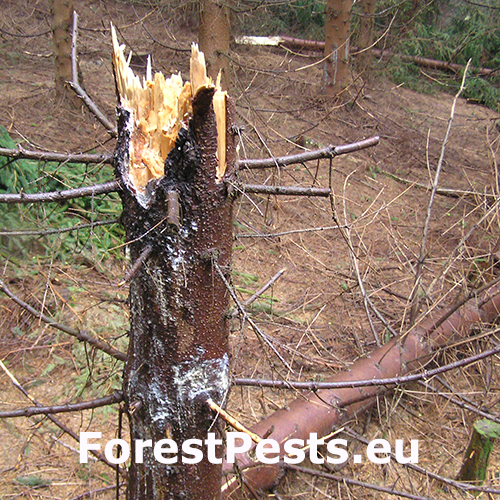
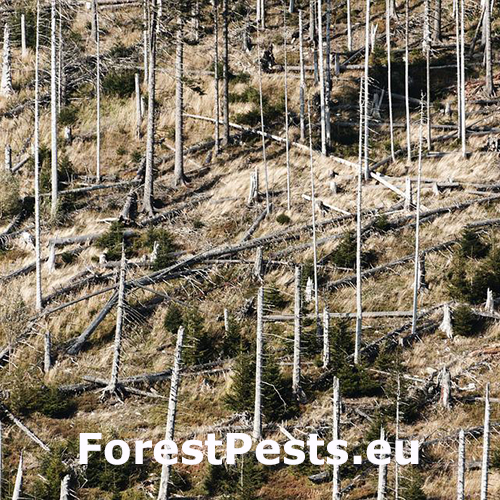
Wind casus tree uproots, stem breaks, branch breaking. Wind damage in stands arise individually, in groups as well as in entire, often large, areas. Extend and intensity of wind damage depends on the wind speed as well as stability of forest stands. At lower altitudes, dry winds cause wilting and subsequent loss of assimilative organs, especially in young forest stands.
Tree Species: Beech, Fir, Spruce
Part of a plant- attacked: Tree trunk, Roots, Branch
Pest significance: Very harmful
Pest Category: Other
Invasive Species: No
Present in EU: Yes
Add comment: Wind
Location map: Wind
Legend:

Expert verified points

Unverified points
Observed by users on these tree species
Similar damage

Snow

Rime

Frost


