





 Show all photos in album
Insert for comparison
We will identify your pest
Add pictures of this species
Show all photos in album
Insert for comparison
We will identify your pest
Add pictures of this species
Thaumetopoea processionea
Oak processionary moth
Description
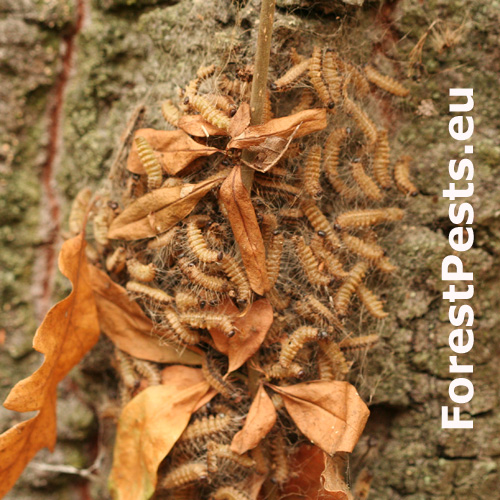
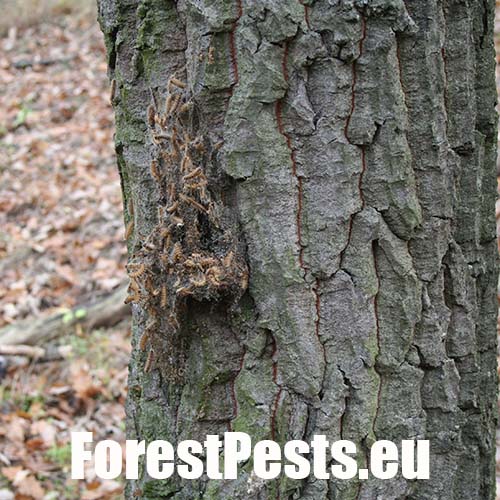
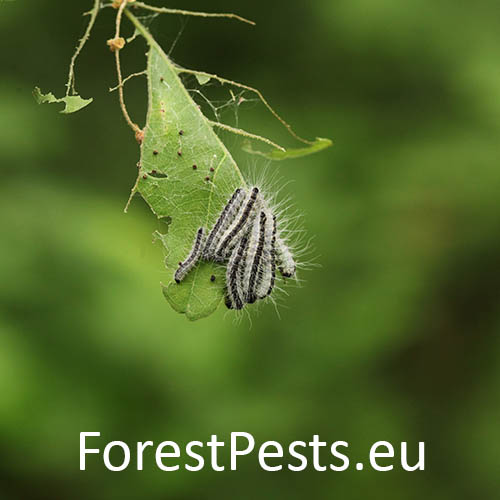
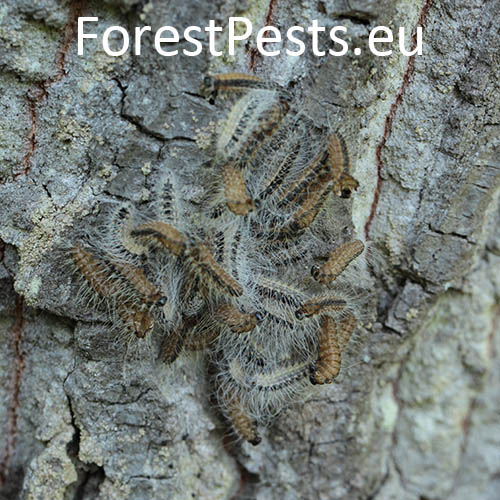
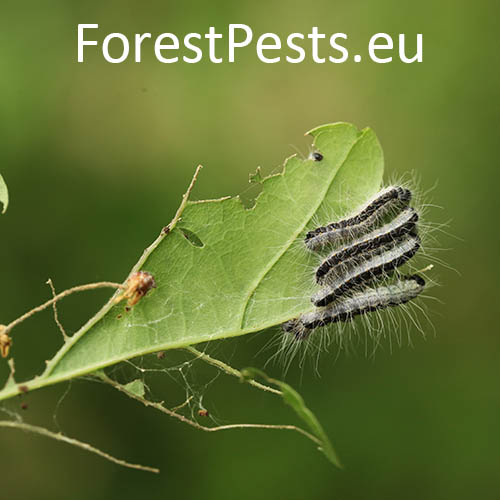
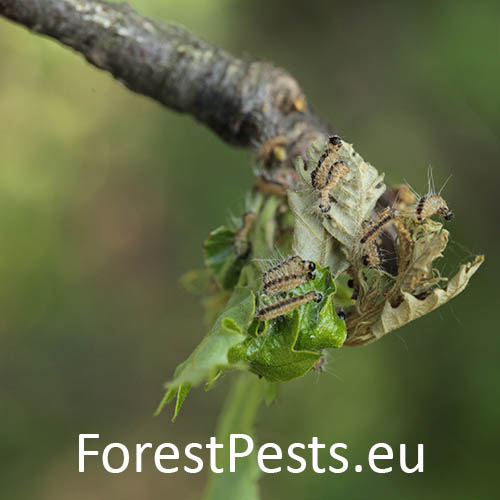
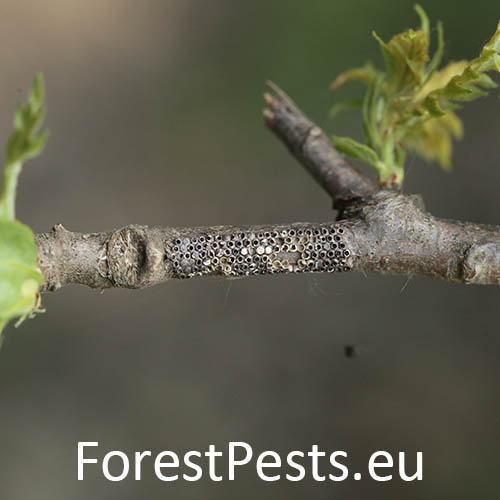
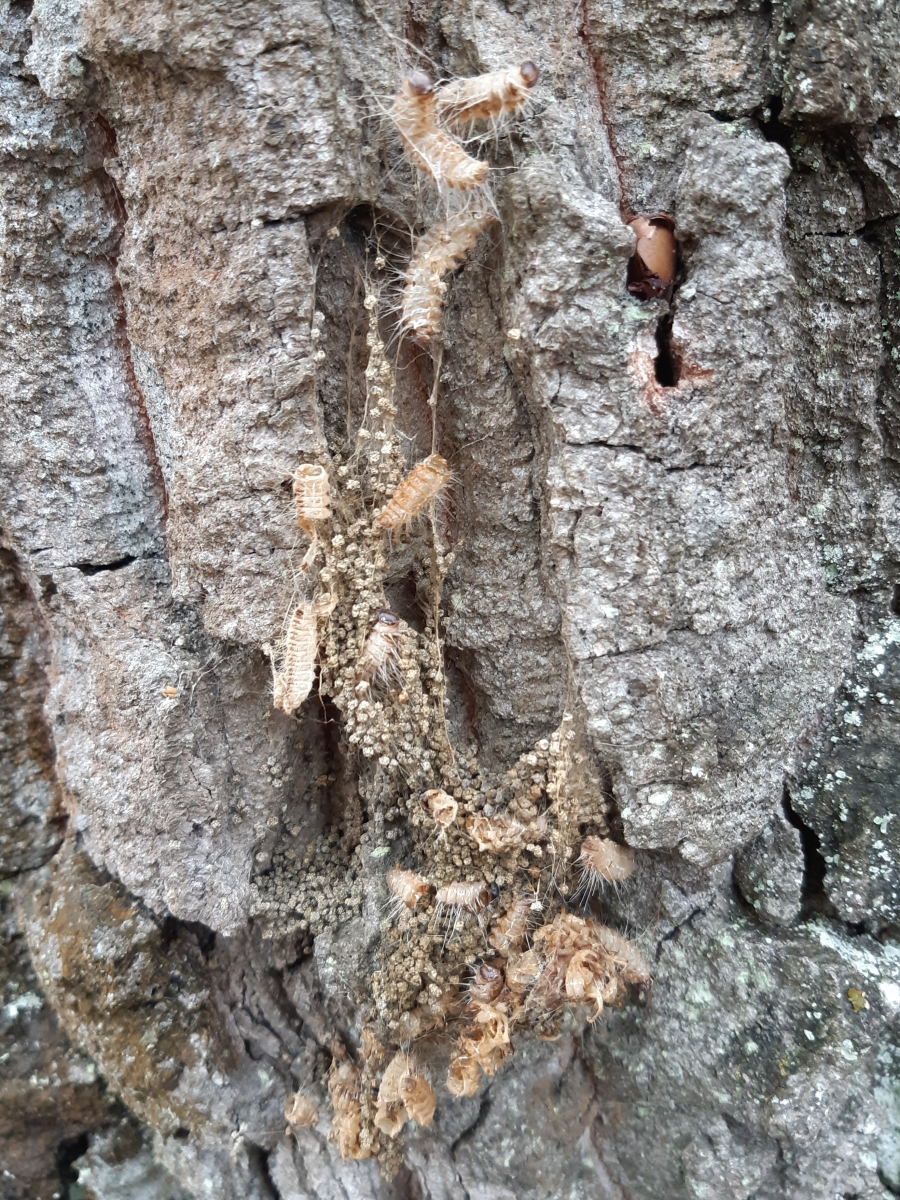
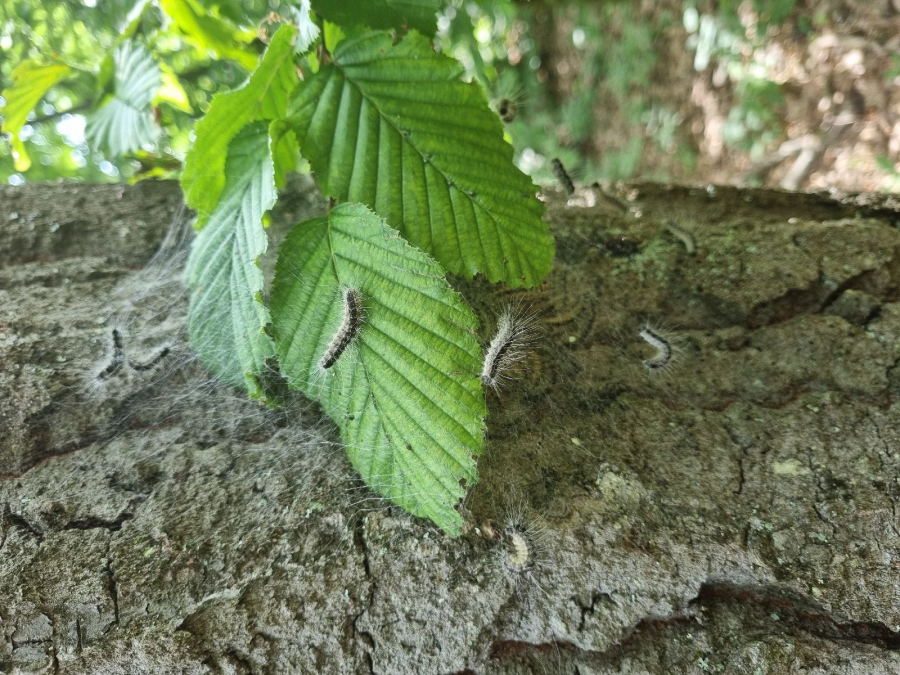
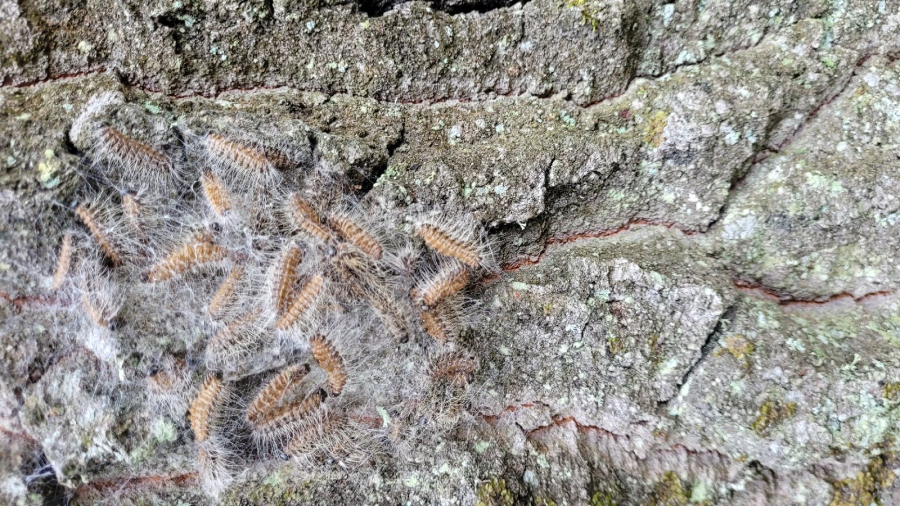
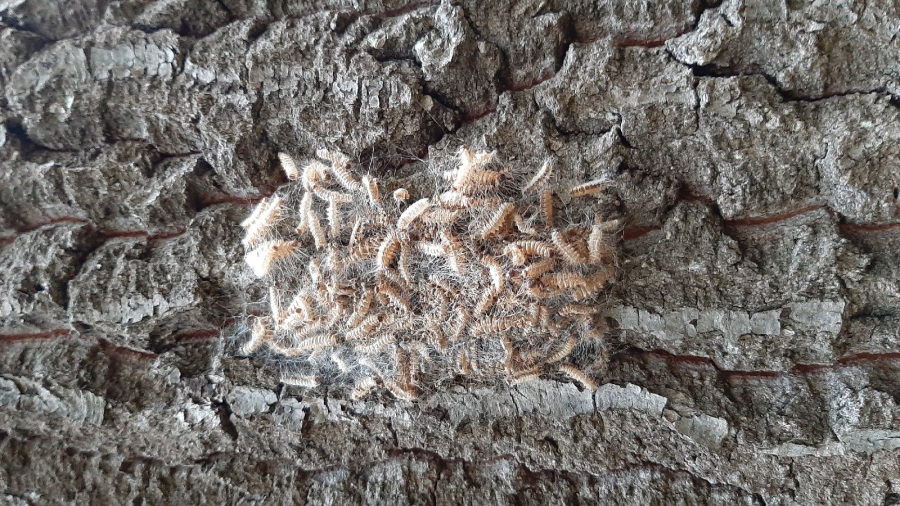
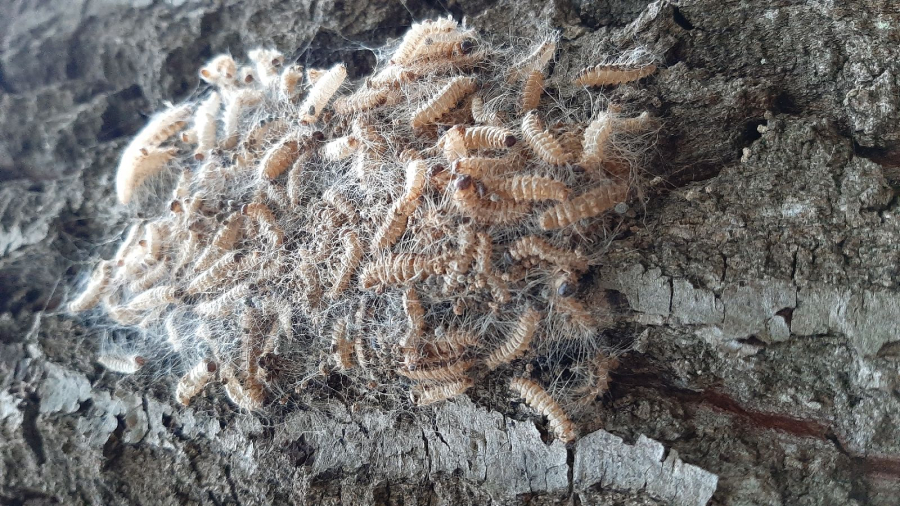
Moths with a 26–30 mm wingspan fly in July. Each female lays between 100 and 200 eggs on twigs and small branches in the canopy. The eggs are deposited in rows in a single layer. The larvae hatch from the overwintered eggs in May. This species is characteristic for the larvae living together in web nests on tree trunks. They crawl out for food, moving one after another in a row, sometimes even several meters long. They pupate in the nest or at the tree base in a cocoon. Beware of the larvae!!!! Their hair can cause allergic reactions in contact with skin.
Symptom
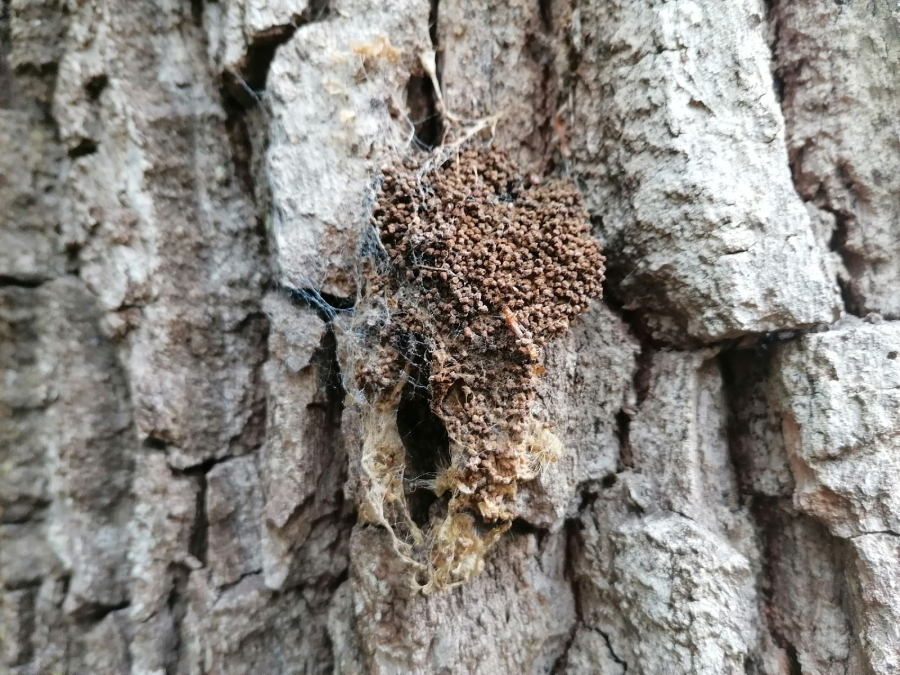
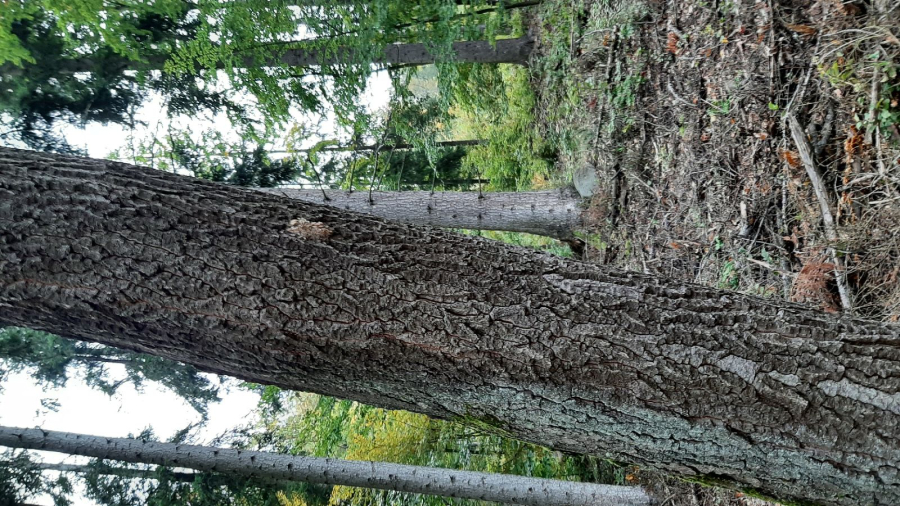
This species is characteristic for the larvae living together in web nests on tree trunks. They crawl out for food, moving one after another in a row, sometimes even several meters long. They pupate in the nest or at the tree base in a cocoon.
Tree Species: Oak
Part of a plant- attacked: Tree trunk
Pest significance: Less harmful
Pest Category: Insects
Invasive Species: No
Present in EU: Yes
Add comment: Thaumetopoea processionea
Location map: Thaumetopoea processionea
print viewLegend:

Expert verified points

Unverified points
Observed by users on these tree species
Most sightings of the species


Last observations
There are a total of 6 observations of the species in the system

Thaumetopoea processionea Oak processionary moth
Marián Slamka
Number of votes: 0
Published: 12.10.2024

Thaumetopoea processionea Oak processionary moth
Marián Slamka
Number of votes: 0
Published: 12.10.2024

Thaumetopoea processionea Oak processionary moth
majo
Number of votes: 0
Published: 12.10.2024

Thaumetopoea processionea Oak processionary moth
rado
Number of votes: 0
Published: 4.6.2024

Thaumetopoea processionea Oak processionary moth
rado
Number of votes: 0
Published: 4.6.2024
Similar damage

Pine moth

Gypsy moth

Browntail moth


