




 Show all photos in album
Insert for comparison
We will identify your pest
Add pictures of this species
Show all photos in album
Insert for comparison
We will identify your pest
Add pictures of this species
Thaumetopoea pityocampa
Pine processionary moth
Description
This moth has cream coloured forewings with brown markings and white hindwings. The females oviposit on the needles in August. During autumn and winter, larvae aggregate in colonies and spin silken nests which enlarge until the 4th instar when the definitive winter nest is built. The larvae change colour at each moult and at the 3rd instar urticating hair patches appear. They crawl out for food, moving one after another in a row formation. Larvae of Thaumetopoea pityocampa are very dangerous for humans. Their hairs are very fragile and if they penetrate the skin, they can cause severe allergic reactions. In the Western Mediterranean area, it is considered one of the most important cedar pests. Severe defoliation of cedar trees is not rare.
Symptom
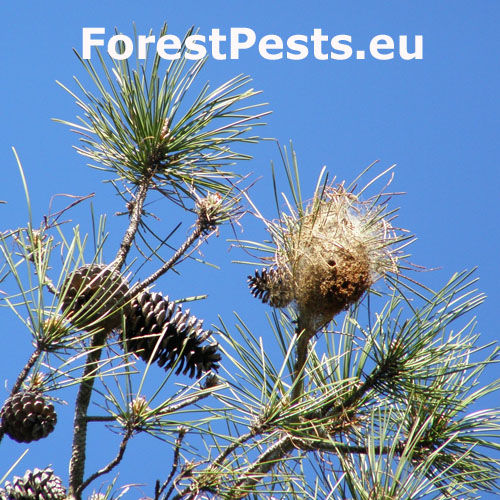
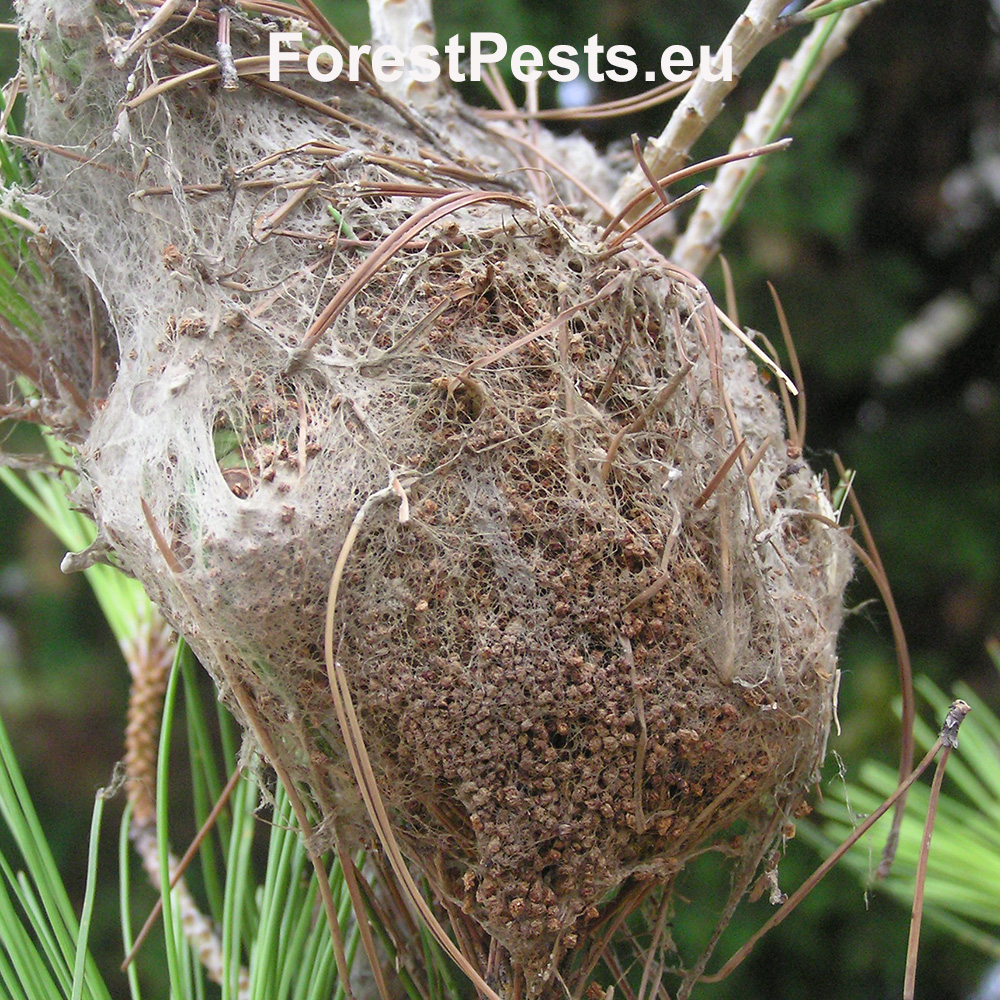
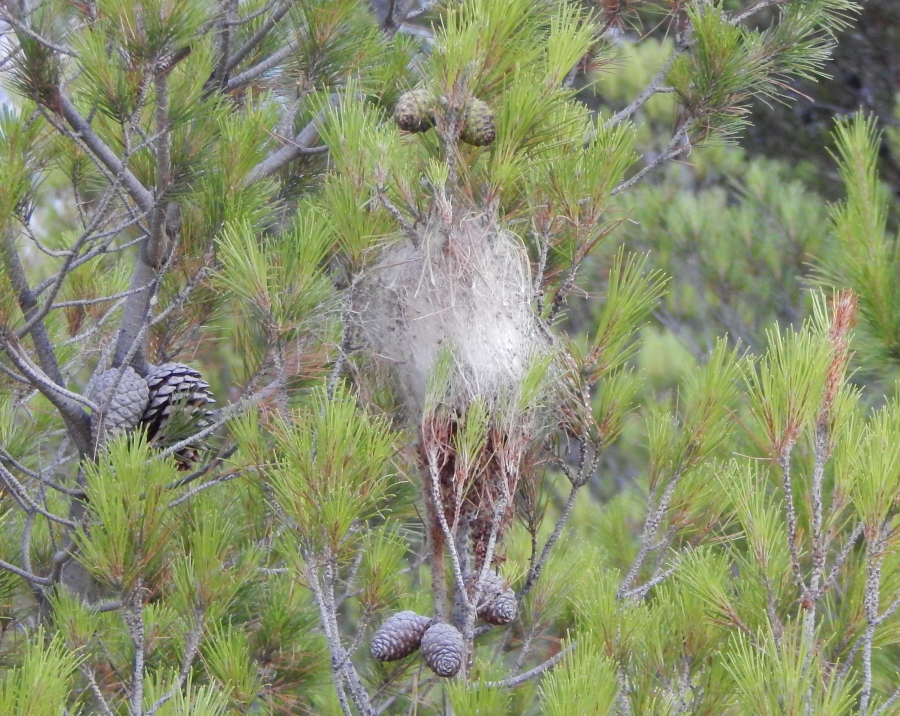
It creates a ´nest´ on the tree, in which the caterpillars spend the night and from where they travel out together in the rows for food in the morning and in the evening. It damages the upper part of the crown. The needles are consumed the whole so that only their base, 1-2 cm long, remain. It can cause up to 100% defoliation of pines.
Tree Species: Pine, Cedar
Part of a plant- attacked: Leaf / Needle
Pest significance: Very harmful
Pest Category: Insects
Invasive Species: Yes
Present in EU: Yes

Add comment: Thaumetopoea pityocampa
Location map: Thaumetopoea pityocampa
print viewLegend:

Expert verified points

Unverified points
Observed by users on these tree species
Most sightings of the species

Last observations
There are a total of 1 observations of the species in the system

Thaumetopoea pityocampa Pine processionary moth
Marián Slamka
Number of votes: 0
Published: 8.7.2022
Similar damage

Web-spinning pine-sawfly

Scots pine aphid

Sawfly Diprion similis


