


 Show all photos in album
Insert for comparison
We will identify your pest
Add pictures of this species
Show all photos in album
Insert for comparison
We will identify your pest
Add pictures of this species
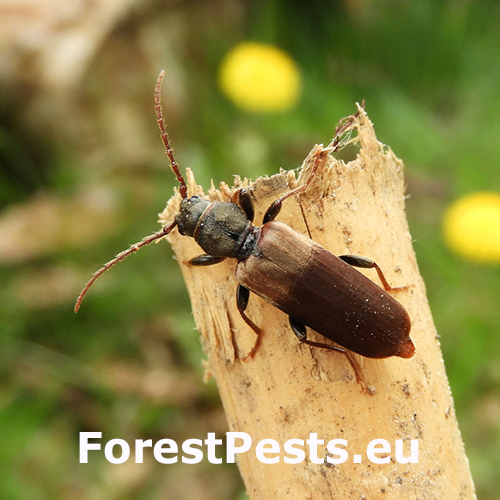
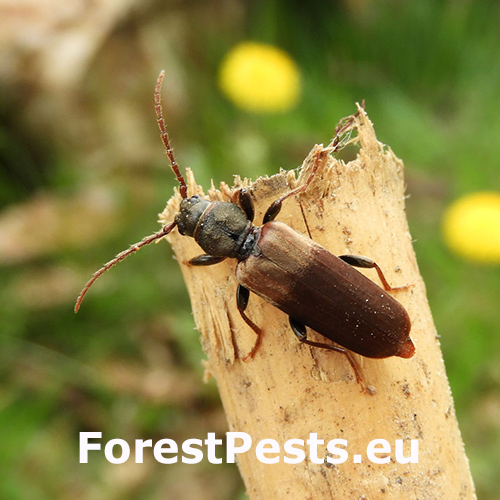
Tetropium fuscum
Brown spruce longhorn beetle
Description
Tetropium fuscum, known as the brown spruce longhorn beetle, is a species of longhorn beetle that primarily infests spruce trees (Picea spp.), including Norway spruce (Picea abies), but can also develop on other conifers like pine (Pinus spp.). It is native to Europe and parts of Asia, widely distributed in countries such as Austria, Germany, Russia, and across Scandinavia. The beetle has one generation per year, with larvae developing under the bark of weakened, dying, or recently felled trees. Adults emerge from June to July and are active during twilight and night, often found on freshly felled logs.
The larvae feed on the phloem and outer sapwood, creating galleries that disrupt nutrient transport within the tree. While they primarily attack stressed or dying trees, a high abundance can contribute to tree mortality and reduce the commercial value of timber by introducing fungal infections causing blue stain. Repeated infestations may worsen the overall health status of affected forests. Rare species.
Symptom
Under the bark, flat galleries filled with frass are present. Exit holes are oval-shaped, and resin may exude. Infested trees may show yellowing or thinning crowns.
Tree Species: Pine, Spruce
Part of a plant- attacked: Tree trunk, Branch
Pest significance: Harmful
Invasive Species: No
Present in EU: Yes
Add comment: Tetropium fuscum
Location map: Tetropium fuscum
Legend:

Expert verified points

Unverified points
Observed by users on these tree species
Similar damage

Long-horned beetle Ergates faber

Longhorn beetle Molorchus minor

Violet tanbark beetle

