




 Show all photos in album
Insert for comparison
We will identify your pest
Add pictures of this species
Show all photos in album
Insert for comparison
We will identify your pest
Add pictures of this species
Stenacis triradiatus
Triradial willow mite
Description
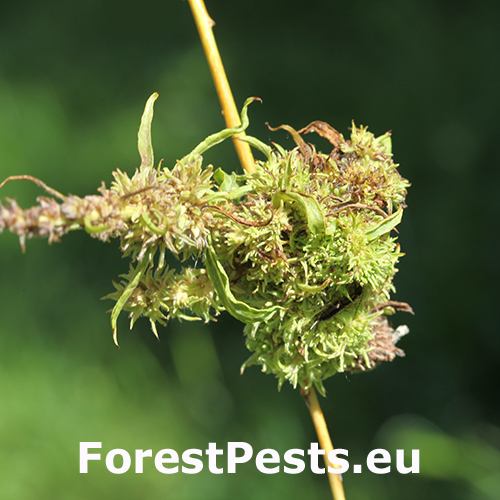
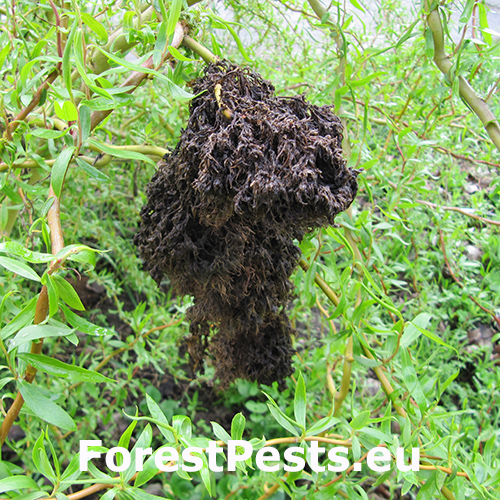
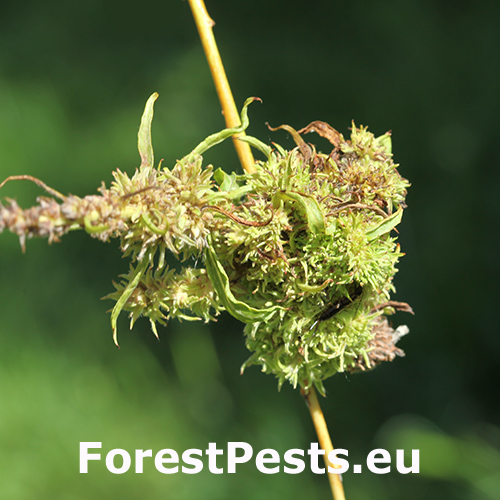
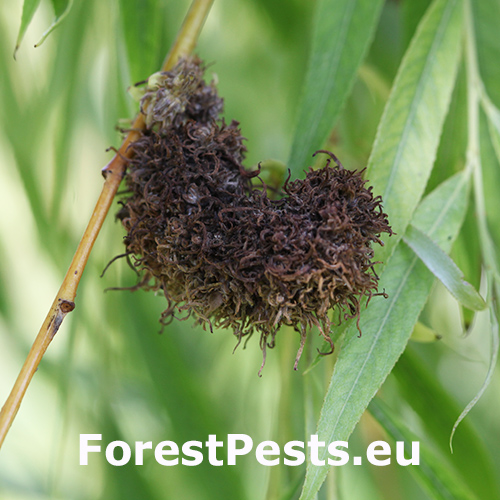
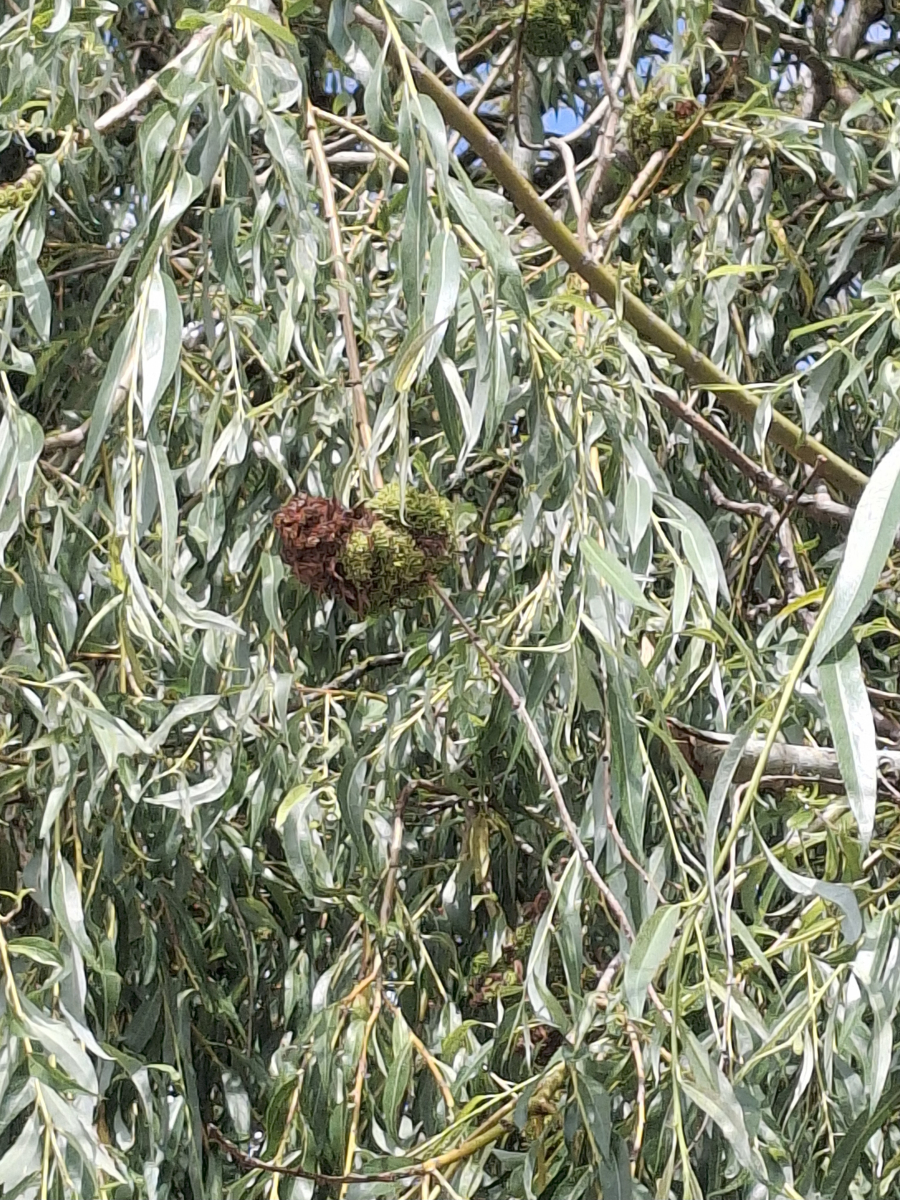
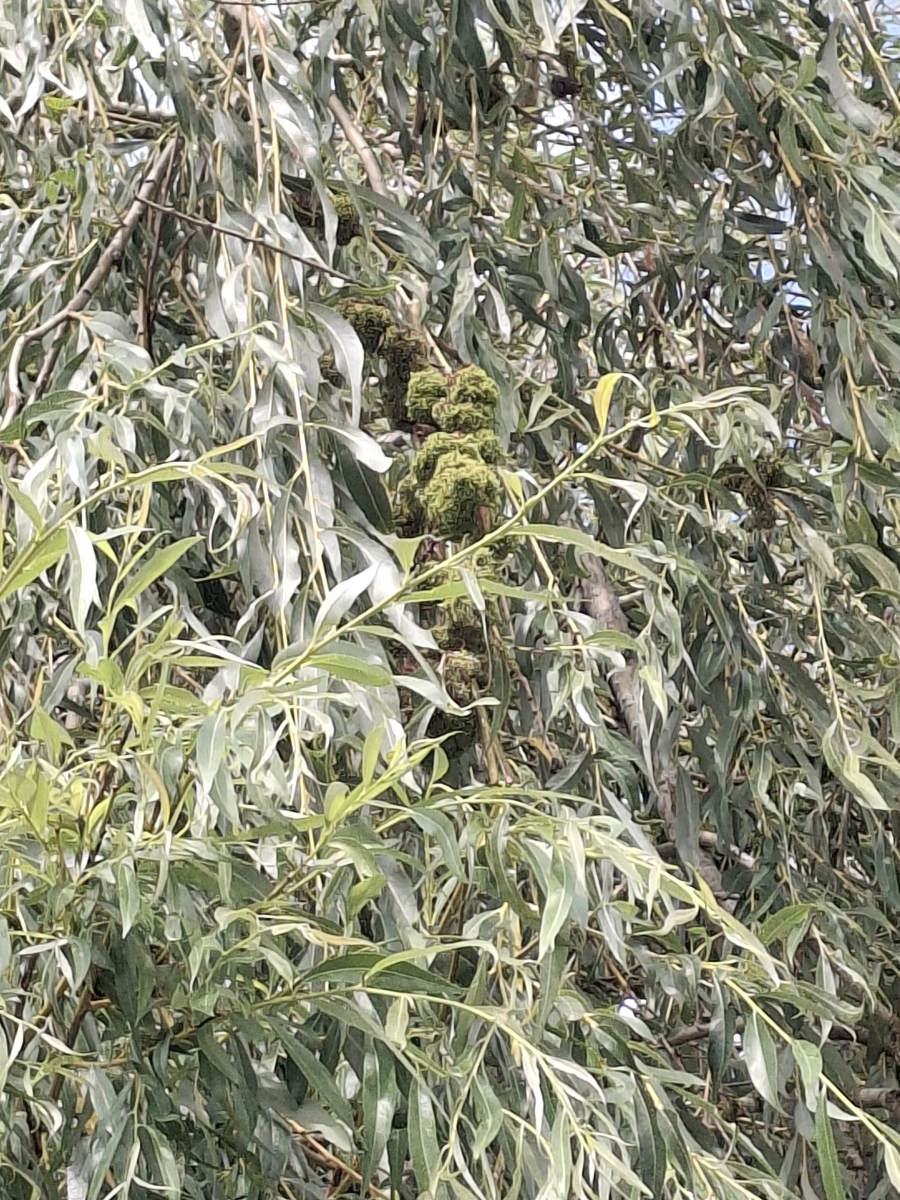
Stenacis triradiatus (= Stenacis triradiata), commonly known as the triradial willow mite, is a microscopic mite found primarily on willow species (Salix spp.), such as Salix alba, Salix cinerea, and Salix caprea. This monophagous mite forms characteristic galls on willow shoots, creating twisted, densely clustered growths known as "witches' brooms." It overwinters under bud scales and becomes active in spring, infesting young leaves, shoots, and catkins. The feeding activity causes distortion and clustering of shoots, leading to weakened branches that impact the plant's aesthetic appeal and overall health. This damage is visually distinct from other mite species as it creates thick, tangled masses rather than the typical leaf discoloration or spotting associated with related species. Stenacis triradiatus is distributed across Europe, particularly in areas where willow species are common.
Symptom
On infested shoots and branches of willows, there are twisted and densely clustered growths. These clusters of small leaves are often clearly visible even from a distance.
Tree Species: Willow
Part of a plant- attacked: Branch
Pest significance: Less harmful
Pest Category: Mites
Invasive Species: No
Present in EU: Yes
Add comment: Stenacis triradiatus
Location map: Stenacis triradiatus
print viewLegend:

Expert verified points

Unverified points
Observed by users on these tree species
Most sightings of the species

Last observations
There are a total of 1 observations of the species in the system
Similar damage

Gooseberry aphid

Aphid Tetraneura ulmi

Grape erineum mite

