




 Show all photos in album
Insert for comparison
We will identify your pest
Add pictures of this species
Show all photos in album
Insert for comparison
We will identify your pest
Add pictures of this species
Snow
Snow
Description
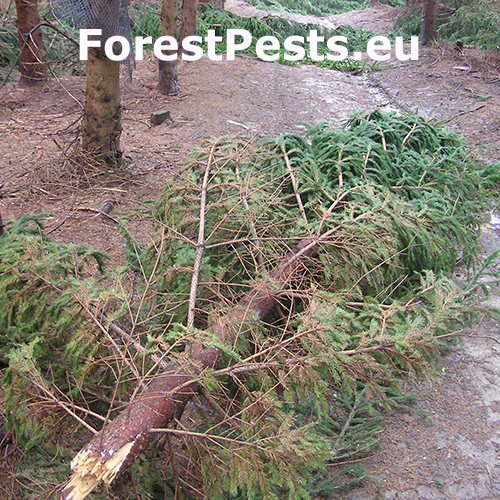
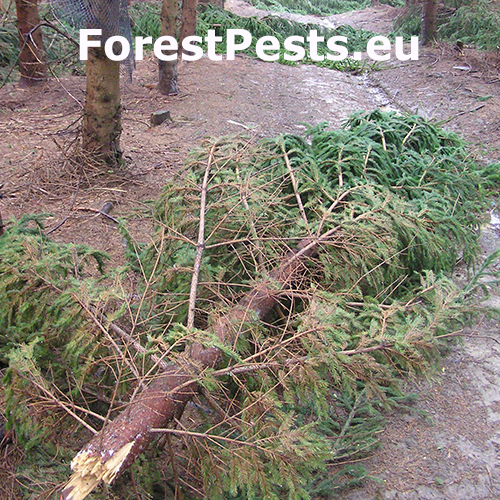
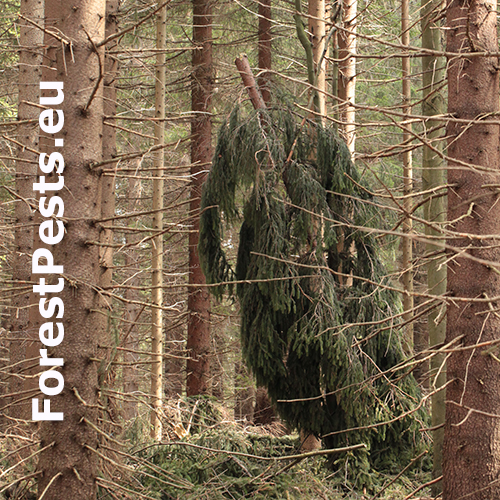
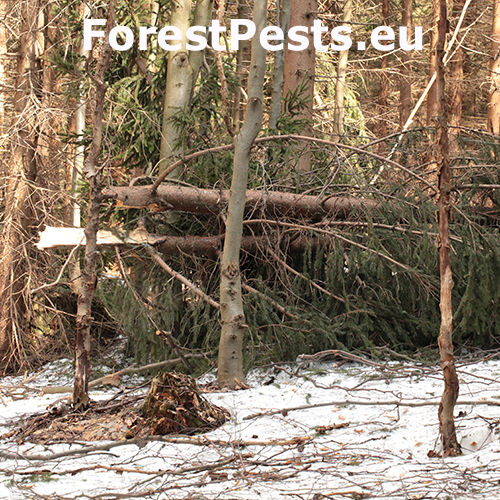
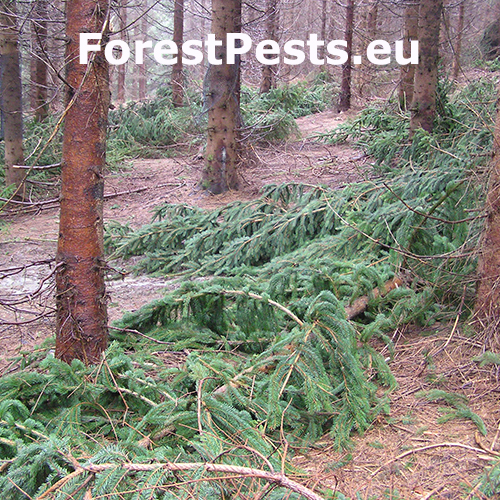
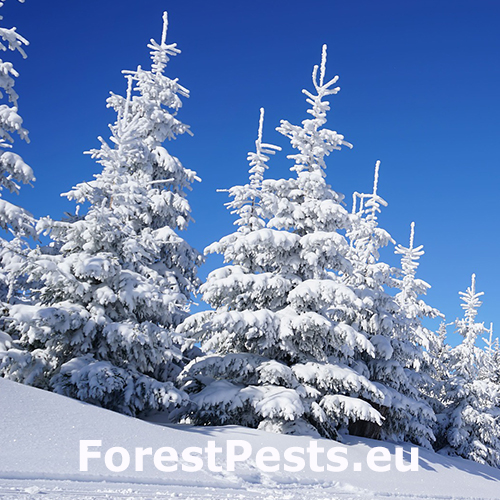
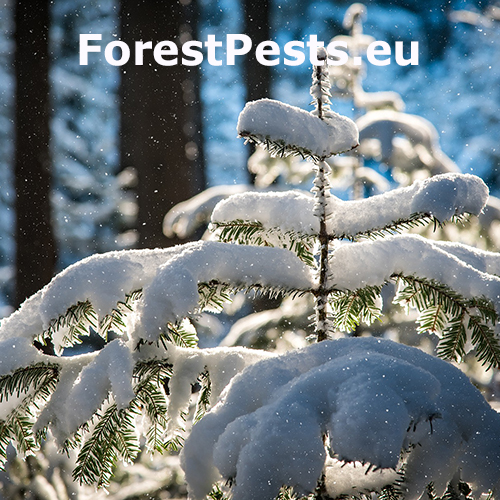
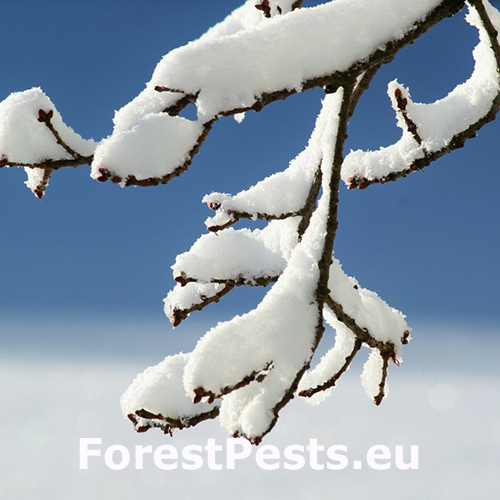
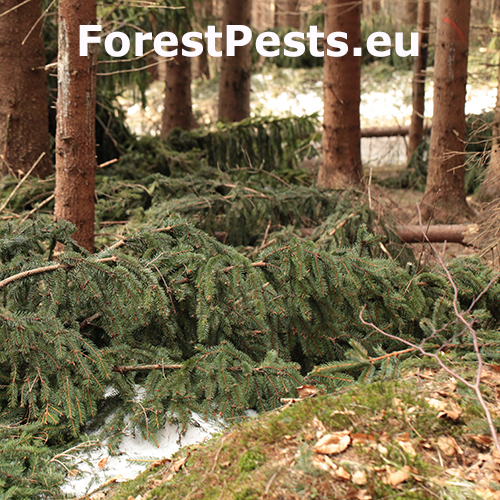
Snow is a form of atmospheric precipitation that creates the conversion of liquid and gaseous status to solid one at atmospheric temperature below 0ºC on sublimation nuclei in the atmosphere. Breakages on trees in forest stands most often cause sticky, resp. wet snow. It consists of wet flakes of rather large dimensions, which fall under temperatures close to 0ºC. The load of the snow creates either top crown breakages, when only an upper part of the crowns breaks off, or stem breakages, when the whole crown or even a part of the stem breaks off. Sometimes snow can cause uprooting of trees. Snow damage can occur in stands on individual trees, scattered, in groups of trees or on continuous areas. As a result of the snow injuries on trees, rots or bark beetle infestations can secondary occur. Snow load is most damaging in conifers, and especially Scots pine is an extremely sensitive tree. At the same time, snow can also damage over-dense deciduous stands, mostly in young stages. The zone of the most frequent forest damage in the region of the Western Carpathians has so far been located between altitudes of 500 and 800 m above sea level. Very heavy (wet) snow often falls at these altitudes. In the same time, grainy snow usually falls at higher altitudes, and rains at lower altitudes. Recent research has suggested that from approx. the beginning of the millennium, snow damage on trees have shifted to higher altitudes. If we compare the effect of snow, wind and rime on trees, while the snow endangers trees by load (pressure) from above, the wind acts from the side of its flow. In the contrast, rime involves tree loading in a form of vertical pull.
Endangered trees
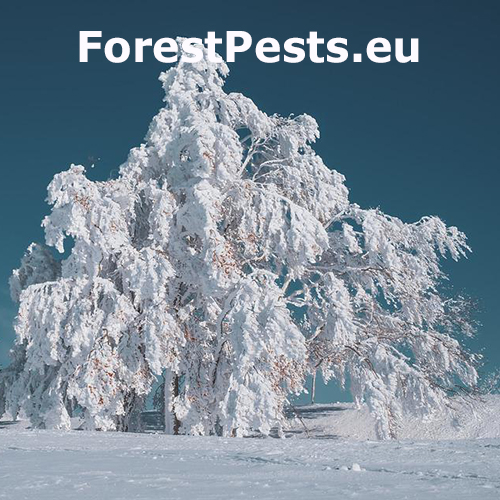
The most endangered are spruce, fir-spruce, fir and Scots pine stands of the 2nd and 3rd age class (i.e. age 21-60 years), especially over-dense ones. At the same time, deciduous stands are more resistant than conifers. Very special case is a birch, which is very often bent or broken by snow, especially when it grows in sparse stands.
Damage localization
Snow damages all organs of trees, especially crowns, sometimes stems, less root systems (uprooting).
Symptom
Snow often breaks parts of the crowns of conifers, especially their tops. Sometimes snow breaks stems, less cases are uprooting. Broken coniferous tree tops are replaced by bayonet-like shoots or lateral tree branches. Subsequently, the trees grow is deformed. In dense deciduous stands, arch-like stems are often formed. Stem breaks occur mostly on trees under main canopy.
Tree Species: Pine, Birch, Fir, Spruce
Part of a plant- attacked: Tree trunk, Branch
Pest significance: Very harmful
Pest Category: Other
Invasive Species: No
Present in EU: Yes
Add comment: Snow
Location map: Snow
Legend:

Expert verified points

Unverified points
Observed by users on these tree species
Similar damage

Fir broom rust

Rime

Frost


