




 Show all photos in album
Insert for comparison
We will identify your pest
Add pictures of this species
Show all photos in album
Insert for comparison
We will identify your pest
Add pictures of this species
Scythropia crataegella
Hawthorn moth
Description
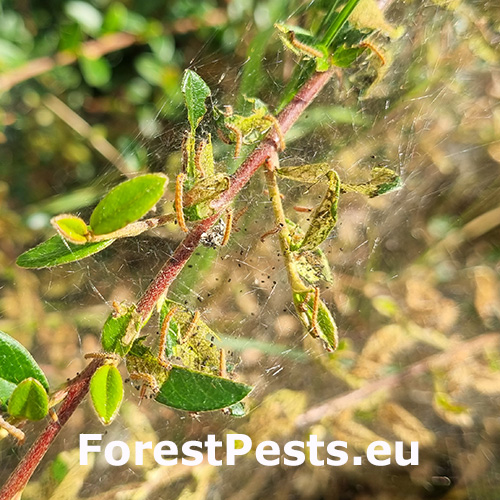
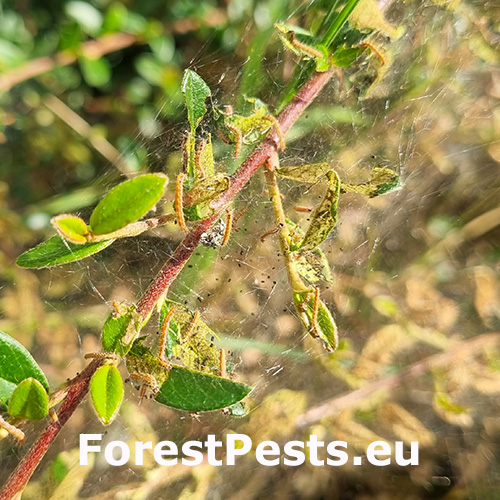
Scythropia crataegella, or the hawthorn moth, is a small moth widespread across much of Europe. It is fairly common within its range and is primarily nocturnal, often attracted to light sources. Depending on location, adults are seen from late May to September, with two generations per year (May–June and August–September). The adult moths have a wingspan of 11–15 mm, with distinctive black-and-white forewings, marked by two irregular black bands and scattered black spots. Caterpillars feed in groups, creating silken webs for protection, and primarily consume Cotoneaster spp. leaves, though they also feed on hawthorn, blackthorn, apple, pear, and other related plants.
Symptom
Present are small (1–1.5 cm) orange larvae. The larvae produce large communal webs that cover parts of the host plant, typically found on branches or clusters of leaves. Inside these webs, the larvae feed on the leaves, often leaving behind only the veins, giving the leaves a skeletonized appearance. Young larvae tunnel within the leaves, creating irregular, translucent mines as they feed. Heavy infestations can lead to significant loss of foliage (up to 100%), particularly in smaller trees or shrubs. These symptoms can reduce the vigor of the plant but rarely cause long-term damage or tree decline (unless infestations are severe).
Tree Species: Hawthorn, Pear, Apple Tree, Cotoneaster, Blackthorn
Part of a plant- attacked: Leaf / Needle
Pest significance: Less harmful
Pest Category: Insects
Invasive Species: No
Present in EU: Yes
Add comment: Scythropia crataegella
Location map: Scythropia crataegella
Legend:

Expert verified points

Unverified points
Observed by users on these tree species
Similar damage

Rusty tussock moth

Mealy plum aphid

Bird-cherry ermine

