




 Show all photos in album
Insert for comparison
We will identify your pest
Add pictures of this species
Show all photos in album
Insert for comparison
We will identify your pest
Add pictures of this species
Rime - Namraza
Rime
Description
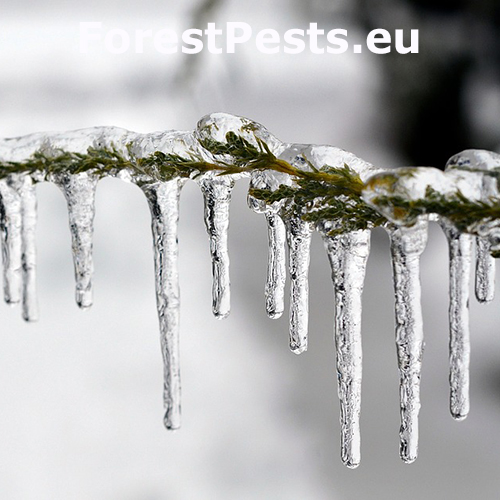
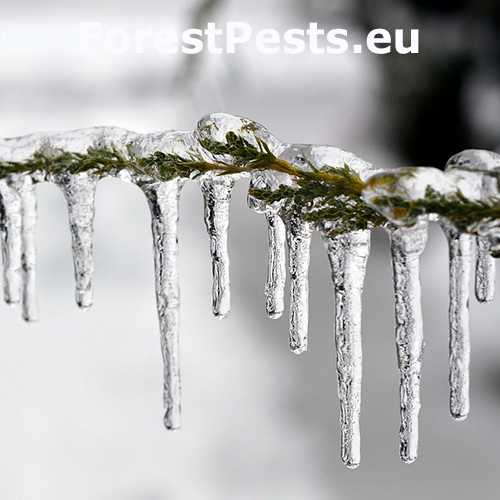
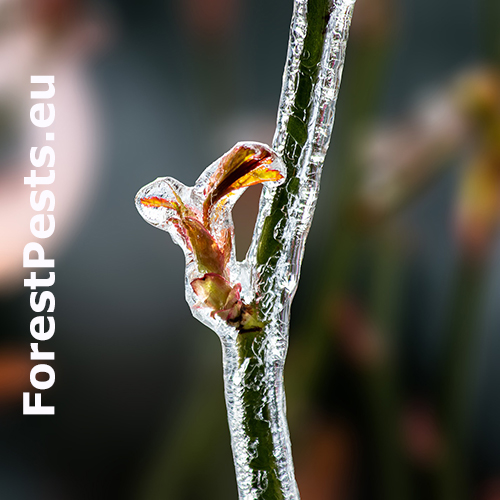
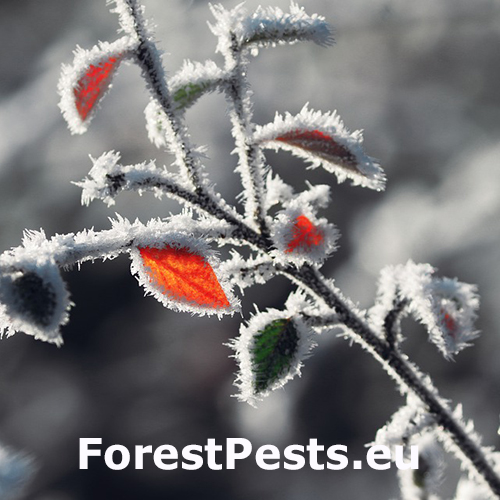
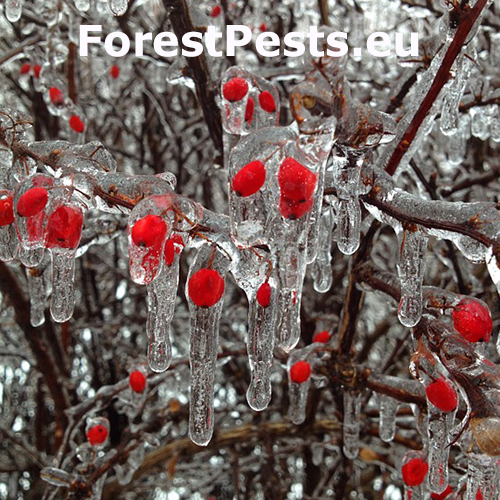
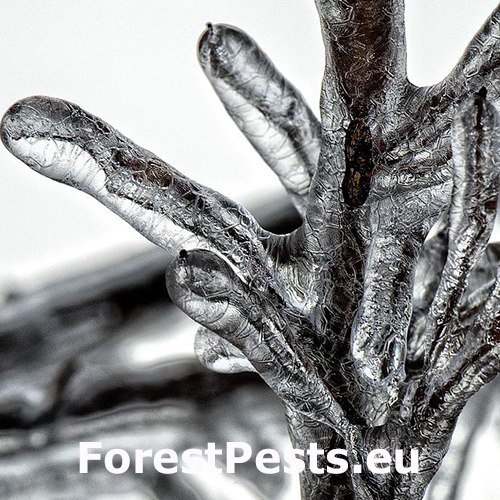
Rime usually forms from fog penetrating by wind under temperatures below 0ºC. It settles on trees against the direction of the wind when cold water droplets rapidly froze. This is so called grainy rime. Another form of rime is icy one, which is a clear layer of amorphous ice freezing during the wind from droplets of subcooled mist (below 0ºC), or from pre-cooled raindrops. Rime damages trees, resp. forest stands by one-sided loading of the crown.
Endangered trees
Rime damages mostly even age spruce, fir-spruce and fir stands with sparse canopy. Icy rime sometimes breaks forest stands at lower altitudes, so there have been cases of damage to deciduous stands, especially European beech. Rime often damage solitaire birches.
Damage localization
Rime breaks almost all organs of trees that are exposed to rime layering. The most common and intense damages to crowns appears especially if they there are more robust branches on the icing than the opposite side.
Symptom
Asymmetric (one sided) loading of the crown as a result of which mainly breaks of crown tops, entire crowns, stems arise. The rime breaks the trees against the wind direction. This happens mostly on forest stand edges, the edges of paths and in forests stands with sparse canopy. Rimes most often form on mountain ridges in young and middle-aged stands. Unlike snow, rime is within stand most endangering dominant and co-dominant individuals. Under extreme one-sided loading, rime (especially in the icy form) can uproot trees in the downhill direction.
Tree Species: Birch, Beech, Fir, Spruce
Part of a plant- attacked: Branch
Pest significance: Harmful
Pest Category: Other
Invasive Species: No
Present in EU: Yes
Add comment: Rime - Namraza
Location map: Rime - Namraza
Legend:

Expert verified points

Unverified points
Observed by users on these tree species
Similar damage

