




 Show all photos in album
Insert for comparison
We will identify your pest
Add pictures of this species
Show all photos in album
Insert for comparison
We will identify your pest
Add pictures of this species
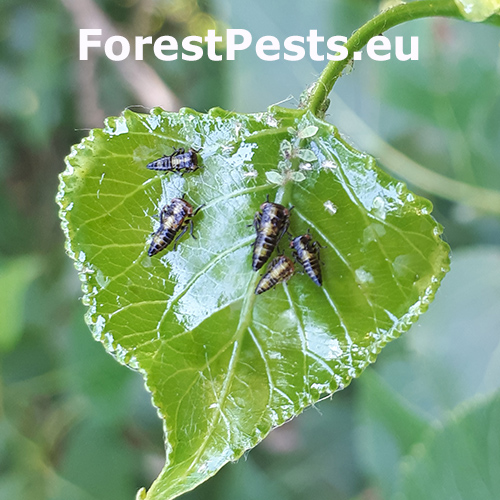
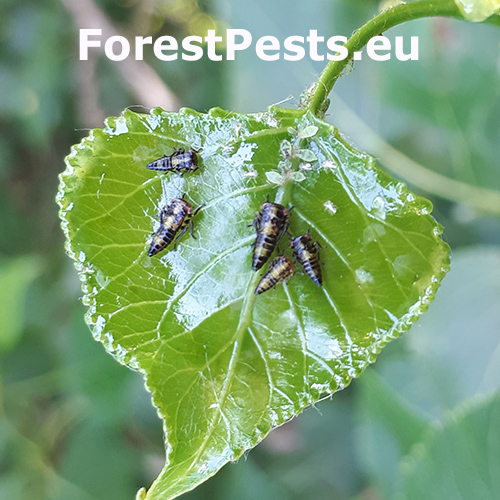
Rhytidodus decimusquartus
Leafhopper Rhytidodus decimusquartus
Description
Rhytidodus decimusquartus is a leafhopper species found across Europe, known for feeding on a variety of deciduous trees and shrubs. It can affect a wide range of host plants, including Salix (willows), Populus (poplars), Betula (birches), and Alnus (alders). Rhytidodus decimusquartus is widely distributed throughout Europe, with its presence most prominent in forested areas, along rivers, and in woodlands where its preferred host trees grow.
Symptom
It attacks young leaves and shoots. Young leaves develop pale spots or blotches as a result of the leafhoppers sucking out sap. This feeding damage can lead to a stippled appearance, eventually causing the leaves to turn yellow or brown. Constant feeding can distort leaf growth, causing them to curl or crumple. Heavy infestations can weaken trees by reducing their ability to photosynthesize, leading to decreased growth, early leaf drop, and an overall decline in the tree's health. The leafhoppers excrete honeydew, which can coat the leaves and stems of trees. This sticky substance encourages the growth of sooty mold, a black fungal layer that further reduces the plant’s photosynthetic ability.
Tree Species: Elderberry, Alder, Poplar, Willow
Part of a plant- attacked: Leaf / Needle, Branch
Pest significance: Less harmful
Pest Category: Insects
Invasive Species: No
Present in EU: Yes
Add comment: Rhytidodus decimusquartus
Location map: Rhytidodus decimusquartus
Legend:

Expert verified points

Unverified points
Observed by users on these tree species
Similar damage

Apple powdery mildew

Dothichiza canker

Cynipid gall wasp Cynips quercusfolii

