


 Show all photos in album
Insert for comparison
We will identify your pest
Add pictures of this species
Show all photos in album
Insert for comparison
We will identify your pest
Add pictures of this species
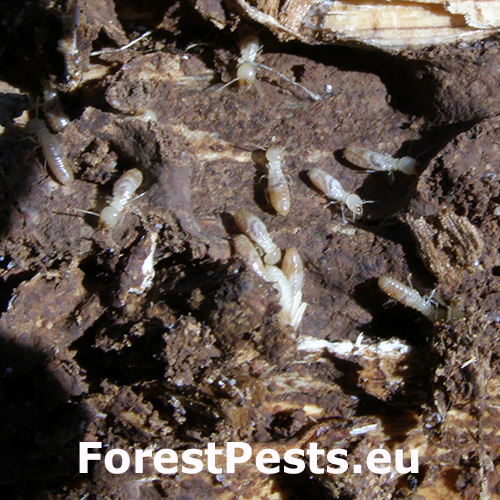
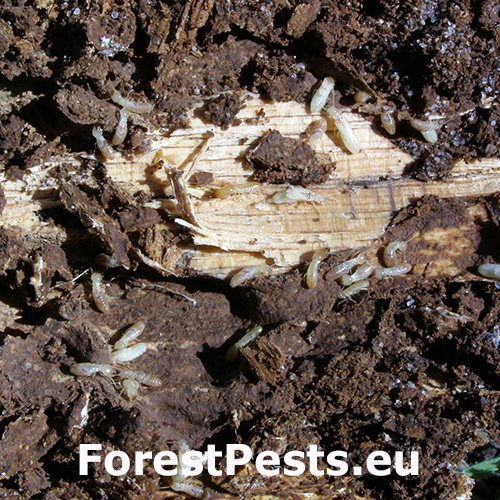
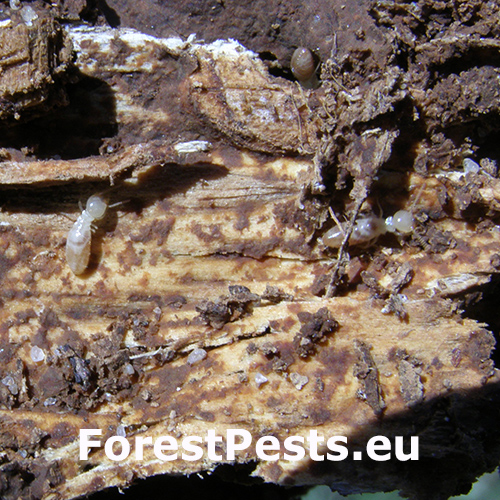
Reticulitermes lucifugus
Subterranean termite
Description
Reticulitermes lucifugus, commonly known as the subterranean termite, is a species that predominantly inhabits southern Europe, including regions like Italy, France, and Spain. This termite prefers moist environments and forms extensive colonies in soil, from which it accesses dead wood and tree stumps. Its bionomics include a caste system of workers, soldiers, and reproductives. The species primarily targets cellulose-rich materials, feeding on dead or decaying wood of deciduous and coniferous trees, often including oak, pine, and chestnut.
Damage caused by R. lucifugus includes structural weakening of wooden substrates, which can impact the overall vitality of affected trees by reducing their stability and increasing susceptibility to secondary pests or pathogens. Aesthetic damage is also evident as wooden surfaces exhibit irregular, hollowed feeding galleries. The species’ distribution is influenced by climatic factors, thriving in Mediterranean climates with high humidity. Recently, its range has expanded slightly northward due to climate change and anthropogenic activities.
In Europe, there are other related species, such as Kalotermes flavicollis (family Kalotermitidae) and Reticulitermes grassei (family Rhinotermitidae).
Symptom
Infested wood exhibits hollow, irregular galleries filled with fine debris. External signs include thinning bark or discoloration. Feeding often causes weakened structural integrity in the affected wood.
Tree Species: Pine, Oak, Eucalyptus, Chestnut, Poplar
Part of a plant- attacked: Tree trunk, Roots, Branch
Pest significance: Harmful
Pest Category: Insects
Invasive Species: No
Present in EU: Yes
Add comment: Reticulitermes lucifugus
Location map: Reticulitermes lucifugus
Legend:

Expert verified points

Unverified points
Observed by users on these tree species
Similar damage

Wooly apple aphid

Ash Bark Beetle

Albizia seed beetle

