




 Show all photos in album
Insert for comparison
We will identify your pest
Add pictures of this species
Show all photos in album
Insert for comparison
We will identify your pest
Add pictures of this species
Pulvinaria floccifera
Cottony camellia scale
Description
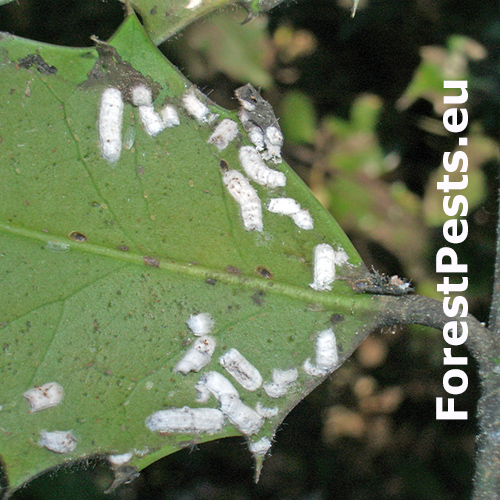
Pulvinaria floccifera, commonly known as the cottony camellia scale, is a sap-sucking insect that infests a wide range of evergreen shrubs and trees. This polyphagous pest targets plants such as camellias (Camellia spp.), hollies (Ilex spp.), and yews (Taxus spp.). It overwinters as immature stages on twigs and leaf undersides and completes one generation per year. In early summer, females produce elongated white, fluffy ovisacs containing up to 1,000 eggs, which remain visible even after the females die. Crawlers hatch from these ovisacs and disperse to feed on leaves.
Infestations result in honeydew secretion, promoting the growth of black sooty mold that reduces photosynthetic efficiency and significantly diminishes the aesthetic value of infested plants. Heavy infestations may lead to foliage discoloration, dieback, and premature leaf drop. Native to Asia, Pulvinaria floccifera has spread widely across Europe, thriving in gardens, parks, and urban landscapes.
Symptom
On the undersides of leaves, white, fluffy ovisacs and honeydew deposits are visible. Leaves may appear discolored, sticky, and covered with black sooty mold. Twig dieback may occur in severe cases. Similar to the sepcies Pulvinaria regalis.
Tree Species: Spotted laurel, Spindle, Holly, Citrus, Barberry, Japanese camellia, Mahonia, Olive, Rhododendron, Japanese skimmia, Yew, Bay laurel, Cherry laurel
Part of a plant- attacked: Leaf / Needle, Branch
Pest significance: Harmful
Pest Category: Insects
Invasive Species: Yes
Present in EU: Yes
Add comment: Pulvinaria floccifera
Location map: Pulvinaria floccifera
print viewLegend:

Expert verified points

Unverified points
Observed by users on these tree species
Most sightings of the species

2
Ruth
1
Last observations
There are a total of 3 observations of the species in the system

Pulvinaria flocciferaCottony camellia scale
Ruth
Number of votes: 0
Published: 9.6.2025
Similar damage

European Tar Spot

European elm scale

European pine bast scale

