




 Show all photos in album
Insert for comparison
We will identify your pest
Add pictures of this species
Show all photos in album
Insert for comparison
We will identify your pest
Add pictures of this species
Plasmopara viticola
Grapevine downy mildew
Description
Downy mildew, caused by Plasmopara viticola, is a highly destructive oomycete responsible for severe grapevine infections. Originally from North America, Plasmopara viticola was introduced to Europe in the late 19th century, where it rapidly spread across vineyards. Today, it is present in most grape-growing regions worldwide. The life cycle of Plasmopara viticola is closely tied to moisture and temperature conditions. It begins in early spring when overwintering oospores in the soil germinate during wet weather. The pathogen produces sporangia, which release zoospores that swim through water films on the plant surface and infect grapevine tissue. Plasmopara viticola can have severe economic consequences for vineyards due to reduced grape yield and quality. Infected plants may produce fewer or lower-quality grapes, impacting both table grape and wine production. Additionally, the need for frequent fungicide applications to control the disease significantly increases production costs.
Symptom
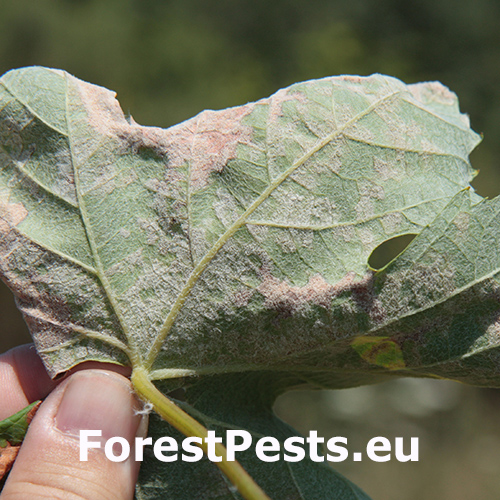
The primary symptom of grapevine downy mildew is the appearance of yellow to brown spots on the upper leaf surface, often described as "oil spots." On the underside of the leaf, especially in humid conditions, a white, downy mold becomes visible. The fungus can also infect young berries, causing them to brown, shrivel, and fall prematurely. Infected berries lose market value and become unsuitable for winemaking. Severe infections can lead to premature leaf drop, reducing photosynthesis and weakening the vine. Over time, this can negatively impact grape yield and the overall productivity of the vineyard. In comparison, powdery mildew thrives in dry, warm conditions and produces a powdery white coating, mainly on the upper surfaces of leaves and fruits. Downy mildew, on the other hand, prefers cool, wet conditions, resulting in yellow, oily spots on the upper side of leaves and a downy white growth on the underside.
Tree Species: Grape
Part of a plant- attacked: Leaf / Needle, Branch
Pest significance: Very harmful
Pest Category: Fungi
Invasive Species: No
Present in EU: Yes
Add comment: Plasmopara viticola
Location map: Plasmopara viticola
Legend:

Expert verified points

Unverified points
Observed by users on these tree species
Similar damage

Grey mould

Powdery mildew Erysiphe euonymi

Azalea powdery mildew

