




 Show all photos in album
Insert for comparison
We will identify your pest
Add pictures of this species
Show all photos in album
Insert for comparison
We will identify your pest
Add pictures of this species
Physokermes piceae
Spruce Bud Scale
Description
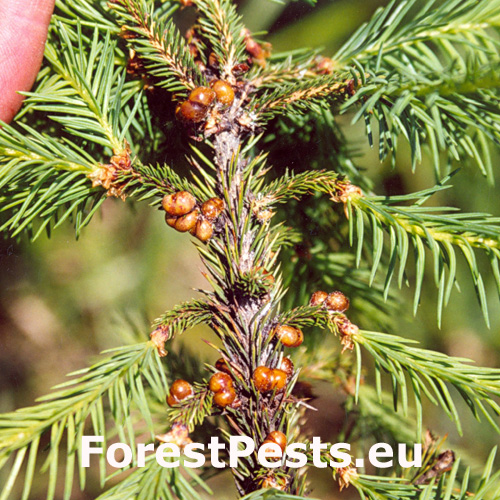
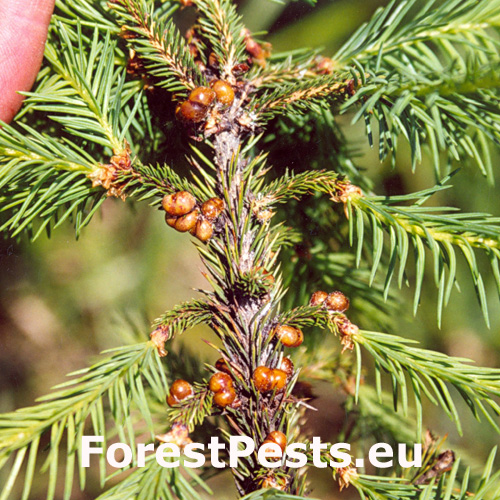
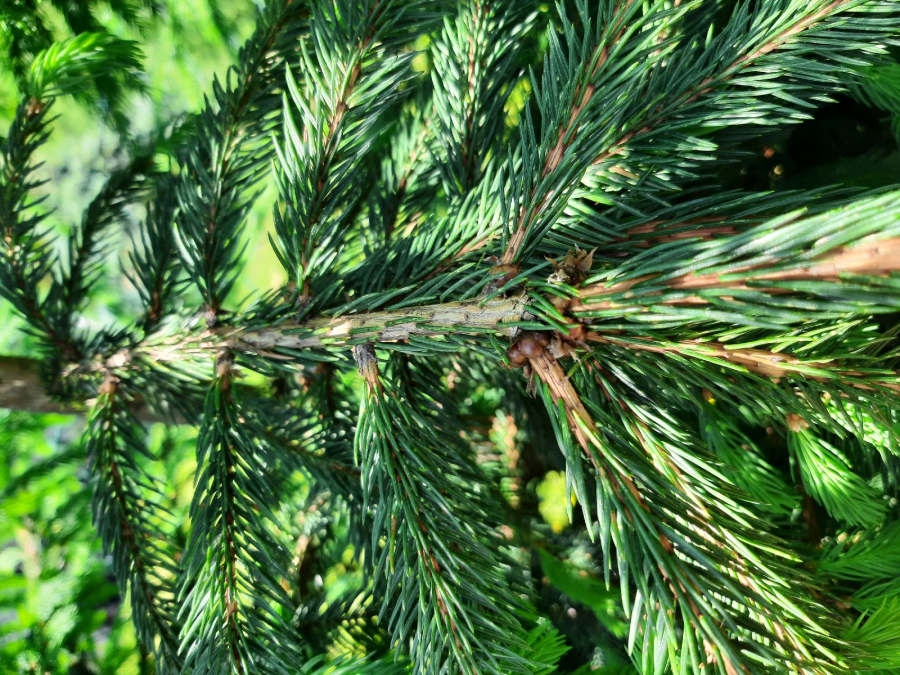
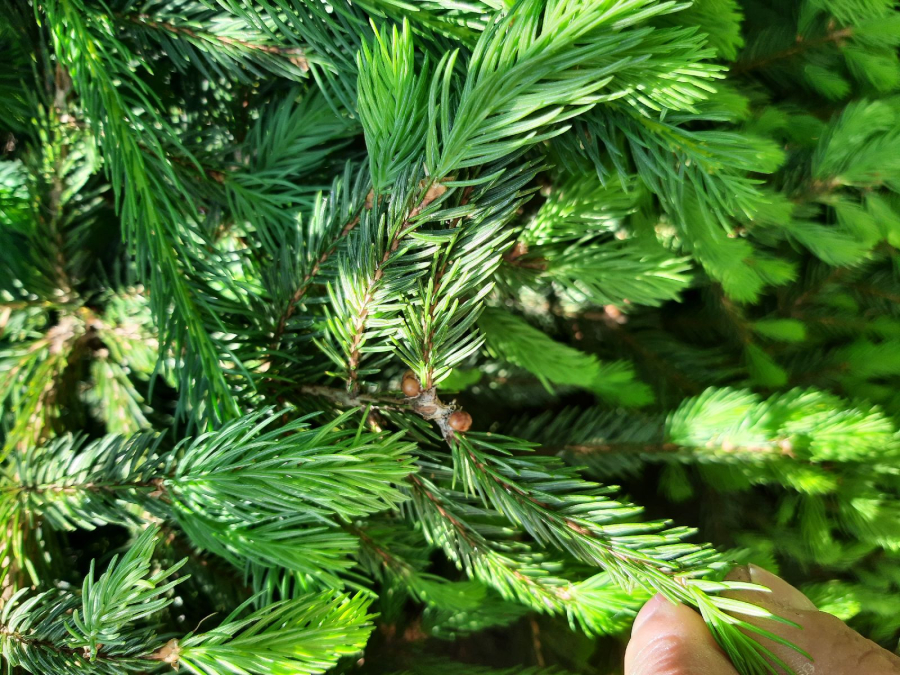
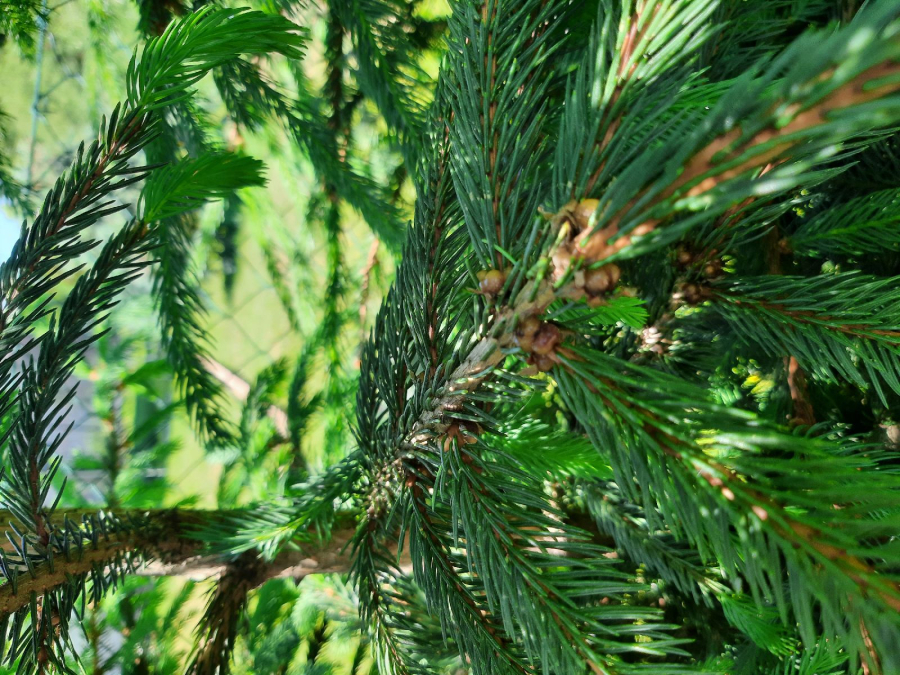
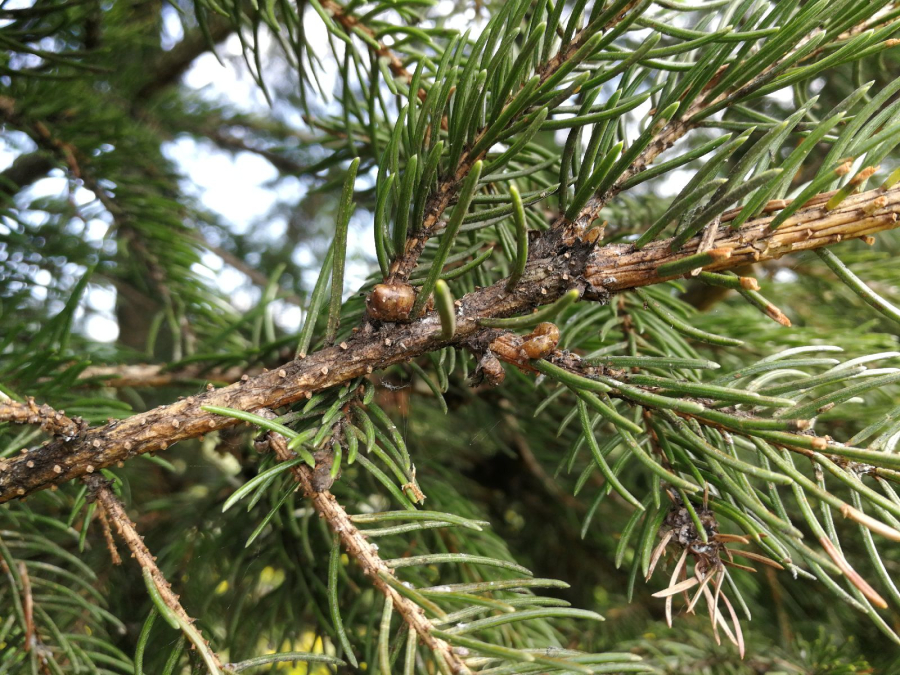
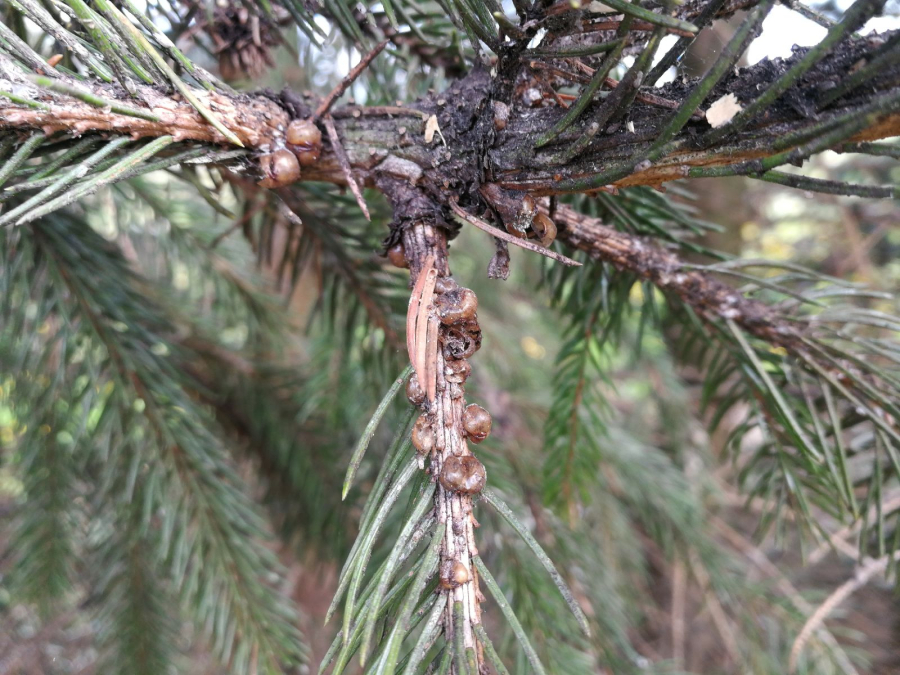
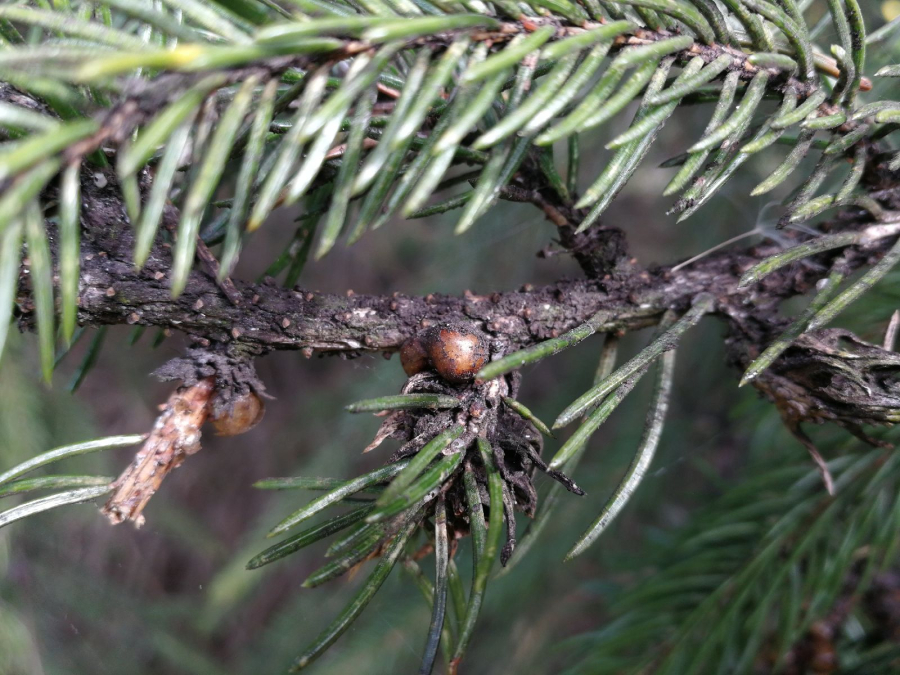
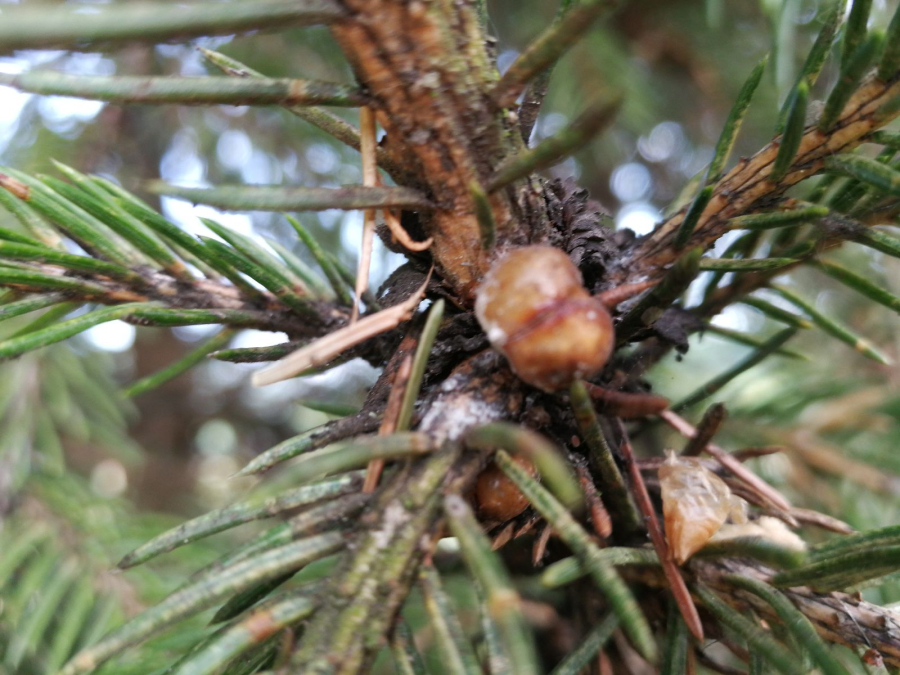
Twigs of spruce species may show distinctive “brown galls”. These are, in fact, adult females of the pest. They are round, glossy, as much as 4-6 mm in size. The sweet substance they secrete attracts ants, wasps and bees. The pest is found on tree twigs in groups. The males are much smaller - only 1 mm in size. In May the females lay around 1,000-2,000 eggs. The tiny larvae suck on the youngest shoots. Usually they overwinter at the terminal buds, continue their feeding in spring and then reach maturity. The bark lice most often colonize spruce species aged 10 or higher canopy sections of older spruces. Growth of the shoots is suppressed, the needles discolour brown or die if infested heavily. Usually, however, the insect causes no serious damage.
Symptom
Twigs of spruce species may show distinctive “brown galls”. These are, in fact, adult females of the pest.
Tree Species: Spruce
Part of a plant- attacked: Branch
Pest significance: Harmful
Pest Category: Insects
Invasive Species: No
Present in EU: Yes
Add comment: Physokermes piceae
Location map: Physokermes piceae
print viewLegend:

Expert verified points

Unverified points
Observed by users on these tree species


Last observations
There are a total of 2 observations of the species in the system

Physokermes piceae Spruce Bud Scale
Martin
Number of votes: 0
Published: 3.6.2023

Physokermes piceae Spruce Bud Scale
Martin
Number of votes: 0
Published: 3.6.2023

Physokermes piceae Spruce Bud Scale
Martin
Number of votes: 0
Published: 3.6.2023

Physokermes piceae Spruce Bud Scale
ak73
Number of votes: 0
Published: 9.5.2022

Physokermes piceae Spruce Bud Scale
ak73
Number of votes: 0
Published: 9.5.2022
Similar damage

Spruce webworm

Woolly adelgid

European spruce budmoth

