


 Show all photos in album
Insert for comparison
We will identify your pest
Add pictures of this species
Show all photos in album
Insert for comparison
We will identify your pest
Add pictures of this species
Phloeospora robiniae
Yellowish brown leaf spots
Description
Phloeospora robiniae is a fungal pathogen responsible for leaf spot disease on black locust (Robinia pseudoacacia) and its cultivars. The fungus thrives in humid conditions, particularly after prolonged wet springs. It primarily infects leaves, but can also spread to petioles and young shoots, leading to growth disturbances and premature defoliation. The infection causes local tissue necrosis, which may result in leaf tearing, resembling gall mite damage. Severe infections can affect overall tree vitality by weakening the crown, especially in susceptible cultivars such as Robinia pseudoacacia ‘Umbraculifera’ and ‘Tortuosa’.
The fungus is widely distributed across Europe, particularly in regions with moderate to high humidity. Its fruiting bodies (acervuli) appear on the underside of infected leaves during summer, serving as a source of reinfection in the following seasons.
Symptom
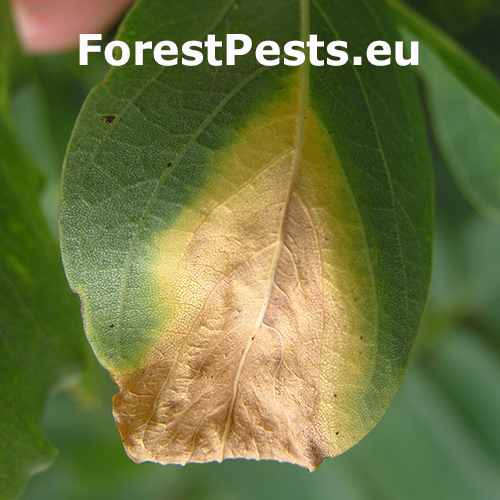
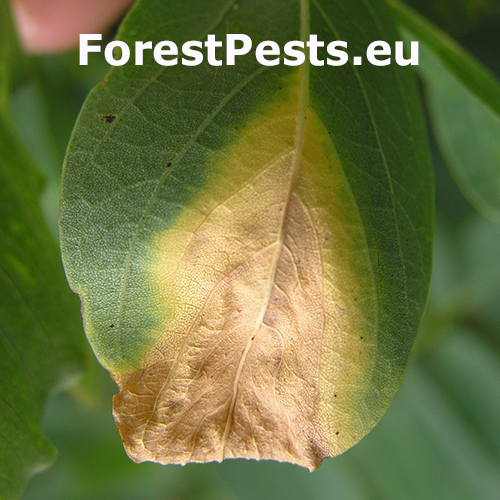
On infected leaves, irregularly shaped, light brown spots with dark margins develop, usually 0.5–1 cm in size. As the infection progresses, leaf tissues may tear locally. Acervuli, small yellow-brown fungal fruiting bodies (about 0.1 mm), are visible on the lower leaf surface. Tips of the leaves are yellow, and become dark brown soon.
Tree Species: Black Locust
Part of a plant- attacked: Leaf / Needle, Branch
Pest significance: Harmful
Pest Category: Fungi
Invasive Species: No
Present in EU: Yes
Add comment: Phloeospora robiniae
Location map: Phloeospora robiniae
Legend:

Expert verified points

Unverified points
Observed by users on these tree species
Similar damage

Gall wasp Andricus coriarius

Leaf blotch miner moth

Leaf spot on dogwoods

