








 Show all photos in album
Insert for comparison
We will identify your pest
Add pictures of this species
Show all photos in album
Insert for comparison
We will identify your pest
Add pictures of this species
Orgyia antiqua
Rusty tussock moth
Description
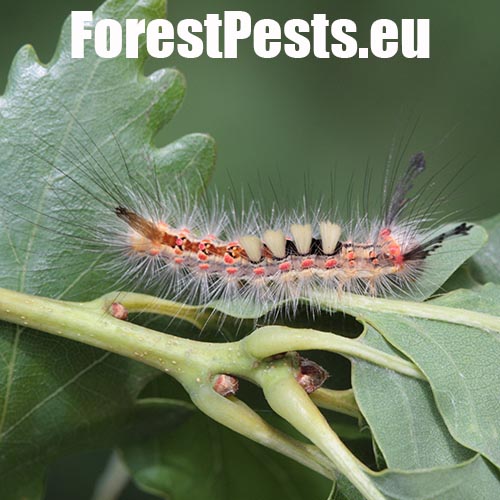
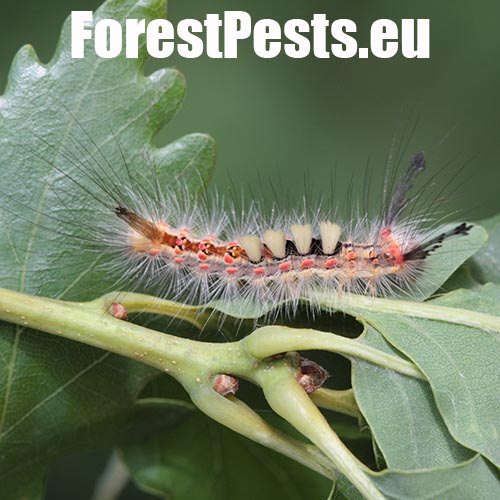
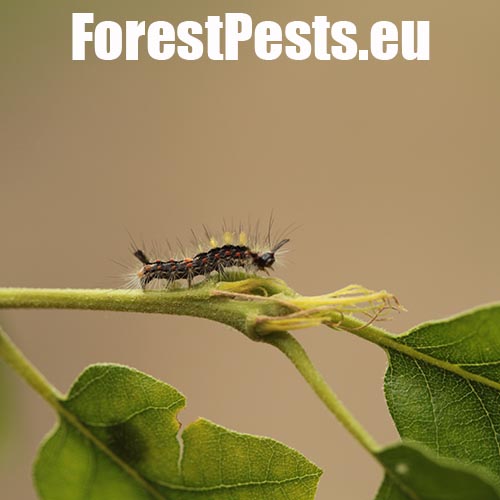
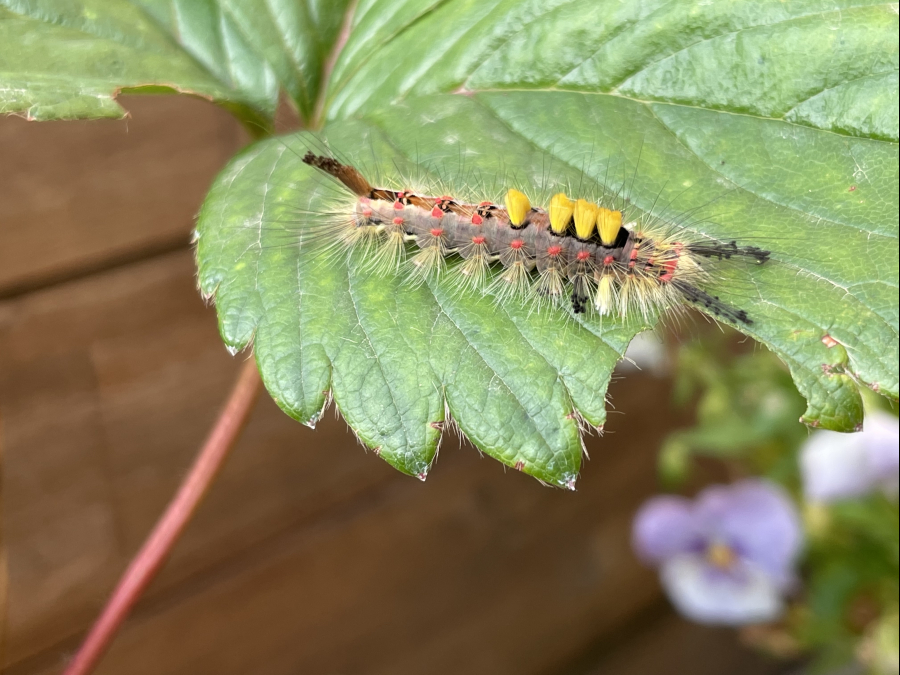
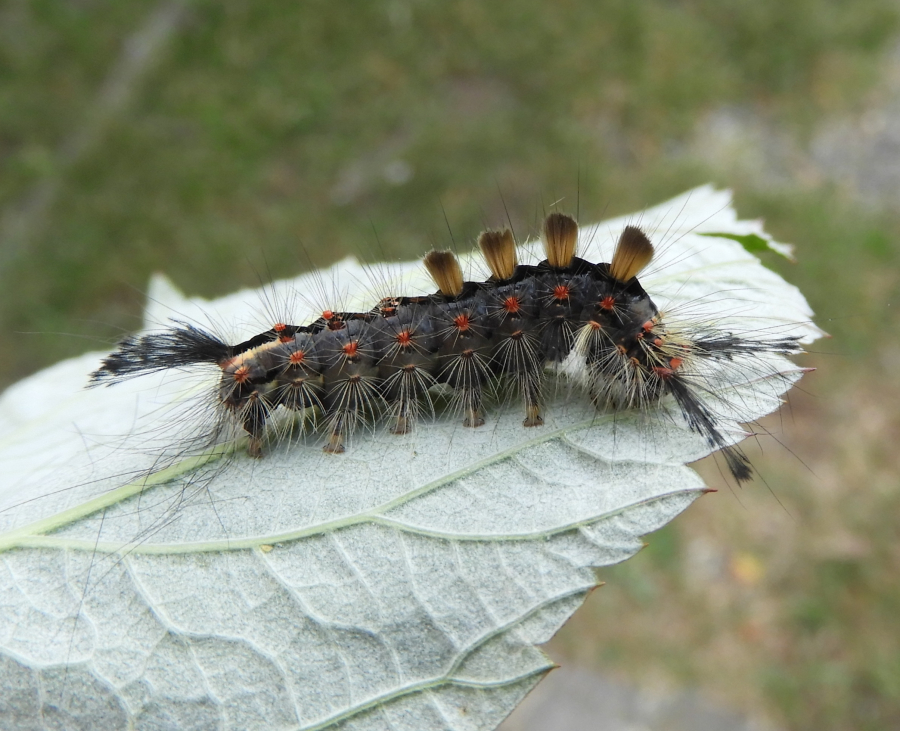
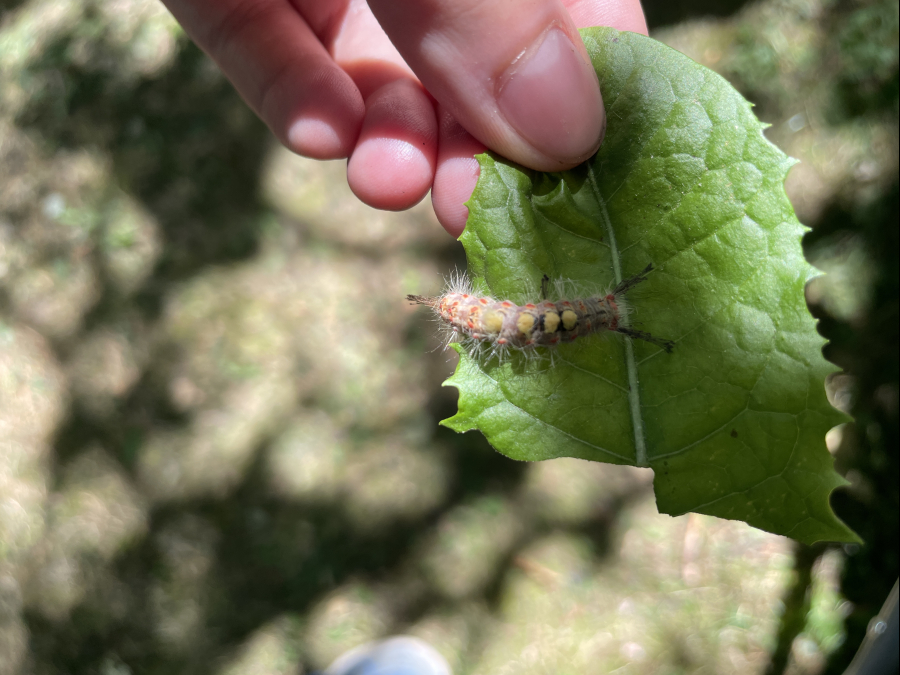
Orgyia antiqua, also known as the rusty tussock moth, is a species of moth with larvae that live on many species of trees and shrubs, feeding on leaves. The larvae are covered with long, rust-colored hairs and can be found between April and September, usually in two or three generations. The adults occur from June to October and are typically brown or gray with distinctive markings on their wings. The species is distributed in a variety of habitats, including forests, orchards, parks, and gardens, and is commonly found throughout Europe, Asia, and North America. Rusty tussock moth infestations can cause significant defoliation of host plants, which can lead to reduced growth and overall health. While outbreaks of this species can be damaging, they are often controlled naturally by parasites and predators. Additionally, the use of insecticides can help to manage populations of rusty tussock moths in areas where they pose a threat to valuable crops or landscapes.
Symptom
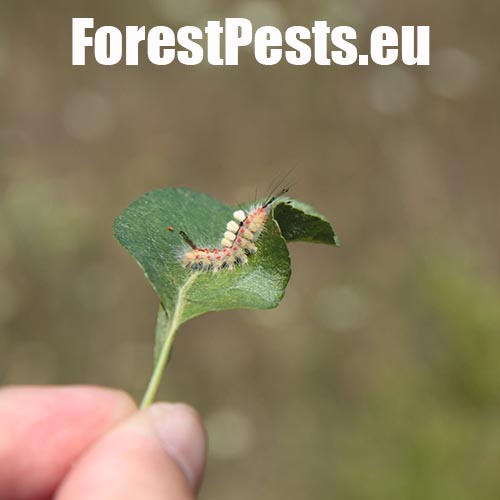
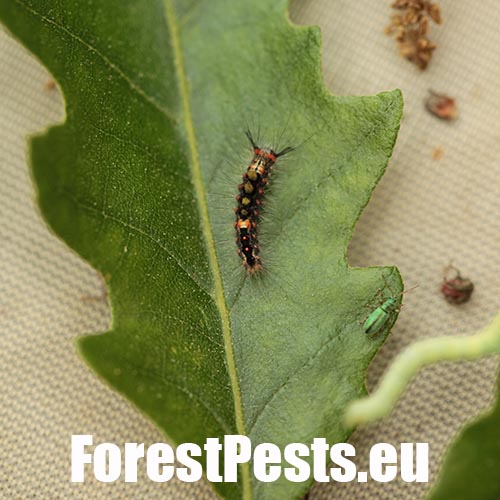
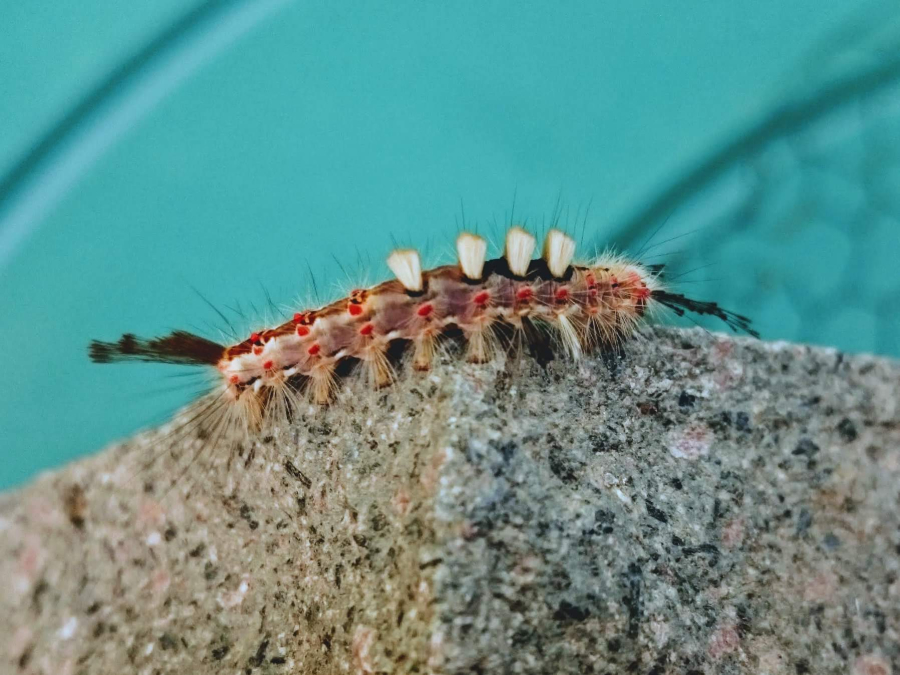
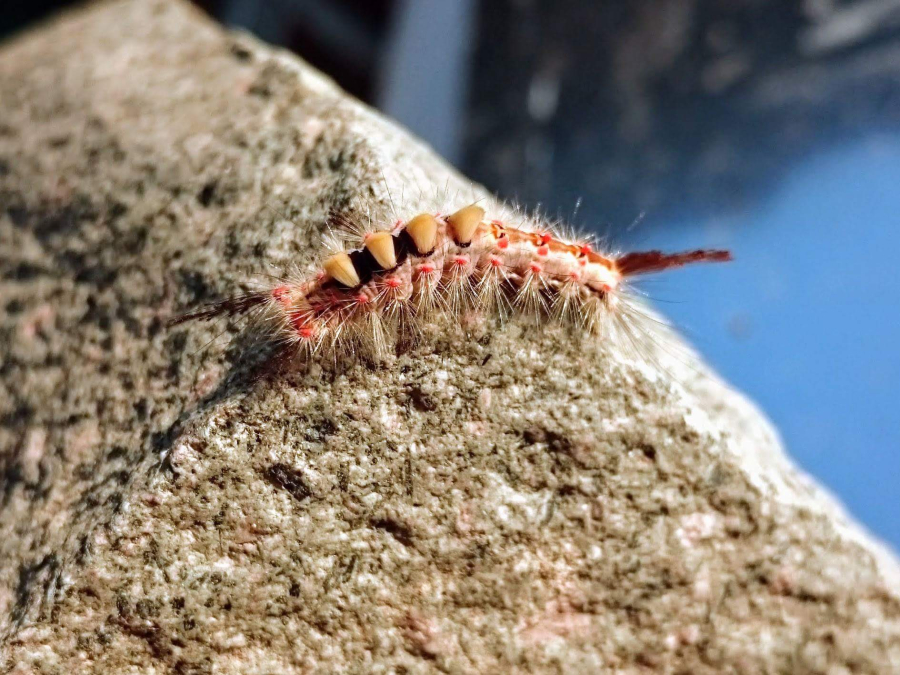
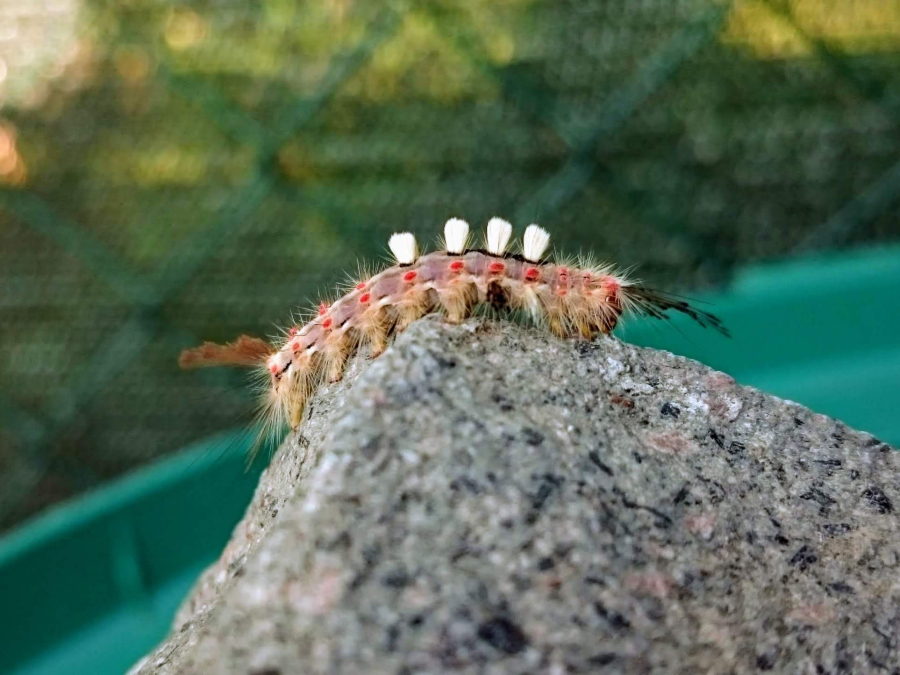
Colorful caterpillars with 4 groups of yellow bristles on the back and a pair of bristles running forward along the sides of the head.
Tree Species: Birch, Cherry, Oak, Willow
Part of a plant- attacked: Leaf / Needle
Pest significance: Harmful
Pest Category: Insects
Invasive Species: No
Present in EU: Yes
Add comment: Orgyia antiqua
Location map: Orgyia antiqua
print viewLegend:

Expert verified points

Unverified points
Observed by users on these tree species
Most sightings of the species


Last observations
There are a total of 10 observations of the species in the system

Orgyia antiquaRusty tussock moth
MZ
Number of votes: 0
Published: 26.9.2023

Orgyia antiquaRusty tussock moth
Juraj Hlavna
Number of votes: 0
Published: 17.7.2021

Orgyia antiquaRusty tussock moth
Marek
Number of votes: 0
Published: 10.7.2021

Orgyia antiquaRusty tussock moth
majo
Number of votes: 0
Published: 13.6.2021

Orgyia antiquaRusty tussock moth
Peky
Number of votes: 0
Published: 8.4.2021
Similar damage

Kentish glory

Dun-bar

Pale tussock


