



 Show all photos in album
Insert for comparison
We will identify your pest
Add pictures of this species
Show all photos in album
Insert for comparison
We will identify your pest
Add pictures of this species
Myzocallis walshii
Black-bordered oak aphid
Description
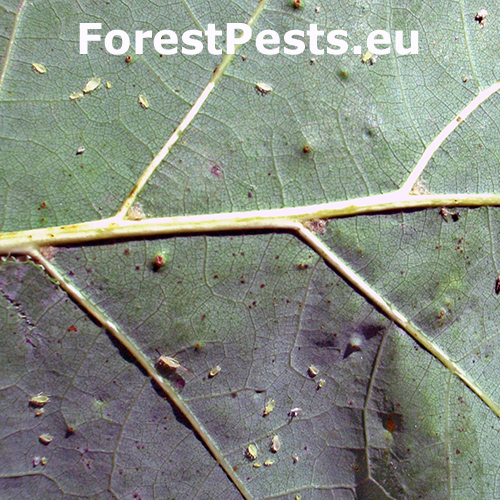
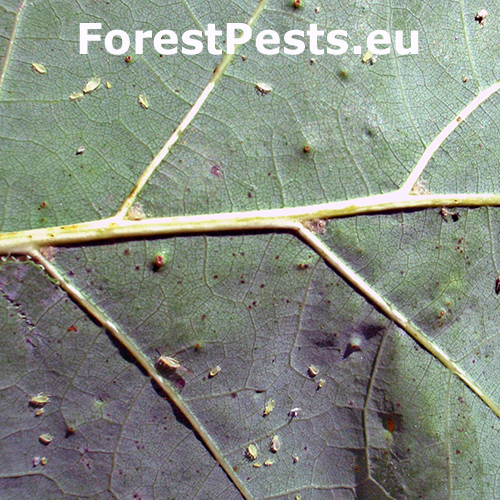
Myzocallis walshii, known as the black-bordered oak aphid, is a sap-feeding insect primarily associated with oaks from the red oak group (Quercus rubra and related species). Native to North America, it was first recorded in Europe in 1988 and has since spread widely, particularly in urban areas and parks. This aphid is monophagous, feeding exclusively on oaks, with no alternate host plants. It inhabits the undersides of leaves, forming dense colonies that produce significant amounts of honeydew, leading to sooty mold development on surfaces below.
The aphid's lifecycle includes parthenogenetic and sexual generations, overwintering as eggs in bark crevices. Infestations reduce photosynthetic efficiency and can impact the aesthetic appearance of host trees by causing leaf discoloration and premature leaf drop. Despite the high honeydew production, Myzocallis walshii colonies are not ant-attended, unlike many other aphid species.
Symptom
Clusters of aphids are visible on the undersides of leaves. Leaves may show discoloration, deformation, and premature drop. Honeydew and sooty mold can coat surfaces below infested trees.
Tree Species: Oak
Part of a plant- attacked: Leaf / Needle
Pest significance: Less harmful
Pest Category: Insects
Invasive Species: Yes
Present in EU: Yes
Add comment: Myzocallis walshii
Location map: Myzocallis walshii
Legend:

Expert verified points

Unverified points
Observed by users on these tree species
Similar damage

Elder aphid

Rose aphid

Apple aphid

