


 Show all photos in album
Insert for comparison
We will identify your pest
Add pictures of this species
Show all photos in album
Insert for comparison
We will identify your pest
Add pictures of this species
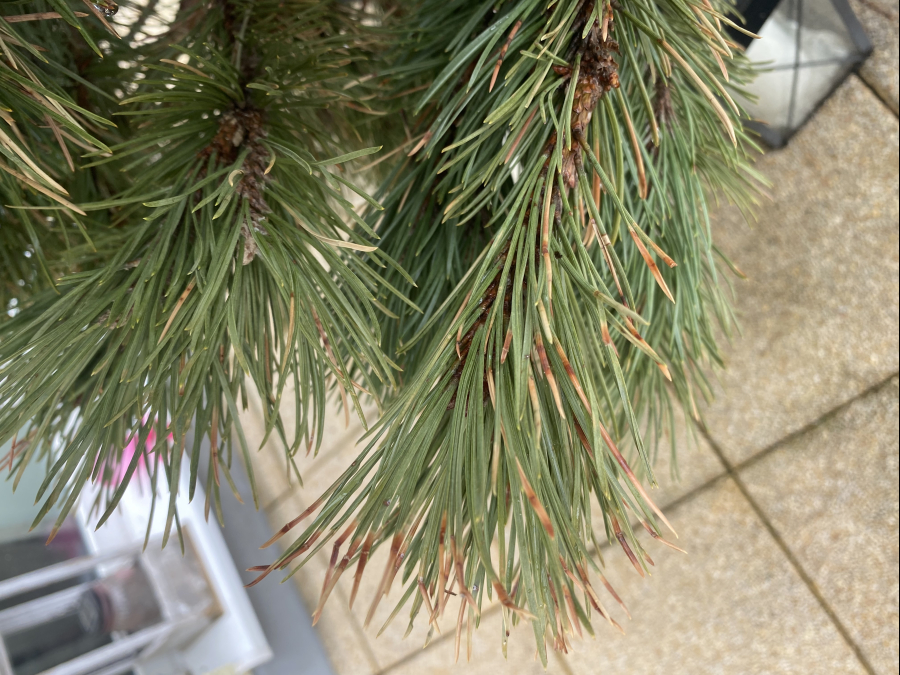
Mycosphaerella dearnessii
Brown spot needle blight
Description
Rainfall and temperature are the critical factors for spore dispersal and infection, which occur from June to September. Spores are released only during rainy weather and never at low temperatures (near 2 °C). The major infection period is from late June to early July and moisture on the needle surface is necessary for spore germination. The conidia produce appressoria and penetration occurs via stomata. The incubation period is variable depending on host type and age: from 1–2 months on young needles to 4–7 months on older foliage. Acervuli develop and mature in late August and, although conidia are released in September, infection is restricted, probably due to increased needle resistance. The disease cycle renews the following summer when the overwintering fruiting bodies release conidia as temperature and rainfall increase.
Symptom
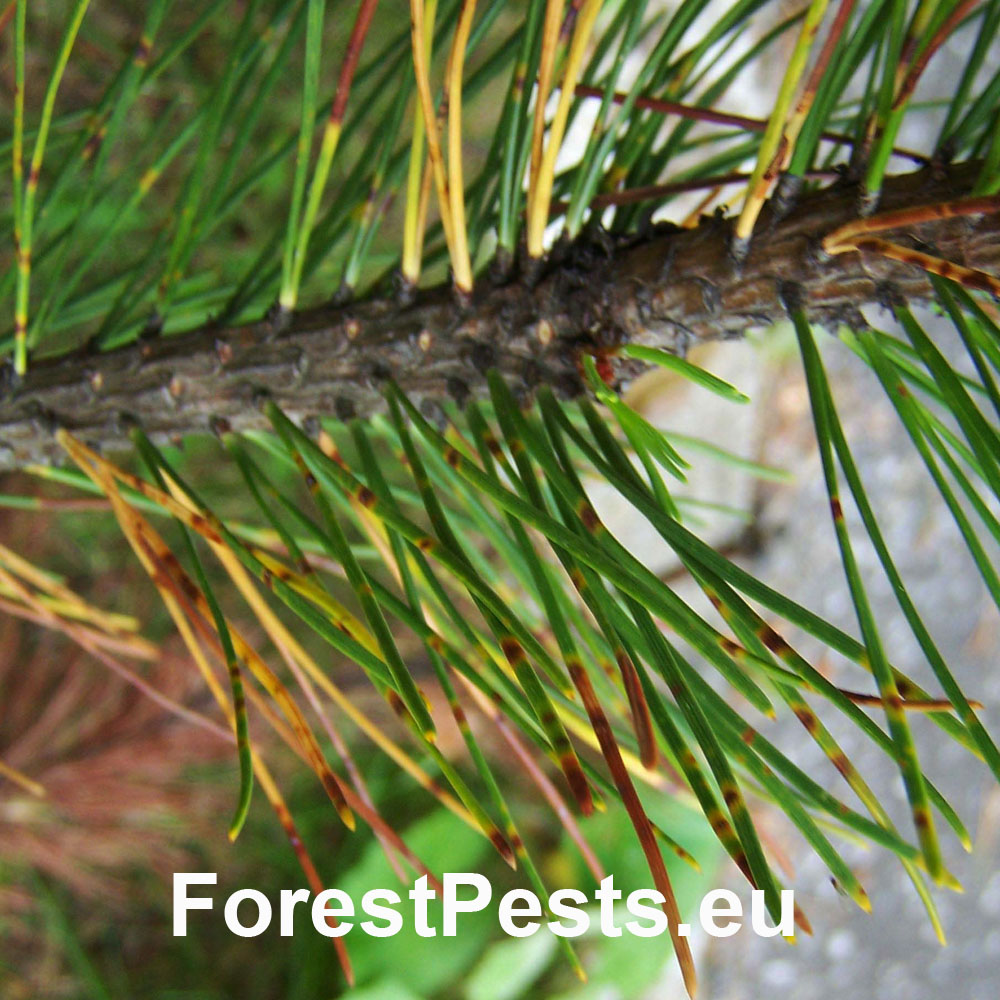
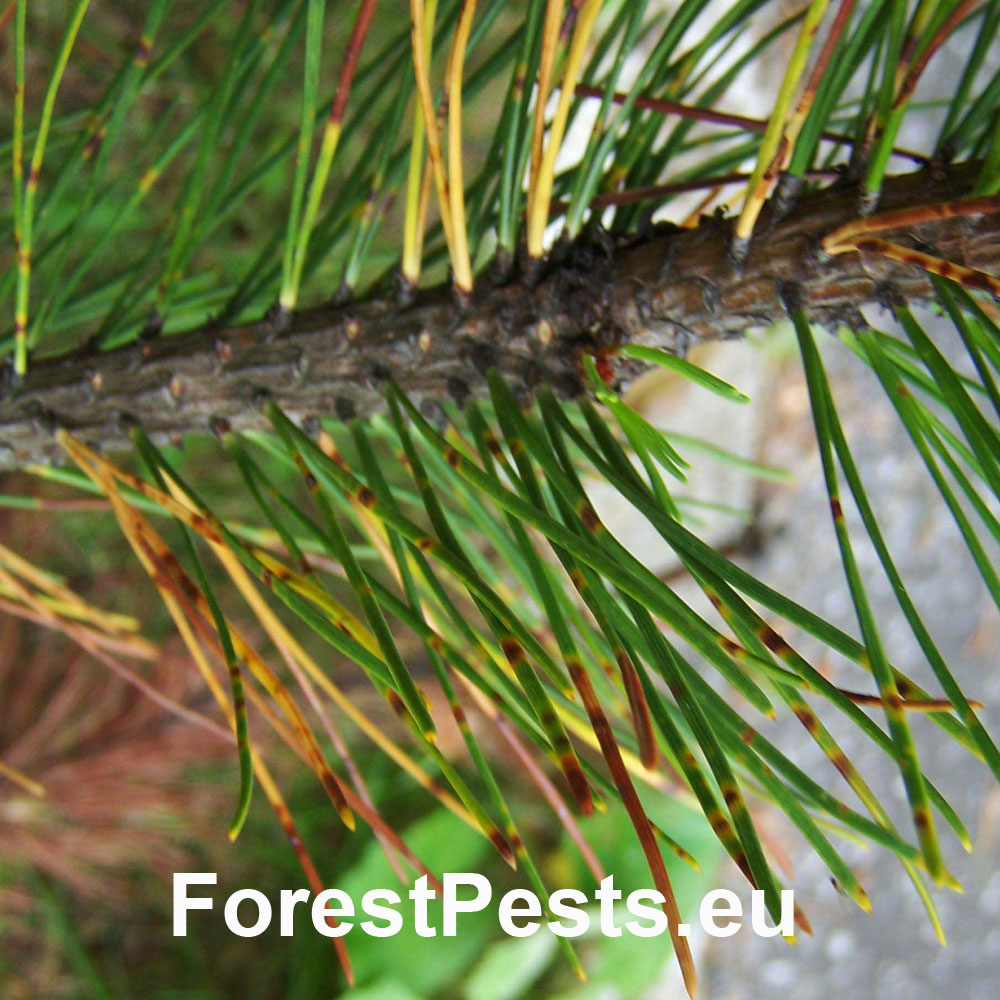
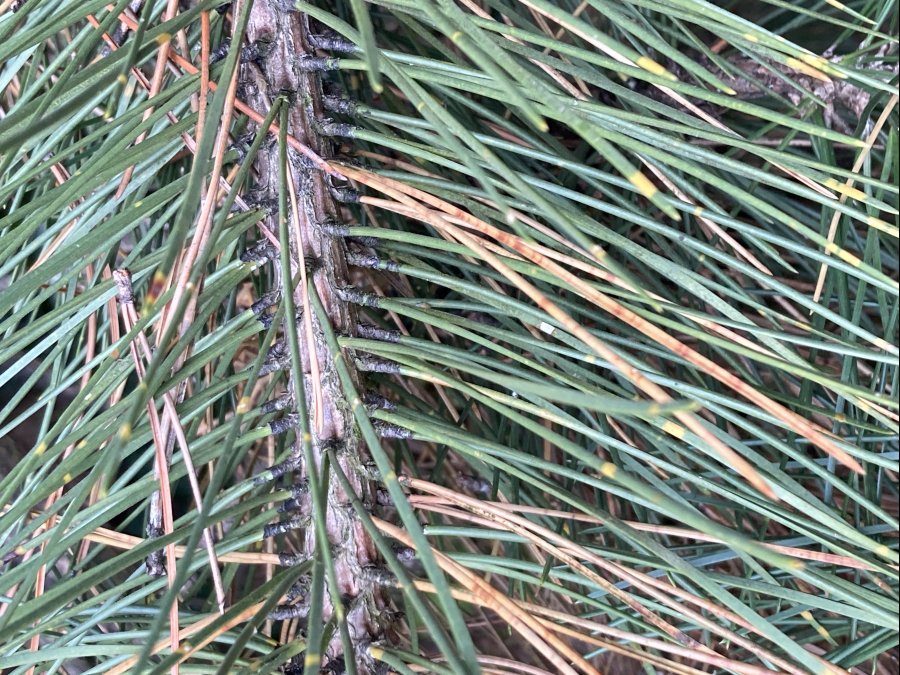
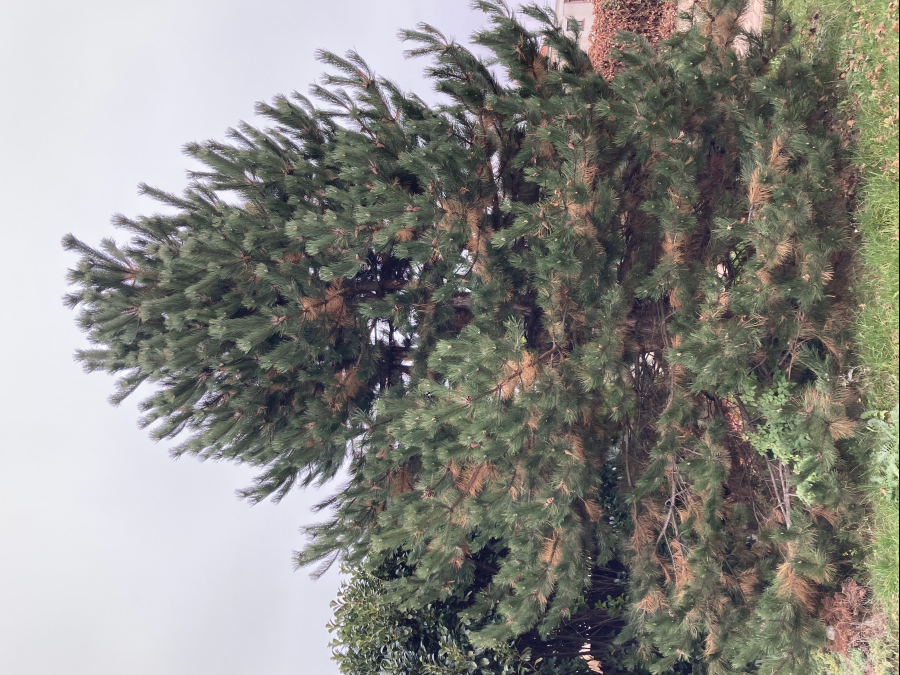
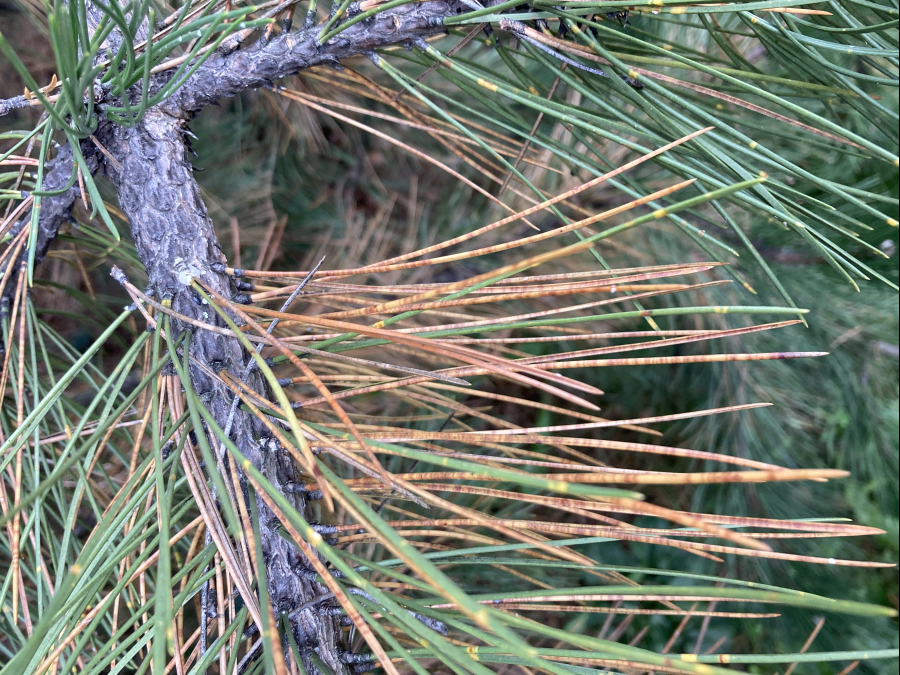
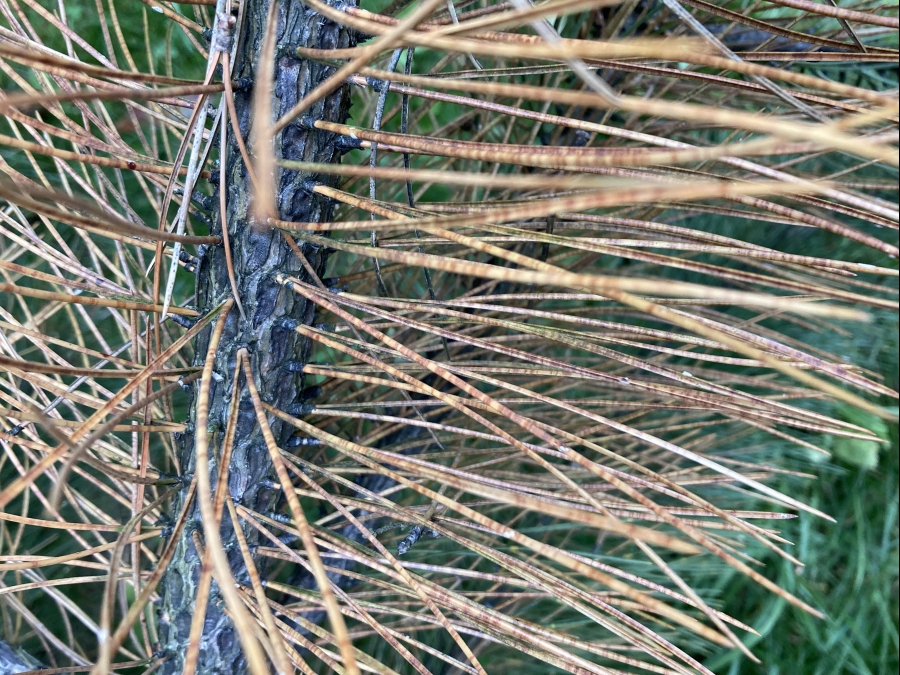
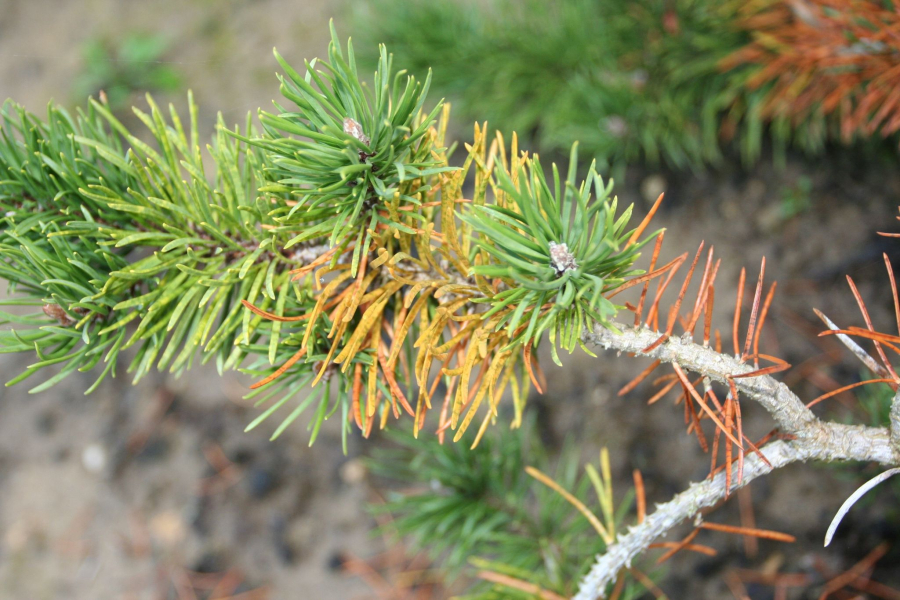
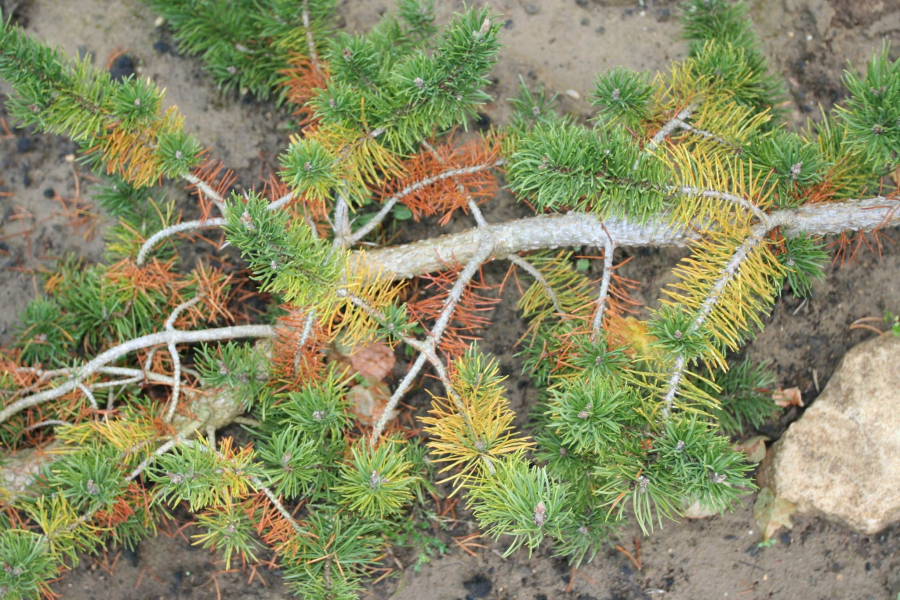
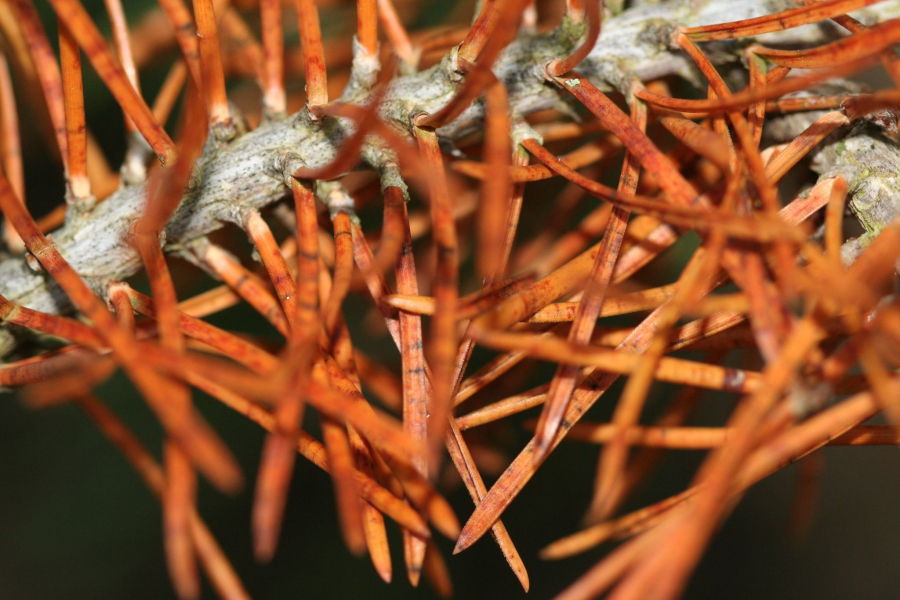
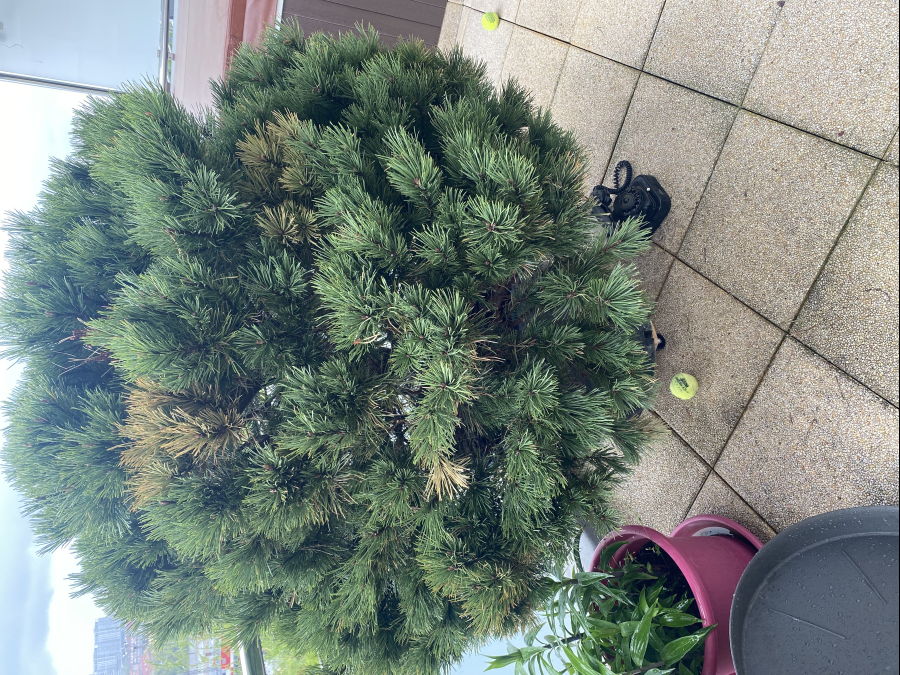
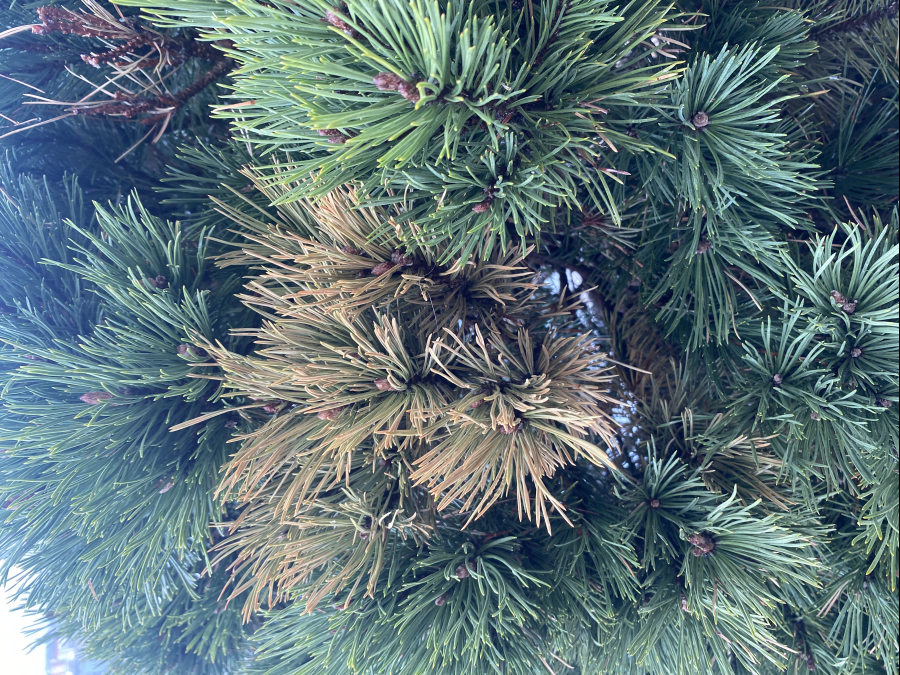
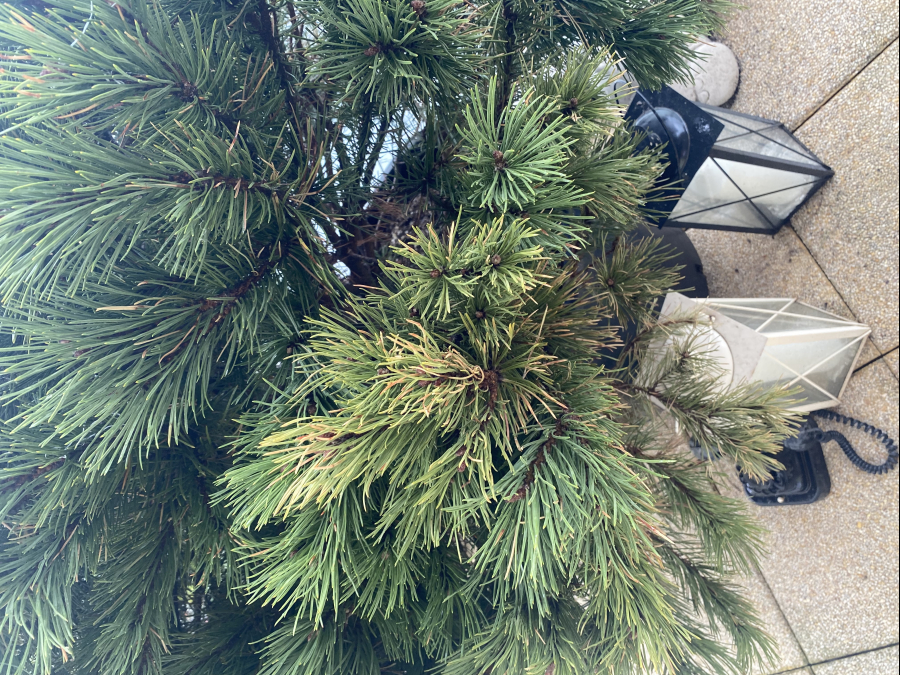
The initial signs of infestation include visible light to light yellow resin-stained spots on the needles, which later turn dark brown. The disease is manifested by the presence of brown transverse spots with yellow edging. Infected needles turn brown, dry and fall off, especially from the tops of shoots.
Tree Species: Pine, Spruce
Part of a plant- attacked: Leaf / Needle
Pest significance: Very harmful
Pest Category: Fungi
Invasive Species: Yes
Present in EU: Yes

Add comment: Mycosphaerella dearnessii
Location map: Mycosphaerella dearnessii
print viewLegend:

Expert verified points

Unverified points
Observed by users on these tree species
Most sightings of the species

Last observations
There are a total of 4 observations of the species in the system

Mycosphaerella dearnessiiBrown spot needle blight
Jana M.
Number of votes: 0
Published: 12.11.2024

Mycosphaerella dearnessiiBrown spot needle blight
Jana M.
Number of votes: 0
Published: 12.11.2024

Mycosphaerella dearnessiiBrown spot needle blight
Jana M.
Number of votes: 0
Published: 12.11.2024

Mycosphaerella dearnessiiBrown spot needle blight
Jana M.
Number of votes: 0
Published: 12.11.2024

Mycosphaerella dearnessiiBrown spot needle blight
Ester
Number of votes: 0
Published: 14.5.2021
Similar damage

Pine needle cast

White felt blight of Abies

Rhizosphaera needle cast

