




 Show all photos in album
Insert for comparison
We will identify your pest
Add pictures of this species
Show all photos in album
Insert for comparison
We will identify your pest
Add pictures of this species
Meripilus giganteus
The giant polypore
Description
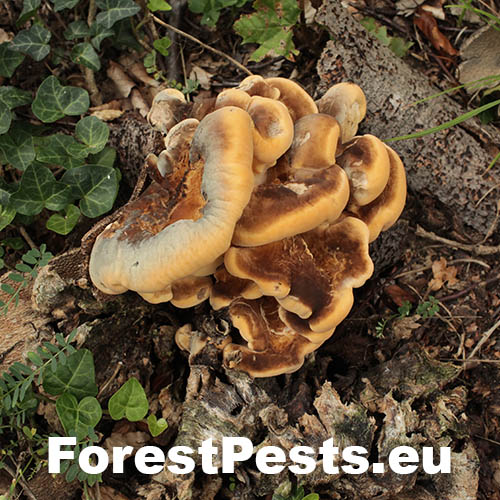
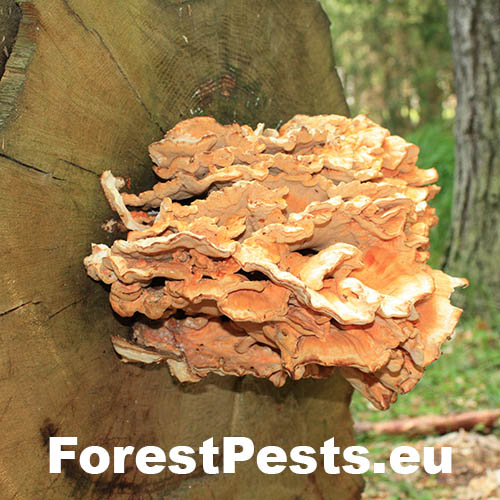
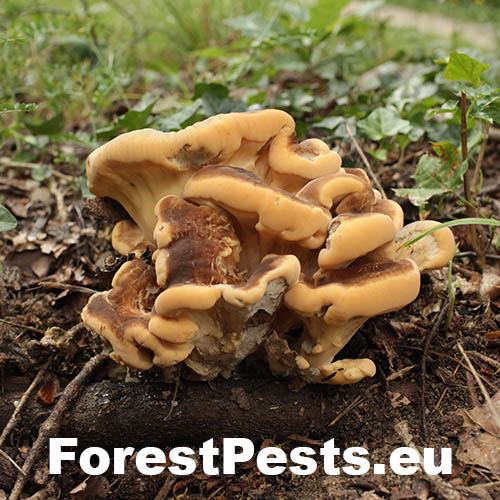
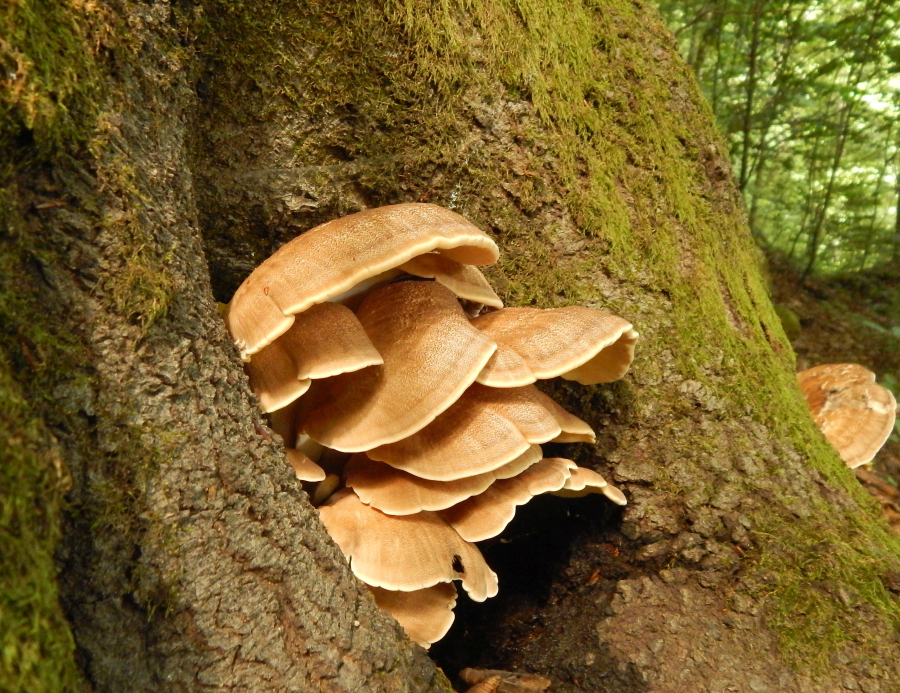
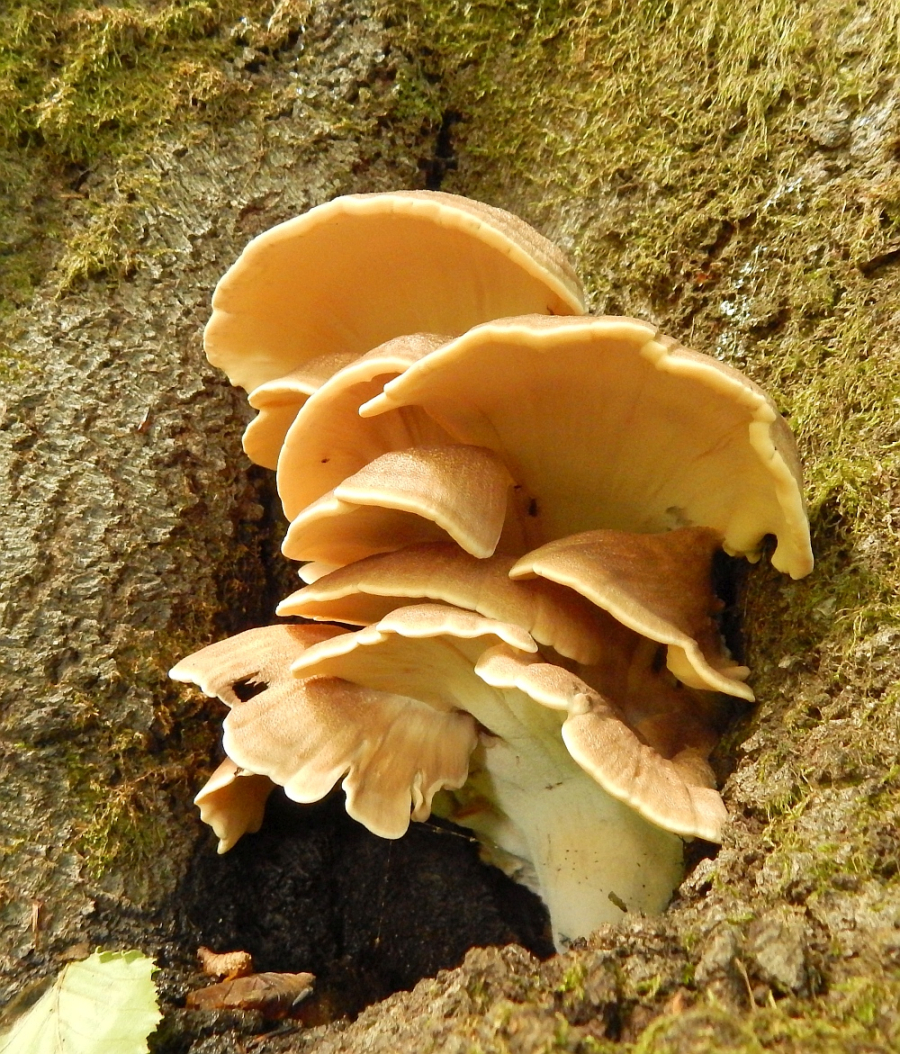
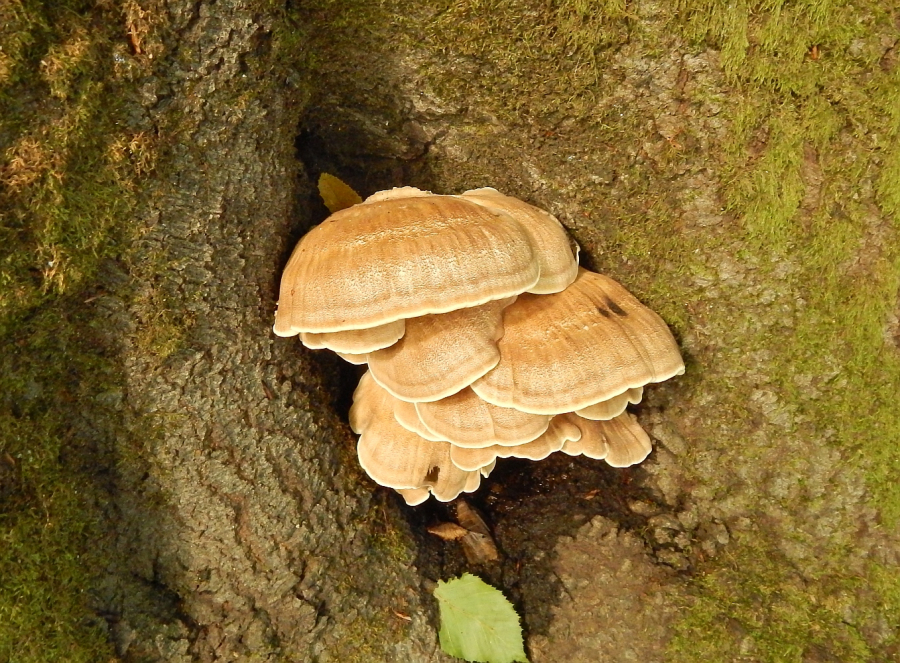
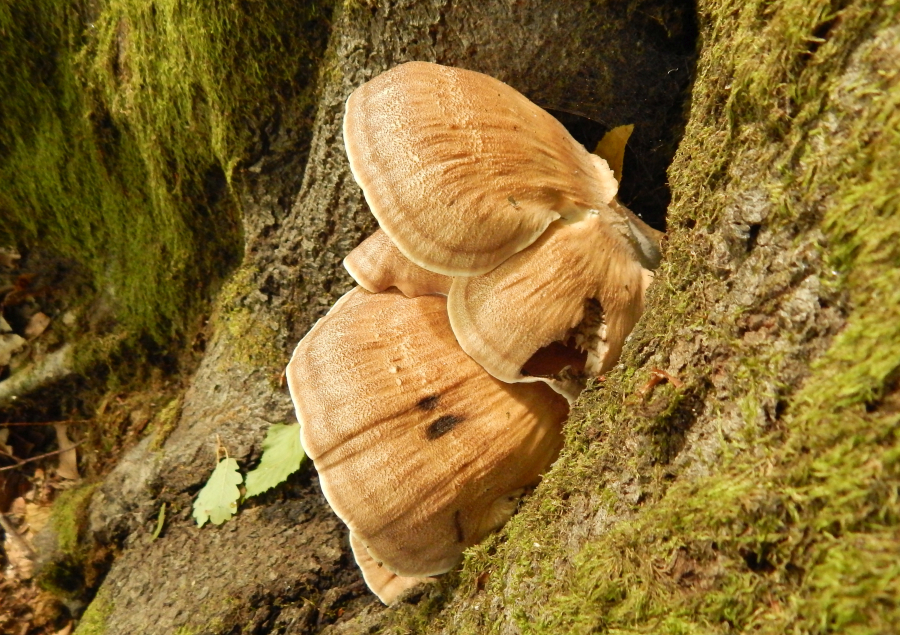
Fruiting bodies are up to 30 cm across or more, composed of multiple caps sharing a branched, stemlike base. Caps are 5–20 cm across; fan-shaped; finely velvety or bald; whitish becoming brownish with age; often radially streaked and concentrically zoned; the margin thin, bruising and aging black. Pore surface is whitish, becoming dirty tan; bruising dark brown to black when fresh; with 6–8 round to angular pores per mm; tubes are up to 8 mm deep. It is parasitic on living oaks and other hardwoods causing a white rot. It grows in large clusters of rosettes near the bases of trees, often reappearing in the same place in subsequent years in summer and fall.
Symptom
The individual hats are 8 - 30 cm wide, at first roughly fleshy with a conspicuous edge wall, later they are thinned with a sharp edge.
Tree Species: Beech
Part of a plant- attacked: Roots
Pest significance: Harmful
Pest Category: Fungi
Invasive Species: No
Present in EU: Yes
Add comment: Meripilus giganteus
Location map: Meripilus giganteus
print viewLegend:

Expert verified points

Unverified points
Observed by users on these tree species
Most sightings of the species

Last observations
There are a total of 1 observations of the species in the system

Meripilus giganteusThe giant polypore
Marián Slamka
Number of votes: 0
Published: 20.8.2021

Meripilus giganteusThe giant polypore
Marián Slamka
Number of votes: 0
Published: 20.8.2021

Meripilus giganteusThe giant polypore
majo
Number of votes: 0
Published: 20.8.2021
Similar damage

Sulphur fungus rot

Fungus Gloeophyllum odoratum

Weeping conk

