


 Show all photos in album
Insert for comparison
We will identify your pest
Add pictures of this species
Show all photos in album
Insert for comparison
We will identify your pest
Add pictures of this species
Megastigmus spermotrophus
Douglas-fir seed chalcid
Description
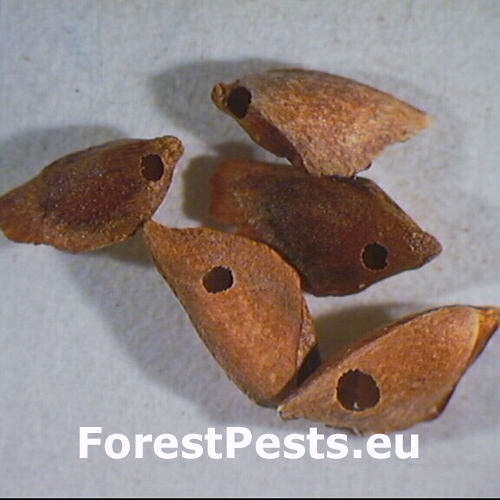
Megastigmus spermotrophus, commonly known as the Douglas-fir seed chalcid, is a small parasitic wasp in the family Torymidae. It primarily infests Pseudotsuga menziesii (Douglas-fir) and is a significant pest of conifer seed production. Females use their long ovipositors to lay eggs inside developing seeds, where the larvae consume the seed tissues, leaving the seed hollow. This species is widely distributed across North America, particularly in regions where Douglas-fir grows. Megastigmus spermotrophus is present in several parts of Europe, where it primarily affects Douglas-fir (Pseudotsuga menziesii), a non-native species introduced for forestry purposes. This chalcid wasp has spread to regions where Douglas-fir is cultivated, including countries like France, the UK, Germany, or the Czech Republic. Megastigmus spermotrophus was first recorded in Europe in the early 20th century. The larvae overwinter inside seeds, emerging as adults in the spring. The economic impact can be severe in seed orchards, with seed losses ranging from 2% to 50% in infested trees, although the damage is often only detectable through X-ray or dissection.
Symptom
Infested seeds are often hollow, with no visible external damage, but small exit holes may appear once the adult emerges.
Tree Species: Douglas Fir
Part of a plant- attacked: Fruit / Seed
Pest significance: Harmful
Pest Category: Insects
Invasive Species: Yes
Present in EU: Yes
Add comment: Megastigmus spermotrophus
Location map: Megastigmus spermotrophus
Legend:

Expert verified points

Unverified points
Observed by users on these tree species
Similar damage

Diplodia tip blight

European spruce budmoth

Frost

