




 Show all photos in album
Insert for comparison
We will identify your pest
Add pictures of this species
Show all photos in album
Insert for comparison
We will identify your pest
Add pictures of this species
Macrodiplosis pustularis
Gall midge Macrodiplosis pustularis
Description
Macrodiplosis pustularis (= Macrodiplosis dryobia) is a species of gall midge belonging to the family Cecidomyiidae. These tiny flies are known for their unique life cycle, particularly their ability to induce the formation of galls on plants, which are abnormal growths that provide both food and protection for the developing larvae. The galls induced by Macrodiplosis pustularis are usually found on oak leaves. The larvae feed within the gall, consuming plant tissue that has been altered to meet their nutritional needs. This phase lasts through much of the growing season, after which the larvae typically drop to the ground to pupate. While Macrodiplosis pustularis is not typically considered a significant pest, its gall-forming activities can have some impact on the health and aesthetic value of oak trees, especially if infestations are heavy. The galls can cause leaf deformities and may reduce photosynthetic efficiency, though the overall impact on the tree's health is usually minimal.
Symptom
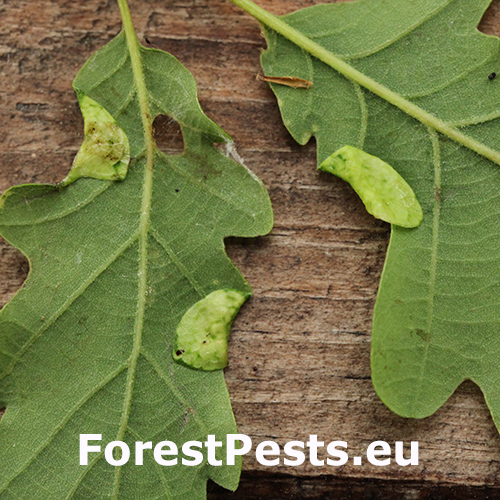
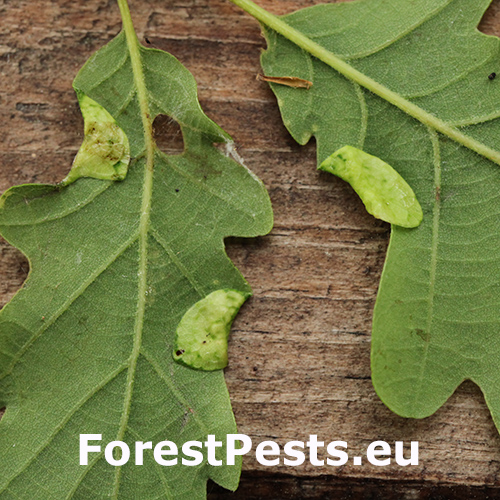
Galls are located at the outer edge of the leaf lobe. The folded part of the leaf becomes somewhat thickened and bent downward. It is covered by a mottled pattern. Inside the folded leaf, there are often more larvae. The larvae live in the leaf until June-July, when they pupate and fall to the ground.
Tree Species: Oak
Part of a plant- attacked: Leaf / Needle
Pest significance: Less harmful
Pest Category: Insects
Invasive Species: No
Present in EU: Yes
Add comment: Macrodiplosis pustularis
Location map: Macrodiplosis pustularis
Legend:

Expert verified points

Unverified points
Observed by users on these tree species
Similar damage

Cynipid gall wasp Cynips quercusfolii

Gall midge Lasioptera populnea

Flea beetle Crepidodera spp.

