




 Show all photos in album
Insert for comparison
We will identify your pest
Add pictures of this species
Show all photos in album
Insert for comparison
We will identify your pest
Add pictures of this species
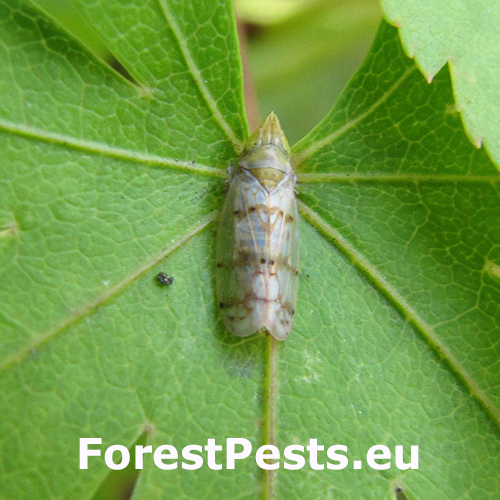
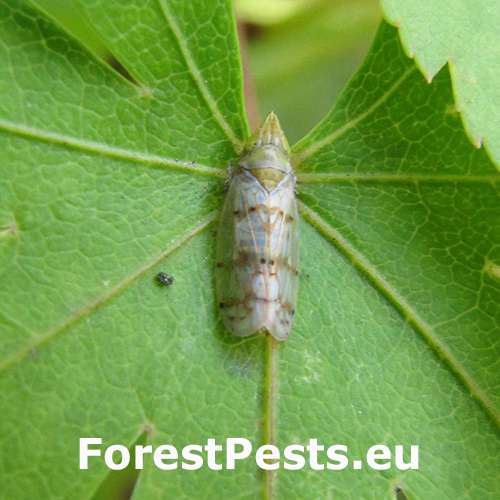
Japanese maple leafhopper
Japananus hyalinus
Description
Japananus hyalinus, commonly known as the Japanese maple leafhopper, is a leafhopper species originally native to East Asia. It is associated primarily with maple trees (Acer spp.), including Acer campestre, A. palmatum, and A. pseudoplatanus. This insect was introduced to Europe, North America, and Australia through the trade of cultivated maples. In Europe, it was first recorded in Austria and Romania in 1961 and has since spread widely across the continent.
The species is univoltine, with eggs overwintering in the nodes of branches. Adults and nymphs feed on sap from leaves, which can lead to metabolic stress in host plants. Although J. hyalinus does not currently act as a known vector for diseases, its sap-sucking activity can reduce plant vigor and impact the aesthetic appearance of leaves through discoloration and minor deformities.
Symptom
Affected leaves exhibit discoloration, stippling, and small puncture marks from feeding. Nymphs and adults are visible on leaf surfaces, often clustered on veins.
Tree Species: Maple
Part of a plant- attacked: Leaf / Needle
Pest significance: Less harmful
Pest Category: Insects
Invasive Species: Yes
Present in EU: Yes
Add comment: Japanese maple leafhopper
Location map: Japanese maple leafhopper
Legend:

Expert verified points

Unverified points
Observed by users on these tree species
Similar damage

Summer chafer

Green cone-headed planthopper

Rhododendron leafhopper

