




 Show all photos in album
Insert for comparison
We will identify your pest
Add pictures of this species
Show all photos in album
Insert for comparison
We will identify your pest
Add pictures of this species
Ips duplicatus
Northern bark beetle
Description
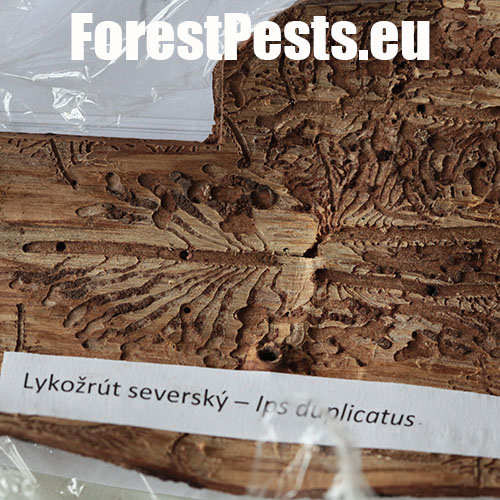
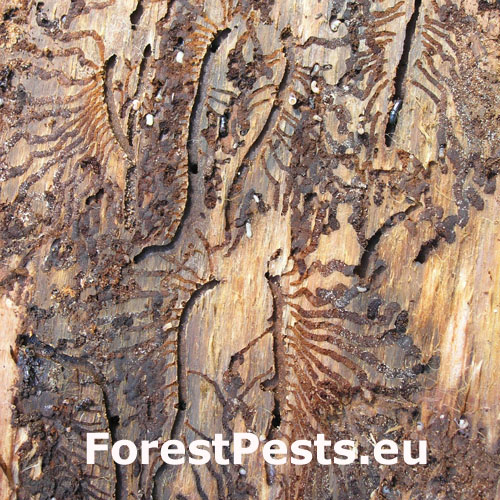
Beetles are 3.3-4.4 mm in length, dark-brown, with four spines at each side of the elytral declivity. The second and third spines arise from a tumescence which forms an arcuate ridge between them. This is most distinct in the male where the third spine is the largest and is capitate. Overwinters in the adult stage, less commonly also as a pupa or larva. Flight takes place in May. The galleries are similar to those of the eight-toothed spruce bark beetle, with the maternal tunnels shorter and slightly narrower. There are normally 2 or 3 of them, slightly forking away on the two-gallery side. Galleries are usually found in standing trees, rather than logs, and in the upper part of trees where the bark is relatively thin and where I. typographus has colonized the lower section. Its presence doesn’t extend to higher altitudes (above 800 m). The species spreads from northern (where is more common) areas into the south during last 10 years.
Symptom
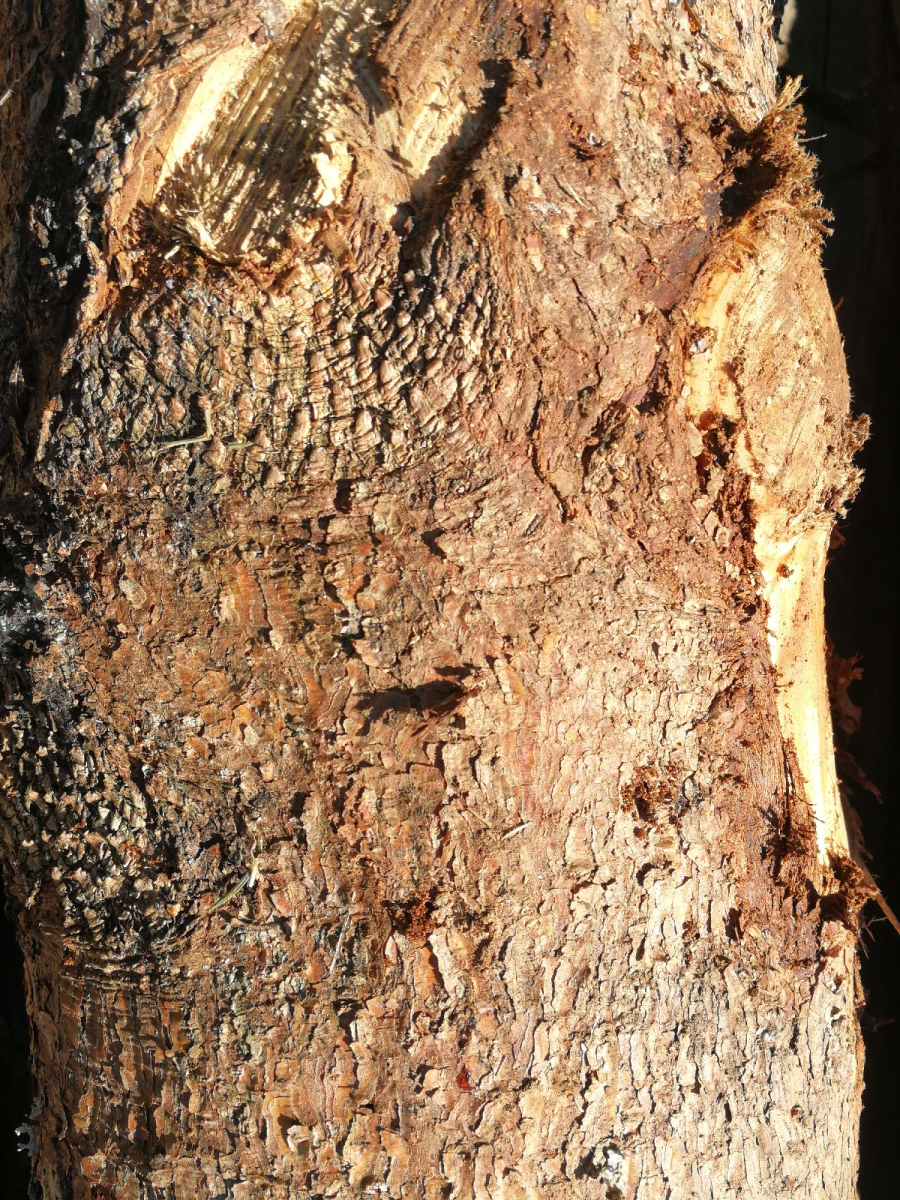
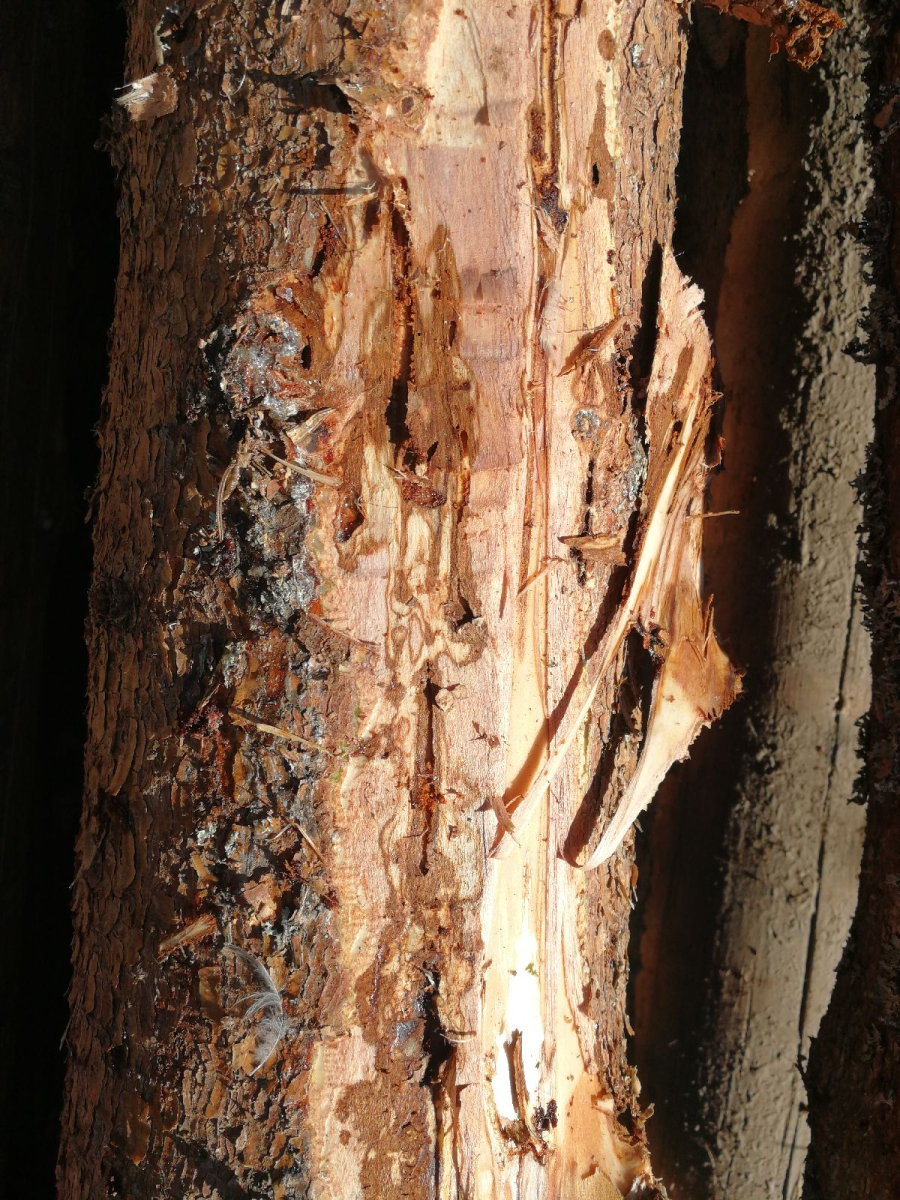
The galleries are similar to those of the eight-toothed spruce bark beetle, with the maternal tunnels shorter and slightly narrower. There are normally 2 or 3 of them, slightly forking away on the two-gallery side. Galleries are usually found in standing trees, rather than logs, and in the upper part of trees where the bark is relatively thin and where I. typographus has colonized the lower section.
Tree Species: Spruce
Part of a plant- attacked: Tree trunk
Pest significance: Very harmful
Pest Category: Insects
Invasive Species: Yes
Present in EU: Yes

Add comment: Ips duplicatus
Location map: Ips duplicatus
print viewLegend:

Expert verified points

Unverified points
Observed by users on these tree species
Most sightings of the species

Last observations
There are a total of 1 observations of the species in the system

Ips duplicatus Northern bark beetle
ak73
Number of votes: 0
Published: 29.8.2022

Ips duplicatus Northern bark beetle
ak73
Number of votes: 0
Published: 29.8.2022
Similar damage

Eight-toothed spruce bark beetle

European spruce bark beetle

Large larch bark beetle


