






 Show all photos in album
Insert for comparison
We will identify your pest
Add pictures of this species
Show all photos in album
Insert for comparison
We will identify your pest
Add pictures of this species
Ips cembrae
Large larch bark beetle
Description
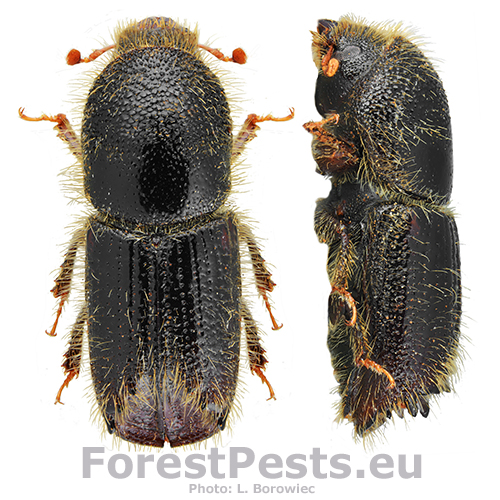
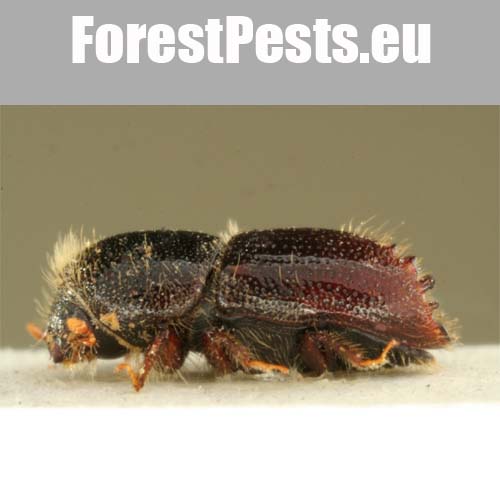
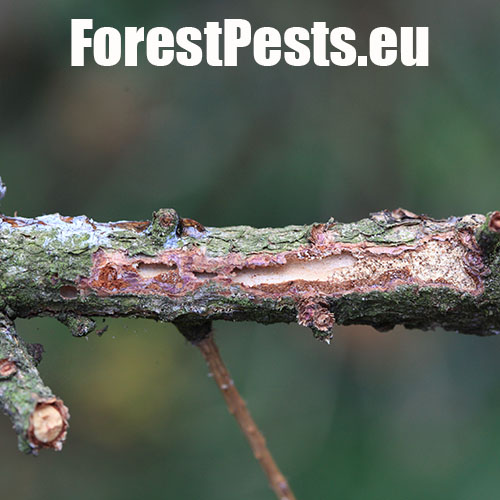
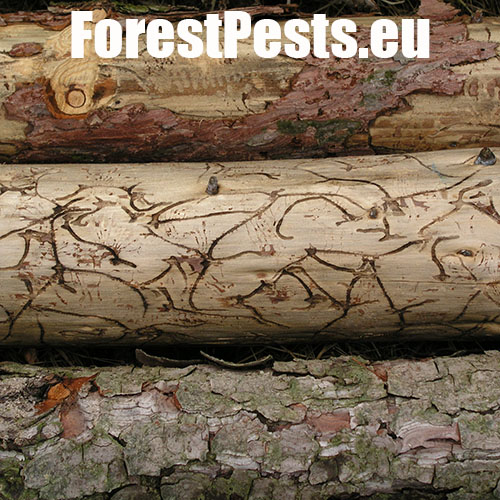
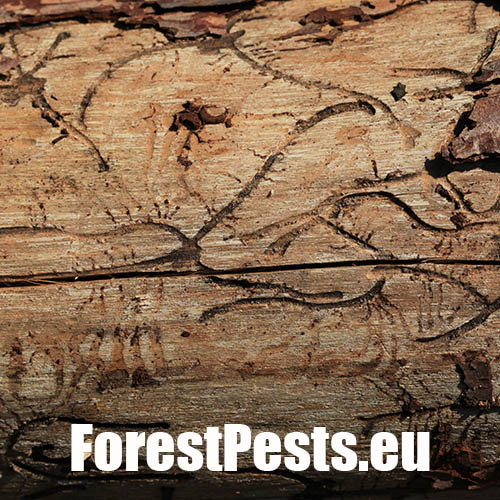
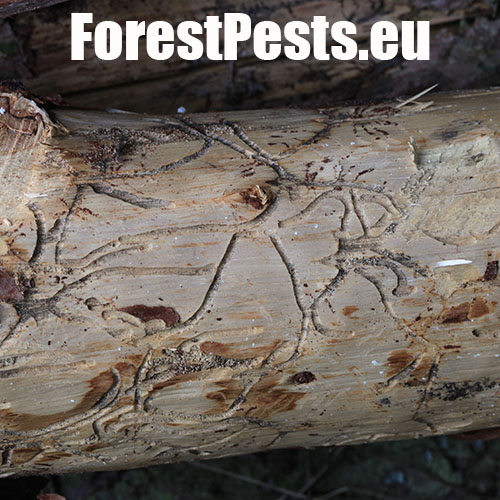
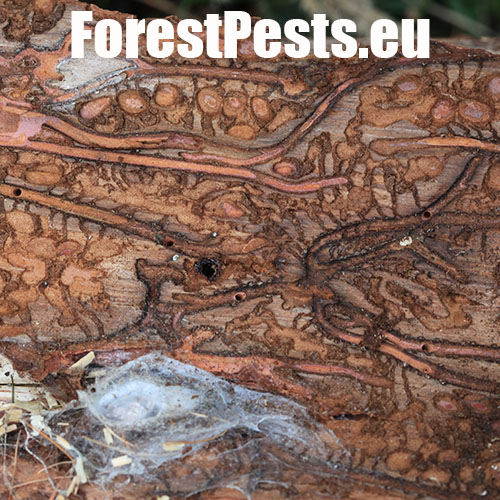
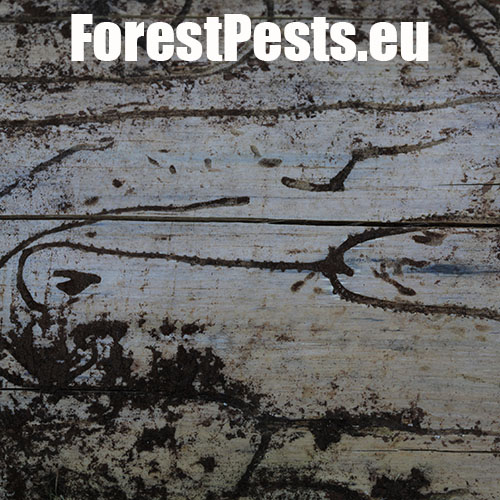
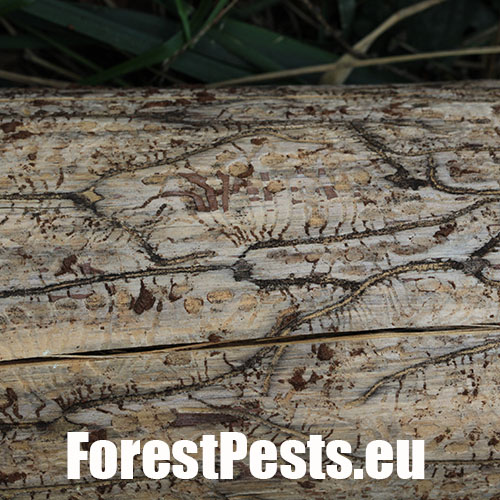
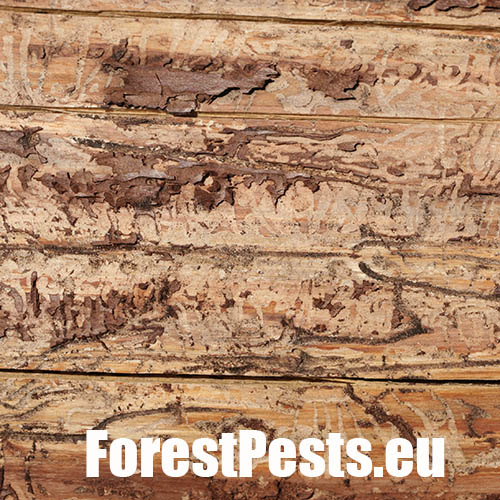
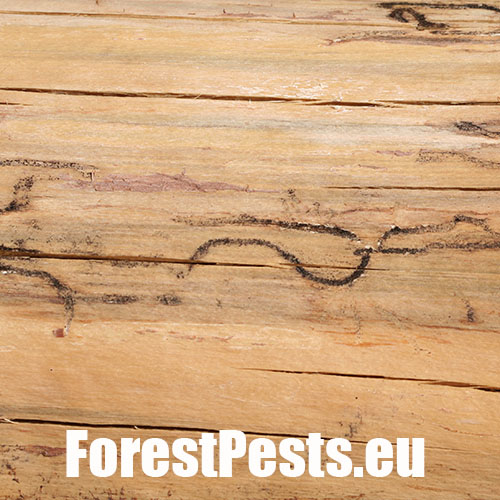
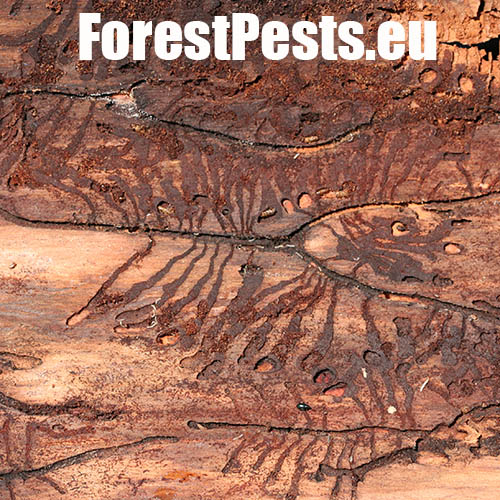
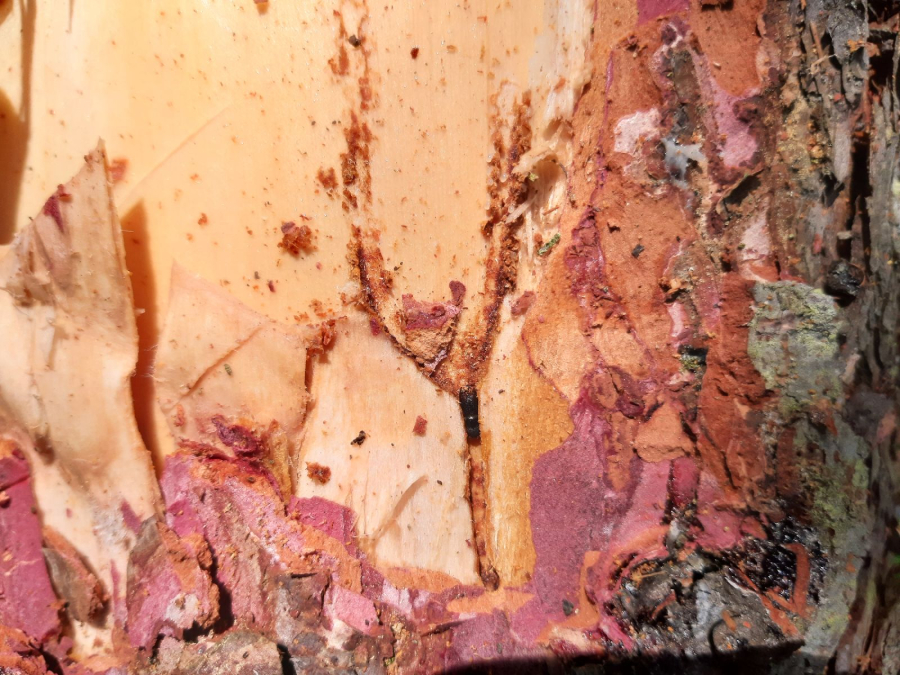
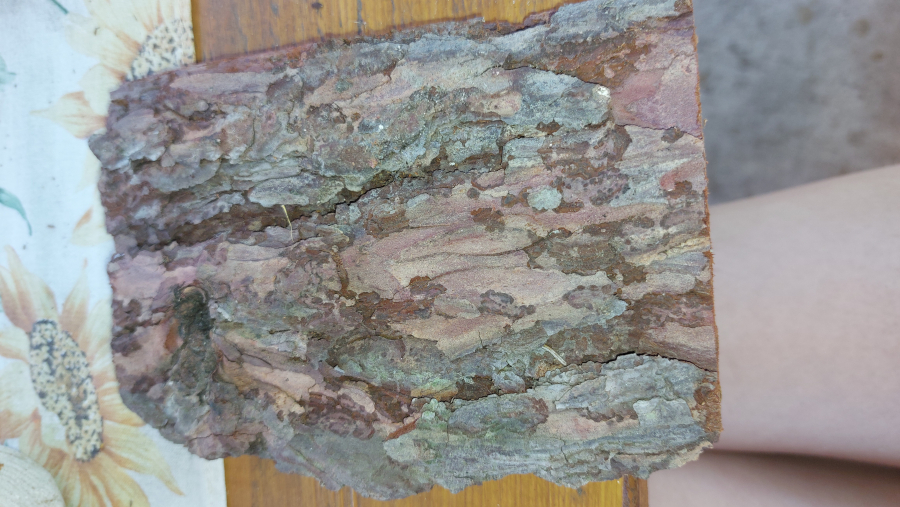
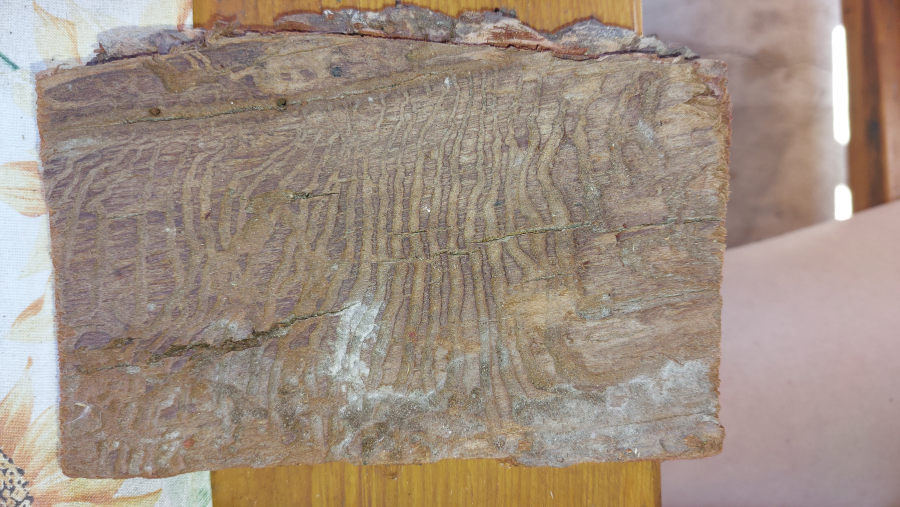
The adult’s body is cylindrical, 4.0-5.5 mm long, of brown-black colour. The first generation is active in April-May, and the second one in August-September. The male bores the nuptial chamber, where mates with 2 up to 5 females. Maternal galleries are irregular, longer than 10-12 cm. Larval galleries are dense, irregular and short. Larvae pupate in the bark and sapwood. After hatching, young adults have a maturation feeding in 1-3 year old shoots in the crowns of older larches, causing a severe defoliation. With a physiology rather similar to the spruce bark beetle, it is a polygamous species prefers larch. It attacks weakened or wind broken trees. Tends to outbreaks. Several other bark beetles species live on larch, including Cryphalus intermedius, C. abietis, C. saltuarius, Xyloterus lineatus and Pityophthorus pityographus.
Symptom
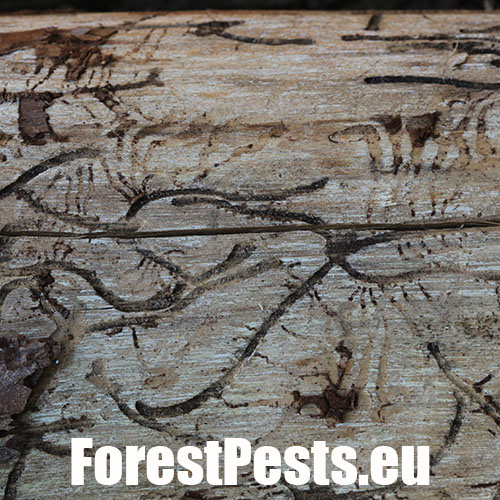
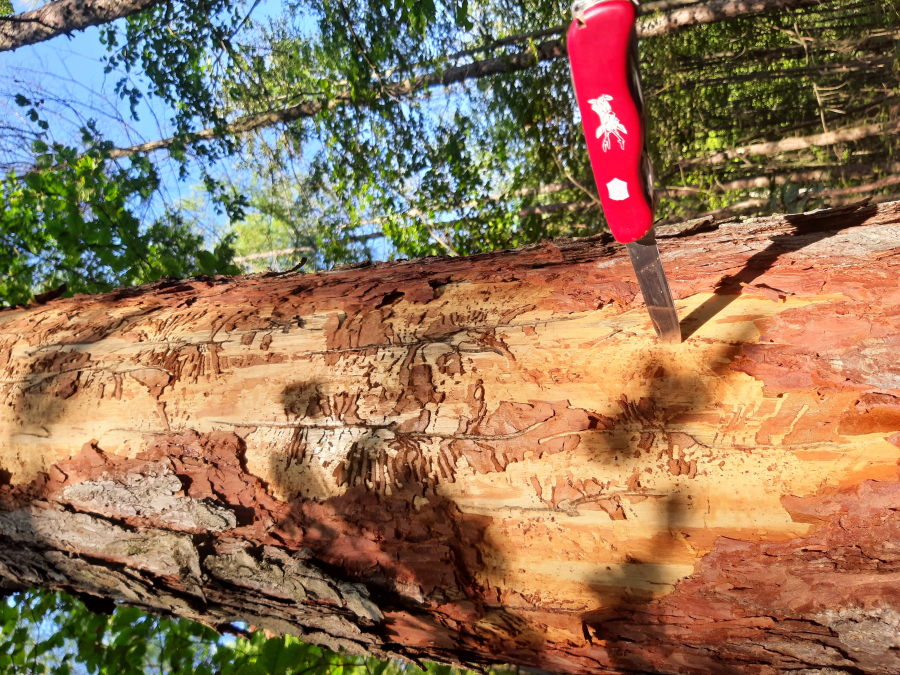
Maternal galleries are irregular, longer than 10-12 cm. Larval galleries are dense, irregular and short.
Tree Species: Spruce, Larch
Part of a plant- attacked: Tree trunk
Pest significance: Very harmful
Pest Category: Insects
Invasive Species: No
Present in EU: Yes
Add comment: Ips cembrae
Location map: Ips cembrae
print viewLegend:

Expert verified points

Unverified points
Observed by users on these tree species
Most sightings of the species

Last observations
There are a total of 3 observations of the species in the system

Ips cembrae Large larch bark beetle
Jozef Špišák
Number of votes: 0
Published: 19.9.2024

Ips cembrae Large larch bark beetle
Jozef Špišák
Number of votes: 0
Published: 19.9.2024

Ips cembrae Large larch bark beetle
Jozef Špišák
Number of votes: 0
Published: 19.9.2024

Ips cembrae Large larch bark beetle
Jozef Špišák
Number of votes: 0
Published: 19.9.2024

Ips cembrae Large larch bark beetle
Miroslav Rybárik, OLH
Number of votes: 0
Published: 21.6.2022
Similar damage

Engraver beetle

European spruce bark beetle

Eight-toothed spruce bark beetle


