




 Show all photos in album
Insert for comparison
We will identify your pest
Add pictures of this species
Show all photos in album
Insert for comparison
We will identify your pest
Add pictures of this species
Illinoia liriodendri
Tulip-tree aphid
Description
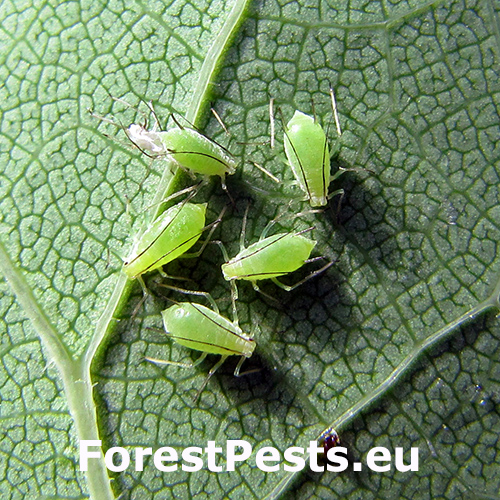
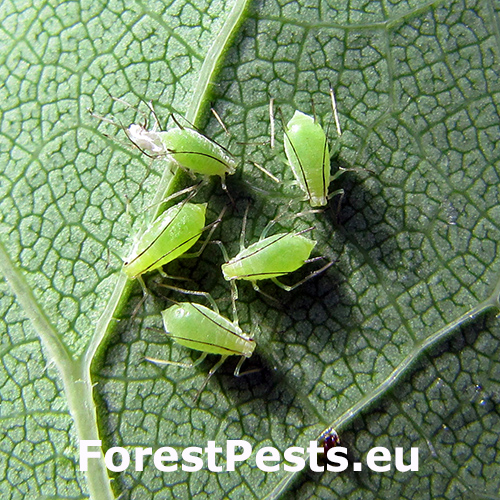
Illinoia liriodendri, commonly known as the tulip-tree aphid, is a sap-feeding insect that primarily inhabits the tulip tree (Liriodendron tulipifera). Native to North America, it was first recorded in Europe in France in 1998 and has since spread to other European countries, where it thrives in parks and gardens. The aphid exclusively feeds on the undersides of tulip tree leaves, forming dense colonies, especially during the growing season. Its life cycle begins with eggs overwintering in bark crevices, which hatch in spring as the leaves emerge. Populations increase rapidly, with viviparous females producing nymphs continuously throughout spring and summer.
Damage caused by Illinoia liriodendri primarily includes honeydew secretion, which fosters the growth of sooty mold, affecting both the aesthetic appearance and photosynthetic capacity of the host tree. Severe infestations may lead to leaf discoloration, premature leaf drop, and reduced tree vitality, though the intensity of damage varies. While the pest does not usually threaten tree survival, its impact on the tree’s visual appeal can be significant in ornamental settings.
Symptom
On the undersides of leaves, clusters of aphids are visible, often accompanied by honeydew deposits that lead to the growth of dark sooty mold. Leaves may display discoloration and distortion, sometimes resulting in premature leaf drop.
Tree Species: Tulip tree
Part of a plant- attacked: Leaf / Needle
Pest significance: Less harmful
Pest Category: Insects
Invasive Species: No
Present in EU: Yes
Add comment: Illinoia liriodendri
Location map: Illinoia liriodendri
Legend:

Expert verified points

Unverified points
Observed by users on these tree species
Similar damage

Gooseberry aphid

Black cherry aphid

Apple aphid

