


 Show all photos in album
Insert for comparison
We will identify your pest
Add pictures of this species
Show all photos in album
Insert for comparison
We will identify your pest
Add pictures of this species
Geosmithia morbida
Thousand cankers disease
Description
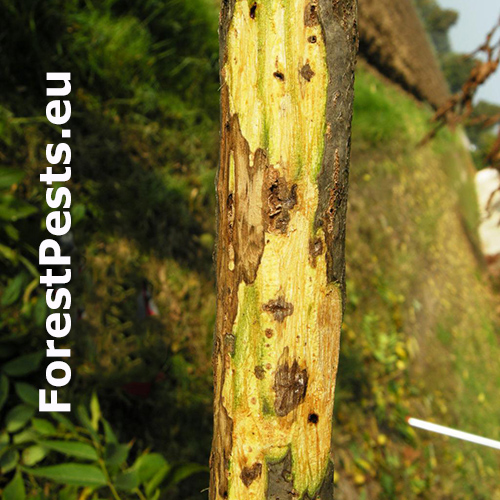
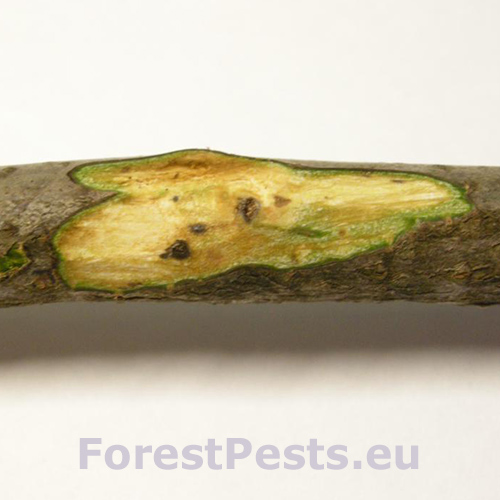
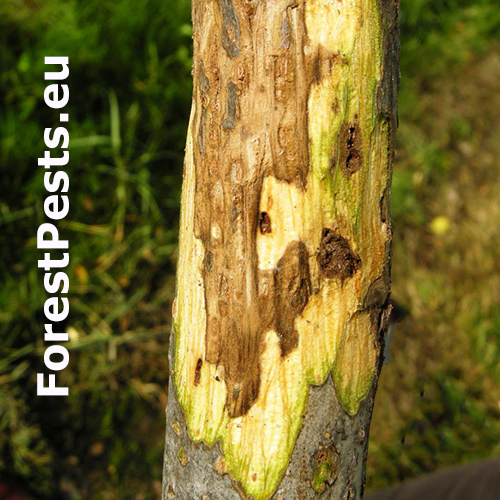
Geosmithia morbida is a pathogenic fungus that, in association with the walnut twig beetle (Pityophthorus juglandis), causes thousand cankers disease. This disease primarily affects black walnut (Juglans nigra) but can also impact other walnut species, including J. hindsii, J. californica, and J. regia. An anamorphic fungus in the Bionectriaceae family, G. morbida was first described as a new species in 2010, based on specimens collected in the southern United States. The fungus infects trees by creating necrotic lesions in the cambium and bark tissues, disrupting their vascular function.
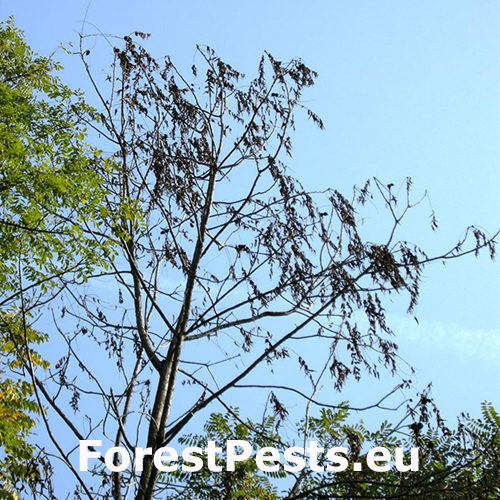
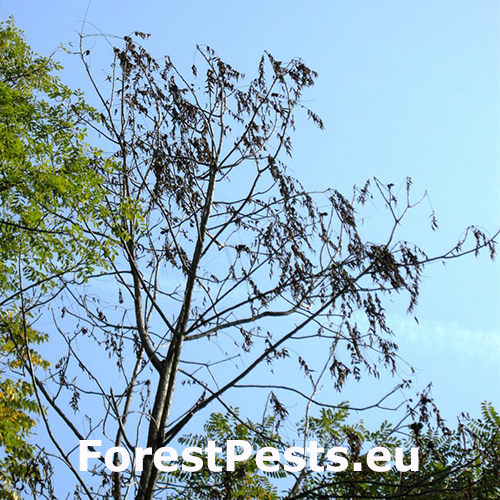
In Europe, G. morbida has been detected in several regions but remains under surveillance to prevent widespread outbreaks. The disease significantly affects the health and appearance of walnut trees, causing crown thinning, yellowing leaves, and extensive bark damage. The combined effects of beetle activity and fungal colonization pose a serious threat to walnut populations in affected areas, often resulting in branch dieback and tree mortality within three to four years.
Symptom
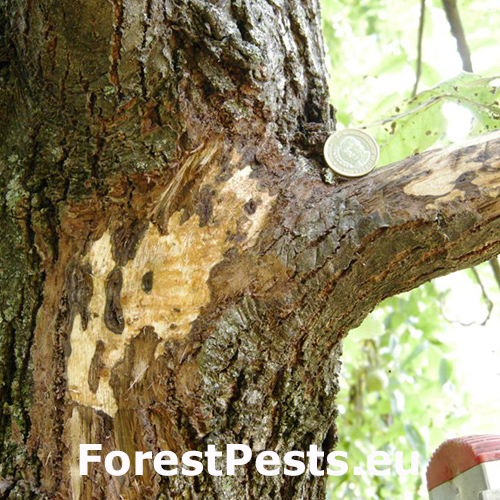
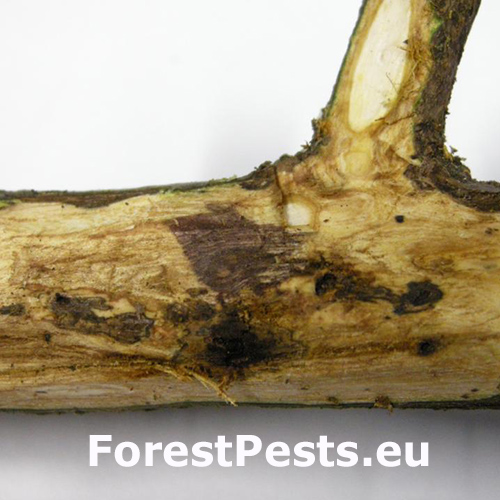
Initial symptoms include yellowing leaves and thinning crowns. Small, diffuse dark lesions form on tree stems, eventually merging into large necrotic patches. Bark cracks, dark discoloration under the bark, and leaf drop from affected branches are common indicators.
Tree Species: Walnut
Part of a plant- attacked: Tree trunk, Branch
Pest significance: Very harmful
Pest Category: Fungi
Invasive Species: Yes
Present in EU: Yes
Add comment: Geosmithia morbida
Location map: Geosmithia morbida
Legend:

Expert verified points

Unverified points
Observed by users on these tree species
Similar damage

Cryptostroma corticale

Walnut husk fly

Chestnut blight

