




 Show all photos in album
Insert for comparison
We will identify your pest
Add pictures of this species
Show all photos in album
Insert for comparison
We will identify your pest
Add pictures of this species
Eriophyes piri
Pear leaf blister mite
Description
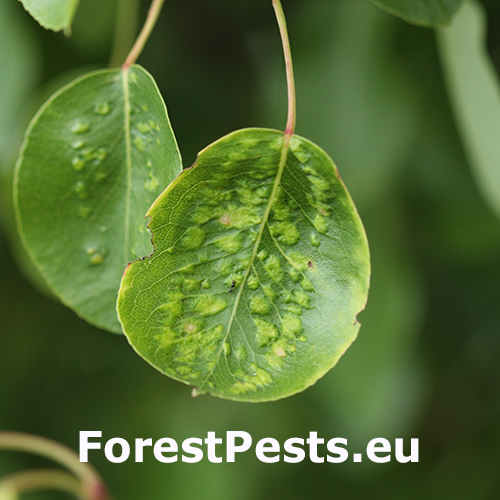
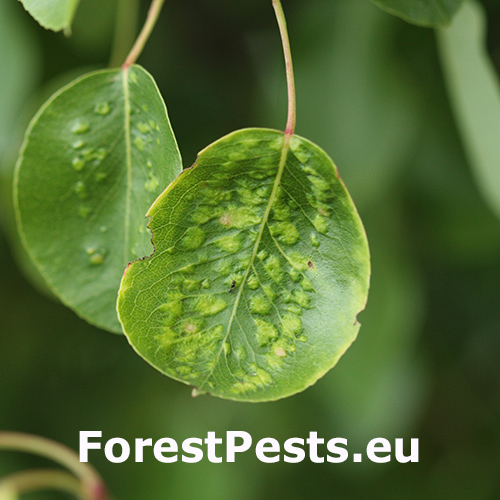
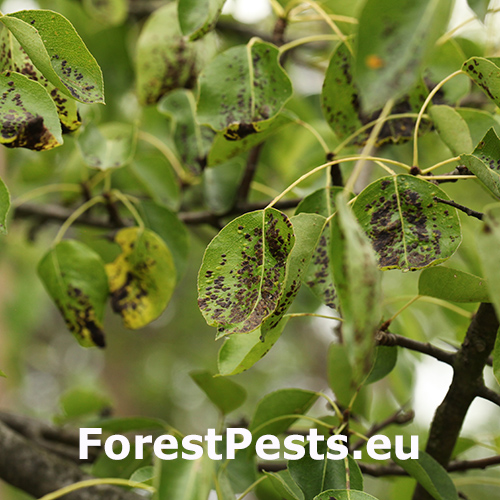
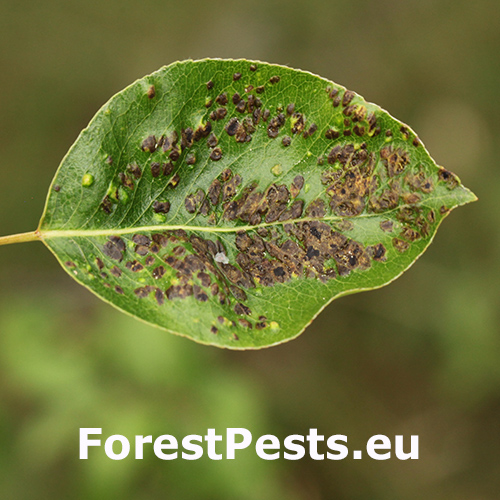
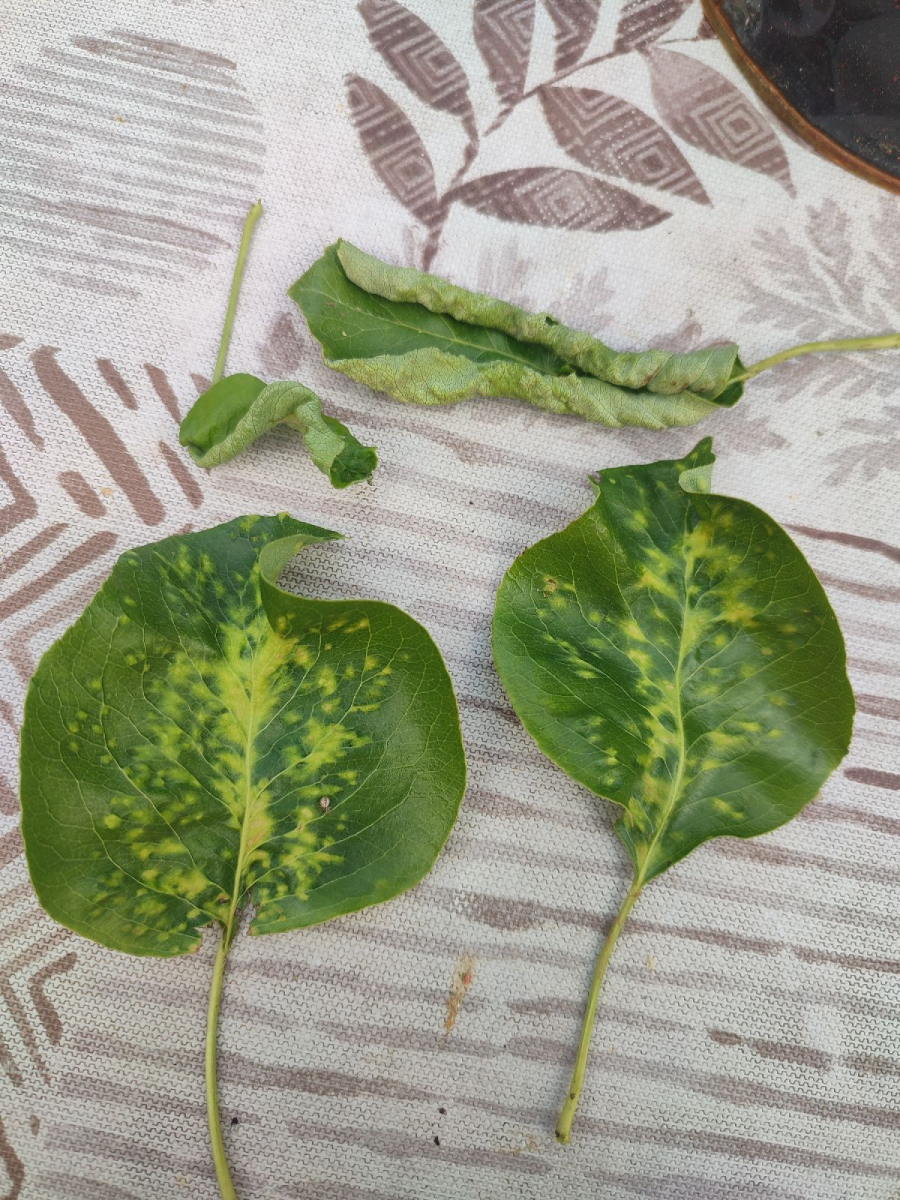
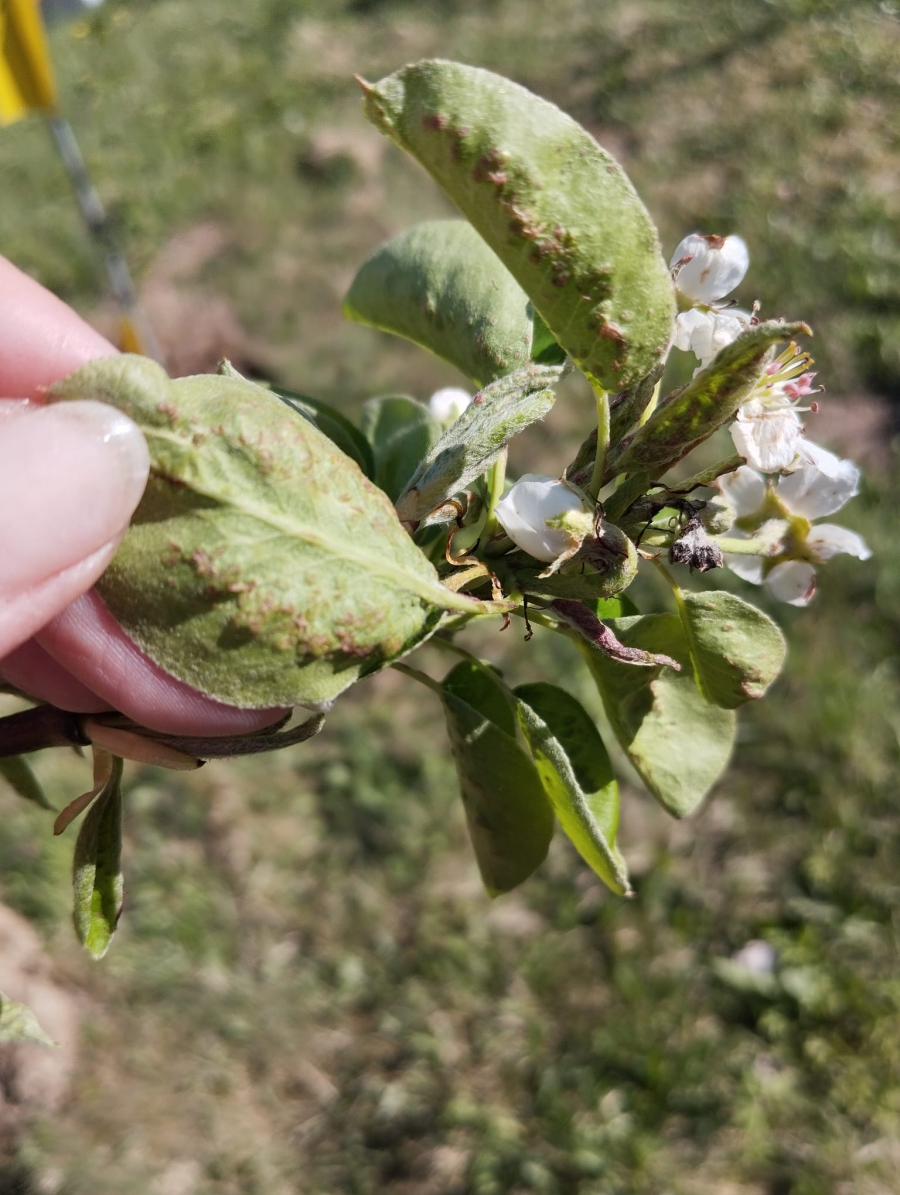
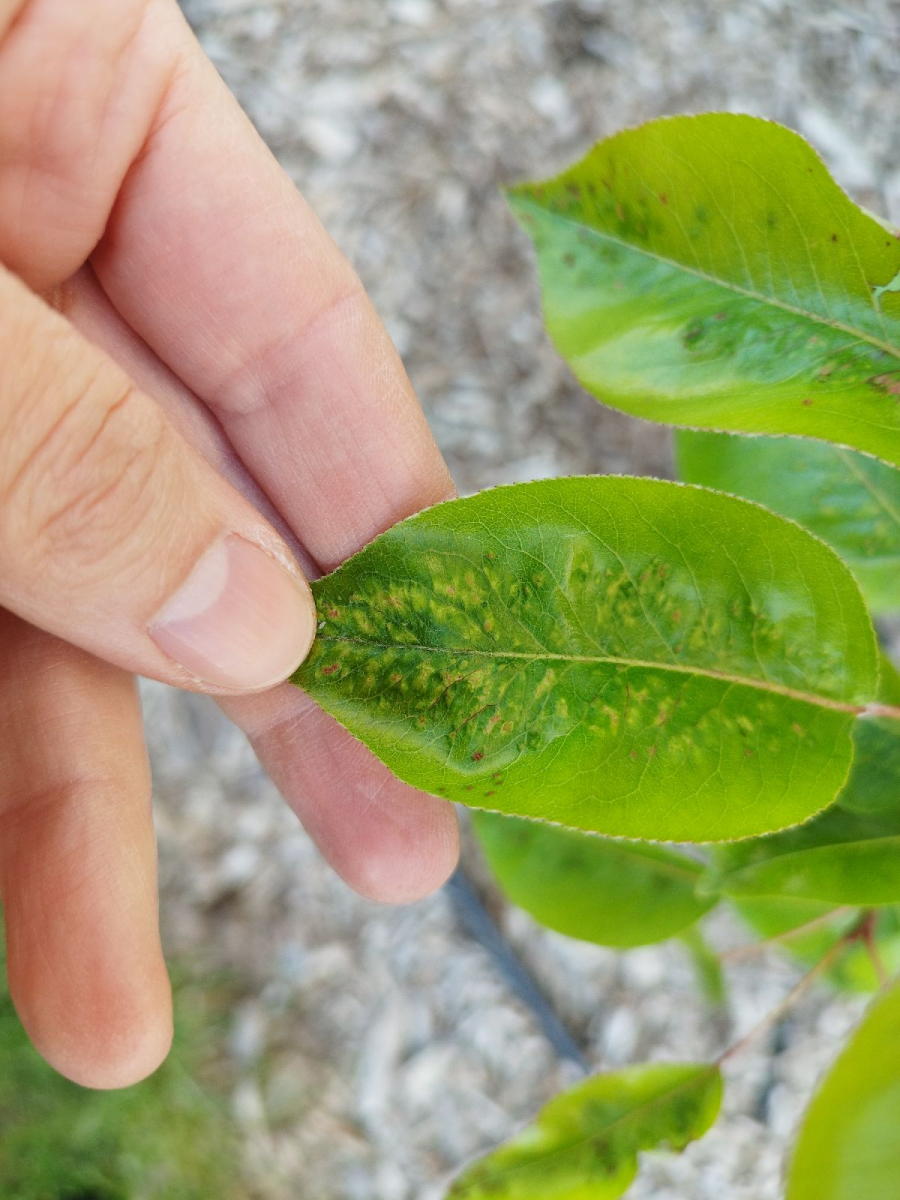
Deformations of pear leaves (pear leaf blisters) are caused by the pear leaf blister mite (Eriophyes piri). Early in spring, shortly after pear buds open, light spots can be seen on the upper surface of the leaves, and thickened areas on the lower surface. These spots later turn black during the summer. Often, all leaves on the tree are affected. More severely affected leaves do not fall off but remain on the trees until autumn. When multiple leaves are affected, the growth of the shoots is often slowed down. This species does not attack fruits. However, severe infestations can indirectly affect fruit quality and yield by impacting the overall health and vigor of the tree. Lower branches of older trees are usually the most affected. The pest is a yellowish-white mite, about 0.2 mm long, which is not visible to the naked eye. It mainly occurs on older pear trees, but occasionally it is found on young trees in fruit nurseries. The pear leaf blister mite overwinters in buds or in bark crevices. Chemical treatment of affected pear trees is usually not necessary. Typically, removing affected leaves from the trees is sufficient. In cases of severe infestation, it is necessary to treat the trees with an appropriate miticide.
Symptom
Leaf deformations, leaf thickening, light spots, later in summer, black crusts on leaves.
Tree Species: Pear
Part of a plant- attacked: Leaf / Needle
Pest significance: Harmful
Pest Category: Mites
Invasive Species: No
Present in EU: Yes
Add comment: Eriophyes piri
Location map: Eriophyes piri
print viewLegend:

Expert verified points

Unverified points
Observed by users on these tree species
Most sightings of the species

Last observations
There are a total of 4 observations of the species in the system

Eriophyes piriPear leaf blister mite
Anonymous contributor
Number of votes: 0
Published: 28.4.2025

Eriophyes piriPear leaf blister mite
Alena
Number of votes: 0
Published: 27.4.2024
Similar damage

European pear rust

Gall mite Acalitus rudis

Apple powdery mildew


