




 Show all photos in album
Insert for comparison
We will identify your pest
Add pictures of this species
Show all photos in album
Insert for comparison
We will identify your pest
Add pictures of this species
Epitrimerus trilobus
Gall mite Epitrimerus trilobus
Description
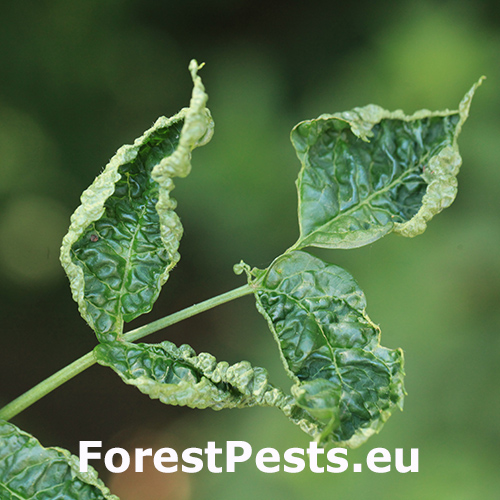
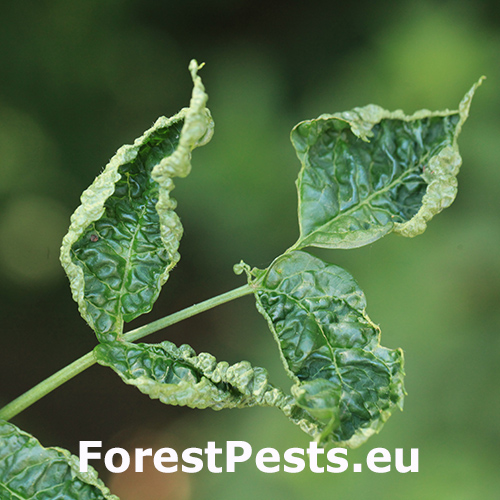
Epitrimerus trilobus is a species of gall mite belonging to the family Eriophyidae and is commonly found throughout Europe. This mite primarily infests elder plants (Sambucus spp.), feeding on their leaves and inducing the formation of galls. The galls caused by Epitrimerus trilobus appear as upward rolls on elder leaves. Host plants commonly affected include the European elder (Sambucus nigra) and red elderberry (Sambucus racemosa). The mites damage the leaves by feeding on their tissues, leading to a reduction in the leaf surface and thus diminishing photosynthesis. In heavily infested plants, this can result in premature leaf drop. In extreme cases, small or young elder trees can suffer significant dieback or even death. The mites remain on the leaves throughout the growing season, but in late summer, they leave the galls and seek shelter for the winter. They typically overwinter in the bark crevices or near buds of the host plant, re-emerging in spring to begin the cycle again. This winter survival strategy helps the mites persist and spread across elder populations in their habitat. Epitrimerus trilobus can have a significant impact on elder species, particularly in cases of heavy infestations, and its presence can be identified through the distinctive leaf galls it forms.
Symptom
The galls caused by Epitrimerus trilobus appear as upward rolls on elder leaves. These rolled sections of the leaves can range from 1 to 5 millimeters wide, and may vary in tightness. In some cases, the galls are so extensive that they cover the entire leaf. In young leaves, severe infestations can cause them to crumple and fail to open properly.
Tree Species: Elderberry
Part of a plant- attacked: Leaf / Needle
Pest significance: Harmful
Pest Category: Mites
Invasive Species: No
Add comment: Epitrimerus trilobus
Location map: Epitrimerus trilobus
Legend:

Expert verified points

Unverified points
Observed by users on these tree species
Similar damage

Pear leaf blister mite

Gall mite of Holly oak

Mite Aceria cerreus

