


 Show all photos in album
Insert for comparison
We will identify your pest
Add pictures of this species
Show all photos in album
Insert for comparison
We will identify your pest
Add pictures of this species
Eotetranychus tiliarium
Lime spider mite
Description
Eotetranychus tiliarium, commonly known as the lime spider mite, primarily targets Tilia species, such as Tilia cordata, but can also infest a variety of deciduous trees including maple (Acer), alder (Alnus), and others. This mite overwinters as adults near the base of the trunk or under nearby foliage and becomes active in early spring. It migrates to the canopy, colonizing the undersides of young leaves. Feeding by puncturing cells causes characteristic pale mottling on the upper leaf surface, which gradually leads to a faded, bronze-like appearance. Severe infestations result in early leaf drop, especially in lower crown areas, potentially impacting the tree’s vitality and detracting from its aesthetic appeal. Eotetranychus tiliarium thrives in warm, dry conditions and can produce up to five generations annually in urban settings.
Symptom
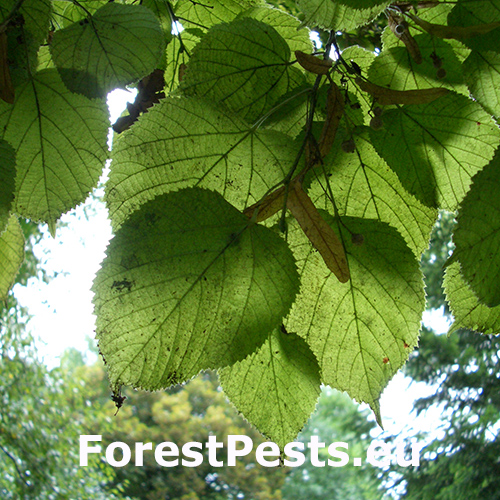
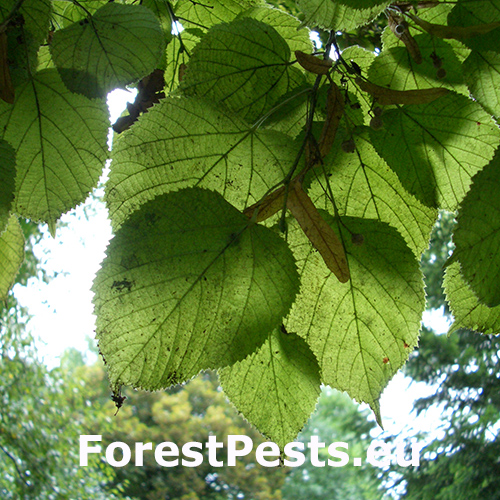
Infested leaves display fine speckling and yellow spots that gradually merge, turning the green color of the leaf to a bronze hue. Heavily damaged leaves may turn brown, curl, and drop prematurely.
Tree Species: Hawthorn, Apple Tree, Maple, Alder, Lime, Rose, Cotoneaster
Part of a plant- attacked: Leaf / Needle
Pest significance: Harmful
Pest Category: Mites
Invasive Species: No
Present in EU: Yes
Add comment: Eotetranychus tiliarium
Location map: Eotetranychus tiliarium
Legend:

Expert verified points

Unverified points
Observed by users on these tree species
Similar damage

Mite Aceria tenella

Mite Aceria brevitarsa brevitarsa

Gall mite Aceria cephalonea

