




 Show all photos in album
Insert for comparison
We will identify your pest
Add pictures of this species
Show all photos in album
Insert for comparison
We will identify your pest
Add pictures of this species
Dysaphis crataegi
Hawthorn-carrot aphid
Description
The hawthorn-carrot aphid (Dysaphis crataegi) is a sap-sucking insect with a two-host life cycle. It overwinters as eggs on hawthorn trees (Crataegus spp.), its primary host. In spring, nymphs emerge and feed on the undersides of leaves, causing them to curl and form red, blister-like galls. By late spring, winged forms migrate to secondary hosts in the Apiaceae family, such as carrot (Daucus carota), parsnip (Pastinaca sativa), and parsley (Aethusa cynapium). These aphids reproduce parthenogenetically on secondary hosts, forming dense colonies that persist until late summer.
On hawthorn, infestations weaken trees and reduce aesthetic appeal by distorting leaves and causing discoloration. Dysaphis crataegi is widespread in Europe and can cause economic damage in agriculture and urban landscapes during high-density outbreaks.
Symptom
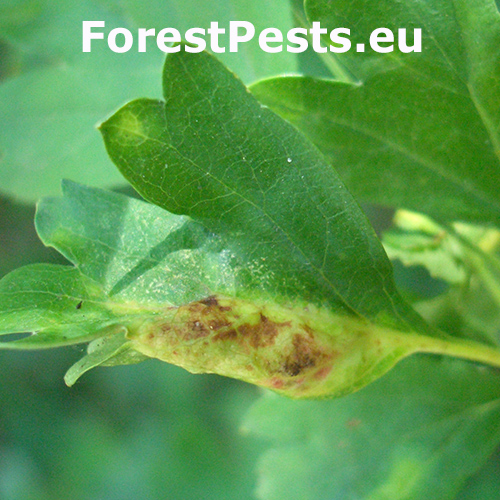
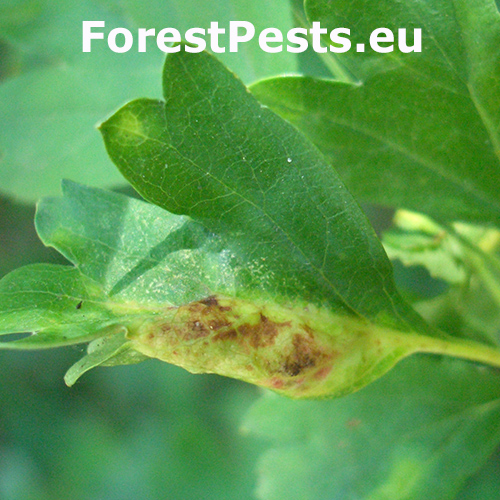
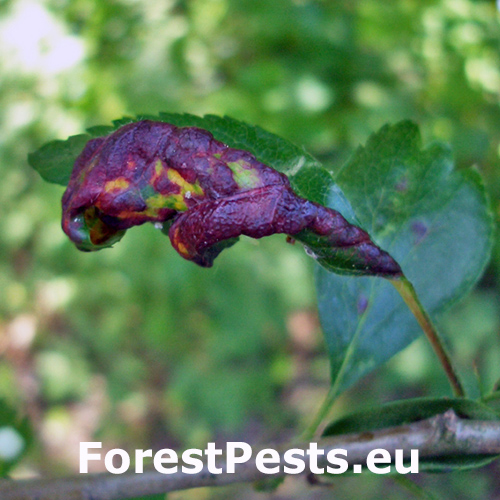
On hawthorn, leaves curl upward and develop red, blister-like galls. There is colony of aphids on the uderside of the levaes.
Tree Species: Hawthorn
Part of a plant- attacked: Leaf / Needle, Branch
Pest significance: Less harmful
Pest Category: Insects
Invasive Species: No
Present in EU: Yes
Add comment: Dysaphis crataegi
Location map: Dysaphis crataegi
Legend:

Expert verified points

Unverified points
Observed by users on these tree species
Similar damage

Black cherry aphid

Common oleaster aphid

Barberry aphid

