




 Show all photos in album
Insert for comparison
We will identify your pest
Add pictures of this species
Show all photos in album
Insert for comparison
We will identify your pest
Add pictures of this species
Drymonia ruficornis
Lunar marbled brown
Description
Wingspan 35-40 mm. Similar to the Marbled Brown (D. dodonaea), this species has a black crescent in the white area of the forewing. Univoltine, adults lives in 1 generation from March to June. Larvae lives on leaves from end of April until June. Narrow, distinct yellow or whitish subdorsal lines makes them relatively easy to recognize. Pupation take place in the soil. The pupa overwinters. Larva feeds on Quercus spp. Inhabiting broadleaved woodland, mainly in warmer regions, not rare. It can be very common in certain years, but does not tent to outbreak. Low economic importance. It is cgenerally not threatened. At the certain places can be negatively influenced by changing of tree structure and preferring instead of oak species some other tree species as for example beech, pine, spruce or fruit trees.
Symptom
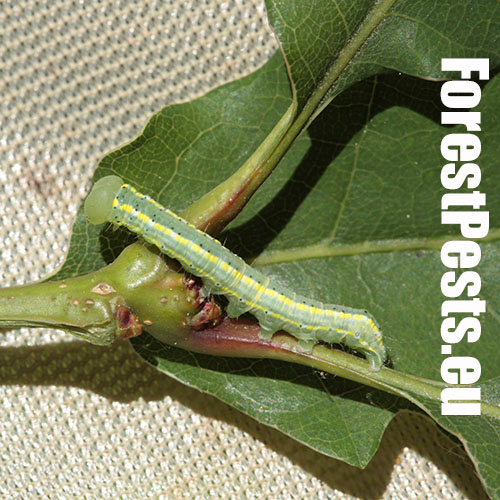
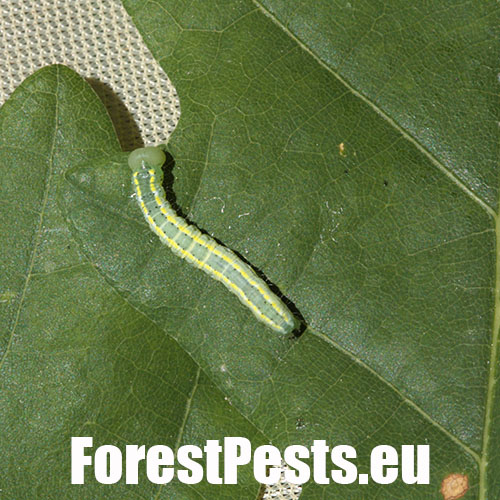
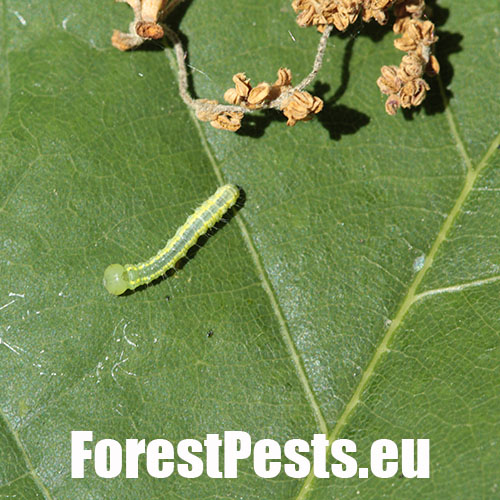
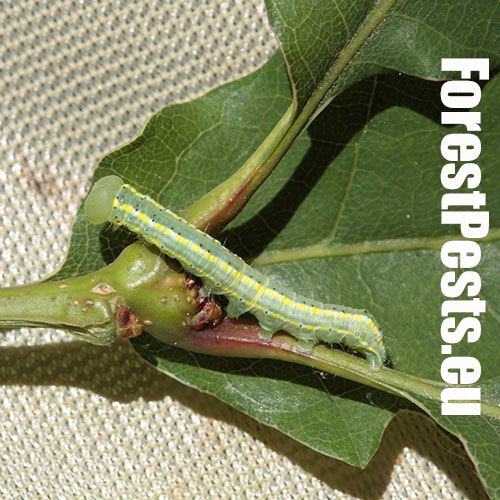
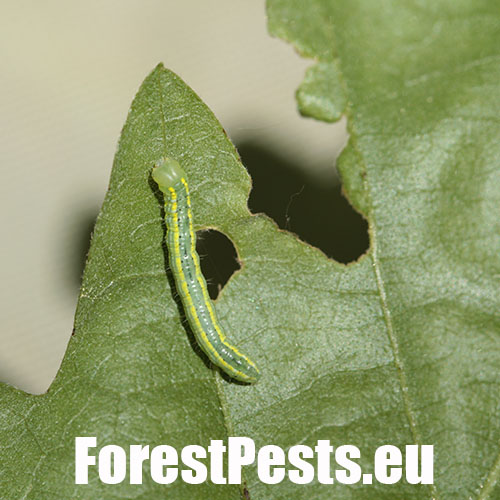
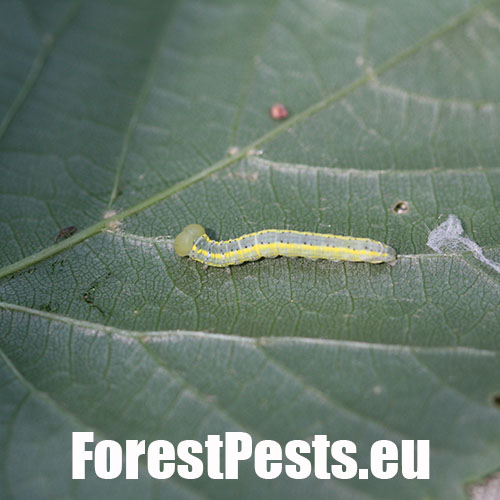
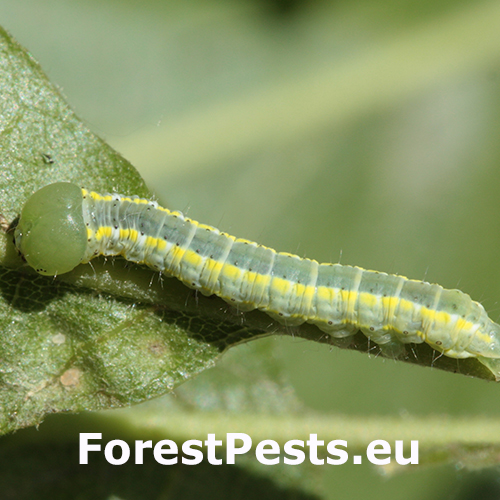
Larva: Body green, dorsally light blue-green, with narrow but distinct yellow or whitish subdorsal lines and wider, mostly yellow spiracular stripes; the last can be partly dashed. Dorsal line absent. Head green, with narrow ongoing spiracular stripes; legs, prolegs and anal prolegs green. Pinacula inconspicuous. Young caterpillars greenish or yellowish with black pinacula; later green with very distinct yellow subdorsal stripes.
Tree Species: Oak
Part of a plant- attacked: Leaf / Needle
Pest significance: Harmful
Pest Category: Insects
Invasive Species: No
Present in EU: Yes
Add comment: Drymonia ruficornis
Location map: Drymonia ruficornis
Legend:

Expert verified points

Unverified points
Observed by users on these tree species
Similar damage

Honeydew aphid

Small quaker

Brindled green


