




 Show all photos in album
Insert for comparison
We will identify your pest
Add pictures of this species
Show all photos in album
Insert for comparison
We will identify your pest
Add pictures of this species
Diplocarpon rosae
Black spot disease
Description
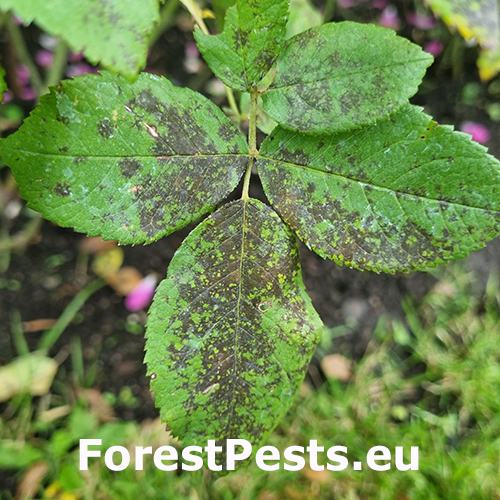
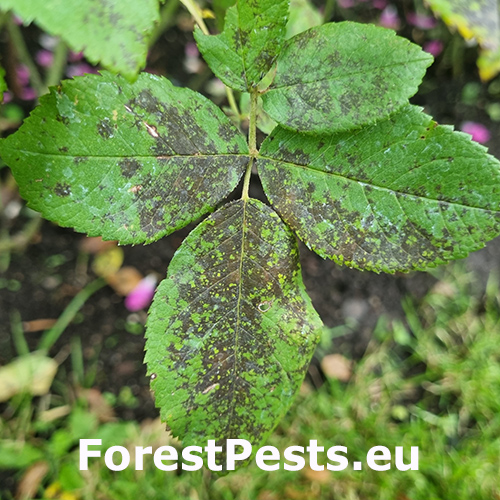
Diplocarpon rosae, also known as black spot disease, is one of the most important and widespread diseases affecting roses. The asexual stage of the pathogen is known as Marssonina rosae, while the sexual and most common stage is Diplocarpon rosae. This disease manifests as dark brown to black spots on the leaves, which gradually enlarge. As a result, the affected leaves turn yellow, dry out, and eventually fall off. If left untreated, the rose plant can lose a significant portion of its leaves, becoming weak and unattractive, with reduced flowering. Diplocarpon rosae overwinters in fallen leaves, and its spores are released in spring, particularly during wet, cool weather. Infection is most common after rainy periods or frequent overhead watering. Proper care involves watering only at the base of the plant, avoiding wetting the leaves and stems (especialy in the evening). Regular fertilization, pruning, removal of attacked (fallen) leaves, and preventive fungicide treatments starting in early spring can help manage the disease. Photinia, another member of the rose family, can also be affected by this fungus.
Symptom
The primary symptom is the appearance of small, round black spots with fringed or irregular edges on the upper surfaces of rose leaves. These spots typically measure 0.5 to 2 centimeters in diameter. A yellow halo or chlorotic area often forms around the black spots, occurring as the tissue surrounding the spots becomes weakened and loses chlorophyll. As the disease progresses, the affected leaves weaken and eventually drop off the plant. This premature leaf drop can lead to significant defoliation, especially during rainy periods. In severe cases, the disease can spread to the stems and young shoots, causing dark lesions that affect the overall health and vigor of the plant. The loss of leaves diminishes the plant's ability to photosynthesize, resulting in stunted growth, reduced flowering, and a generally weakened plant.
Tree Species: Photinia, Rose
Part of a plant- attacked: Leaf / Needle, Branch
Pest significance: Very harmful
Pest Category: Fungi
Invasive Species: No
Present in EU: Yes
Add comment: Diplocarpon rosae
Location map: Diplocarpon rosae
Legend:

Expert verified points

Unverified points
Observed by users on these tree species
Similar damage

Rose plume moth

Rose aphid

Rose sawfly

