




 Show all photos in album
Insert for comparison
We will identify your pest
Add pictures of this species
Show all photos in album
Insert for comparison
We will identify your pest
Add pictures of this species
Diloba caeruleocephala
Figure of eight moth
Description
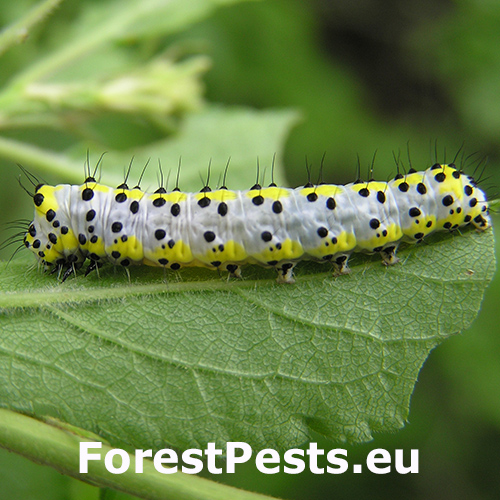
Diloba caeruleocephala, commonly known as the figure of eight moth, belongs to the family Noctuidae and is found across Europe and parts of Asia. This moth is easily identifiable by the unique figure-eight pattern on its greyish-brown forewings. The vibrant creamy blue-green caterpillars, adorned with yellow stripes and black spots, primarily feed on woody Rosaceae such as Prunus, Pyrus, Amelanchier, and Crataegus species, with Prunus spinosa being the most important host plant in Central Europe. Feeding can lead to significant defoliation of these plants, which include economically important fruit trees like apples and pears. In gardens and orchards, heavy infestations can weaken plants, reduce fruit yield, and make the plants more susceptible to other pests and diseases. The caterpillars inhabit warm, open forests, hedgerows, bushy grasslands, and similar locations. The egg overwinters, and the caterpillar is typically found from late April to June, with the moths flying in autumn (September/October). Despite being common in the Mediterranean, the figure of eight moth is in decline in many areas, especially north of the Alps, due to landscape uniformization, modern agriculture, and dark forest management without clearings and bushy edges.
Symptom
Brightly colored caterpillars, leaf defoliation.
Tree Species: Cherry, Hawthorn, Pear, Apple Tree, Rowan, Whitebeam, Shadbush, Blackthorn
Part of a plant- attacked: Leaf / Needle
Pest significance: Less harmful
Pest Category: Insects
Invasive Species: No
Present in EU: Yes
Add comment: Diloba caeruleocephala
Location map: Diloba caeruleocephala
Legend:

Expert verified points

Unverified points
Observed by users on these tree species
Similar damage

Codling moth

Boxwood pyralid

Psyllid Psylla alni

