




 Show all photos in album
Insert for comparison
We will identify your pest
Add pictures of this species
Show all photos in album
Insert for comparison
We will identify your pest
Add pictures of this species
Didymomyia tiliacea
Lime gall midge
Description
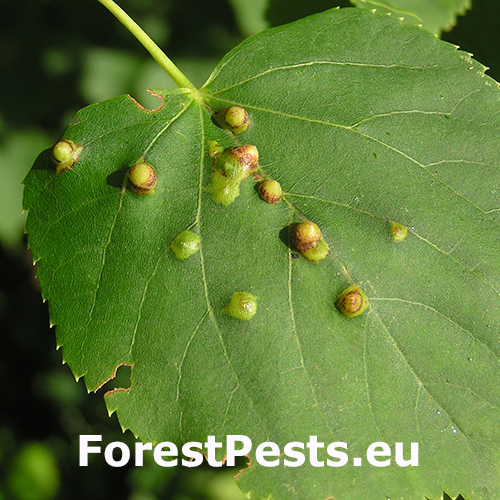
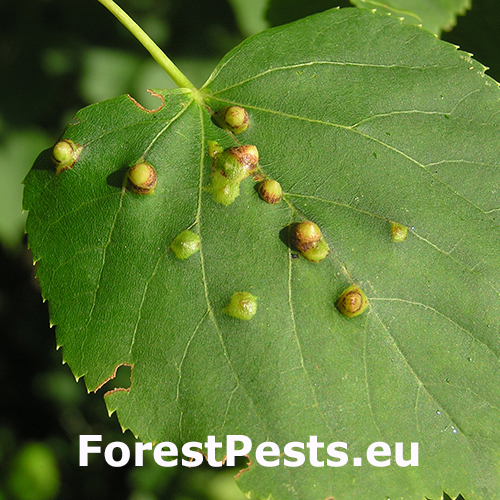
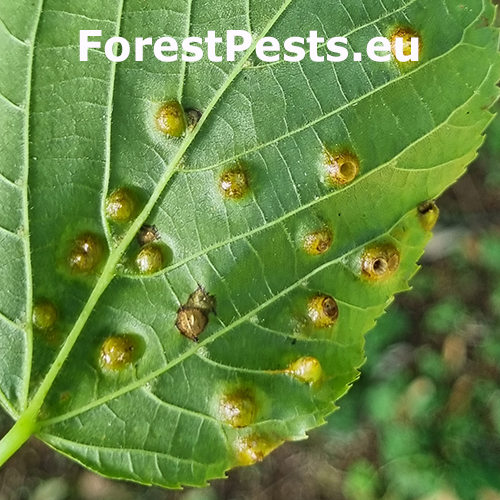
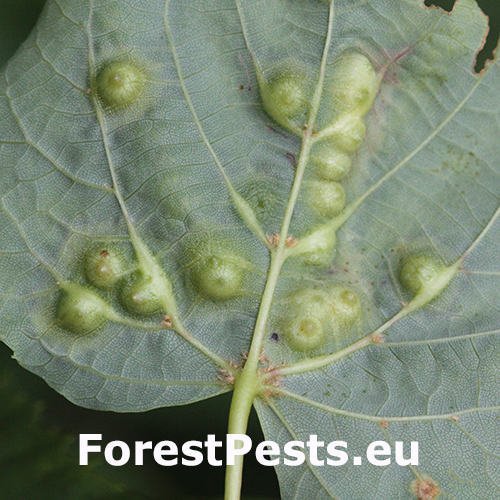
Didymomyia tiliacea, also known as Didymomyia reaumuriana, is a gall midge belonging to the Diptera family Cecidomyiidae. This pest induces gall formation on Tilia (lime) trees. The galls can grow up to 6 by 4 mm in size, initially appearing green and later transitioning to brown or yellow. They are visible on both the upper and lower surfaces of the lime leaves. On the upper side, cone-shaped outgrowths, approximately 2 mm long, can be observed, while on the lower side, the galls manifest as less noticeable swellings.Initially green, the galls gradually turn red over time. During autumn, the galls begin to enlarge, and a new cone-shaped structure emerges from within the gall, serving as a habitat for one larva of the pest. These larvae are yellow in color. Following leaf fall, the larvae undergo pupation, and the adult midges emerge during the spring season.The presence of Didymomyia tiliacea can have a noticeable impact on the affected Tilia trees, causing the formation of galls and altering the appearance of the leaves. Monitoring the infestation, implementing appropriate management practices, and understanding the life cycle of this gall midge can aid in preserving the health and vitality of lime trees.
Symptom
This pest induces gall formation on Tilia (lime) trees. The galls can grow up to 6 by 4 mm in size, initially appearing green and later transitioning to brown or yellow. They are visible on both the upper and lower surfaces of the lime leaves. On the upper side, cone-shaped outgrowths, approximately 2 mm long, can be observed, while on the lower side, the galls manifest as less noticeable swellings.
Tree Species: Lime
Part of a plant- attacked: Leaf / Needle
Pest significance: Less harmful
Pest Category: Insects
Invasive Species: No
Present in EU: Yes
Add comment: Didymomyia tiliacea
Location map: Didymomyia tiliacea
Legend:

Expert verified points

Unverified points
Observed by users on these tree species
Similar damage

Hairy beech gall

Black locust gall midge

Tilia leaf spot fungus


