


 Show all photos in album
Insert for comparison
We will identify your pest
Add pictures of this species
Show all photos in album
Insert for comparison
We will identify your pest
Add pictures of this species
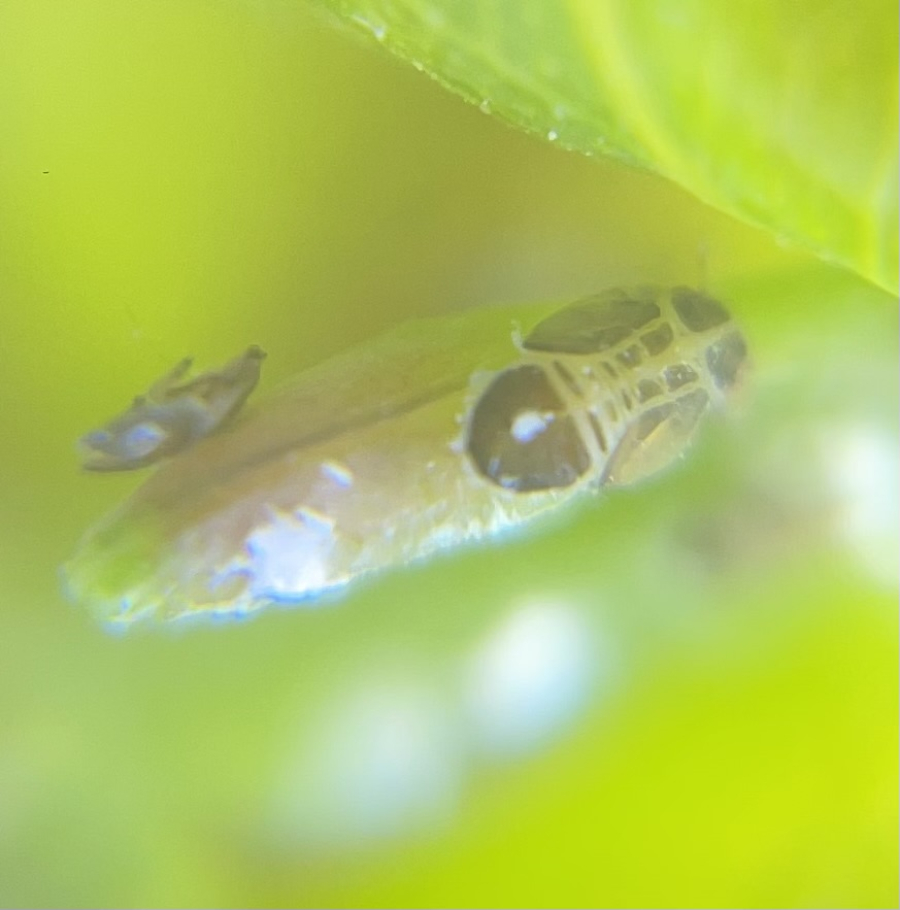
Ctenarytaina eucalypti
Eucalyptus psyllid
Description
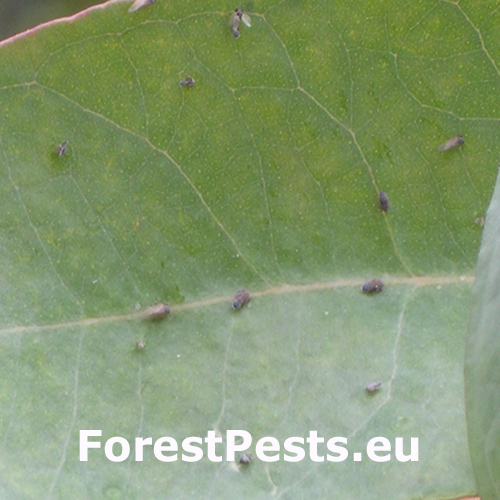
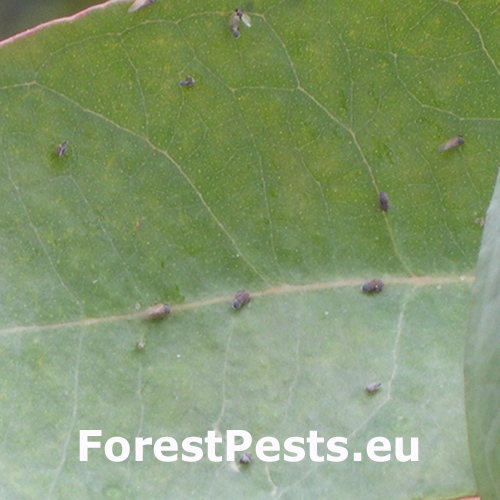
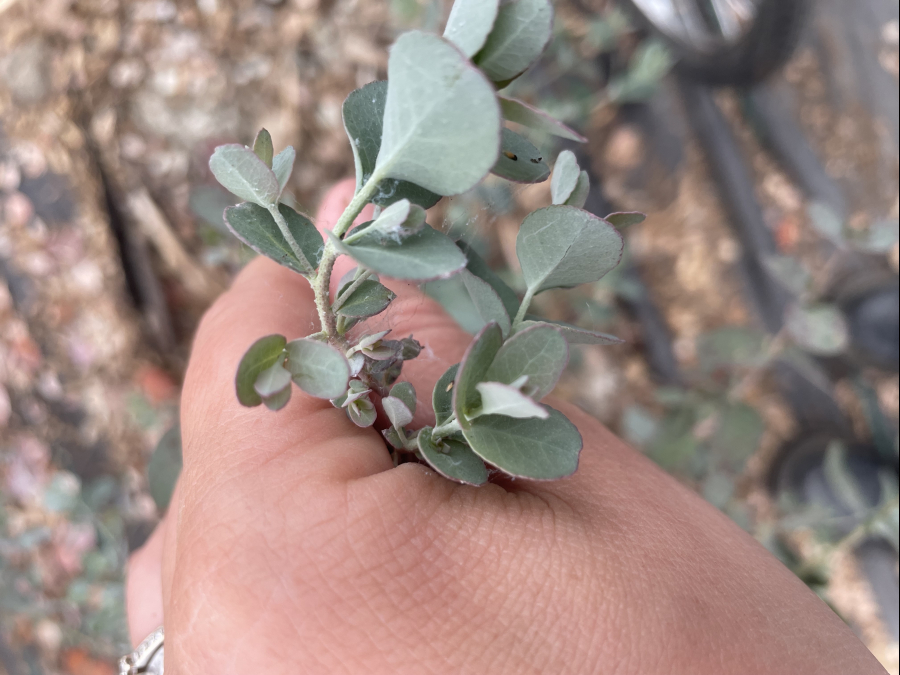
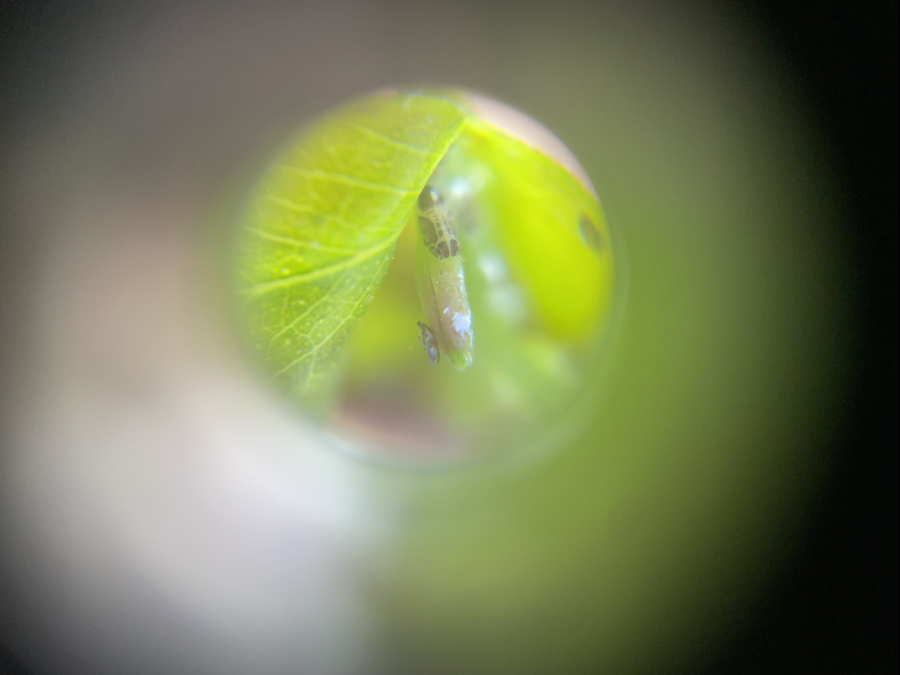
Ctenarytaina eucalypti, commonly known as the eucalyptus psyllid, is a small sap-sucking insect native to Australia that primarily infests eucalyptus species, especially Eucalyptus globulus and Eucalyptus pulverulenta. Since its accidental introduction to Europe, it has established populations in several countries, including the United Kingdom, Ireland, France, Spain, and Germany. Both nymphs and adults feed on the sap of young shoots and leaves, leading to leaf curling, discoloration, and stunted growth. Severe infestations can result in significant aesthetic damage and reduced vigor of ornamental eucalyptus trees. Additionally, the psyllids excrete honeydew, which promotes the growth of sooty mold, further diminishing the tree's appearance.
In some regions, it is considered a key pest of eucalyptus plantations.
Symptom
Infested shoots exhibit curled and discolored leaves, often accompanied by white waxy secretions and the presence of honeydew, leading to sooty mold development.
Tree Species: Eucalyptus
Part of a plant- attacked: Leaf / Needle
Pest significance: Very harmful
Pest Category: Insects
Invasive Species: Yes
Present in EU: Yes
Add comment: Ctenarytaina eucalypti
Location map: Ctenarytaina eucalypti
print viewLegend:

Expert verified points

Unverified points
Observed by users on these tree species
Most sightings of the species

Last observations
There are a total of 1 observations of the species in the system

Ctenarytaina eucalyptiEucalyptus psyllid
Markéta K.
Number of votes: 0
Published: 25.4.2025

Ctenarytaina eucalyptiEucalyptus psyllid
Markéta K.
Number of votes: 0
Published: 25.4.2025

Ctenarytaina eucalyptiEucalyptus psyllid
Markéta K.
Number of votes: 0
Published: 25.4.2025
Similar damage

Poplar-shoot aphid

Rhododendron lace bug

Gooseberry aphid

